



French Ceramic Jar
These pieces range from rustic green-glazed confit pots to refined Paris porcelain lidded vessels, offering practical storage and distinct regional character.
French Ceramic Jar
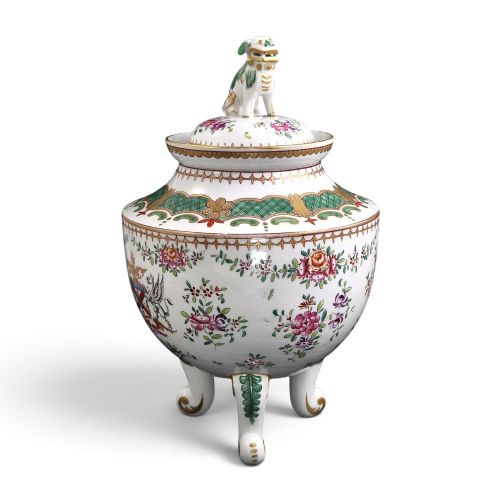
A French ceramic jar encompasses utilitarian vessels for food and oil alongside decorative porcelain vases and pharmacy storage containers. Confit pots and olive jars from regional workshops sit alongside painted porcelain pieces created in urban centres.
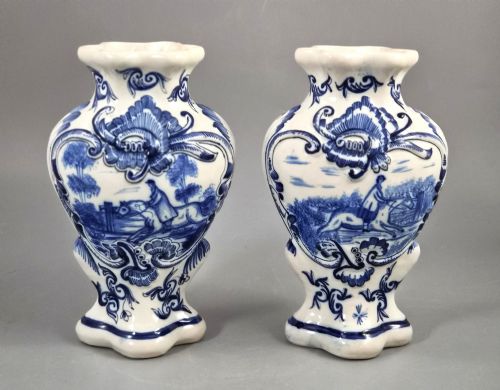
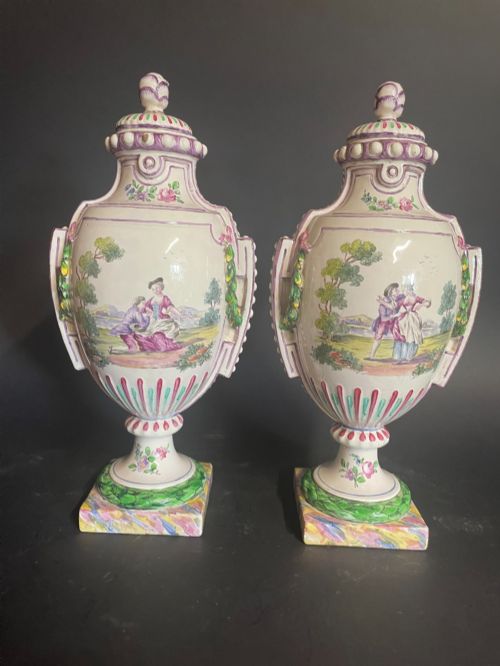
The nineteenth century provides the majority of surviving examples on this page, spanning green-glazed terracotta, blue and white faience, and gilt bronze mounted porcelain. Forms move between rustic storage jars with handles and ornamental table pieces.
Rural utility pieces contrast with urban porcelain adaptations of Asian and European styles, reflecting both domestic storage needs and nineteenth-century taste for decorative revival objects.
Materials and construction methods
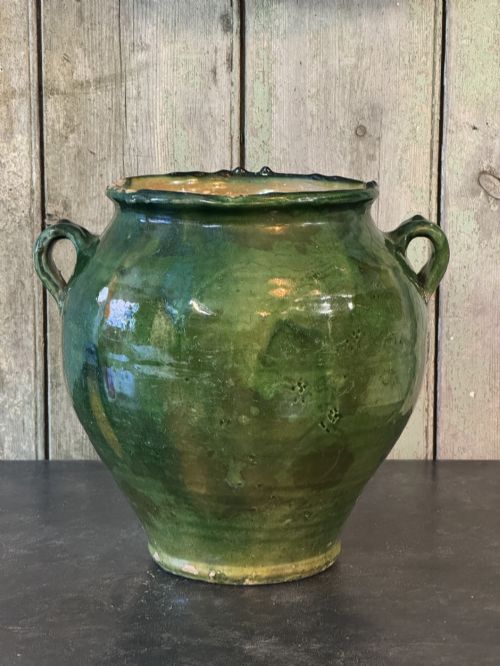
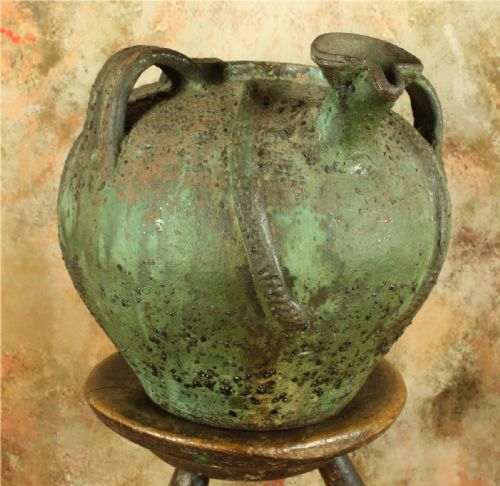
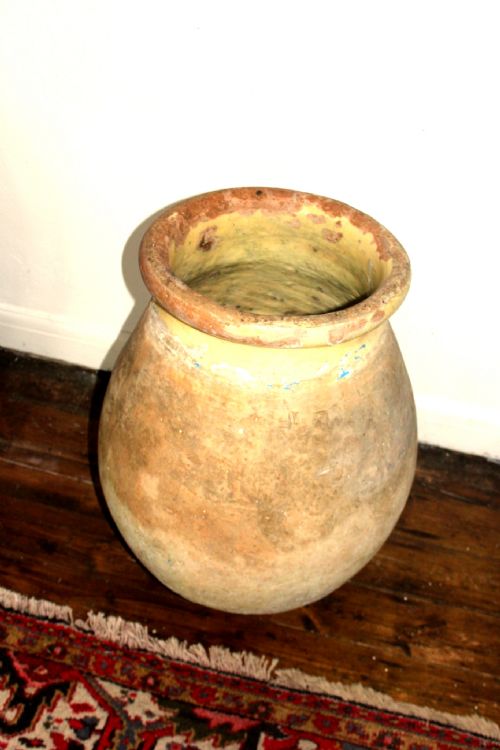
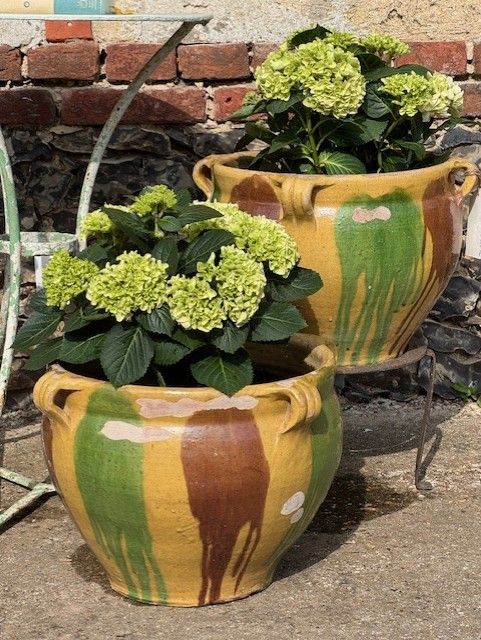
Makers utilised local terracotta and earthenware for utilitarian olive and confit jars, applying lead or salt glazes to seal porous bodies for liquid storage. These functional vessels show wheel-thrown body forms often combined with applied lug handles.
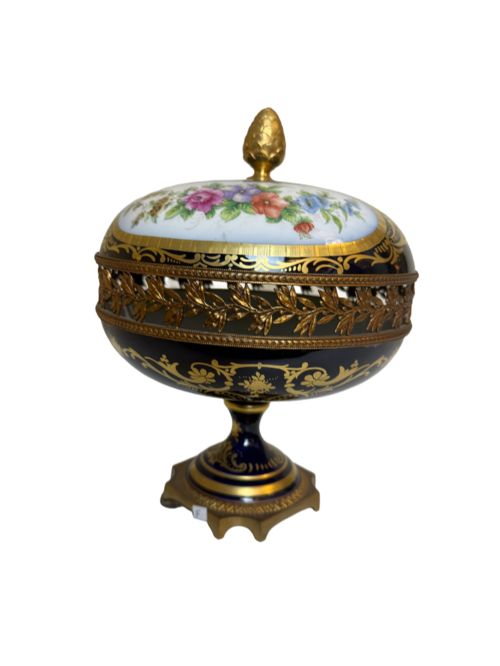
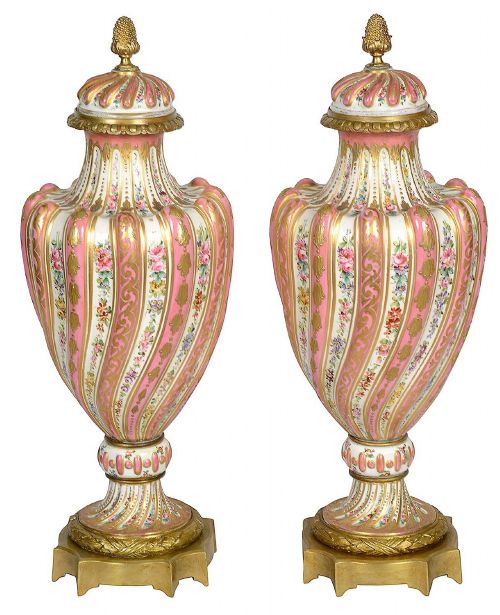
Faience and porcelain pieces employ tin glazes or hard-paste ceramic bases painted with polychrome or blue and white motifs. Ormolu mounts in brass are occasionally added to elevate decorative porcelain urns and vases.
Several heavy olive jars retain the ancient drips of green glaze that ran down their sides while cooling in rural French kilns.
Distinguishing quality across periods
Quality rests in the crispness of hand-painted decoration, the integrity of original glazes, and the presence of associated lids or mounts. Pieces from established Parisian workshops and documented potteries show finer brushwork and more refined potting than utilitarian rural wares.
Surface wear tells a story of domestic utility, where an even, aged patina on terracotta or earthenware enhances the piece. Structural completeness of handles and the preservation of delicate ormolu mounts dictate the standing of decorative lidded vases.
Samson Paris·Fourmaintraux Courquin·Sceaux Faience
The French Ceramic Jar Glossary
- Confit pot
- A utilitarian French earthenware vessel traditionally used for preserving duck or goose confit. These pots typically feature a partially glazed body and side handles.
- Faience
- Tin-glazed earthenware produced in France and across Europe, known for a white opaque background painted with coloured ceramic pigments.
- Ormolu
- Gilded brass or bronze mounts applied to decorative porcelain vases and urns during the nineteenth century. The technique adds architectural structure and metallic contrast to the ceramic body.
- Apothecary jar
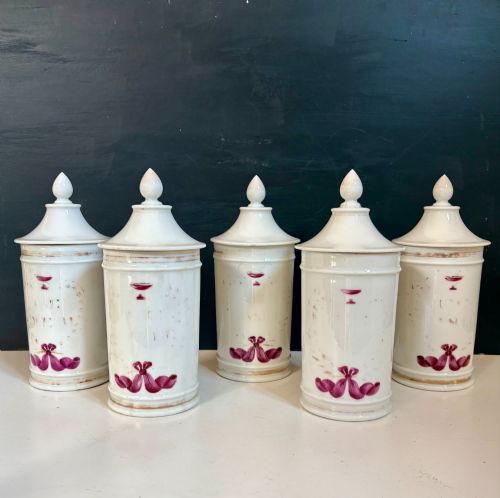
- A cylindrical or urn-shaped ceramic container utilised in pharmacies for storing dried herbs and medicines. They frequently bear painted labels indicating their original contents.
French Ceramic Jar: Frequently Asked Questions
What were confit pots used for?
Confit pots served rural households as storage containers for preserved meats, particularly duck and goose, packed in fat to prevent spoilage over winter months.
Their distinctive partially glazed surfaces helped regulate moisture while the side handles allowed for secure lifting in crowded larders.
How do I care for antique terracotta jars?
Antique terracotta and earthenware require gentle dusting with a dry cloth and protection from sudden temperature shifts. Because these historic bodies remain porous, avoid filling them with water for fresh plants unless an internal glass liner is used.
Keep them away from damp environments to preserve the stability of the earthen walls and any historic surface patina.
How can I date a French ceramic jar?
Dating relies on examining the glaze type, potting technique, and decorative style against established nineteenth and eighteenth-century production methods. Utilitarian earthenware often shows tool marks and glaze pooling characteristic of regional provincial kilns.
Ornamental porcelain pieces display factory marks, transfer-printing techniques, or hand-painted motifs that align with specific revival periods.
Where should I display these jars at home?
Large olive and confit jars suit floor placement in hallways or kitchens, adding architectural height and texture to empty corners. Smaller pharmacy jars and lidded porcelain vases look best grouped on sideboards or mantelpieces where their painted details remain visible.
Mixing rustic terracotta forms with refined porcelain creates a balanced interior display reflecting varied French ceramic traditions.