

French Bronze Desk Clock
These French bronze desk clock pieces bring nineteenth-century precision and neoclassical presence straight to your mantelpiece.

French Bronze Desk Clock Forms
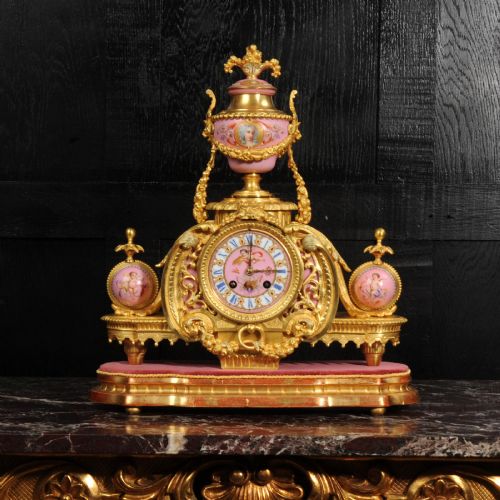
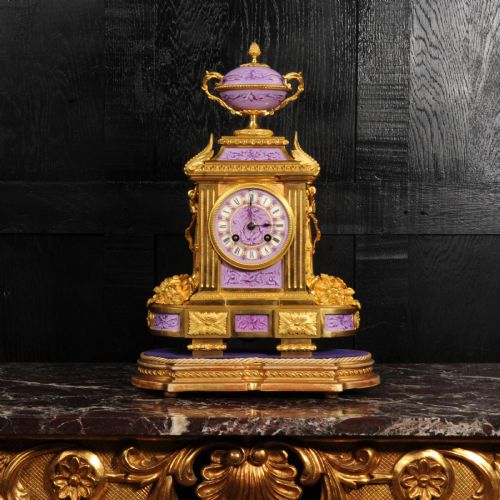
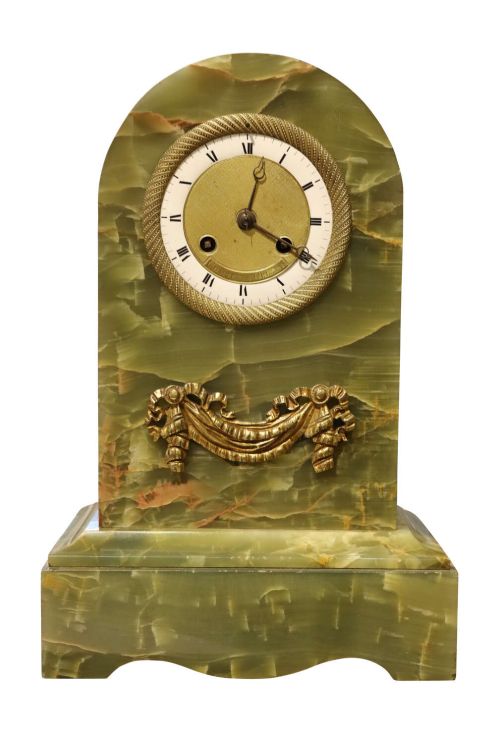
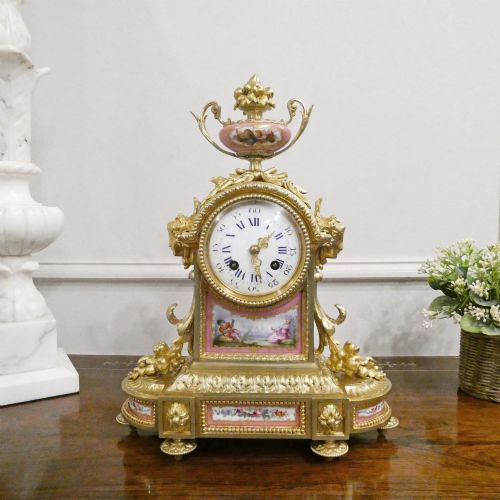
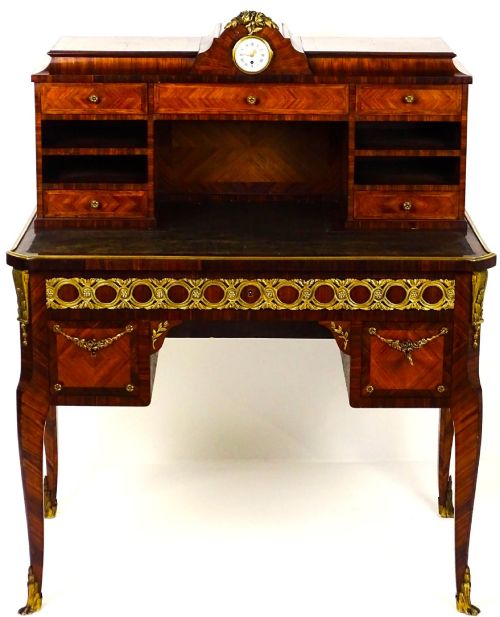
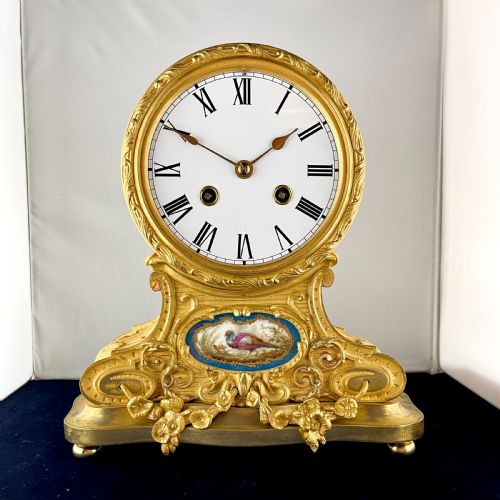
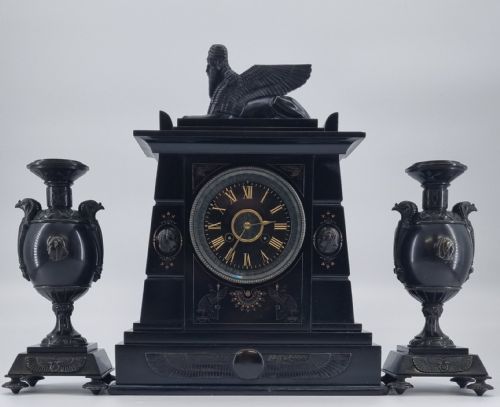
A french bronze desk clock most commonly appears from the nineteenth century in forms such as mantel clocks, clock sets, and clock garnitures. These pieces span styles including French Neoclassical, Louis XV, Louis XVI style, and Rococo Revival.
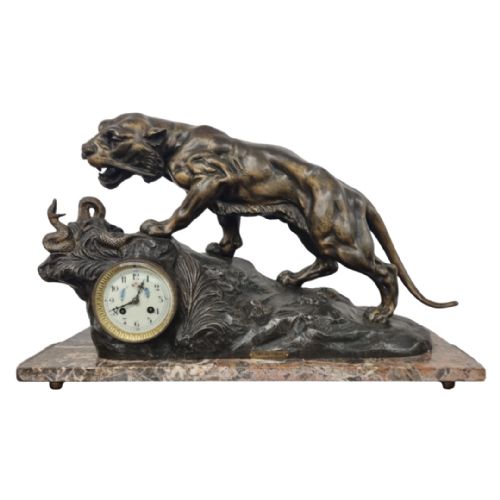
The selection here includes specific sculptural variants like an elephant form and literature-themed marble clock garnitures. Makers such as Raingo Frères also shape the offerings found on this page.
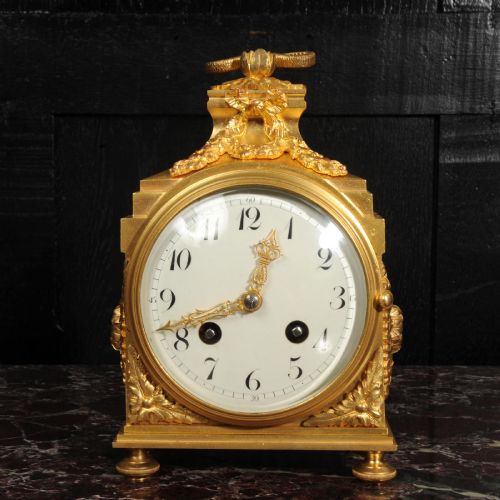
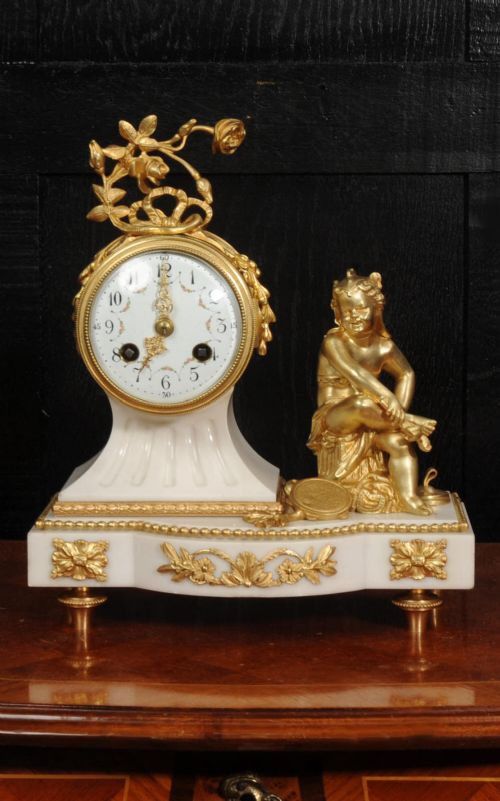
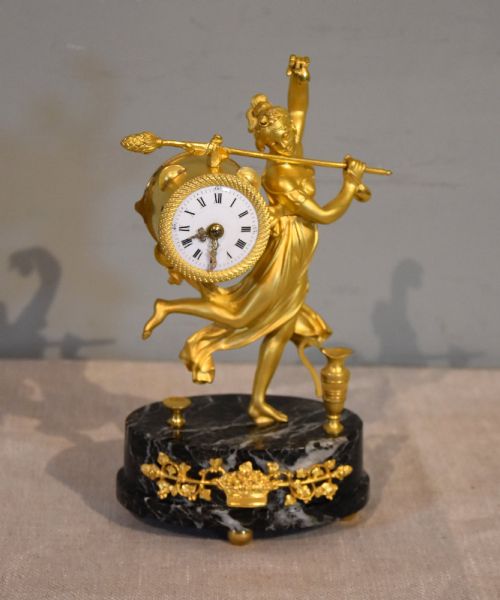
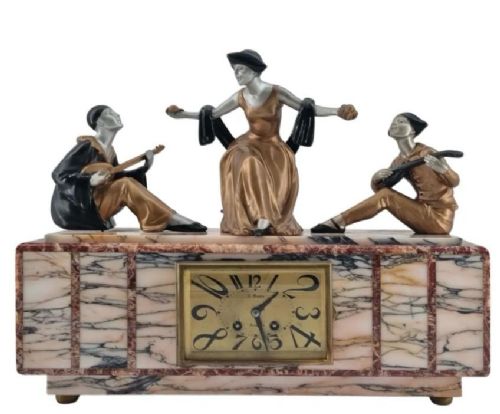
Buyers encounter works executed in gilt metal, patinated bronze, and ormolu, frequently paired with contrasting materials like marble and glass.
Construction and Materials
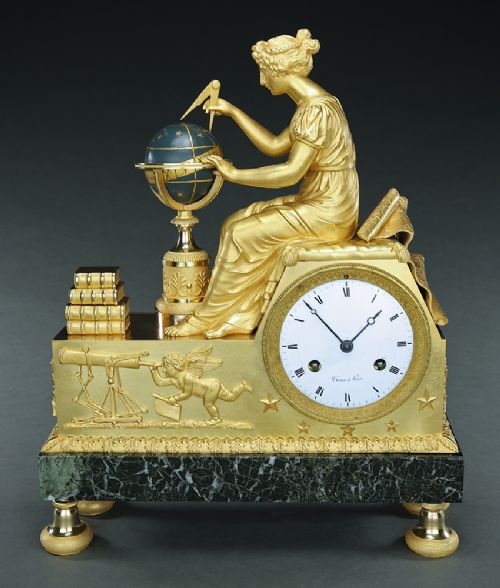
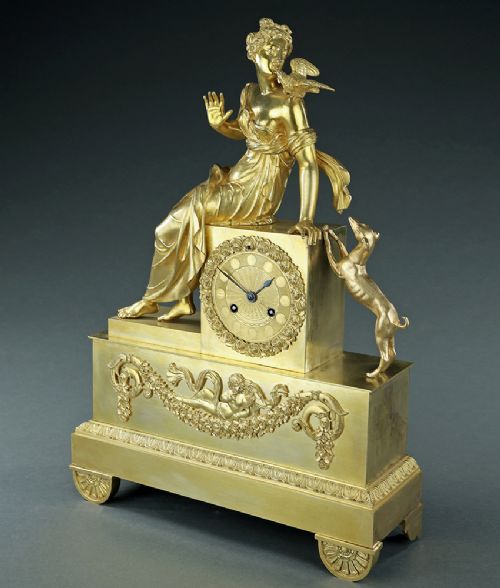
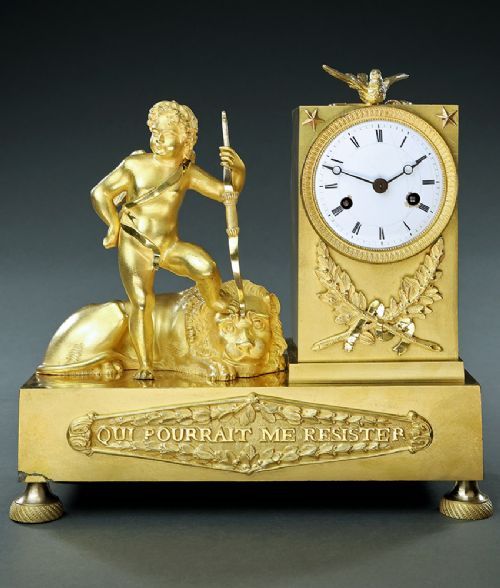
These works combine cast bronze with gilt metal and ormolu finishes, often utilising patinated bronze alongside gilded elements to create tonal depth. Foundry techniques of the nineteenth century allow for intricate figural casting, seen in animal subjects and allegorical themes.
Enamel dials provide the face for these movements, protected behind glass bezels within heavy bronze or marble housings. Bases and structural surrounds incorporate shaped marble and detailed cast mounts in Louis XVI and Rococo revival idioms.
Retail Price Guide 2026
Typical UK retail prices for french bronze desk clock, calculated from the Sellingantiques database of over a million retail prices indexed since 2003. This retail price guide relies exclusively on Sellingantiques data; no external sources or auction records are used, so the figures do not describe the wider market.
Assessing Quality
Quality in these nineteenth-century timepieces rests on the crispness of the bronze chasing and the depth of the gilding or ormolu. Superior examples display refined hand-finishing on sculptural details, such as figurative elements or floral mounts, rather than softened cast surfaces.
The integration of materials also defines the tier of the piece, where harmonious joins between heavy marble, patinated bronze, and fire-gilt components elevate the overall composition.
Raingo Frères·Raingo Fres Paris
The French Bronze Desk Clock Glossary
- Ormolu
- Gilt bronze produced by applying a mercury and gold amalgam to a bronze base, fired to create a durable golden finish. This technique defines the rich surfaces seen on many nineteenth-century French clock cases.
- Clock garniture
- A set comprising a central timepiece accompanied by matching side ornaments, such as urns or candelabra. These matched groupings create a unified decorative scheme for a mantel or desk.
- Patinated bronze
- Bronze treated with chemical solutions to produce a specific surface colour, often dark brown or greenish-black. This finish contrasts sharply with bright gilt or ormolu mounts.
- Louis XVI style
- A neoclassical aesthetic characterised by straight lines, symmetry, and classical architectural motifs like urns and swags. Nineteenth-century makers frequently revived this vocabulary for luxury horology.
Frequently Asked Questions
What is a clock garniture?
A clock garniture consists of a central timepiece accompanied by matching decorative side pieces, such as urns or vases. These matched sets were designed to create a balanced display across a mantelpiece or sideboard.
The pieces in a garniture share materials, such as marble and bronze, and decorative motifs to unify the arrangement.
How do I identify Louis XVI style?
Louis XVI style relies on classical symmetry, straight architectural lines, and restrained ornamentation rather than the asymmetrical curves of the earlier Rococo period. Look for details like classical columns, urns, and leaf swags cast in ormolu.
Nineteenth-century interpretations of this style capture the same formal elegance through heavy bronze casting and precise gilt work.
What is ormolu?
Ormolu refers to finely cast and chased bronze that has been coated with a gold amalgam and fired, leaving a rich golden surface. It provides the bright, luxurious metallic highlights found on many nineteenth-century French clock cases.
Unlike simple plating, historic ormolu requires careful hand-chasing after casting to sharpen the details before gilding.
Where were these clocks placed?
These timepieces were created for prominent domestic spaces, typically sitting on mantelpieces, desks, or salon tables where they functioned as both instruments and sculptural art. Clock garnitures specifically required a wide surface to accommodate the central clock and its matching side ornaments.
Their heavy bronze and marble construction ensured they remained stable on large pieces of furniture.