




French Bronze Candelabrum
When you search for a French bronze candelabrum, you are looking at nineteenth-century lighting works that bring sculptural metalwork and candlelight together.
French Bronze Candelabrum
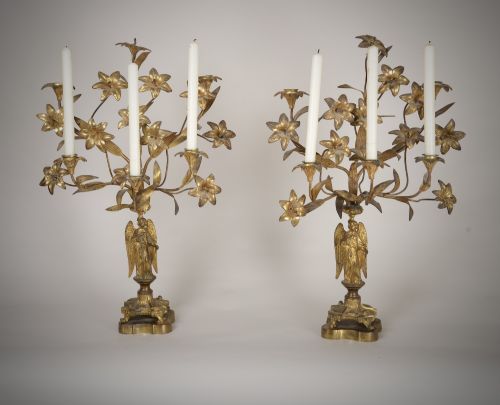
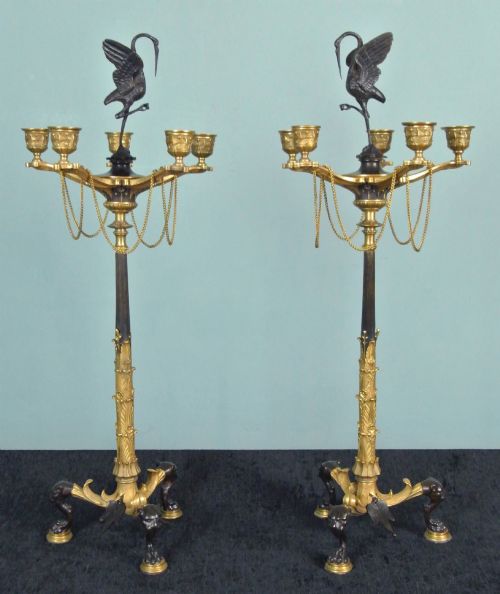
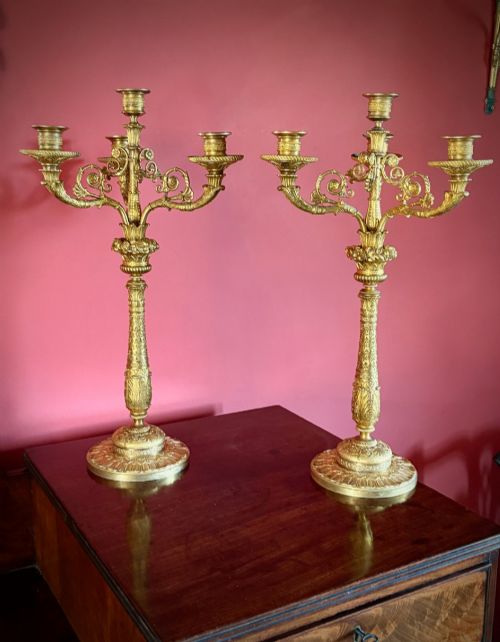
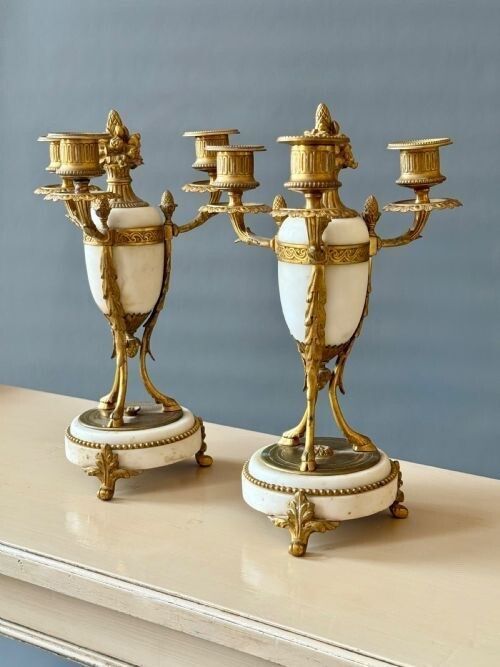
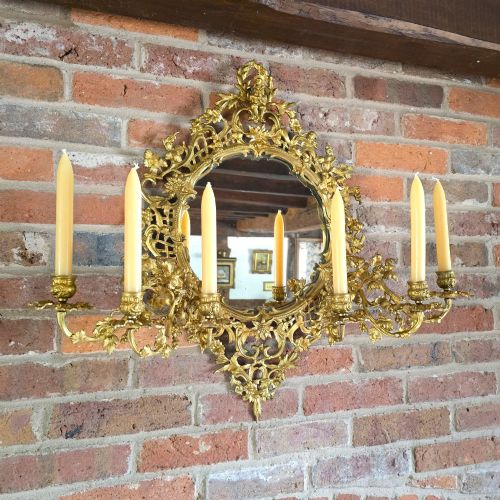
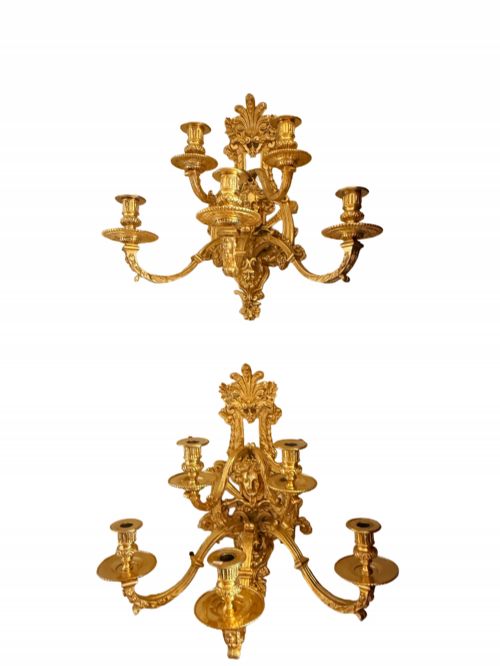
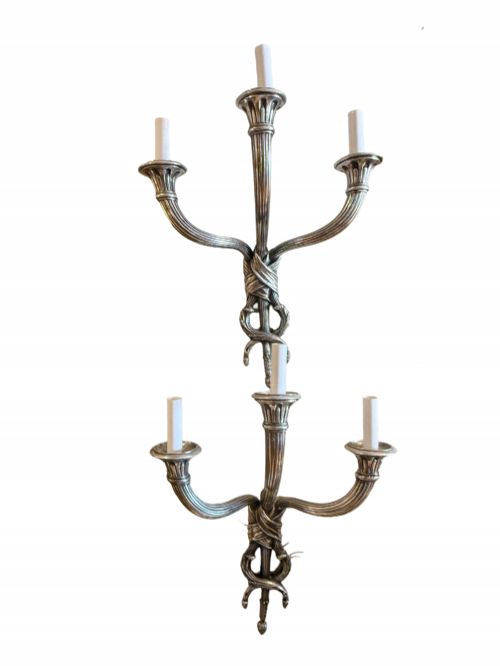
A French bronze candelabrum is a multi-branched lighting fixture designed for tables, mantelpieces, or walls, dating primarily from the nineteenth century. These objects combine cast metal figures, urns, or foliage with functional candle sockets arranged across several arms.
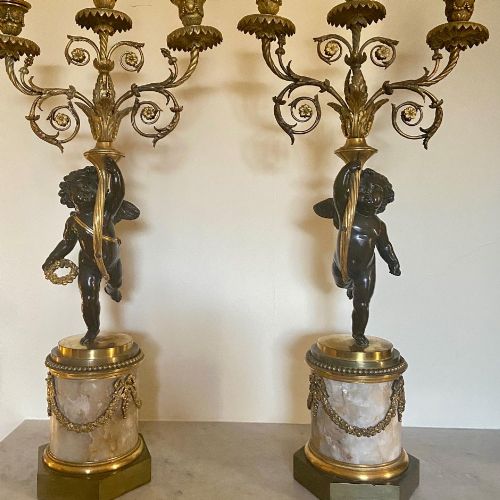
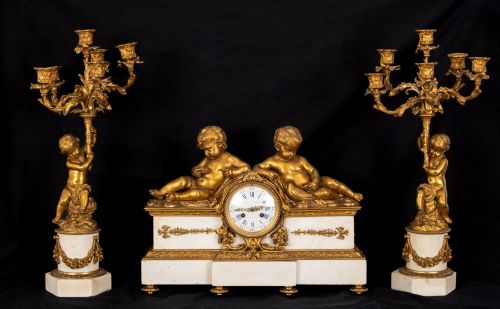
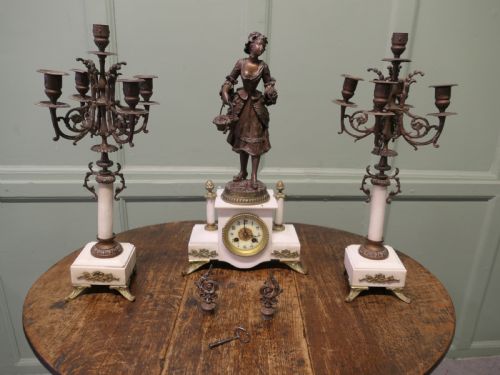
The selections encountered here span styles from the formal restraint of Louis XVI and Empire revivals to the exuberant curves of Rococo and Gothic designs. Many survive in symmetrical pairs, often accompanied by matching marble bases or incorporated into clock garniture sets.
Materials and construction
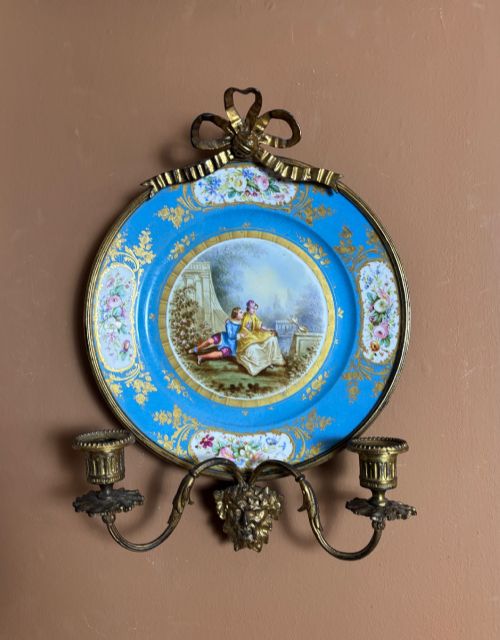
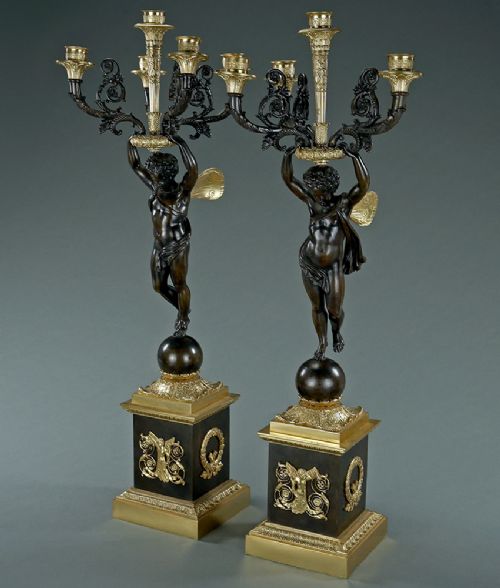
Foundries utilised cast bronze, patinated dark or left bright, alongside mercury-gilded ormolu that created sharp contrasts between matte and burnished surfaces. White marble, onyx, and occasionally champlevé enamel or Sevres porcelain provided structural bases and decorative accents.
Casting took place in sections using traditional methods, allowing intricate figural details such as putti, stags, or classical deities to be assembled with threaded pins and screws before final chasing and gilding.
A stag, a doe, elephants, and putti all make unexpected appearances holding up the lights.
Quality variations
Weight and stability also separate standard items from superior pieces, particularly where heavy marble plinths support multi-branched candelabra or complex clock garnitures without tilting.
Barbedienne·Francois Redmond·Pierre Philippe Thomire·Thiebaut Freres·Rabiat
The French Bronze Candelabrum Glossary
- Ormolu
- Gilded bronze produced by applying a mercury and gold amalgam to a bronze base and heating it to drive off the mercury. This technique created a durable, rich golden surface typical of luxury French metalwork.
- Patinated bronze
- Bronze treated with chemical solutions to produce a darkened, greenish, or brown surface finish. It provided a stark contrast against bright ormolu mountings.
- Garniture set
- A decorative grouping consisting of a central mantel clock flanked by matching candelabra, vases, or urns. These sets dominated nineteenth-century interior display.
- Champlevé
- An enamelling technique where troughs or cells are hollowed out of the metal surface and filled with vitreous enamel powder before firing. The resulting coloured patterns decorated bases and stems.
- Candelabrum
- A branched candlestick holding multiple candles on separate arms branching from a central pillar. The plural form is candelabra.
French Bronze Candelabrum: Frequently Asked Questions
How do I date a French bronze candelabrum?
Dating relies on stylistic clues, casting methods, and material combinations recorded across nineteenth-century manufacturing. Earlier examples from the Empire period favour classical motifs, while later Victorian and Third Republic pieces often mix historical revivals.
Foundry marks or signatures stamped into the bronze can also narrow down the production decade. Comparing the construction of the drip pans and nozzle screws helps distinguish period originals from later reproductions.
Were these pieces meant for daily use?
Nineteenth-century households used these fixtures for ambient lighting in salons and dining rooms before the widespread adoption of electricity. Wax candles provided the primary illumination during evening gatherings.
Today, surviving pieces serve mainly as decorative mantel or table ornaments. Many owners choose to display them unlit to preserve the delicate ormolu surfaces and patination.
What is a clock garniture set?
A clock garniture set is a coordinated trio or group of decorative objects designed to sit together on a mantelpiece. It typically pairs a central clock with matching side candelabra or urns.
These matched sets were manufactured as unified decorative schemes for formal nineteenth-century drawing rooms. The materials and motifs used on the clock case are repeated precisely on the accompanying candelabra.
How should I clean gilded bronze?
Gilded bronze requires gentle dusting with a soft dry brush to remove accumulated particles without scratching the surface. Moisture and abrasive cleaners will damage the delicate mercury gilding.
Professional conservation is recommended if oxidation or heavy grime obscures the detail of the chasing. Keeping pieces away from direct heat sources prevents the mounting adhesives in marble bases from drying out.