



Ornate Brass Table Lamp
An ornate brass table lamp brings weight and detailed metalwork to a room, offering both character and functional illumination.
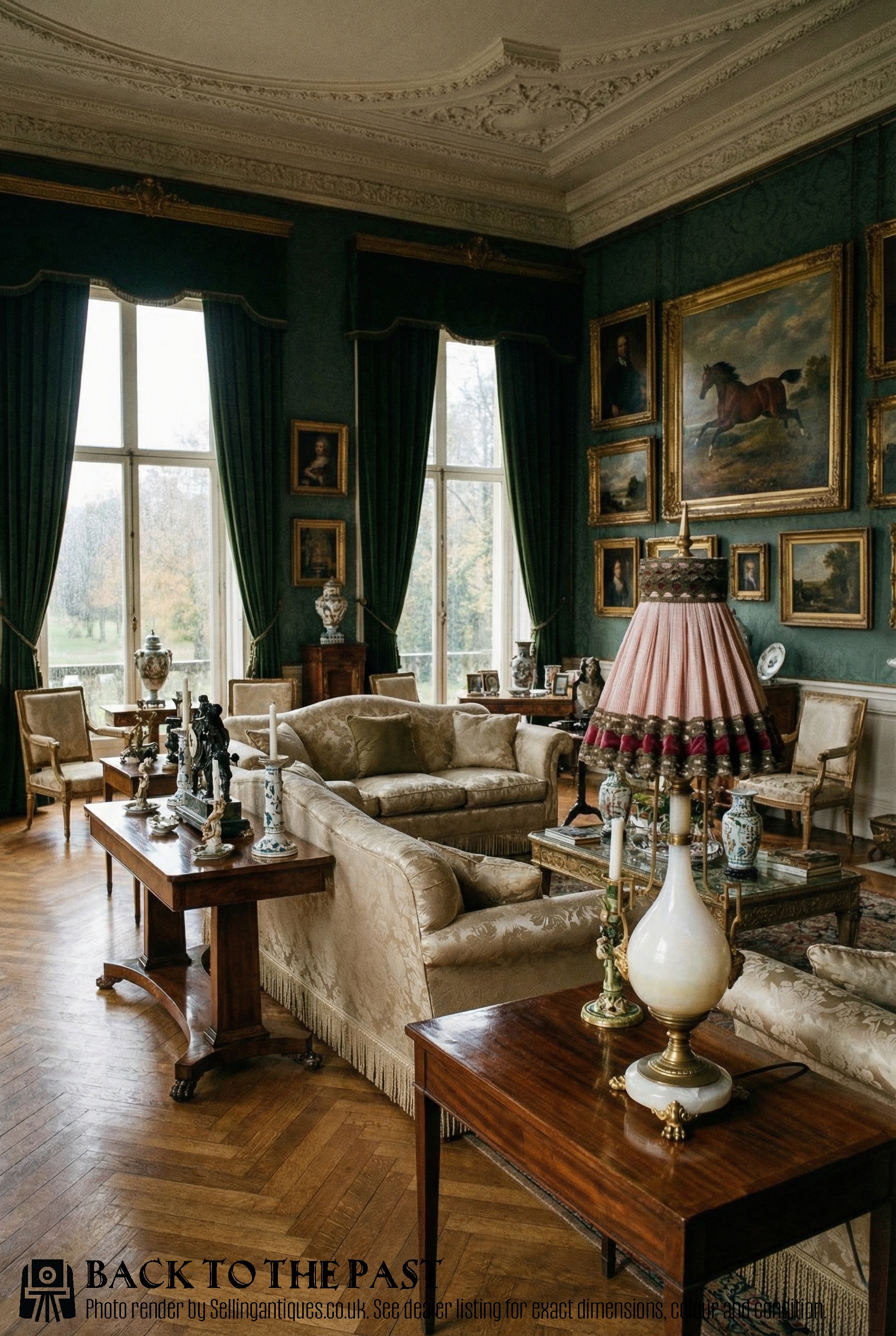
Identifying an ornate brass table lamp
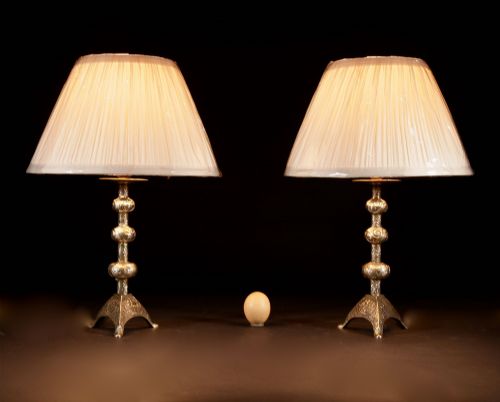
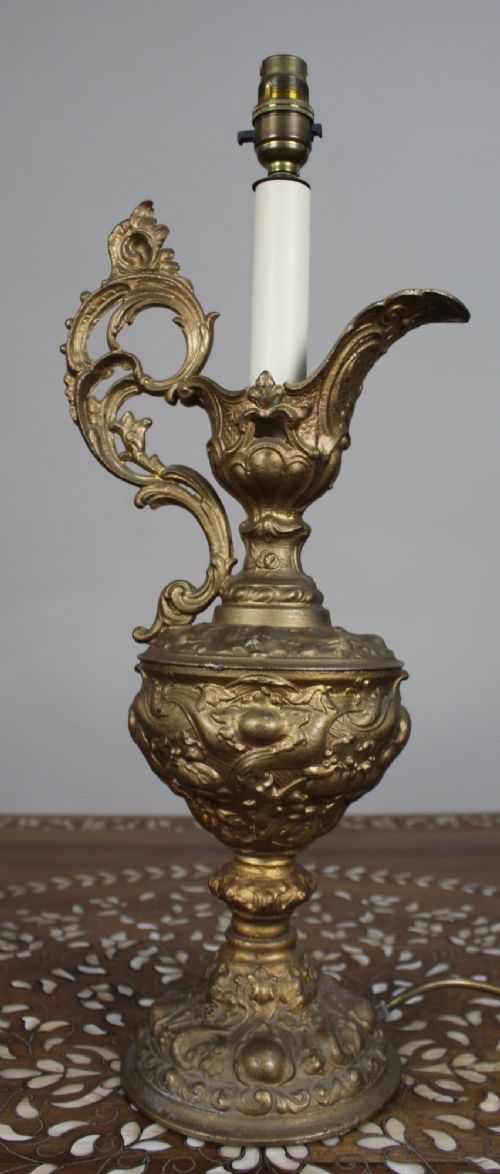
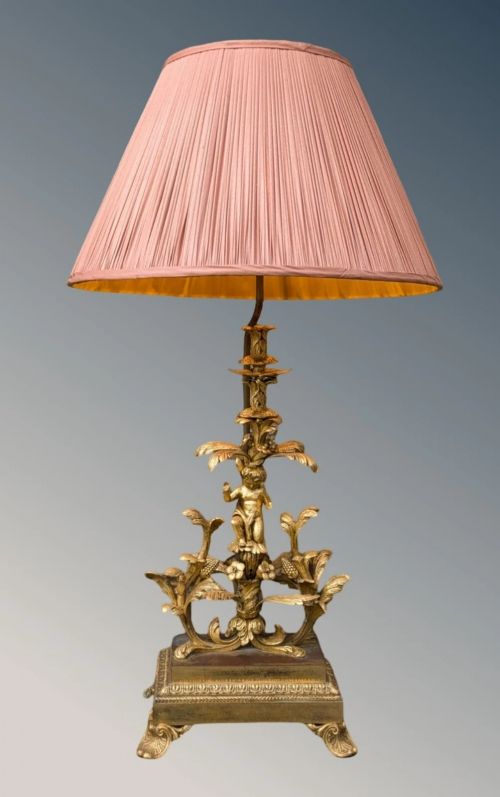
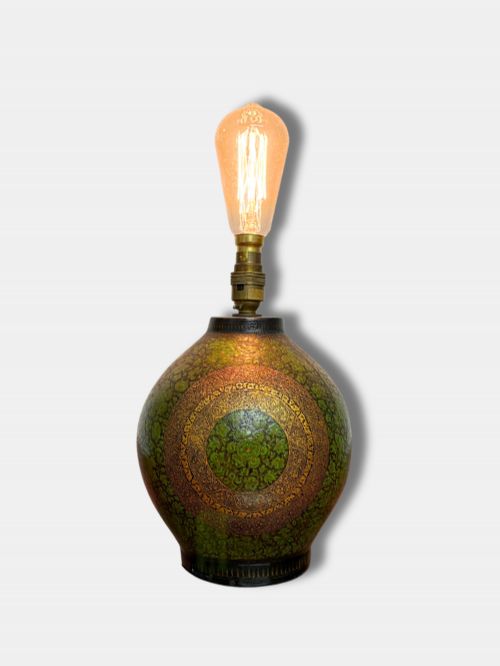
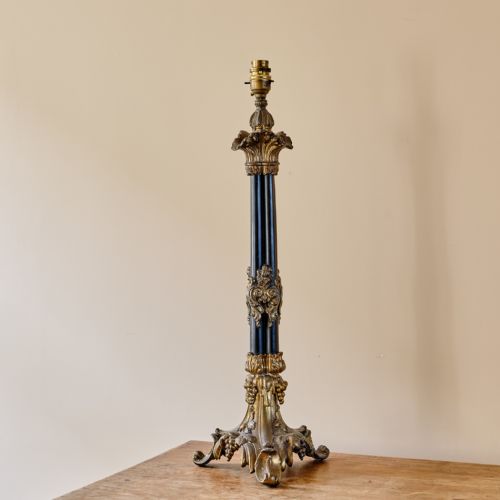
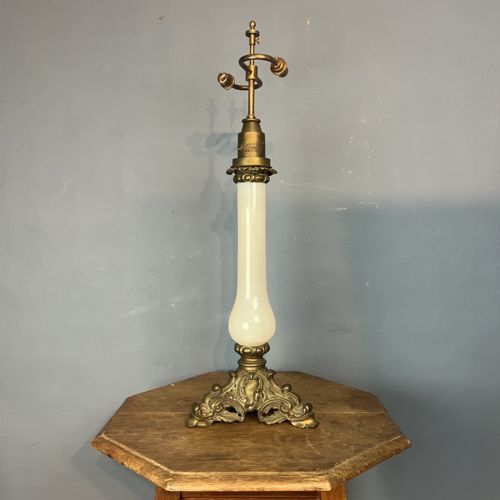
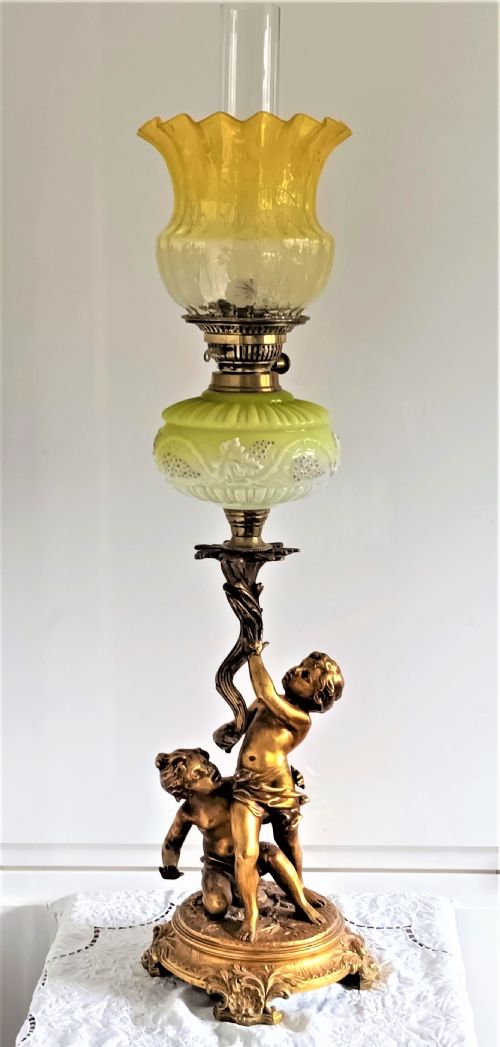
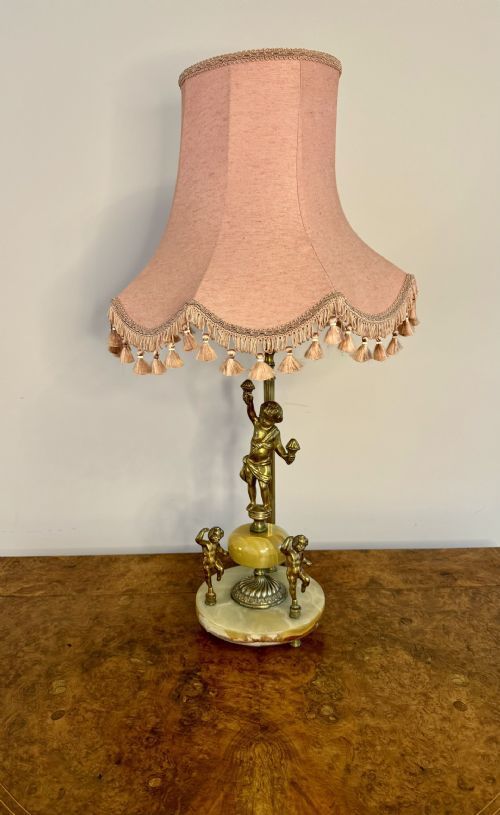
When you search for an ornate brass table lamp, you are looking at domestic lighting pieces that incorporate elaborate metal casting, classical columns, or figural supports. These items span from the mid-nineteenth century through the Edwardian era and into the 1920s.
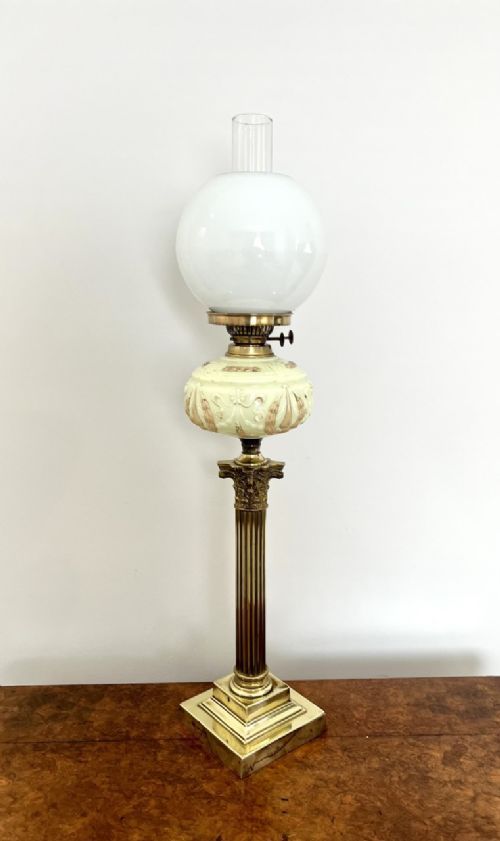
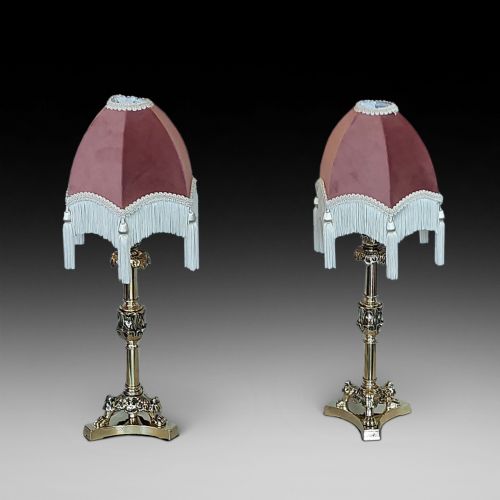
The versions you are most likely to meet on this page include Victorian Corinthian column designs and early twentieth-century examples featuring intricate metalwork. Many began life as oil lamps before conversion to electricity.
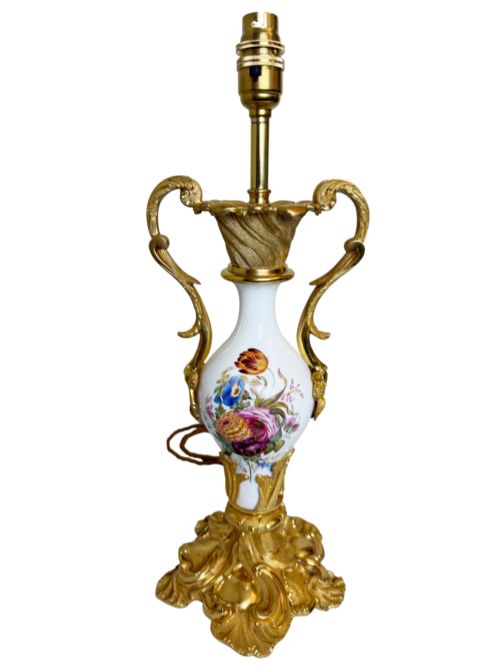
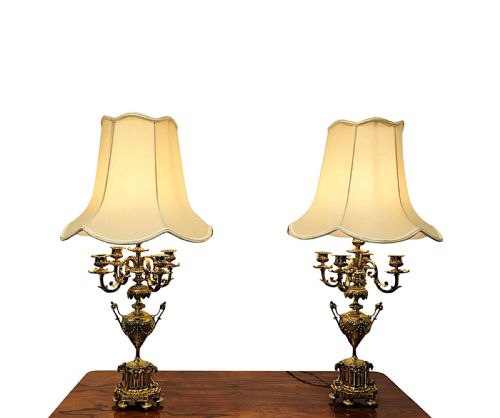
Other variations appearing in the records include French amphora lamps on onyx bases with gilt metal paw feet, alongside candelabrum-style pieces and specialised Pullman lamps.
Materials and construction
Makers utilised cast and sheet brass as the primary structural material, frequently combining it with contrasting elements such as opaline glass, onyx, and gilt metal. Some pieces incorporate silver plate or inlaid metal details.
Lighting components were paired with shades made from fabric, silk, or twisted pleat materials, while bases often rested on detailed supports like paw feet or claw feet.
Retail Price Guide 2026
Typical UK retail prices for ornate brass table lamp, calculated from the Sellingantiques database of over a million retail prices indexed since 2003. This retail price guide relies exclusively on Sellingantiques data; no external sources or auction records are used, so the figures do not describe the wider market.
Numbered mechanisms prove that nineteenth-century engineers took table illumination very seriously indeed.
Judging quality in metal lamps
The distinction between standard and superior examples lies in the crispness of the casting and the depth of the ornamentation. Heavier solid brass construction and finer chased details separate the top of the range from simpler production pieces.
The incorporation of secondary materials like genuine onyx or hand-finished opaline glass elements indicates a higher tier of manufacture, as does the presence of registration marks or specific maker identification such as Wild and Wessel.
Wild and Wessel
The Ornate Brass Table Lamp Glossary
- Corinthian column
- A classical architectural column style featuring ornate capitals decorated with acanthus leaves, frequently utilised for Victorian and Edwardian lamp standards.
- Opaline glass
- A semi-translucent milk glass popular in the nineteenth century, often used for bodies and reservoirs of converted oil lamps.
- Candelabrum
- A branched candlestick holder adapted or designed to hold multiple light sources.
- Wild and Wessel
- A notable maker of nineteenth-century lamps, recognised through numbered mechanisms and specialised burner systems.
- Pullman
- A heavy, secure lamp design originally manufactured for railway carriage use, featuring weighted bases to prevent tipping.
Frequently Asked Questions
Are these lamps safe to use?
Most antique lamps are rewired for modern electrical standards to ensure safety during daily domestic use.
Buyers should check that the wiring and plug comply with current regulations before plugging the lamp into a mains socket.
How do I date a brass lamp?
Dating relies on stylistic clues such as column orders, base designs, and the presence of registration numbers or manufacturer stamps.
Victorian pieces often display heavier classical revival detailing, whereas 1920s examples lean towards French amphora shapes and onyx integrations.
What is a converted oil lamp?
Many nineteenth-century table lamps originally functioned by burning oil before being adapted for electric bulbs.
This conversion process preserves the original brass reservoir and burner mechanisms while adding modern internal wiring.