

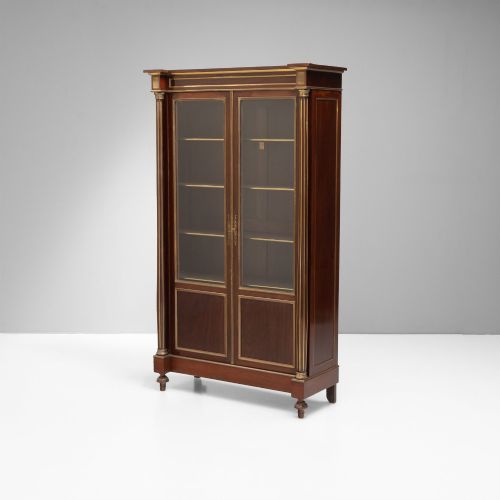
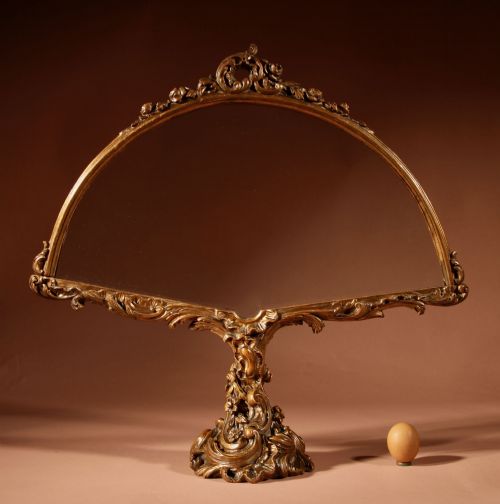
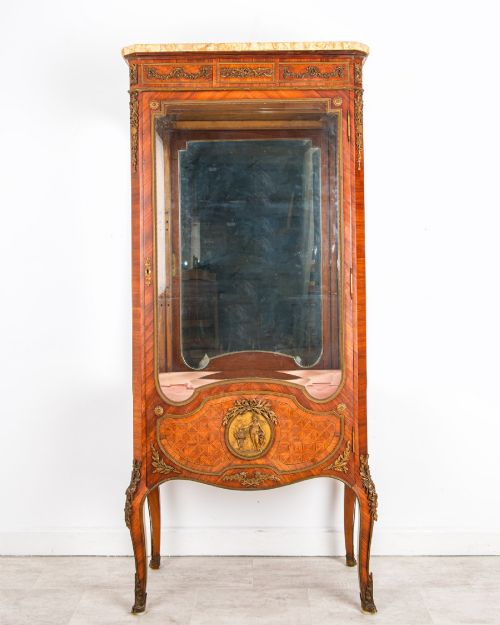
French Brass Display Cabinet
These french brass display cabinet designs combine glazed visibility with disciplined metalwork to showcase collections.
French Brass Display Cabinet
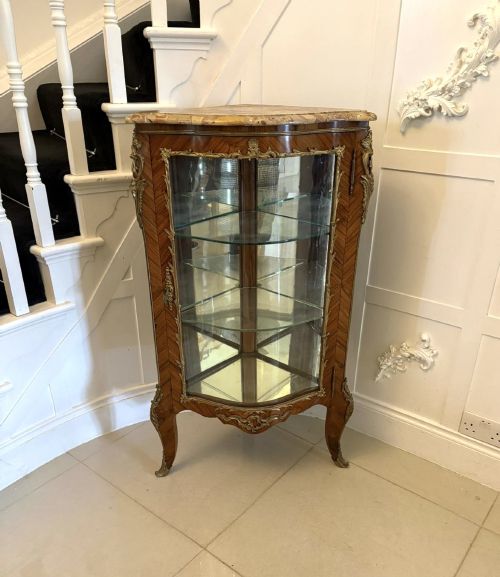
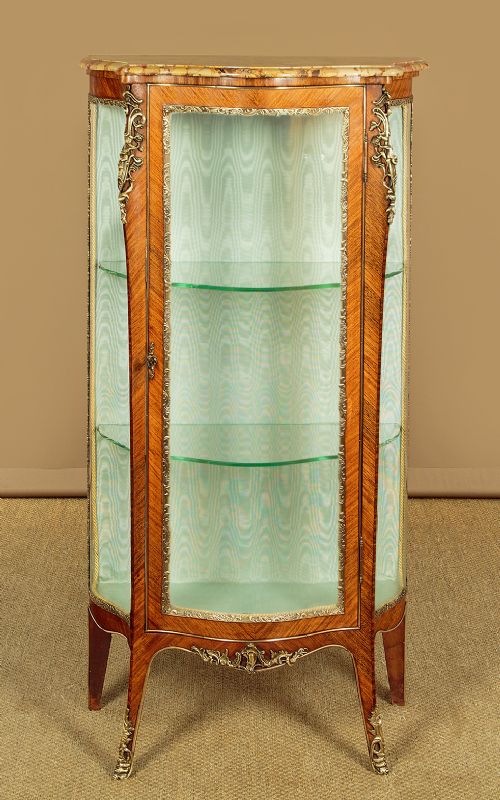
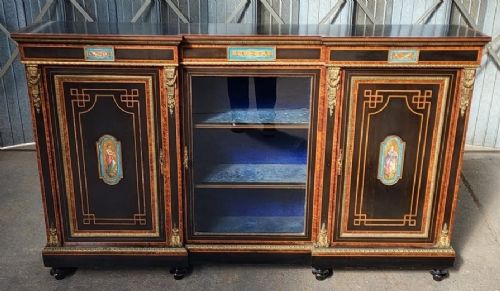
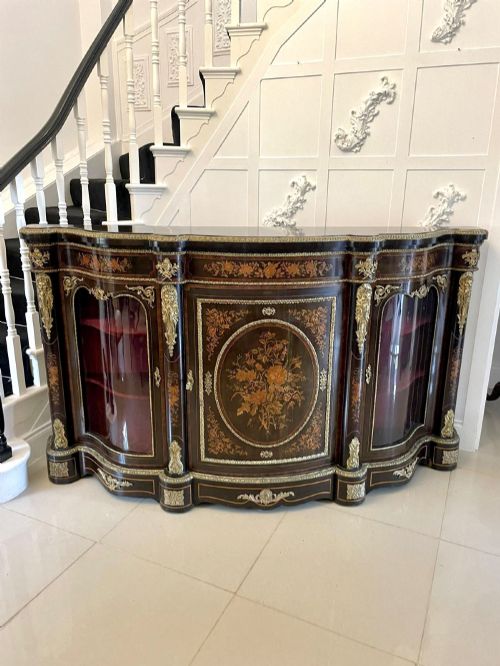
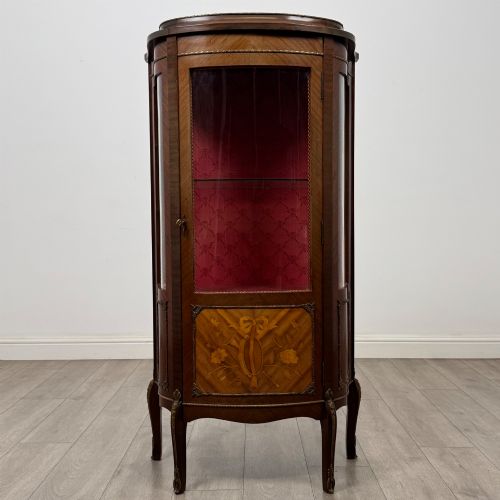
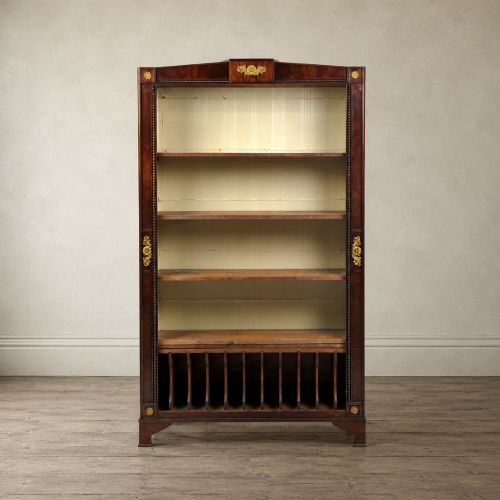
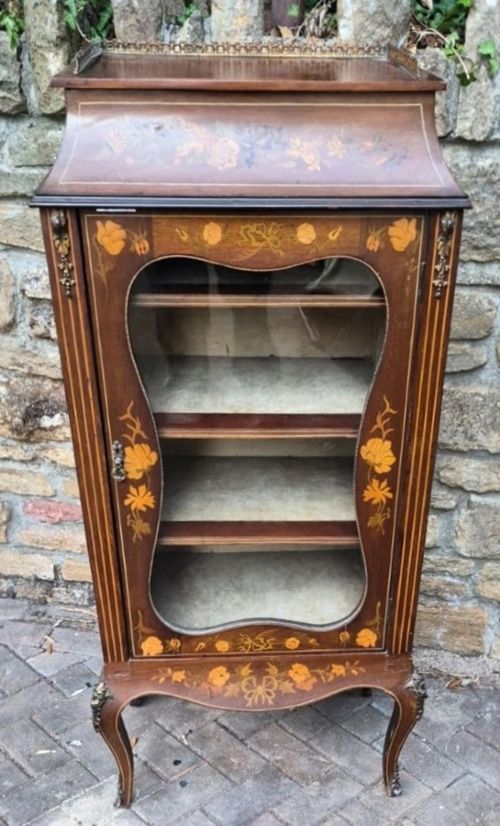
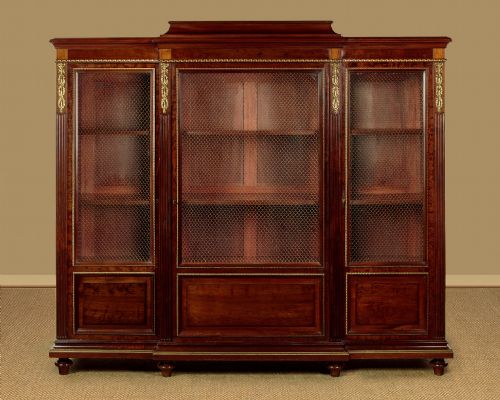
A french brass display cabinet serves to exhibit precious objects behind glass while framing them in timber and metal mounts. Pieces on this page span the nineteenth century through the twentieth century, taking forms such as freestanding vitrines, pier cabinets, and bookcases.
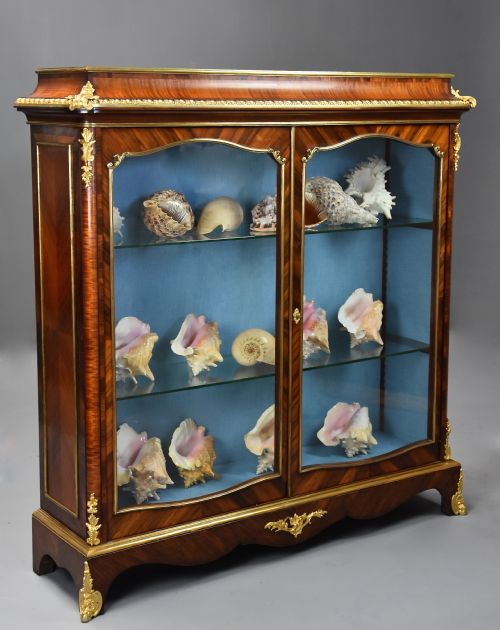
The aesthetic draws heavily on revived historical idioms like Louis XV and Napoleon III styles, alongside French Empire and Directoire designs. Buyers encounter serpentine shapes, breakfront profiles, and flat-fronted cabinets intended for drawing rooms and salons.
How they were made
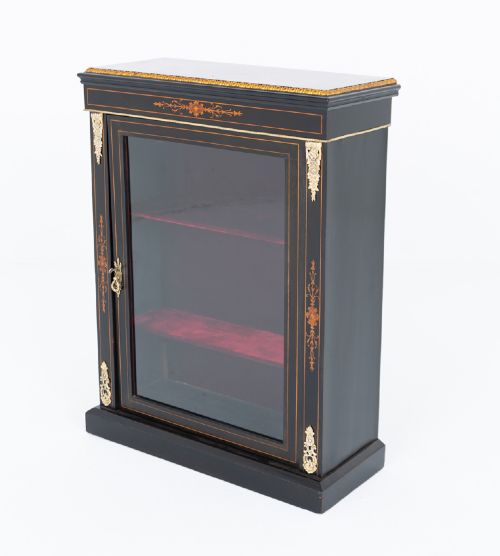
Constructed primarily from structural timbers like mahogany, rosewood, and kingwood, these cabinets frequently incorporate ebonised wood or satinwood veneers. Artisans employed marquetry and Boulle inlay, setting brass and tortoiseshell into dark wood surfaces.
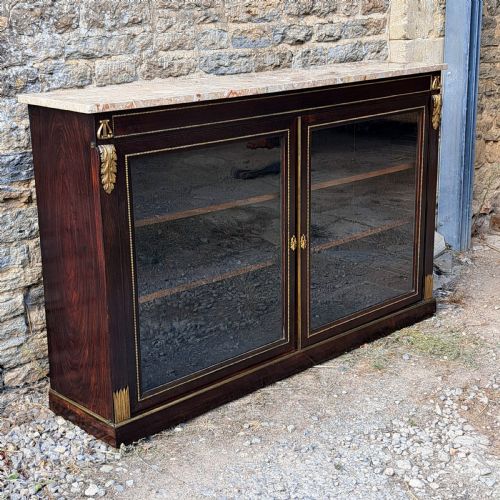
Ormolu and brass mounts embellish corners, cornices, and glass frames, often paired with marble tops. Glazing panels are fitted into wooden doors to protect the contents while maintaining full visibility from the room.
Listings feature nineteenth-century periods including Victorian and Edwardian eras, alongside revival styles from Louis XV to French Empire.
What varies in quality
The refinement of the cast metal mounts and the crispness of the chasing separate standard production from superior examples. Ormolu details on better pieces possess depth and sharp definition rather than flat or cast-over surfaces.
Timber selection and veneer execution dictate the underlying merit of a cabinet. Fine floral marquetry, precise Boulle work, and carefully matched grain patterns on kingwood or mahogany indicate a higher standard of cabinet-making.
François Linke·Paul Sormani
The French Brass Display Cabinet Glossary
- Ormolu
- Gilded bronze applied as decorative mounts to furniture frames and corners. This technique provides a metallic contrast to dark woods like ebonised walnut or kingwood.
- Vitrine
- A glass-fronted cabinet designed specifically for displaying porcelain, curiosities, or small objects. The form prioritises light entry through glass panes on doors and sides.
- Boulle
- A form of marquetry using brass and tortoiseshell inlaid in counter-changed patterns. Developed in France, it creates elaborate metallic and dark tortoiseshell surface decoration.
- Serpentine
- A curved line of furniture fronts and tabletops that bends outward at the centre and inward at the sides. This contour requires precise joinery and shaping of the timber.
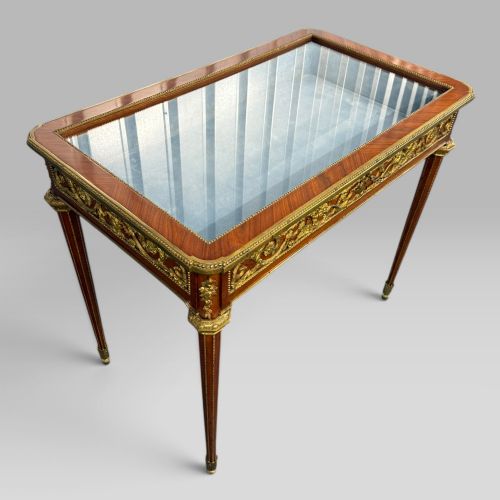
- Bijouterie table
- A glass-topped display table intended for holding small valuable items such as jewellery or medals. These tables often feature hinged glazed lids and slender legs.
French Brass Display Cabinet: Frequently Asked Questions
What is a french brass display cabinet used for?
These cabinets were built to display porcelain, silver, and decorative objects in formal reception rooms. The glass panels and internal shelving protect collections from dust while keeping them visible.
Over time, collectors adapted them to house books, medals, and smaller antiquities. Their narrow floor footprints made them suitable for placement against drawing room piers and walls.
Are marble tops original to these cabinets?
Marble tops frequently accompany nineteenth-century French kingwood and mahogany vitrines. They provide a durable, cool surface that contrasts with the warm tones of polished timber and gilt metal.
White and variegated marble slabs were cut to follow the exact serpentine or breakfront contours of the cabinet base beneath them.
How do I care for kingwood and ormolu?
Kingwood veneers benefit from occasional application of quality wax polish to maintain their deep reddish-brown grain and lustre. Avoid placing wood furniture in direct sunlight or near heat sources to prevent timber splitting.
Ormolu mounts require gentle dusting with a soft brush. Chemical cleaners should be avoided because they strip the original gilding from the bronze.