




Glass Showcase on Stand
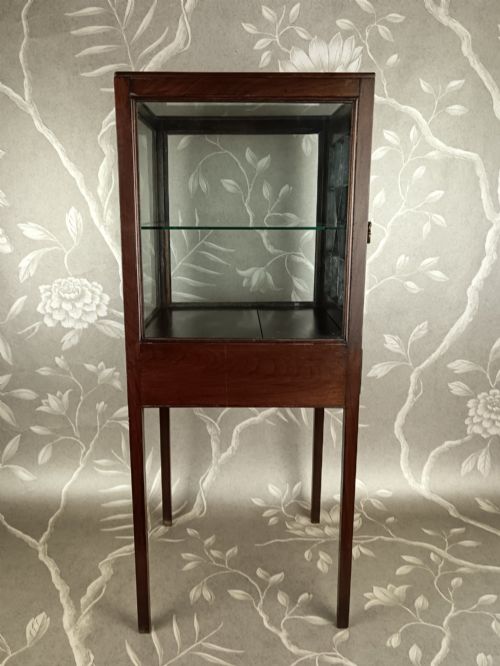
Glass showcase on stand pieces lift precious objects into the light, bringing architectural display into domestic rooms.
Glass Showcase on Stand
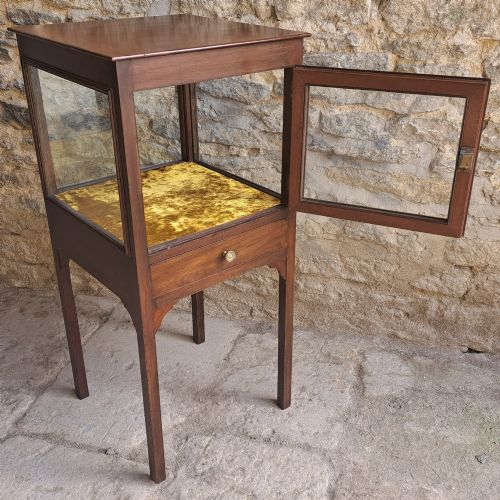
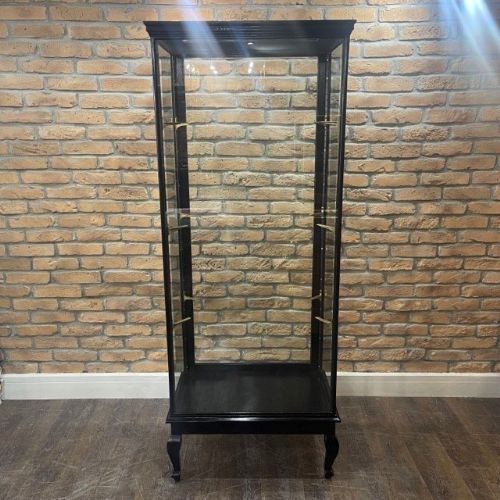
A glass showcase on stand takes the form of an elevated display cabinet or vitrine designed to present small treasures at eye level. When searching for a glass showcase on stand, you encounter tall tower cabinets, cylindrical pedestals, and table-like bijouterie cases raised on slender legs.
The prevailing examples on this page date from the Edwardian era and the Georgian period, executed predominantly in mahogany with inlaid details. These pieces combine glazed upper sections for viewing with sturdy wooden stands, drawing from French Louis XVI and Sheraton design vocabularies.
Makers and cabinetmakers produced these display pieces to house delicate ceramics, silver, and curiosities safely away from dust while offering unobstructed views from multiple angles. The forms range from demi-lune shapes to freestanding oval vitrines and tall shop display units.
Materials and construction methods
Cabinetmakers constructed the main framework using mahogany, sometimes accented with satinwood crossbanding, ebonised wood, or giltwood depending on the chosen style. Structural support relies on timber stands, whilst brass fittings secure the glazed doors and hinges.
Interiors frequently feature fabric or velvet linings to cushion displayed items and enhance the visual contrast against the woodwork. Glazing techniques employ large panes of glass held securely within wooden or brass frames to maximise transparency.
Listings feature mahogany as the predominant timber, complemented by brass fittings and velvet interiors across Edwardian and Georgian examples.
Distinctions in craftsmanship
The refinement of the timber inlay and the crispness of any painted decoration separate standard examples from finer pieces. Cabinetmakers who invested greater time in precise joinery and balanced proportions achieved more enduring structural integrity.
The choice of secondary timbers and the quality of the brass mounts also indicate the original workshop's standing. Intricate details such as curved glass panes or sophisticated locking mechanisms reflect higher standards of period execution.
Siegel
The Glass Showcase on Stand Glossary
- Vitrine
- A glass-panelled cabinet designed specifically for displaying fine objects or porcelain. These cases protect fragile collections while allowing full visibility from the exterior.
- Bijouterie cabinet
- A shallow display table or cabinet with a glass top and sides, created for holding jewellery, medals, and small trinkets. The elevated stand brings the items close to the viewer.
- Satinwood
- A pale, lustrous timber utilised for stringing and decorative inlay work on mahogany furniture. Cabinetmakers prized it for providing sharp tonal contrast against darker woods.
- Crossbanding
- A border technique where thin strips of veneer are laid across the grain of the main panel. This method frames the primary wood surface with a neat decorative edge.
- Vernis Martin
- A simulated Japanese lacquer technique developed in France, known for its translucent and luminous finish. It appears on specialised decorative cabinets of the period.
- Demi-lune
- A half-moon shape used for the footprint of certain display cabinets designed to sit flat against a wall. This profile softens the corners of a room while offering display space.
Glass Showcase on Stand: Frequently Asked Questions
What fits inside a glass showcase on stand?
These cabinets suit small collectables, ceramics, silver pieces, and delicate ornaments that benefit from being viewed closely. The enclosed space keeps dust off fragile items while keeping them visible.
Larger variations accommodate taller porcelain figures or tiered collections, whereas shallow bijouterie versions suit flat items like medals, coins, and jewellery.
How do I distinguish Edwardian from Georgian pieces?
Georgian examples often display heavier mahogany proportions and classic architectural lines dating back to the late eighteenth century. Edwardian pieces, appearing around nineteen-hundred, frequently feature lighter satinwood inlay and Sheraton revival influences.
Examining the internal construction methods, secondary woods, and hardware styles helps clarify the exact period of manufacture.
Where should I place a freestanding vitrine?
Freestanding display cabinets require stable placement away from direct sunlight to protect both the timber finishes and any fabric interior linings. Positioning them where natural light can pass through the glass enhances the visibility of the contents.
Ensure there is sufficient clearance around doors and hinged lids for safe access when opening the showcase.
How do I care for the velvet or fabric linings?
Velvet and fabric linings respond best to gentle surface dusting with a soft brush or low-suction vacuum attachment. Avoid using liquid cleaners on the textile surfaces to prevent water staining the underlying timber base.
If the lining requires replacement, select traditional materials that match the original period aesthetic of the display cabinet.