



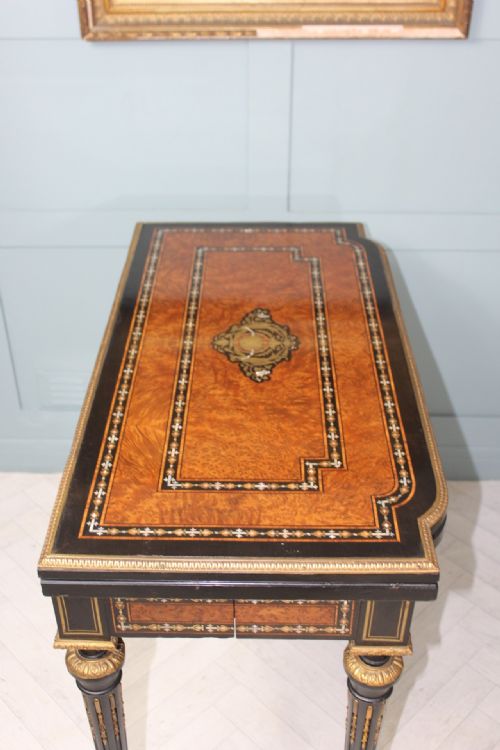


French Amboyna Table
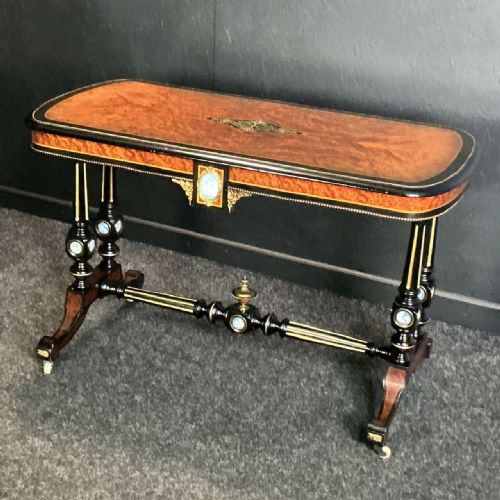
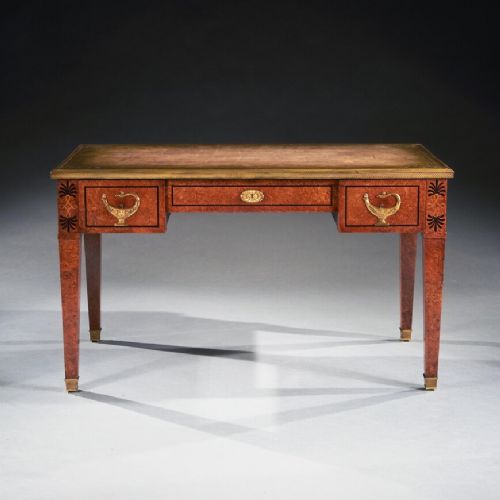
A french amboyna table brings figured burl timber and gilt bronze mounts together, offering a rich centrepiece for a refined interior.
French Amboyna Table
A french amboyna table encompasses diverse forms created during the nineteenth century, including centre tables, writing desks, and bedside cabinets. These pieces reflect periods such as the Victorian era and Napoleon III style, merging utility with decorative ambition.
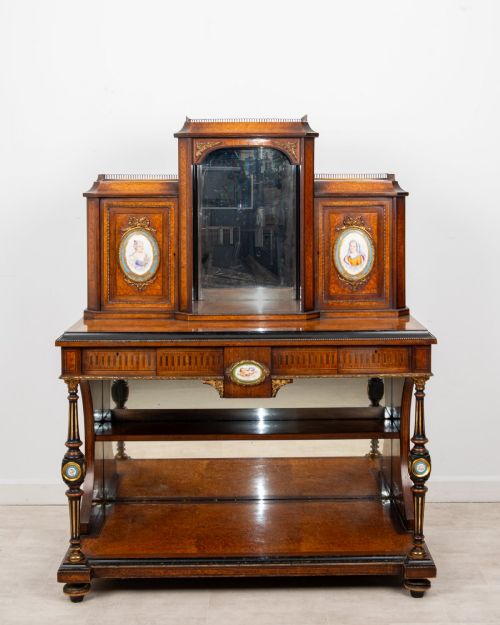
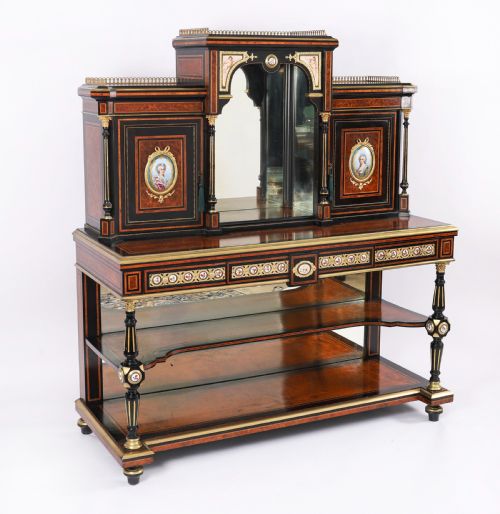
Writing desks, bonheur du jour variants, and games tables appear frequently alongside occasional side tables and etageres. Makers employed exotic veneers to construct these functional household items, often pairing the timber with contrasting ebonised wood.
The aesthetic leans heavily toward French revival movements, incorporating neoclassical details or Louis XVI motifs. Buyers encounter both freestanding centrepieces and specialised writing furniture designed for domestic studies and salons.
Materials and construction methods
Craftsmen applied amboyna veneer over secondary timbers to showcase the rich, mottled grain of the burr wood. This timber frequently combines with ebonised wood or contrasting fruitwoods to create deep visual borders.
Mounts cast in ormolu, gilt bronze, and brass accent the structural lines of the furniture. Inlaid details, porcelain plaques, and marble tops further enrich the surfaces of select writing and bedside tables.
The listings show pieces spanning the nineteenth century, including specific dated items from 1850, 1860, 1870, 1880, and 1900 alongside broader Victorian and Napoleon III eras.
Assessing quality in construction and finish
Quality rests upon the selection and matching of the amboyna veneer across the primary surfaces. Superior examples display symmetrical grain patterns that flow seamlessly over drawers and table tops.
The precision of the metal mounts and the crispness of the cast ormolu or brass details dictate the grade of the piece. Finer works integrate porcelain plaques or marquetry with exact alignment and minimal disturbance to the surrounding wood.
Paul Sormani·Edward And Robert·Gillows
The French Amboyna Table Glossary
- Ormolu
- Gilded bronze used for decorative mounts and sabots on furniture. The technique involves applying a gold amalgam to a bronze base and firing it to achieve a matte and polished finish.
- Bonheur du jour
- A small, light ladies writing desk featuring a set of drawers or a cabinet on the upper surface. This form gained popularity during the French revival periods.
- Etagere
- A set of open shelves for displaying small decorative objects or books. These pieces utilise slender vertical supports and often feature amboyna inlay.
- Marquetry
- The art of applying decorative pieces of veneer to a structural structure to form pictorial or geometric designs. Craftsmen use various dyed and natural woods to achieve contrast.
French Amboyna Table: Frequently Asked Questions
What is a French amboyna table?
A French amboyna table is a nineteenth-century piece of furniture surfaced with decorative amboyna burl veneer. These works span forms like writing desks, centre tables, and side cabinets.
Such items often incorporate brass, ormolu, or porcelain mounts characteristic of Napoleon III and Victorian revival styles.
How do I identify a Victorian French style table?
Victorian interpretations of French designs combine British cabinet-making frameworks with continental aesthetic movements. Look for ebonised wood accents paired with amboyna veneers and gilt bronze mounts.
Maker attributions and specific revival motifs like Louis XVI details help date these pieces to the mid-to-late nineteenth century.
Where were these tables used originally?
These tables served various domestic roles in formal reception rooms, private boudoirs, and libraries. Centre tables anchored large drawing rooms, while writing desks and bonheur du jour variants functioned in private studies.
Smaller bedside cabinets and etageres provided surface area and storage within private chambers.
How should I care for amboyna veneer?
Protect amboyna veneer from direct sunlight to prevent the golden-brown timber from fading over time. Maintain a stable room humidity to keep the underlying wood from shifting and cracking the veneer.
Dust the surface gently with a soft, dry cloth and avoid harsh chemical polishes that can degrade the French polish finish.