
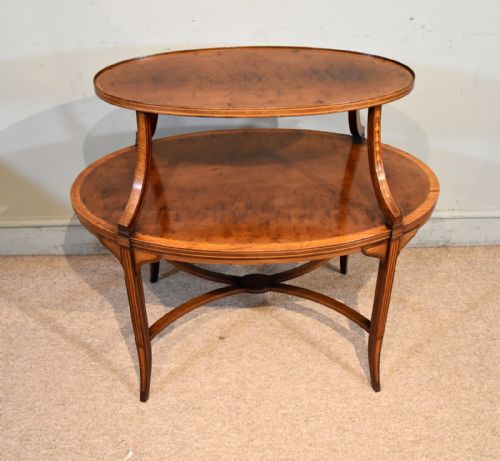


French Oval Side Table
The french oval side table brings subtle curves and refined proportion to any room, offering a surface that balances decorative grace with everyday utility.
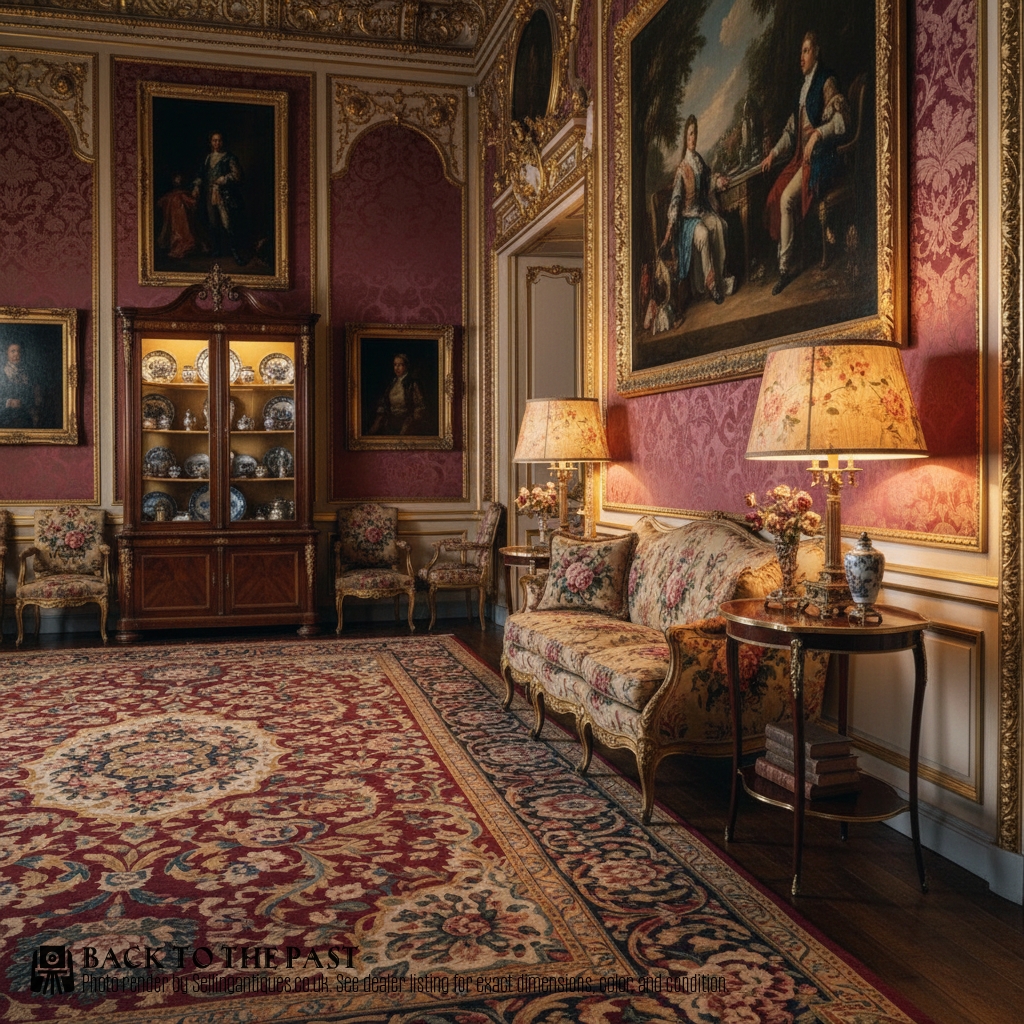
French Oval Side Table
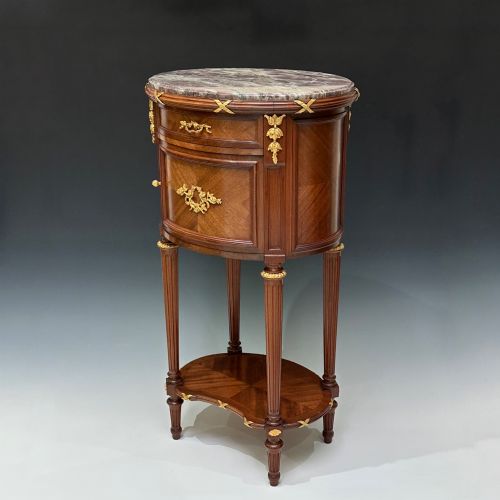
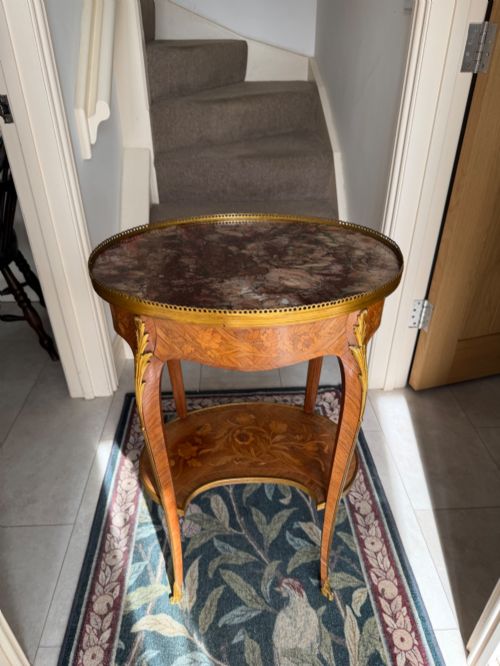
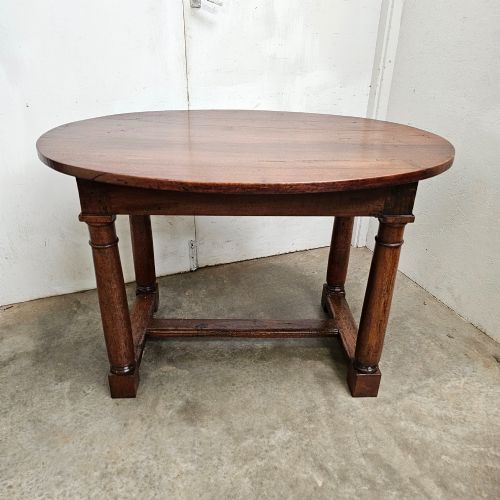
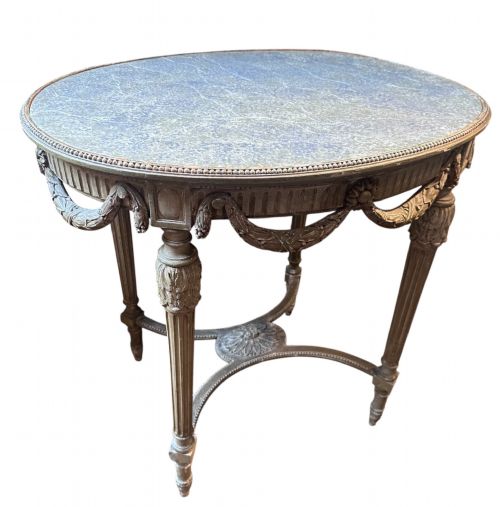
A french oval side table combines soft elliptical geometry with historical European design, appearing most frequently in nineteenth-century interpretations of Louis styles.
These pieces range from bedside cabinets and tiered etagere stands to freestanding centre tables and lamp tables designed for drawing rooms.
Makers drew on eighteenth-century revivals, utilising rich cabinet woods and inset marble surfaces to achieve a distinct silhouette.
Quality and Execution
The distinction between standard production and masterwork lies in the precision of the veneer work and the crispness of the cast bronze mounts.
Hand-cut marquetry patterns and well-matched grain flows demonstrate superior workshop standards, whereas mechanical shortcuts reveal themselves in flat or uniform surfaces.
Listings feature eighteenth and nineteenth-century periods, utilising mahogany, kingwood, marble, and brass across side tables, etageres, and bedside cabinets.
François Linke·A. Beurdeley·Haentgos Freres·Charles Topino
The French Oval Side Table Glossary
- Marquetry
- Decorative patterns formed by inserting thin veneers of different woods into a supportive ground. This technique creates complex pictorial or geometric designs across tabletops.
- Ormolu
- Gilded bronze mounts applied to furniture for decorative accent. High-quality examples are hand-chased after casting to sharpen fine details.
- Etagere
- An open tiered shelving unit designed for display. These pieces provide multiple levels for small decorative objects.
- Parquetry
- Geometric wood inlay arranged in repetitive patterns such as cubes or chequers. It creates texture across flat surfaces.
- Galleries
- Raised brass or metal borders fitted around the perimeter of marble tabletops. They prevent items from sliding off curved surfaces.
French Oval Side Table: Frequently Asked Questions
Where should I place a french oval side table?
These pieces fit naturally beside a sofa or as a compact bedside stand where a rectangular table would feel too harsh. Their curved perimeter allows them to sit comfortably in tighter corners or narrow hallways.
The absence of sharp corners makes them practical for high-traffic zones while introducing traditional European character to the room.
How do I care for the marble top?
Most antique marble surfaces are polished stone that benefits from regular wiping with a damp cloth and mild soap. Avoid acidic cleaners or citrus substances which can etch the polished surface over time.
Using coasters and mats protects the stone from moisture rings and preserves the natural sheen of the marble.
Are these tables sturdy enough for daily use?
Most examples are built from dense hardwoods like mahogany and walnut, making them structurally robust for holding lamps or books. Their slender legs require sensible placement away from heavy impacts.
Regular checks of the joints ensure the frame remains stable through years of daily placement and use.
How do I distinguish between periods?
Nineteenth-century revival pieces often borrow heavily from Louis XV and Louis XVI designs, using machine-sawn veneers alongside hand-finished brass mounts. Earlier eighteenth-century originals display distinct hand-cut joinery and aged patination across the timber.
Examining the underside and drawer construction helps reveal the manufacturing methods characteristic of a specific decade.