
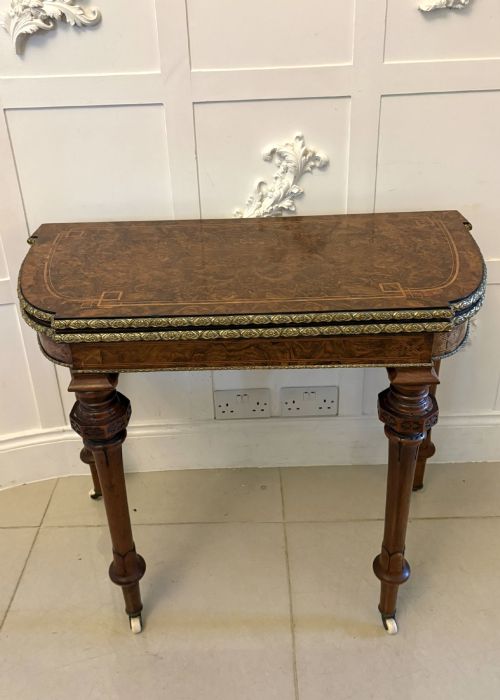
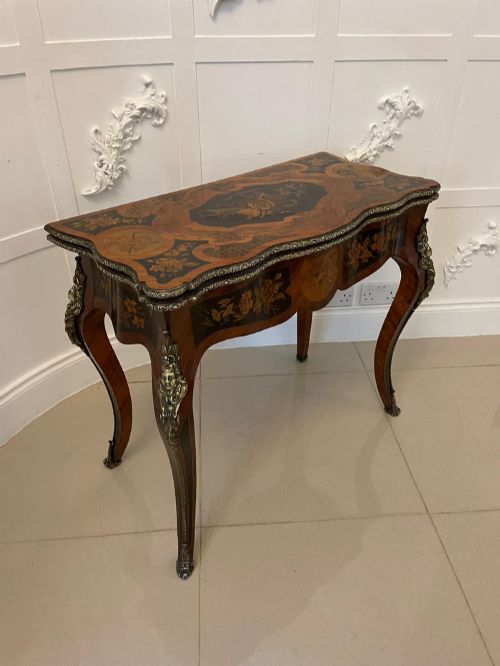
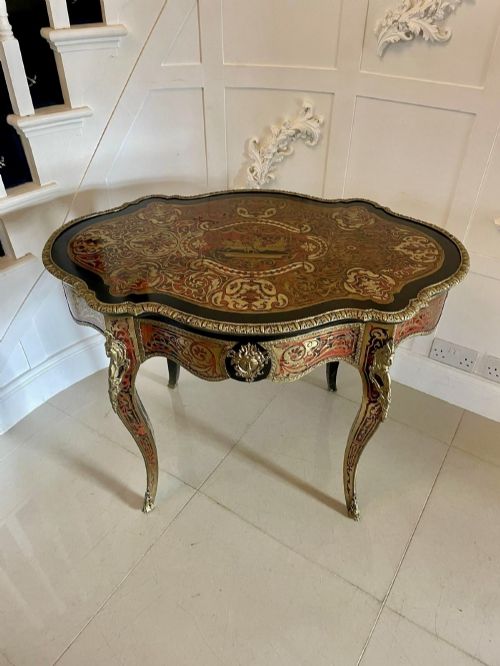
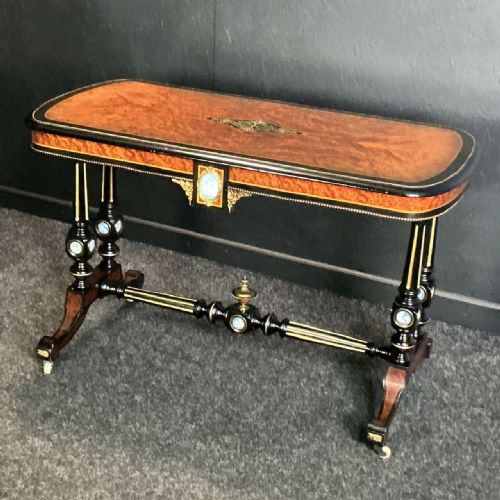
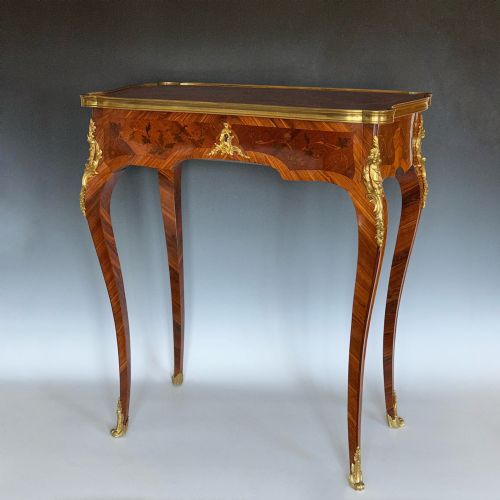
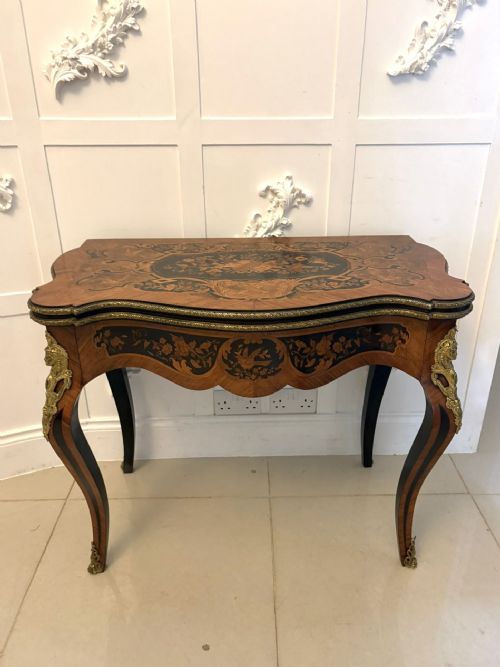
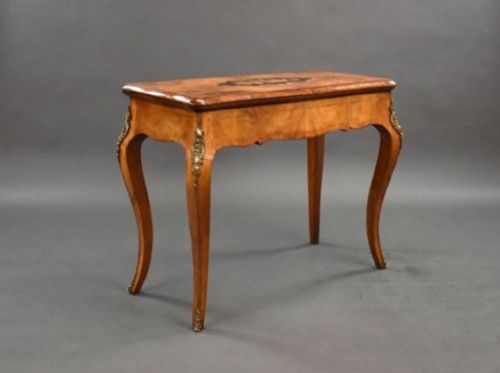


Ormolu Marquetry Console Table
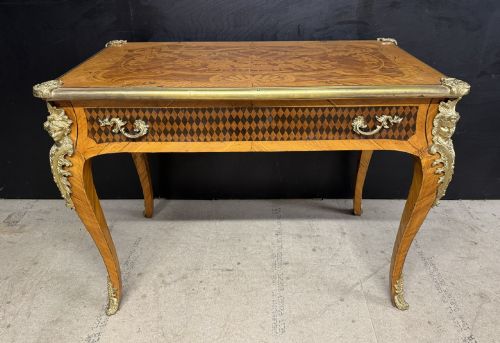
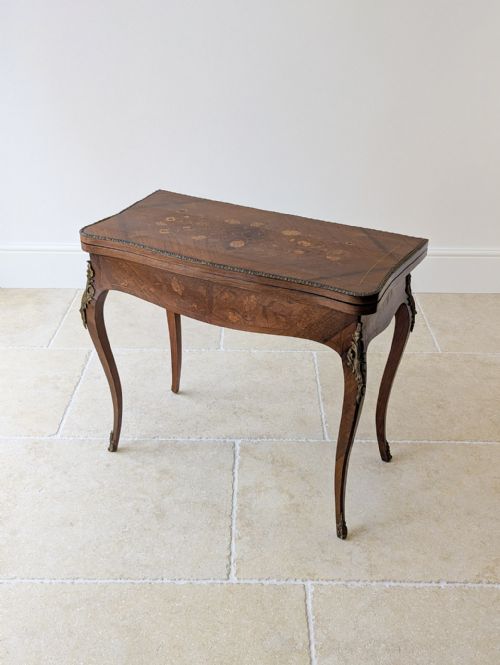
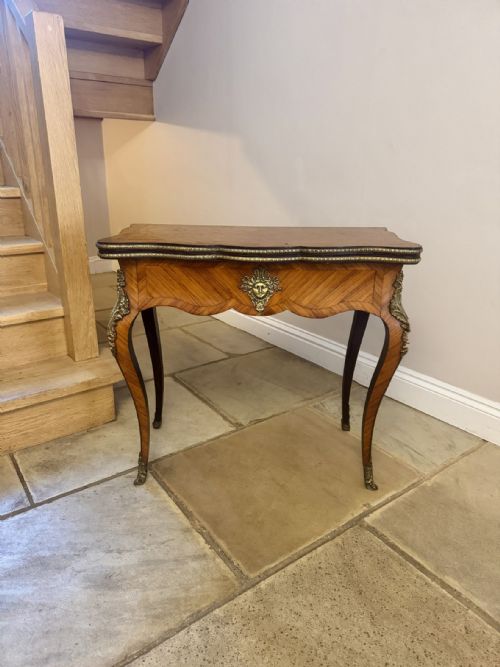
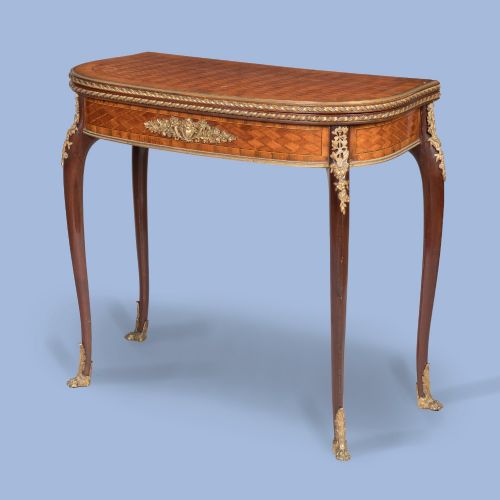
An ormolu marquetry console table brings French revival elegance and intricate floral wood patterns into a room.
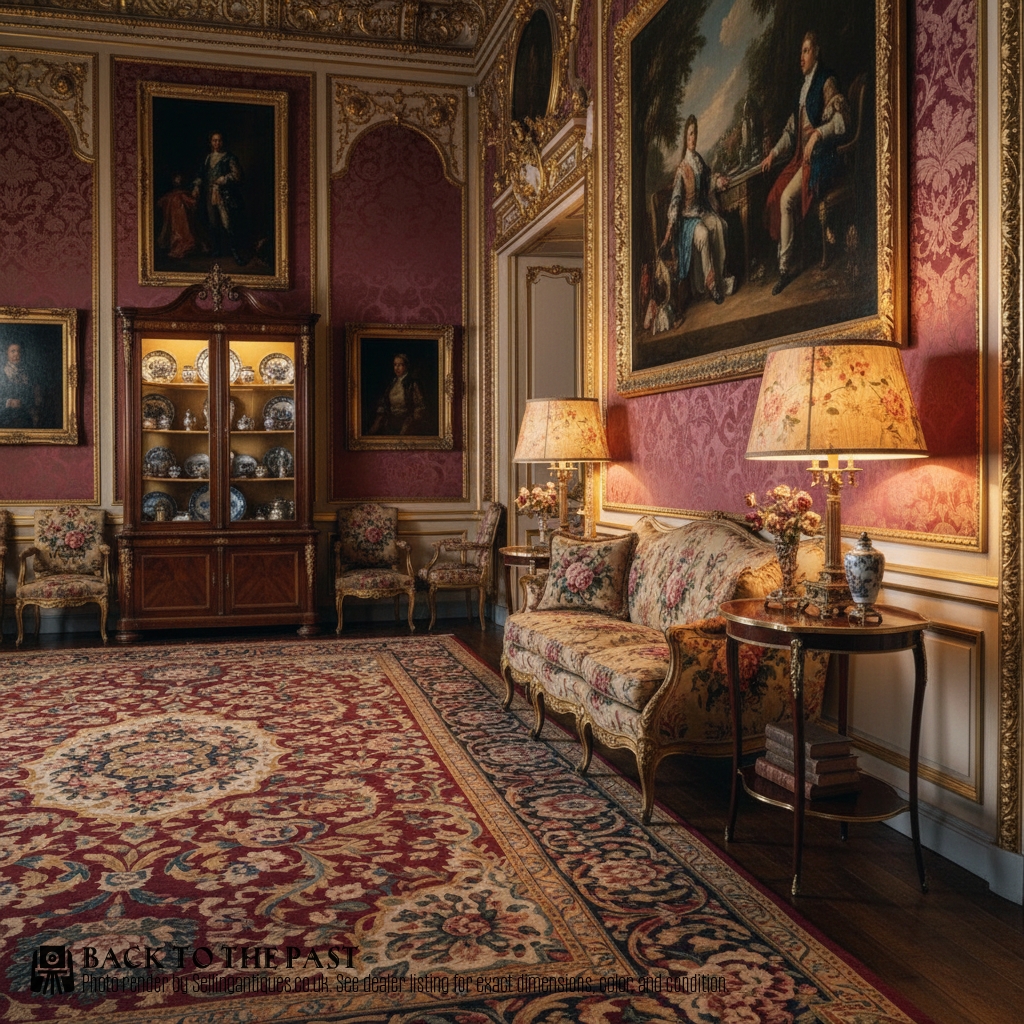
Ormolu Marquetry Console Table
An ormolu marquetry console table combines gilt bronze mounts with detailed wood inlay, originating mainly from the nineteenth century and the Victorian period. These pieces frequently appear in forms such as card tables, side tables, and games tables reflecting Louis XV and Louis XVI revivals.
Makers working in France and Britain produced these tables using exotic timbers like kingwood, walnut, and rosewood. The selection ranges from demi-lune shapes to fold-over card tables designed to stand against a wall or sit in the centre of a room.
Materials and methods
Cabinet makers applied fine veneers of marquetry and parquetry inlay, creating floral and geometric patterns across surfaces of kingwood, walnut, and rosewood. These timbers formed the base for intricate hand-cut wood designs.
Gilt bronze, known as ormolu, was cast and chased before being applied as mounts, edgings, and feet. Ebonised wood and brass also appeared, paired with mahogany or tulipwood depending on the chosen style.
Judging the work
Quality rests upon the crispness of the ormolu casting and the depth of the hand-chasing on the bronze mounts. Pieces from prominent makers show sharper detail in the metalwork and tighter joints in the timber.
The complexity of the marquetry inlay and the choice of exotic veneers distinguish finer examples. Grain alignment and the precision of the parquetry patterns reveal the skill invested by the cabinet maker.
François Linke·Maison Millet·Edwards & Roberts·Henry Dasson·Joseph-Emmanuel Zwiener
The Ormolu Marquetry Console Table Glossary
- Ormolu
- Gilded bronze used for decorative mounts and feet. It provides a bright metallic contrast to dark woods.
- Marquetry
- Decorative veneer work forming pictures or floral patterns using various coloured woods. Craftsmen assemble these thin wood sections by hand.
- Parquetry
- Geometric wood inlay forming repeating patterns such as cubes or squares. This technique differs from floral marquetry by relying on angular precision.
- Console table
- A table designed to stand against a wall, frequently supported by decorative brackets or legs. Many examples in this group feature fold-over tops for card games.
- Kingwood
- A dense exotic timber with rich dark veining utilised extensively in French nineteenth-century furniture. It takes a high polish.
Ormolu Marquetry Console Table: Frequently Asked Questions
How do I identify a Louis XV style table?
Louis XV style tables display asymmetric curves, cabriole legs, and naturalistic floral marquetry. Ormolu mounts accentuate the flowing outlines of the apron and feet.
These pieces typically date from the nineteenth century during the French revival periods. The emphasis rests on serpentine shapes rather than straight architectural lines.
Were these tables used for card games?
Many surviving examples function as card or games tables featuring a fold-over top. When opened, the top reveals a playing surface lined with baize or felt.
Cabinet makers designed them to serve as console or side tables when closed. This dual purpose suited nineteenth-century drawing rooms.
What is the difference between marquetry and parquetry?
Marquetry involves cutting wood veneers into pictorial or floral designs. Artisans piece together various timbers to depict leaves, flowers, and scrolls.
Parquetry uses geometric shapes like diamonds and cubes to create repeating patterns. Both techniques often appear combined on nineteenth-century French tables.
How should I care for ormolu mounts?
Dust ormolu mounts gently with a soft dry cloth to prevent accumulation of dirt in the chased recesses. Avoid abrasive cleaners or metal polishes that strip the original fire gilding.
Keep the timber surfaces conditioned with appropriate wax. Stable room humidity prevents the veneers from lifting.