


French Alabaster Bust
A french alabaster bust is a sculpted portrait of carved stone, prized for its soft translucence and classical elegance.

French Alabaster Bust
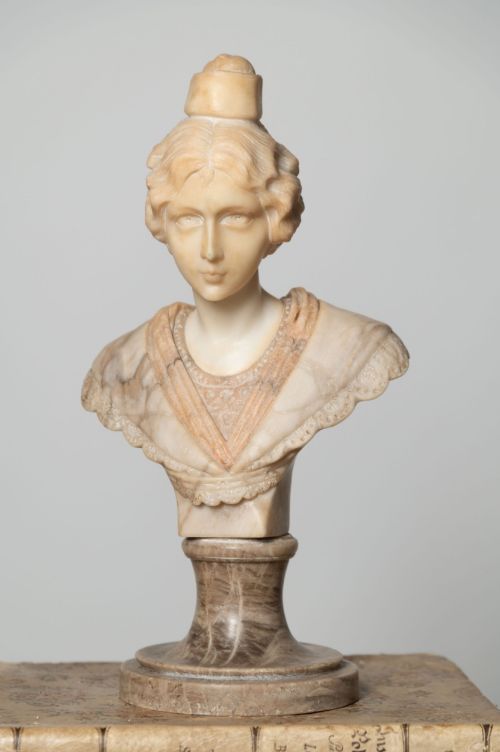
A french alabaster bust captures female subjects, young girls, and mythological figures such as Ariadne and Sappho, rendered in carved stone. These sculptures date across the nineteenth century and into the early twentieth century, aligning with Art Nouveau and classical revival aesthetics.
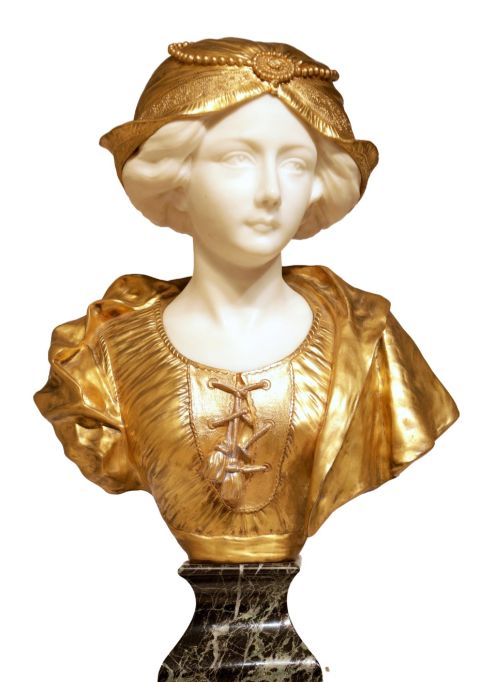
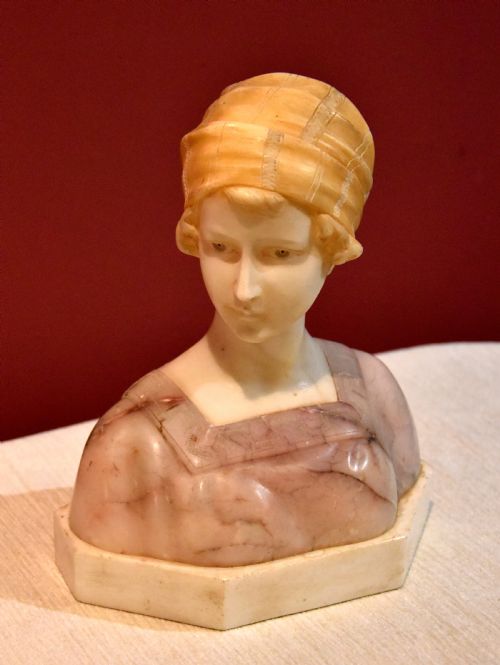
The versions most commonly met on this page are female portrait sculptures, often mounted on marble bases or paired with bronze and gilt bronze elements. Subjects range from idealized classical maidens to literary heroines like Mignon, reflecting nineteenth century French sculpture traditions.
Makers and signatories such as Affortunato Gory, Auguste Henri Carli, and R. Lusili appear among the sculpted works. Collectors encounter these pieces both as standalone portrait busts and integrated into larger sculptural compositions.
Materials and construction
Carvers shaped these sculptures primarily from alabaster and marble, sometimes combining the stone with bronze, gilt bronze, spelter, or mahogany bases. The physical properties of alabaster allow artisans to achieve a warm, semi-translucent skin tone that mimics life.
Foundry work and metal casting supplemented the stone carving, utilising bronze and spelter for clothing details, hair ornaments, or structural mounts. Artisans finished these mixed media pieces with bronze finishes or gilt highlights to contrast against the pale stone.
Listings feature works from the nineteenth century and early twentieth century, incorporating alabaster, marble, bronze, and spelter across figurative sculptures and stands.
Distinctions in quality
The refinement of the carving separates standard decorative works from superior sculptural examples, particularly in the rendering of facial expressions, drapery, and hair texture. Signed pieces by established sculptors demonstrate greater anatomical precision and artistic ambition.
The integration of mixed materials, such as contrasting marble socles or crisp gilt bronze mounts, distinguishes finer pieces. The natural figuring and purity of the stone block also influence the visual impact of the finished portrait.
Affortunato Gory·Auguste Henri Carli·George Van Der Straeten·R. Lusili·Greuze
The French Alabaster Bust Glossary
- Alabaster
- A fine-grained, translucent stone used by sculptors for portrait busts and figures because it accepts delicate carving. Its softness requires gentle handling to preserve the surface detail.
- Socle
- A short plinth or pedestal supporting a bust, frequently fashioned from contrasting marble or wood. It elevates the sculpture and provides structural stability.
- Spelter
- A zinc alloy utilised as a substitute for bronze in decorative figures and mounts, often given a bronze finish. It was common in nineteenth century French manufacturing.
- Art Nouveau
- A decorative style characterised by flowing, organic lines and natural forms, visible in the hair and drapery of turn-of-the-century busts. It dominated European design from the late nineteenth century until the First World War.
- Patina
- The surface sheen or coloration acquired by bronze and metal components through age or artificial chemical treatment. It adds depth to the metallic elements of a mixed media sculpture.
French Alabaster Bust: Frequently Asked Questions
How do I clean a french alabaster bust?
Alabaster is porous and sensitive to moisture, so cleaning requires only a dry, soft brush or microfiber cloth to remove dust. Water and chemical solvents will damage the stone surface permanently.
Keep these sculptures away from direct sunlight and damp environments to prevent discoloration and surface degradation over time.
Are these busts solid alabaster?
Most pieces feature solid carved alabaster for the head and shoulders, frequently mounted upon a base made of marble, stone, or wood. Some works incorporate metal elements such as bronze or gilt bronze for garments and accessories.
Makers often combined materials to enhance the visual contrast between the pale stone portrait and its structural support.
What periods do these sculptures date from?
The available pieces span the nineteenth century and the early twentieth century, with dates recorded around 1880, 1900, 1910, and the wider 1895 to 1925 window. Stylistic shifts range from nineteenth century classical revival to flowing Art Nouveau designs.
Signatures and historical dress often help narrow down the specific decade of creation.
How do I display a bust safely?
Place the sculpture on a stable, flat surface such as a dedicated plant stand, console table, or sturdy cabinet where it will not be bumped. Because alabaster is relatively soft, heavy impacts can cause chips or fractures.
Ensure the support matches the weight of the stone and any accompanying marble or bronze mounts.