


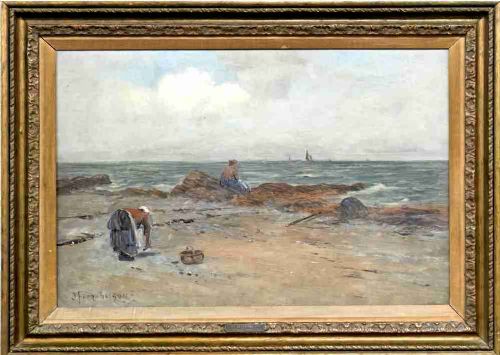
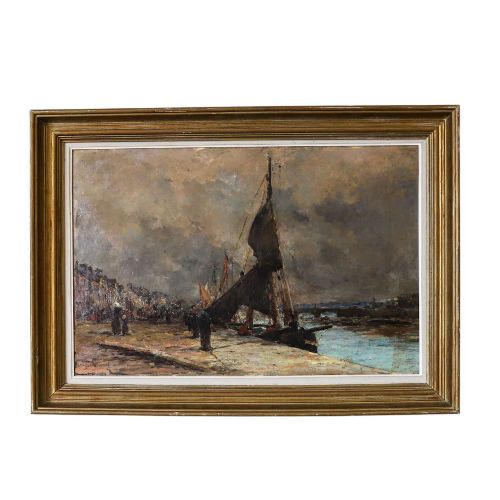
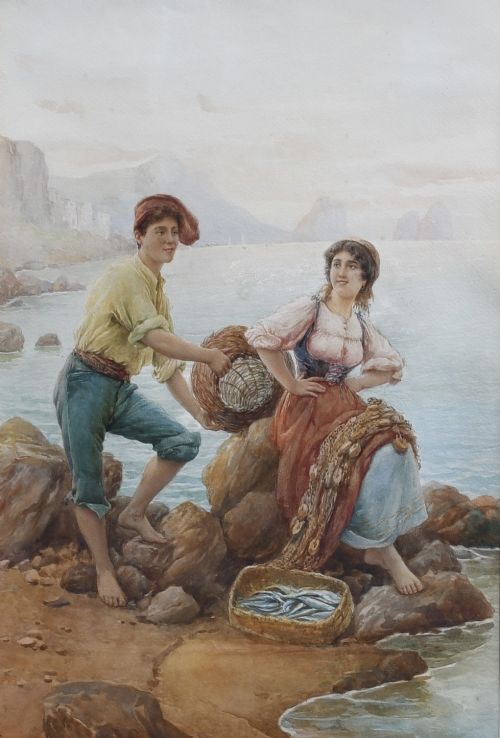
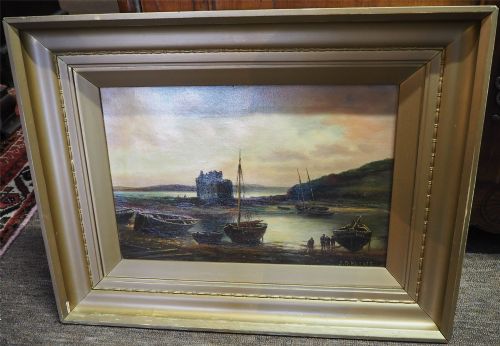
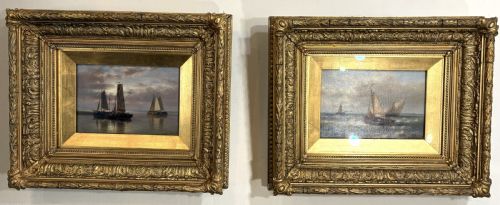

Framed Victorian Coastal Scene
A framed victorian coastal scene brings the grey spray and quiet harbours of the nineteenth century straight into your room.
Framed Victorian Coastal Scene
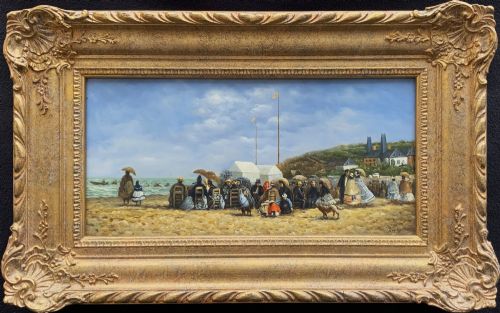
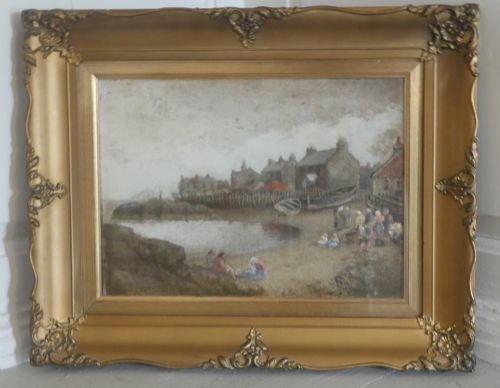
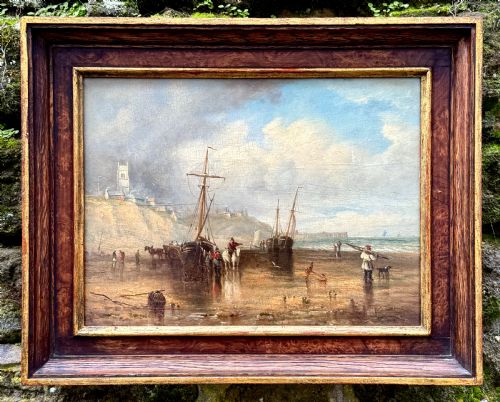
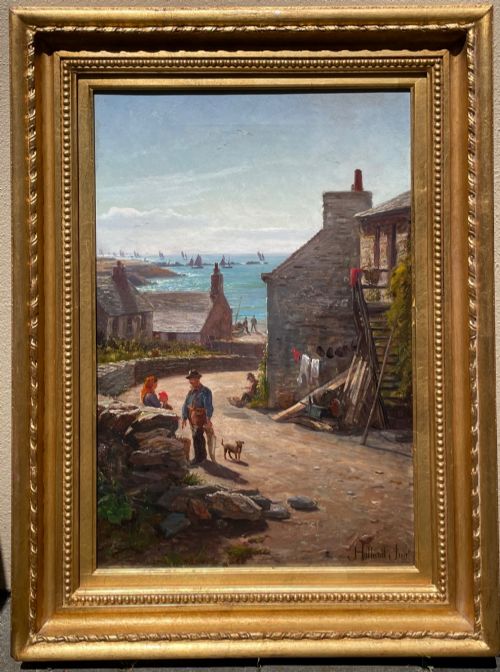
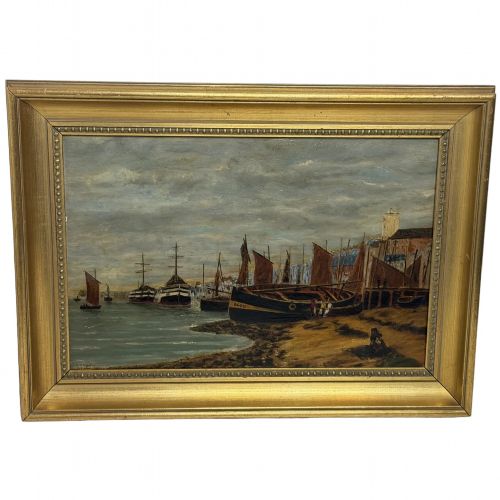
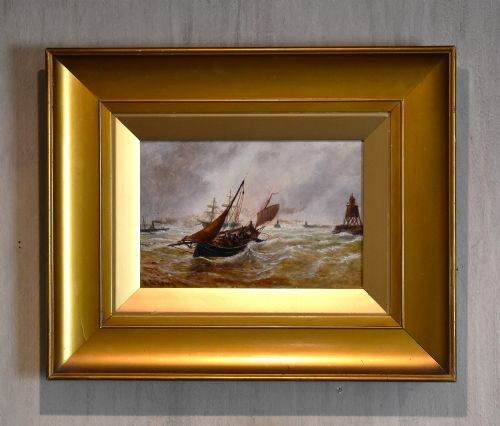
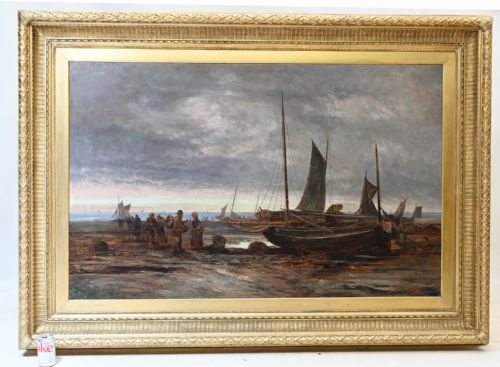
A framed victorian coastal scene captures maritime life, fishing vessels, and rugged shorelines through nineteenth-century painting traditions. These works range from intimate watercolours of quiet bays to large oil paintings depicting stormy seas and bustling harbours.
Most examples originate from the nineteenth century, utilising styles spanning traditional maritime art, impressionism, and realism. Subjects frequently feature specific locations such as Cornish ports, Scottish coasts, and Dutch waterways.
Collectors encounter works on canvas, paper, wood, and card, each retained in period settings. These pieces document maritime history alongside the artistic tastes of the Victorian era.
Materials and Construction
Artists painted these scenes using oil paint or watercolour applied to canvas, prepared wood panels, heavy paper, or card. Canvases and panels frequently rest inside substantial wooden frames finished with gesso and gold leaf.
The physical build relies on traditional stretcher frames for canvas supports or protective glazing for works on paper. Gilt wood mouldings provide the primary framing structure, often decorated with ornate surface relief.
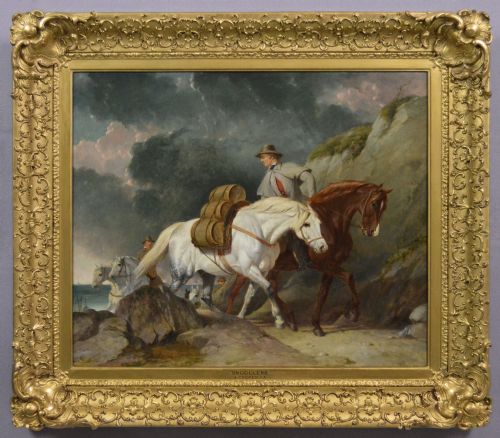
Several artists painted smugglers hiding horses on coastal paths.
Markers of Quality
Quality rests upon the artist's command of light, atmosphere, and maritime detail. Stronger works convey movement in water and weather conditions with precision, whereas weaker examples rely on formulaic compositions.
The preservation of the painted surface and the originality of the matching frame influence the standing of a piece. Intact brushwork without extensive restoration distinguishes finer examples from heavily repaired alternatives.
James Orrock·William Banks Fortescue·Thomas Creswick·Abraham Cooper·Joseph Farquharson·Bernard Benedict Hemy·Abraham Hulk I·James Kyd·Thomas Bush Hardy·George Gregory·James Webb·Claude Thomas Stanfield Moore·James Thomas Watts·Sir David Murray
The Framed Victorian Coastal Scene Glossary
- Gesso
- A plaster mixture applied to wooden frames as a smooth base for gilding. It allows for crisp moulded ornamentation around the edge of the artwork.
- Oil on Canvas
- Pigment mixed with drying oils applied to a stretched woven fabric support. This medium permits rich colour blending and textured brushwork.
- Watercolour Painting
- Pigments suspended in a water-soluble vehicle applied to paper or card. It produces translucent washes of colour typical of nineteenth-century coastal studies.
- Gilt Wood
- Timber coated with a thin layer of gold leaf or metallic powder. It frames the artwork with a reflective metallic finish characteristic of the period.
Framed Victorian Coastal Scene: Frequently Asked Questions
Where were these coastal scenes painted?
Artists worked across various maritime locations, recording specific harbours, fishing villages, and coastal paths throughout Britain and Europe.
Popular painting spots included Cornwall, the Isle of Man, Norfolk, and Dutch waterways.
How do I hang a heavy oil painting?
Secure the hanging wire to sturdy D-rings screwed directly into the wooden stretcher bars rather than the frame itself.
Use wall plugs and screws rated for the total weight of the canvas and gilt wood moulding.
Can watercolours be displayed in sunlight?
Paper and watercolour pigments fade permanently when exposed to direct ultraviolet rays over long periods.
Place these works on interior walls away from direct sunlight and use protective glass with UV-filtering properties.
How do I clean a gilt frame?
Dust the ornate gesso surfaces gently with a soft, dry brush to remove settled particles without damaging the gold leaf.
Avoid liquid cleaners, damp cloths, and chemical solvents, which strip the metallic finish.