






Antique Fishing Vessel Artwork
Antique fishing vessel artwork captures the drama of maritime life through the skilled hands of painters working across several centuries.
Antique Fishing Vessel Artwork
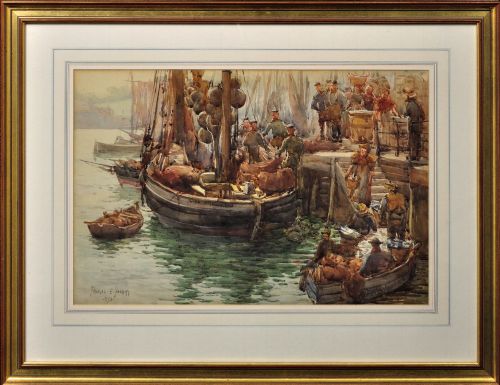
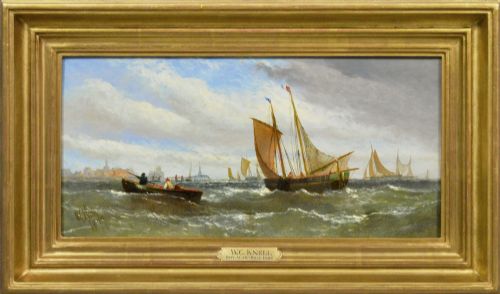
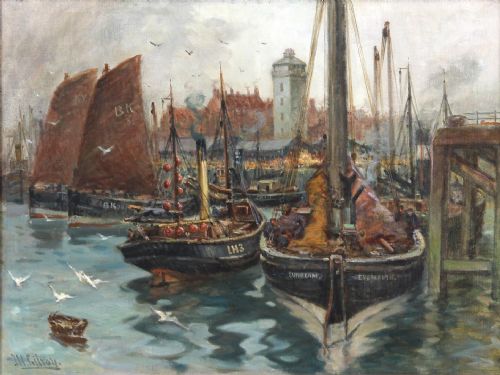
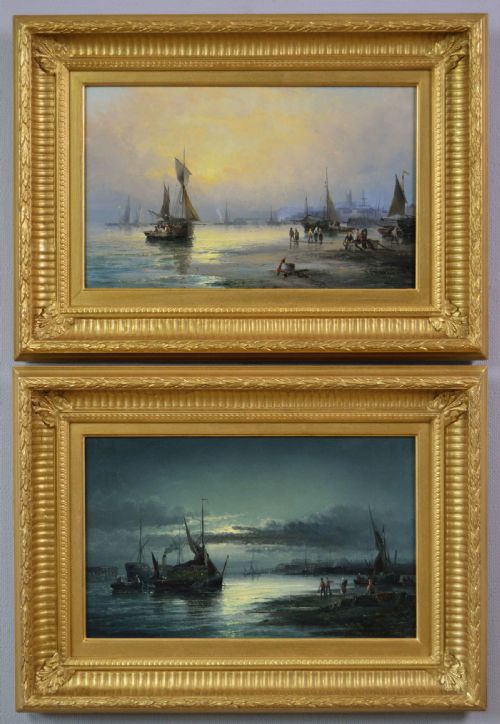
Antique fishing vessel artwork brings coastal scenes and maritime labour into domestic spaces through painted depictions of boats and boat yards. When searching for antique fishing vessel artwork, buyers encounter various interpretations ranging from early Georgian coastal views to mid-century maritime impressions.
The pieces on this page span the Georgian period, Victorian era, and the nineteenth century, extending into twentieth-century modern and mid-century styles. Works include individual oil paintings on canvas alongside delicate watercolour paintings on paper.
Examples range from tranquil depictions of beached vessels to dynamic scenes of fishing boats heading out into brisk winds. Buyers frequently find framed works complete with gilt wood surrounds that complement the traditional subjects.
Materials and methods
Artists utilised oil paint applied to canvas to capture the movement of water and the texture of wooden hulls. Canvas serves as the primary support for many nineteenth-century and mid-century works.
Watercolour paint on paper provides a lighter, more translucent medium favoured by artists recording coastal life. Gilt wood frames often house these paintings, offering a traditional decorative border.
Antique Fishing Vessel Artwork Retail Price Guide 2026
Typical asking prices for fishing vessel artwork among the pieces listed under this phrase on Sellingantiques today, from the lower quarter to the upper quarter. They describe what is for sale here now, not the wider market.
The listings on this site feature oil on canvas and watercolour on paper across Victorian, Georgian, and mid-century periods.
Judging quality
Quality rests upon the artist's ability to render maritime atmosphere and the structural integrity of the vessels depicted. Works by named painters display greater precision in handling light and movement compared to anonymous pieces.
The preservation of the canvas or paper surface, alongside the condition of the original or period frame, influences the overall character of the piece.
George Shaw·William Shayer·Fred Mayor·Hubert Thornley·Thomas Bush Hardy
The Antique Fishing Vessel Artwork Glossary
- Canvas
- A heavy woven fabric used as a surface for oil painting. It provides durability and texture for maritime scenes.
- Watercolour
- A painting method in which the paints are made of pigments suspended in a water-based solution. Applied to paper, it creates translucent washes of colour.
- Gilt wood
- Wood that has been treated with a thin layer of gold leaf or gold paint. It frequently forms the decorative frame surrounding antique paintings.
- Impressionism
- A style of painting characterised by relatively small, thin, yet visible brush strokes. It emphasises accurate depiction of light in its changing qualities.
Antique Fishing Vessel Artwork: Frequently Asked Questions
What periods do these paintings come from?
The works span multiple eras, beginning with the Georgian period and moving through Victorian times and the nineteenth century. Later pieces extend into the mid-twentieth century.
This broad chronological range allows collectors to select works reflecting distinct artistic movements and historical periods.
Are these works created with oil or watercolour?
Artists used both oil paint on canvas and watercolour on paper to capture maritime subjects. Oil paintings often feature heavier textures and framed gilt wood presentations.
Watercolour works provide a lighter medium that highlights delicate atmospheric conditions along the coast.
How should I hang and display these artworks?
These pieces require placement away from direct sunlight and excessive moisture to protect the canvas, paper, and gilt wood frames. Proper wall spacing ensures stable environmental conditions.
Matching the frame style to your interior decor helps integrate maritime paintings into domestic spaces.
How can I identify different artistic styles?
Styles range from nineteenth-century British realism and Dutch school traditions to mid-century modern interpretations. Examining brushwork and composition reveals the specific artistic approach of the period.
Signed works and named artists provide direct links to particular schools of maritime painting.