


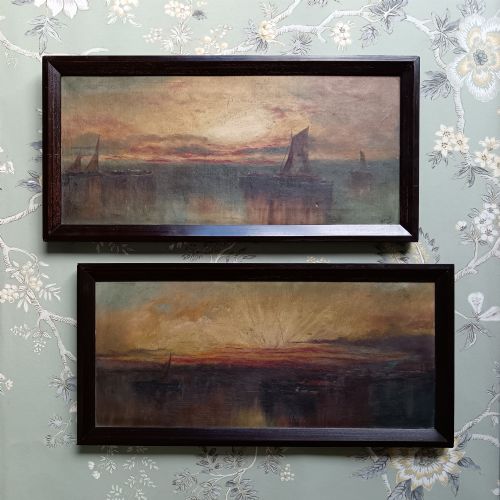
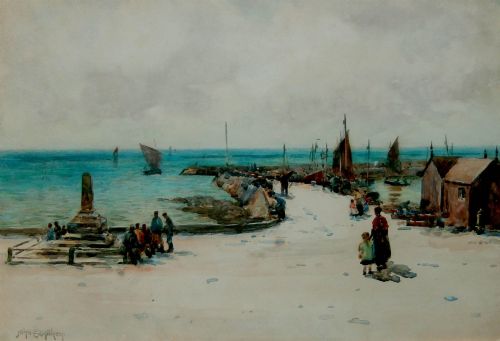
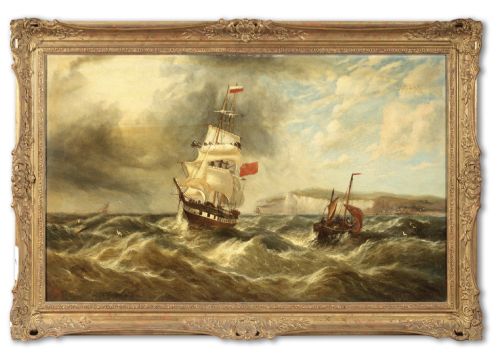
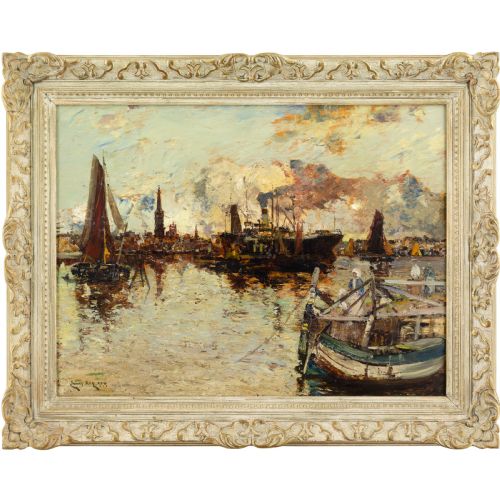
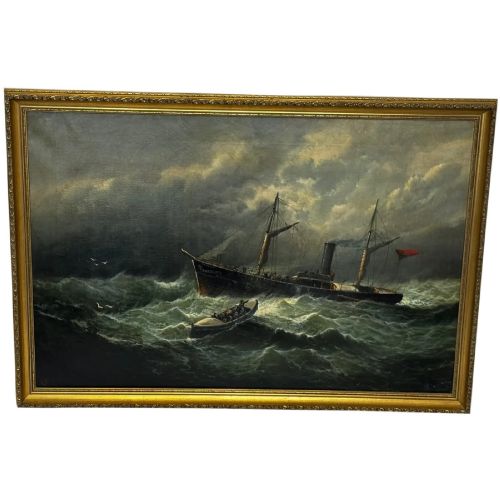
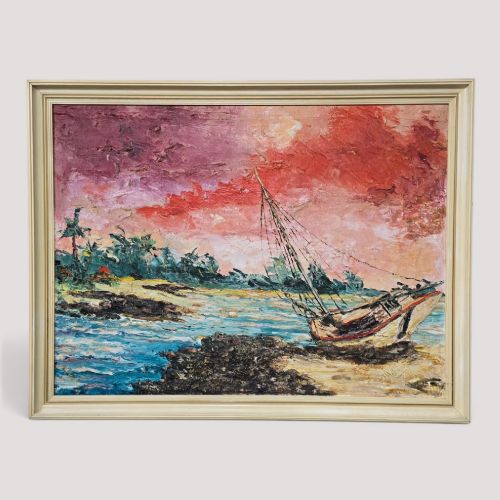
Framed Nautical Wall Painting
A framed nautical wall painting brings the open sea and historic maritime scenes directly into a room through oil, watercolour, and gouache.

Framed Nautical Wall Painting
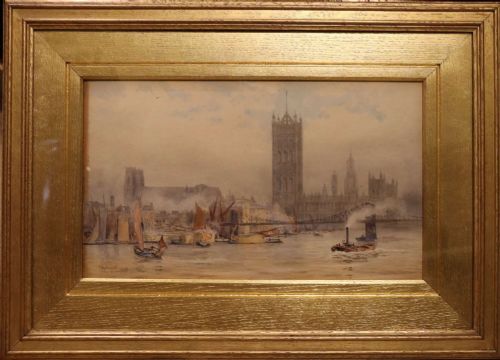
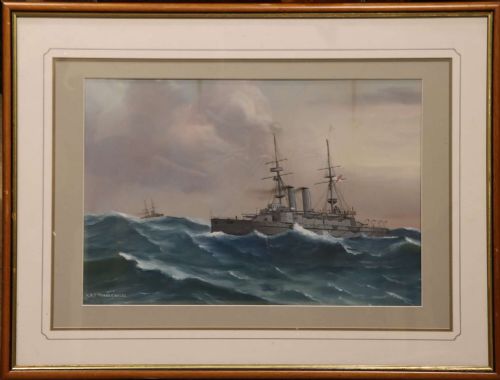
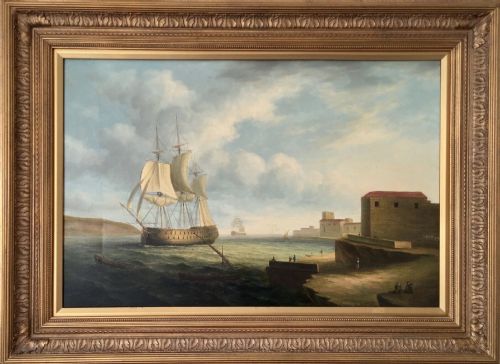
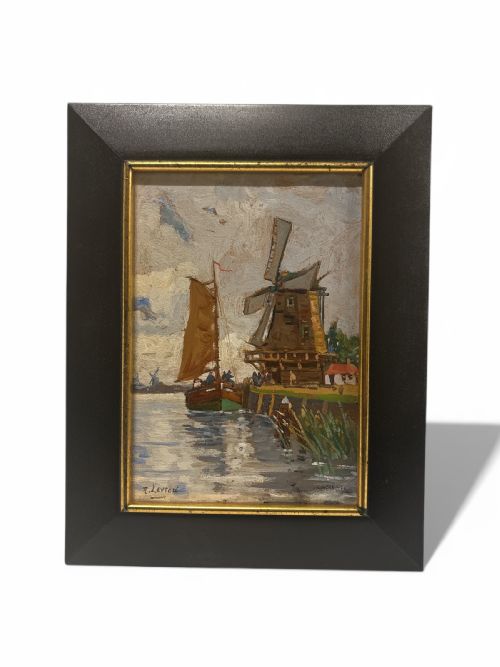
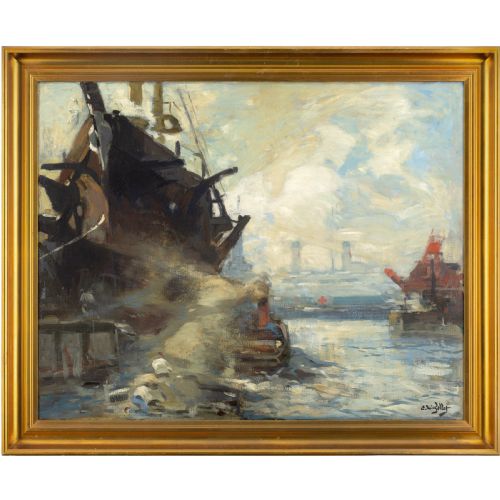
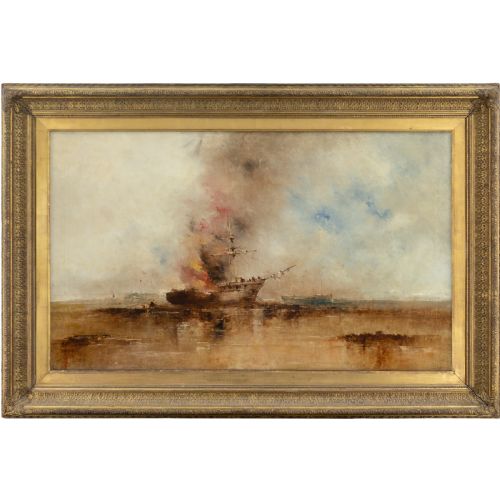
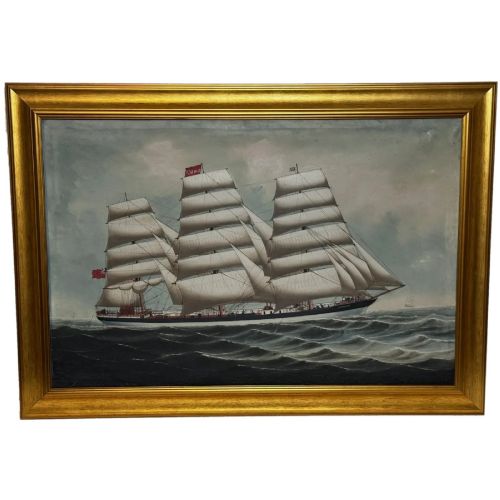
A framed nautical wall painting depicts marine subjects ranging from historic warships and merchant vessels to coastal harbours and rough seas. Buyers searching for a framed nautical wall painting encounter works executed across the nineteenth and twentieth centuries.
The pieces on this page include oil on canvas, panel works, watercolours, and gouache depictions of shipping vessels. These artworks capture maritime history, coastal landscapes, and naval engagements within period frames.
Materials and construction
Artists painted these marine subjects using oil paint or watercolour on canvas, paper, wood panels, or board. Many pieces retain their period wooden frames, occasionally accented with gilt finishes.
Protective glass frequently covers paper and watercolour works, while canvas and panel paintings remain open or varnished. The physical construction combines structural timber frames with varied fine art media.
Listings feature works spanning the eighteenth, nineteenth, and twentieth centuries, executed in oil, watercolour, and gouache.
Judging quality and execution
Quality in these maritime works rests upon the artist's handling of light, water movement, and vessel rigging. Skilled painters render maritime architecture and turbulent seas with anatomical and atmospheric precision.
The preservation of the paint surface and the originality of the accompanying frame contribute significantly to the standing of each piece. Finer examples display confident brushwork and accurate historical detail.
James Hardy·James Orrock·Eugène-Louis Gillot·William McAlpine·Reginald Arthur Borstel·Lemuel Francis Abbott·James Kay·William Broome·Bernard Gribble·Bonaventura Peeters·F. Corpuz·Peter Brannan·Paul Bret·Willem Bos·John Wilson Carmichael·Richard B. Spencer·William Henry Williamson·Bernard Benedict Hemy
The Framed Nautical Wall Painting Glossary
- Gouache
- An opaque watercolour medium used on paper or board to create solid colour areas. It allows for vibrant marine and coastal studies.
- Panel
- A flat wooden support used instead of canvas for oil paintings. Artists frequently utilised panels for smaller nineteenth-century maritime works.
- Seascape
- A work of art depicting the sea, ships, or coastal views. These subjects form the core of maritime painting.
- Trumeau
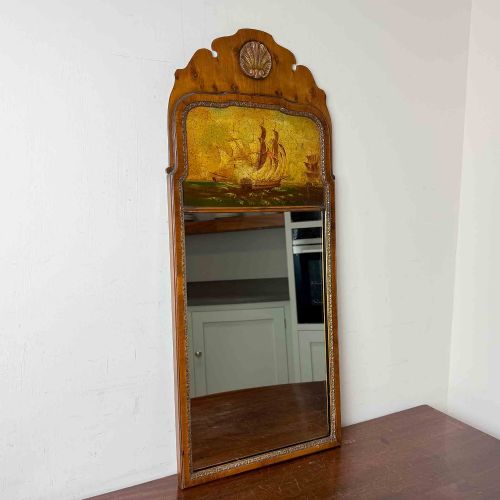
- A decorative wall mirror featuring an integrated painting above the glass plate. Some examples incorporate period maritime oil paintings.
Framed Nautical Wall Painting: Frequently Asked Questions
How do I date a maritime painting?
Dating relies upon examining the vessel types, rigging styles, and clothing depicted in the scene alongside any signatures. Clothing and ship architecture changed notably between the eighteenth and twentieth centuries.
Material analysis of the canvas, stretcher bars, and the framing style also assists in narrowing down the period of creation.
Where should I hang a marine painting?
These works suit study rooms, living areas, or hallways where wall space allows for traditional framing. Placing them away from direct sunlight protects the pigments in both oils and watercolours.
Ensure the hanging height places the centre of the canvas at eye level for comfortable viewing.
What is the difference between oil and watercolour?
Oil paintings utilise pigment suspended in drying oils applied to canvas or wood, offering rich textures and deep tones. Watercolours use water-soluble pigments on paper, resulting in lighter, translucent effects.
Watercolours invariably require protective glass glazing, whereas oil paintings on canvas remain unglazed.
How do I clean an antique frame?
Dust frames gently with a dry, soft-bristled brush to remove surface accumulation without disturbing the wood or gilt finish. Avoid using liquid cleaners or abrasive cloths on antique mouldings.
Professional conservators should handle structural repairs or deep cleaning of fragile gilt surfaces.