



Antique Fishing Boat Picture
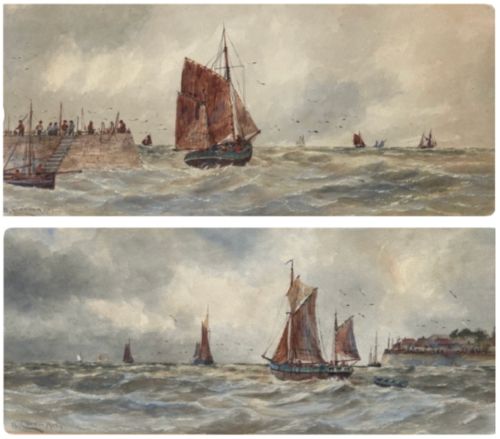
An antique fishing boat picture brings the salt air and rugged coastline of the nineteenth and twentieth centuries straight into your room.

Antique Fishing Boat Picture
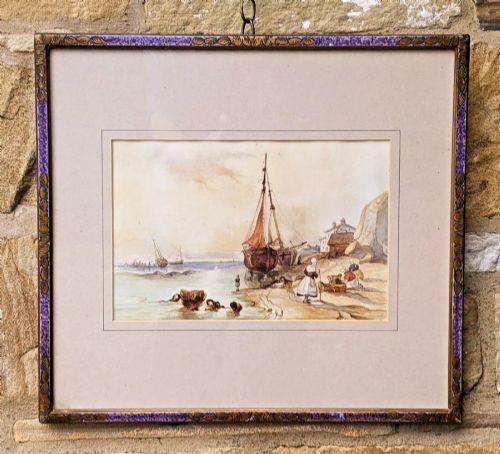
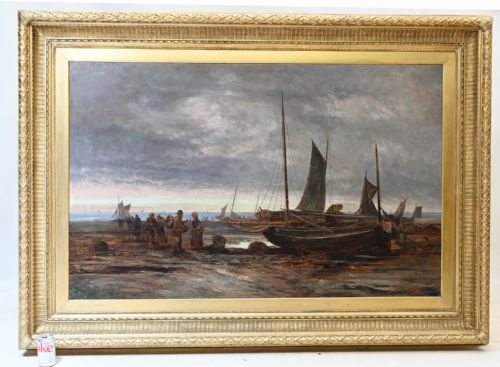
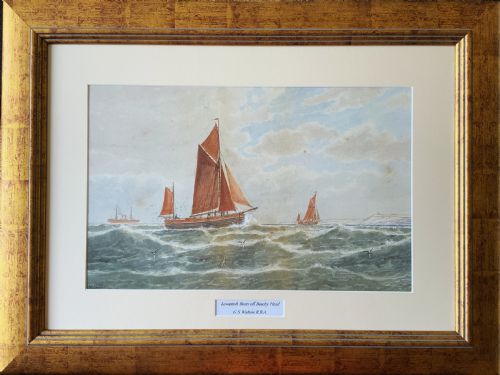
When you search for an antique fishing boat picture, you encounter maritime artworks capturing working vessels, coastal harbours, and tidal shores. These pieces span the nineteenth century, the Edwardian era, and mid-century British movements, reflecting the changing fortunes of coastal communities.
The version you are most likely to meet on this page is a watercolour painting or an oil on canvas, often framed in wood or gilt wood. Subjects range from Norfolk and Cornwall coasts to Normandy ports, showing vessels beached, making a run for home, or moored in busy harbours.
Makers and artists range from named watercolourists and oil painters to skilled regional artists working within Victorian marine art and British impressionism. Their works preserve a detailed record of maritime history through varied mediums including pastels, gouache, and etchings with aquatint.
How they were made
Artists painted these coastal scenes using oil on canvas or watercolour pigment on paper, occasionally combining watercolour and gouache for added opacity. Pastels and etchings with aquatint also appear, showing the diverse graphic techniques used to render sea and sky.
Supports varied from stretched canvas and heavy paper to prepared board, housed within wooden or gilt wood frames that protected the delicate surfaces. Painters built up compositions through layered washes of pigment or thick strokes of oil paint to capture the movement of water and light.
At least one artist clearly found deep emotional resonance in the coast, titling a Normandy maritime piece 'The Love Between Man And The Deep Blue Sea'.
What varies in quality
Quality depends on the artist's command of light, atmosphere, and maritime architecture, distinguishing casual topographical sketches from masterly studies of marine movement. A strong composition captures the weight of the sea and the specific rigging of the vessels with convincing accuracy.
The handling of the medium dictates the depth of the work, from transparent watercolour washes that describe misty coastal air to rich impasto in oil paintings that renders churning waves. Preservation of the original paper or canvas and the suitability of the frame also define the standing of each piece.
William Cannon·George Stanfield Walters·Charles Napier Hemy·William Lee Hankey·Gustave De Bréanski·T.S. Wallis·Frederick William Hattersley·Ernest F. Hill·George Henry Knight·Paul H Ellis·Norman Janes·Robert Leslie Howey·Thomas Bush Hardy
The Antique Fishing Boat Picture Glossary
- Watercolour pigment
- A finely ground colour mixed with a water-soluble binder, applied in translucent washes to paper. It allows artists to capture the luminous quality of coastal skies and shifting sea light.
- Gilt wood
- Wood carved and coated with gold leaf or a gold-coloured metallic finish for framing. This traditional technique provides a bright border that separates the maritime scene from the surrounding room.
- Etching with aquatint
- A printmaking method where lines are bitten into a metal plate with acid, and tonal areas are created using powdered resin. It produces rich, varied shades particularly suited to atmospheric seascapes.
- Gouache
- An opaque water-based paint containing pigment and a binding agent, often mixed with watercolour. It provides solid highlights and dense colour areas for foam, sails, and clouds.
- Oil on canvas
- Pigment suspended in drying oil, applied to a woven fabric stretched across a wooden frame. This medium permits thick impasto and deep, saturated colour suited to dramatic coastal waters.
Antique Fishing Boat Picture: Frequently Asked Questions
What periods do these paintings cover?
The works span from the nineteenth century and the Victorian era through the Edwardian period up to the mid-twentieth century. Artists recorded changing coastal scenes across these decades using traditional and modern British styles.
Most pieces date from the late Victorian and Edwardian years, reflecting a surge in British marine art and coastal painting during that era.
Are these works painted on canvas or paper?
Surviving works utilise both canvas and paper as supports, depending on the medium chosen by the artist. Oils are typically found on canvas or panel, whilst watercolours, pastels, and etchings are executed on paper.
Framing often reflects the period of the artwork, with wood and gilt wood surrounds protecting the paper and canvas surfaces.
How should I hang an oil painting?
Oil paintings on canvas require stable wall fixings suited to the weight of the wooden stretcher and frame. Hang them away from direct sunlight and excessive moisture to protect both the canvas and the painted surface.
Ensure the wall space allows adequate ventilation behind the frame to prevent dampness from affecting the fabric and ground.