
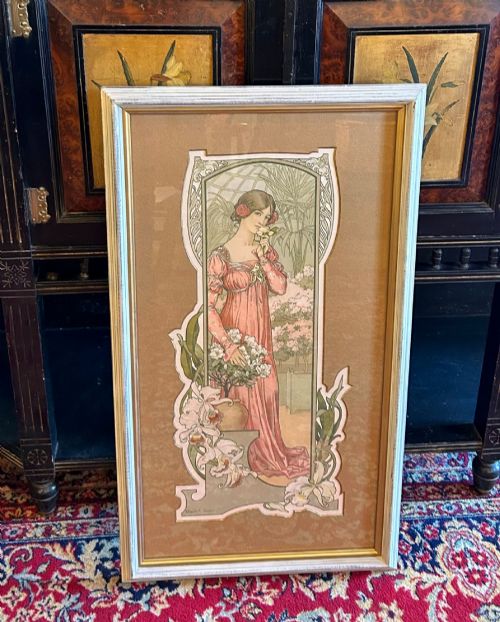
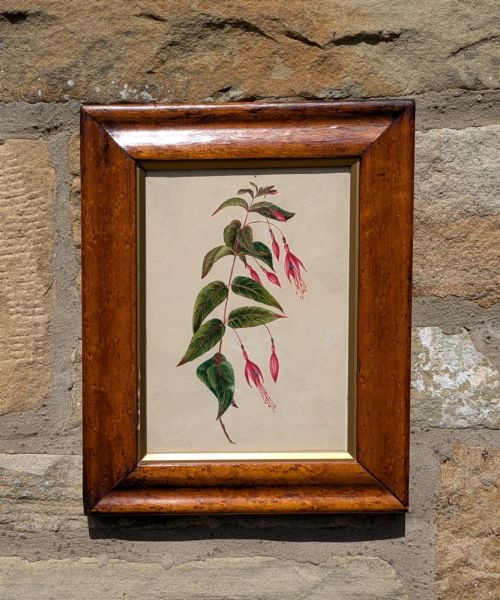
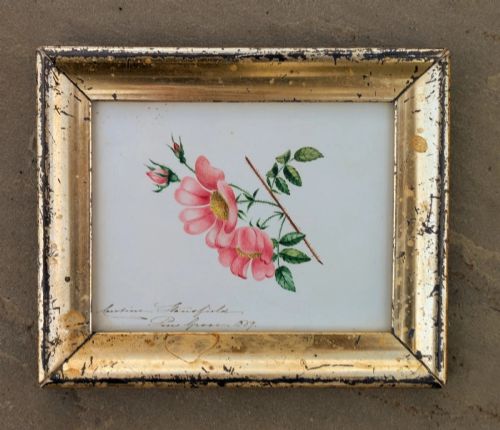
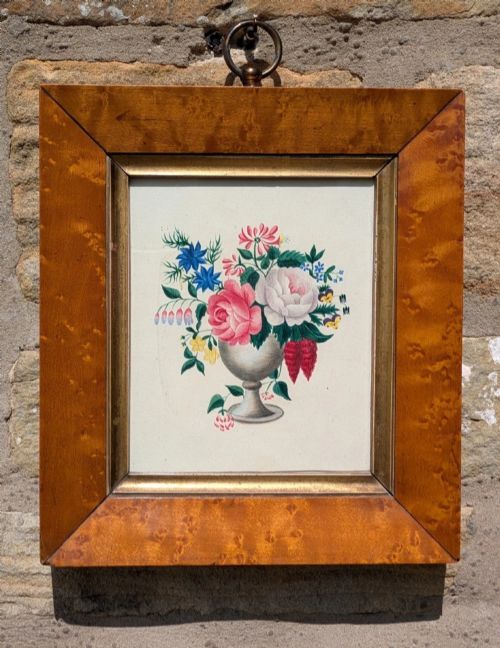
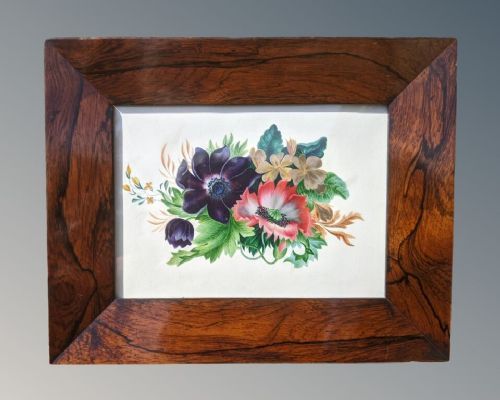
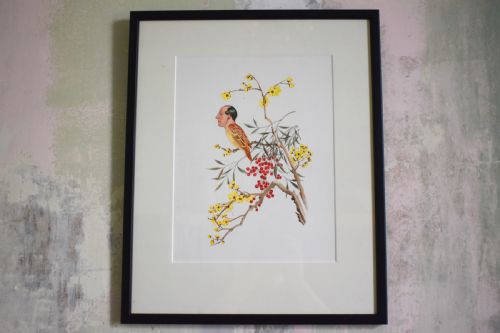


Framed Floral Illustration
A framed floral illustration brings botanical study and colour to a wall through watercolour, lithograph, or engraving.
Framed Floral Illustration
A framed floral illustration combines botanical observation with decorative arts, originating primarily from the eighteenth and nineteenth centuries.
The version most commonly encountered on this page is the nineteenth-century watercolour or botanical print.
These works range from simple single studies of roses or pelargoniums to engraved plates featuring insects and plants.
Materials and technique
Artists and botanical illustrators worked on paper using watercolour, gouache, ink, and watercolour pigment.
Many works incorporate engraving and lithography techniques, occasionally enhanced with hand-colouring.
Framing typically employs wood, gilt wood, and glass to protect the paper works.
Several botanical plates include unexpected insect companions sharing the page with the flowers.
Quality and execution
Quality rests on the precision of the botanical drawing and the delicacy of the pigment application on paper.
Signed works by known botanical artists or established schools command greater interest than anonymous studies.
The condition of the paper and the preservation of the original hand-colouring define the merit of the piece.
Elisabeth Sonrel·Catherine Thomas·Henrietta Creswell·Pancrace Bessa·Jabez Bligh·Charlotte Isa James·Alice Macallan Swan·John Curtis·Annie Mary Youngman·Edith Alice Andrews·Georg Wolfgang Knorr·M.K Rhodes·Pierre Joseph Redoute·Arthur H Buckland·Minnie Smythe·George Dionysius Ehret
The Framed Floral Illustration Glossary
- Lithograph
- A print made from a planographic surface, traditionally stone, allowing fine tonal gradations. This technique reproduced detailed artwork for publications.
- Gouache
- An opaque watercolour paint containing a white pigment to create a heavier layer. It provides solid colour and sharp highlights on paper.
- Engraving
- An intaglio printing process where an image is incised into a metal plate. It produces precise, clean lines suitable for scientific illustration.
- Botanical
- Pertaining to the scientific study of plants, translated into detailed visual records. These works focus on accurate representation of floral structures.
- Still life
- A painting or drawing depicting inanimate subject matter, such as vases of roses or baskets of flowers. Artists arrange these elements to study form and light.
Framed Floral Illustration: Frequently Asked Questions
How old are these framed floral illustrations?
The pieces span from the eighteenth century through the nineteenth century and into the 1930s.
Most examples date from the Victorian and Edwardian periods.
Are these original watercolours or prints?
The selection includes both unique hand-painted watercolours and published engravings or lithographs.
Many prints feature contemporary hand-colouring applied over the ink lines.
How should I hang these framed pieces?
Paper works require placement away from direct sunlight to prevent the watercolours and pigments from fading.
Grouping smaller botanical studies together creates a balanced display on a wall.
What is the difference between an engraving and a watercolour?
An engraving is a printed multiple produced from an incised metal plate, often coloured by hand afterwards.
A watercolour is a unique painting created directly on paper by the artist's hand.