

Framed Cottage Painting
A framed cottage painting brings the quiet domesticity of rural life onto the wall through nineteenth and twentieth-century brushwork.
Framed Cottage Painting
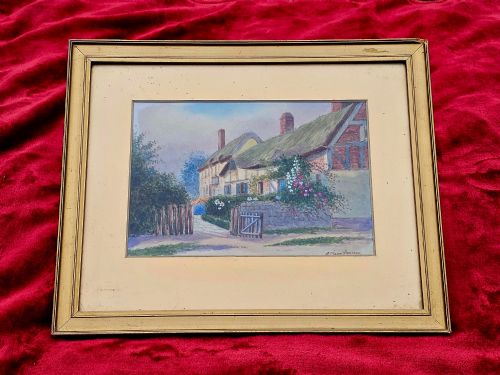
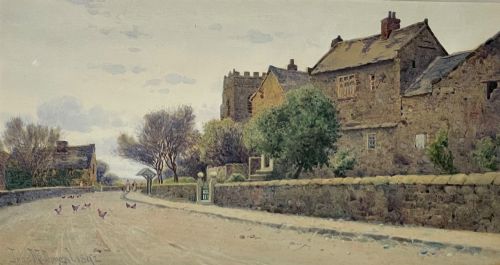
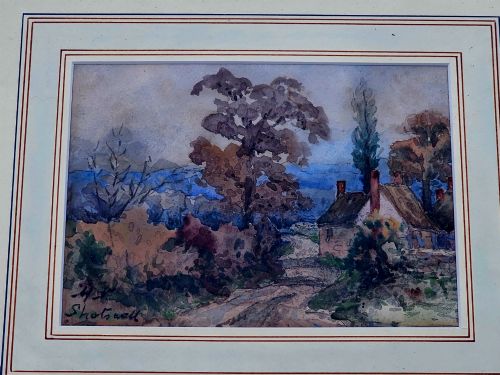
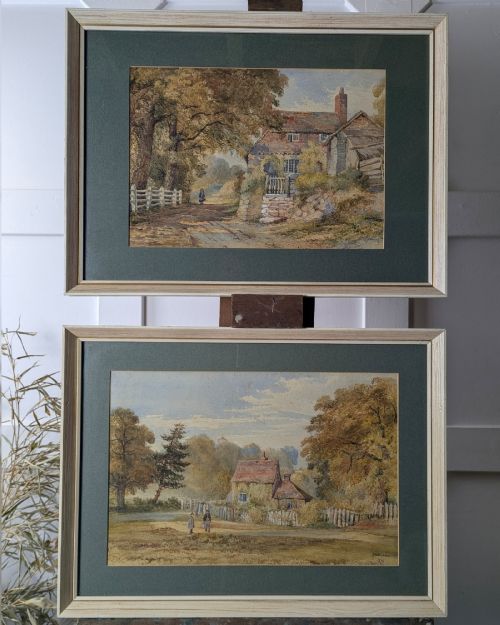
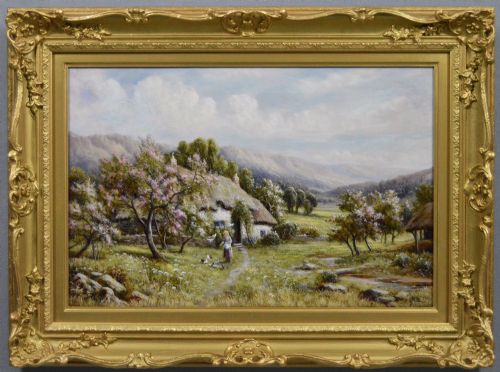
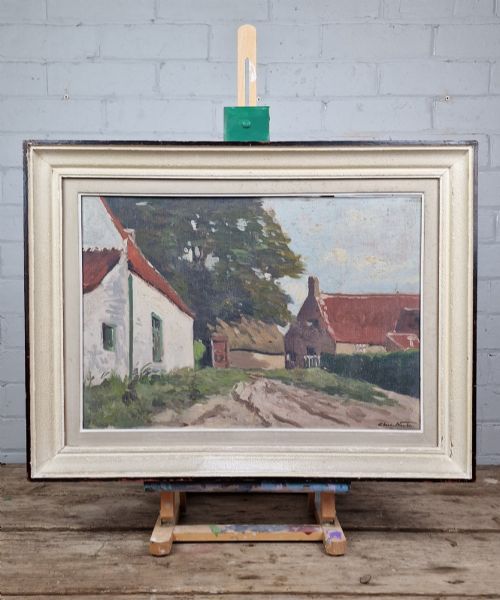
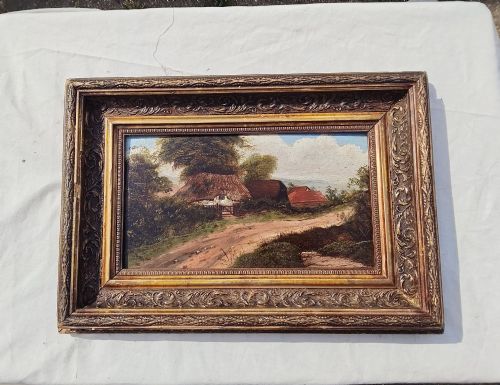
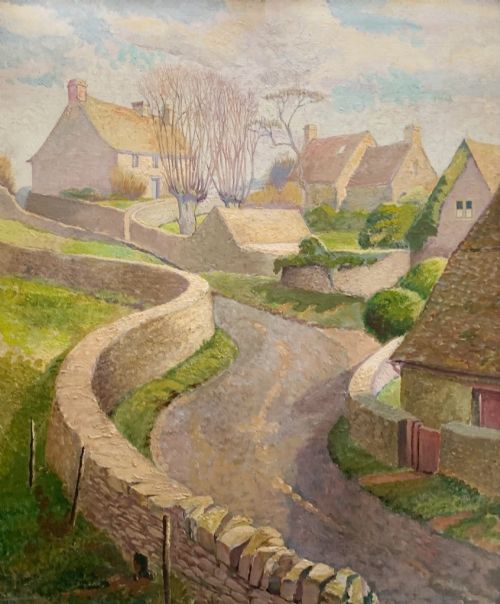
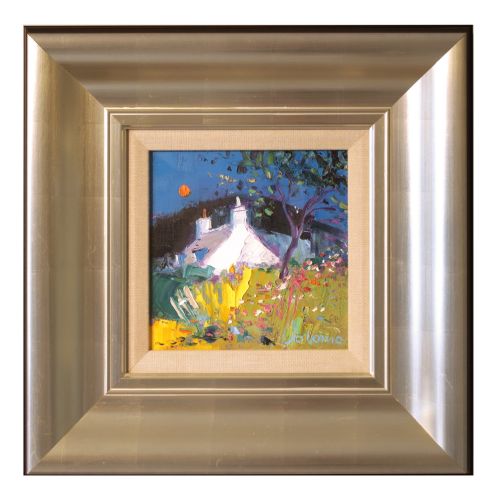
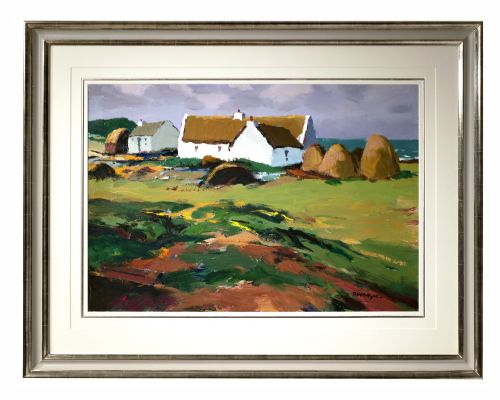
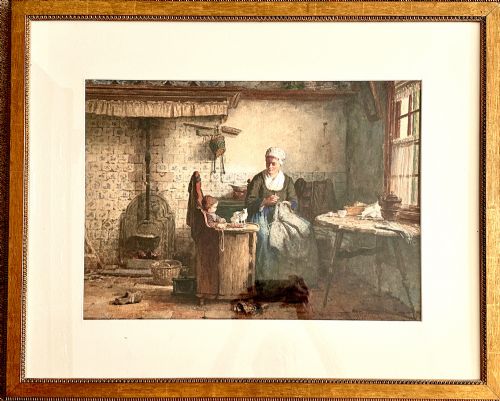
A framed cottage painting represents rural scenes, farmsteads, and village dwellings executed across the Victorian, Edwardian, and mid-century periods. These works capture domestic life, thatched roofs, and country gardens through the eyes of British and European artists working in both oil and watercolour.
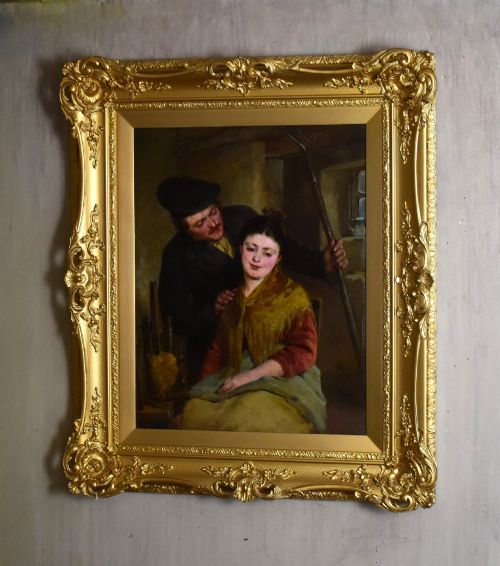
The most common examples on this page are nineteenth-century watercolours and early twentieth-century oil paintings on canvas, board, or panel. Many depict figures outside a cottage gate, quiet farmyards, or rustic river landscapes housed within original gilt or wooden frames.
How They Were Made
Artists painted these rural subjects using oil paint on canvas, panel, or card, as well as watercolour on paper, often applying pigments with brush and palette knife. Works on canvas utilised wooden stretchers, whilst panels provided a rigid support for detailed brushwork.
Framing typically involved wood, gesso, and glass to protect the painted surface, with many frames carrying period gilding or decorative moulding that matches the era of the artwork.
Listings feature works in oil and watercolour on paper, canvas, board, and card across the nineteenth and twentieth centuries.
What Varies in Quality
The handling of light and atmospheric perspective separates accomplished regional artists from amateur practitioners. Superior examples demonstrate confident brushwork, depth in landscape elements, and expressive rendering of figures rather than stiff, formulaic composition.
The integrity of the original materials also defines the standard, distinguishing works with stable pigment and preserved paper from those affected by heavy restoration or moisture damage.
William Howard Hardy·A. Marie Parsons·John McDougal·Robert A. Nottingham·Robert John Hammond·Charles Houben·Howard Helmick·John Lowrie Morrison·Donald McIntyre·Hendrik Valkenberg·Jacob Akkersdijk·Percy Lancaster·George Morland·Charles Edward Wilson·Harry Brooker·Alexander Rosell·Mario Pinetti·Haynes King·Fred Lawson·James Kyd·J S Ainley·William Hoggatt·James Hardy Junior·Frederick James Knowles·George Smith
The Framed Cottage Painting Glossary
- Watercolour
- A painting method in which the paints are made of pigments suspended in a water-based solution. These works are typically executed on paper and require glass protection.
- Gesso
- A plaster-like mixture applied to wood or canvas to prepare a surface for painting or used to form moulded relief on picture frames. It provides a smooth base for gilding.
- Genre Painting
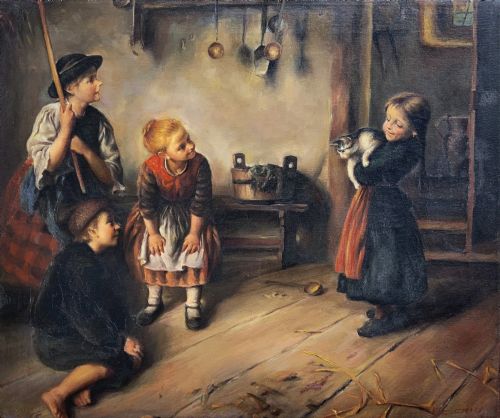
- The pictorial representation of scenes from everyday life, typically depicting ordinary people engaged in domestic activities. These works often feature figures outside a cottage.
- Impressionism
- A nineteenth-century art movement characterised by relatively small, thin, yet visible brush strokes and an emphasis on accurate depiction of light. Artists applied these principles to rural landscapes.
Framed Cottage Painting: Frequently Asked Questions
What periods do these paintings come from?
The works span the nineteenth and twentieth centuries, encompassing Victorian, Edwardian, and mid-century movements. Artists recorded rural architecture and cottage life through changing artistic styles across these decades.
Most pieces date from the late nineteenth century up through the nineteen-sixties, reflecting traditional techniques and regional British and European schools.
How were these paintings originally displayed?
These artworks were displayed as domestic wall art within parlours and sitting rooms, housed in wood and gesso frames. The frames often featured decorative mouldings or period gilding suited to the interior taste of the time.
Many retain their original protective glass, particularly in the case of watercolours and works on paper, which required shielding from atmospheric soot and damp.
How do I identify a genre painting?
A genre painting depicts everyday subjects and ordinary people engaged in domestic tasks or leisure. In these listings, such scenes frequently show figures outside a cottage, children playing, or daily chores.
These compositions focus on narrative and human activity within a rural setting rather than pure landscape or portraiture.
What is the difference between oil and watercolour?
Oil paintings use pigments suspended in drying oils, applied to canvas, board, or panel to create rich, textured surfaces. These works offer depth of colour and can be displayed without glass protection if the surface is stable.
Watercolours use water-soluble pigments on paper, producing a luminous and translucent effect. Because paper is vulnerable to moisture and fading, these works require framing under glass.