
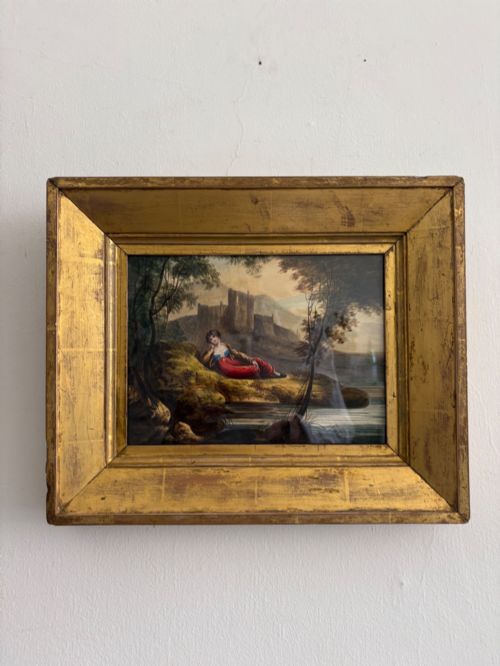
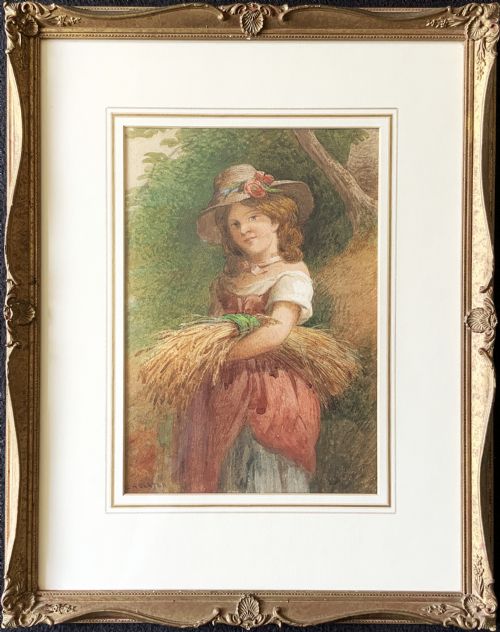


English Pastoral Watercolour
An english pastoral watercolour captures the quiet rhythm of rural life through delicate pigment on paper, offering a timeless window into the countryside.
English Pastoral Watercolour
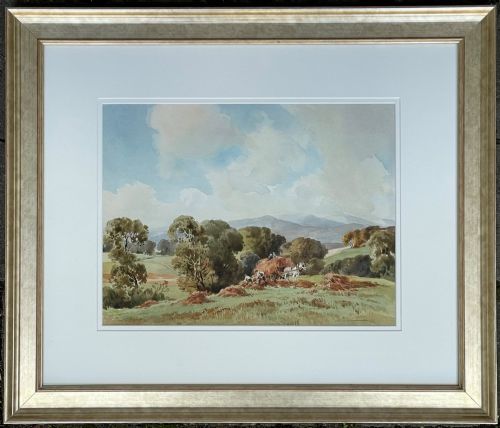
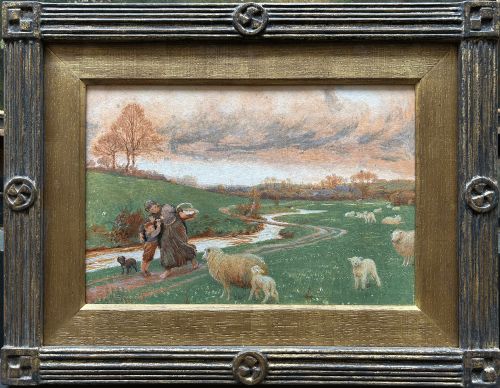
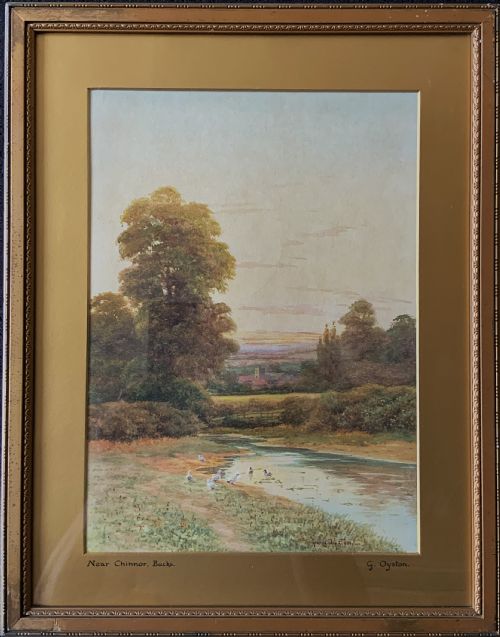
An english pastoral watercolour depicts traditional rural scenes such as thatched cottages, livestock grazing by rivers, and harvest landscapes. These works emerged strongly during the nineteenth century and continued through the Edwardian period into the early twentieth century.
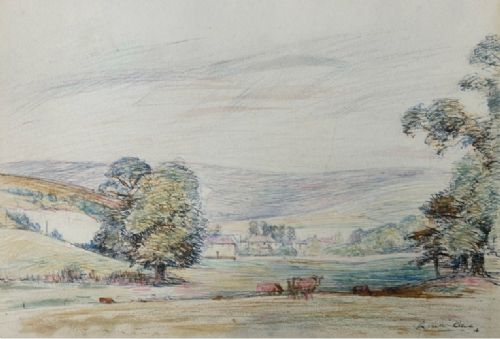
Buyers encounter framed paintings, wall art, and fine art pieces created by named artists of the English School as well as unsigned regional talents. The subjects focus predominantly on pastoral idylls, rural waterways, and farming life.
The most common examples on this page date from the Victorian era up to the 1930s, reflecting a sustained cultural appetite for scenes of tranquil countryside living.
Materials and Technique
Artists painted primarily with watercolour pigment applied directly to paper support, sometimes employing bodycolour to build up highlights and opaque details. Many works retain their original period frames constructed from wood and finished with gold leaf or gilt.
Glass protects the delicate paper surface from atmospheric moisture and handling damage. The layering of translucent washes allowed painters to capture subtle shifts in natural light across rural landscapes.
The listings span from mid-nineteenth century Victorian works through to 1930s examples, executed in watercolour on paper.
Distinguishing Quality
Quality rests upon the artist's ability to handle light, atmosphere, and naturalistic detail within the landscape. Stronger examples display confident brushwork and precise draughtsmanship in figures, animals, and foliage.
The survival of the original frame and the preservation of the paper pigment without excessive fading dictate the desirability of a piece. Works by nationally exhibited painters generally command greater attention than anonymous student pieces.
Percy Lancaster·George Oyston·Philip Richard Morris·Henry Charles Fox·Henry John Kinnaird
The English Pastoral Watercolour Glossary
- Watercolour
- A painting method where fine pigment is suspended in a water-based solution and applied to paper. This technique allows for luminous washes and delicate colour blending.
- Gilt Wood
- Wood carved and coated with a thin layer of gold leaf or metallic paint. This material was standard for framing fine art during the nineteenth and early twentieth centuries.
- English School
- A classification for artists trained or working primarily within Britain. It groups together practitioners of traditional landscape and pastoral painting across multiple generations.
- Edwardian Pastoral
- A stylistic category reflecting early twentieth-century depictions of the countryside. These works often show a heightened romanticism toward rural labour and village life.
English Pastoral Watercolour: Frequently Asked Questions
What subjects appear in these watercolours?
The compositions focus on traditional rural life, including shepherds with flocks, cattle by rivers, harvest scenes, and old cottages. Artists drew inspiration from specific regional landscapes across the British countryside.
These depictions served as a popular form of wall art for homes seeking a connection to nature and traditional agrarian values.
How do I date an english pastoral watercolour?
Dating relies on stylistic clues, framing materials, artist signatures, and occasionally inscriptions verso. Victorian works often feature more dramatic narrative elements, while Edwardian pieces lean toward softer atmospheric effects.
Paper characteristics and framing styles also help narrow down the decade of production.
Are these paintings usually framed?
Most surviving works retain framing, frequently in period wood or gilt designs appropriate to their creation date. Original frames help protect the delicate paper and glass assembly.
Collectors often value pieces that retain their period framing rather than modern replacements.
How should I care for a watercolour?
Watercolour paintings require protection from direct sunlight to prevent the pigments from fading over time. Maintaining stable indoor humidity levels prevents damage to the paper support and the wooden frame.
Displaying pieces away from damp walls ensures the longevity of both the artwork and its protective glass.