


Framed Chinese Export Art
Framed Chinese export art encompasses historic paintings and panels produced for Western markets, prized for their delicate detail and cross-cultural trade history.
Framed Chinese Export Art
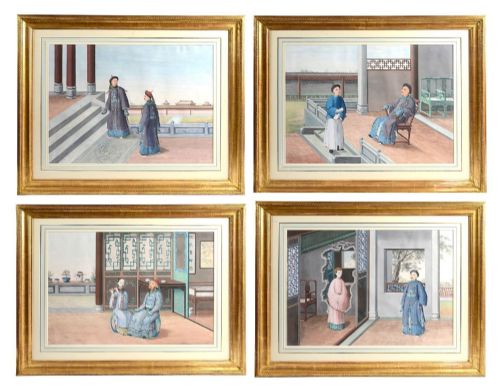
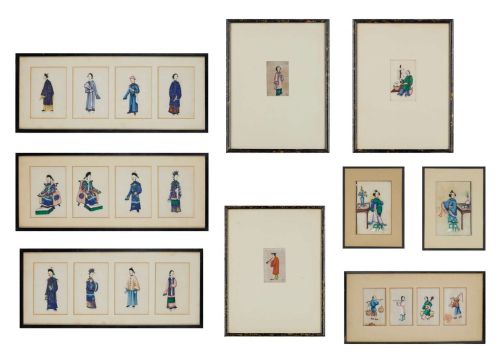
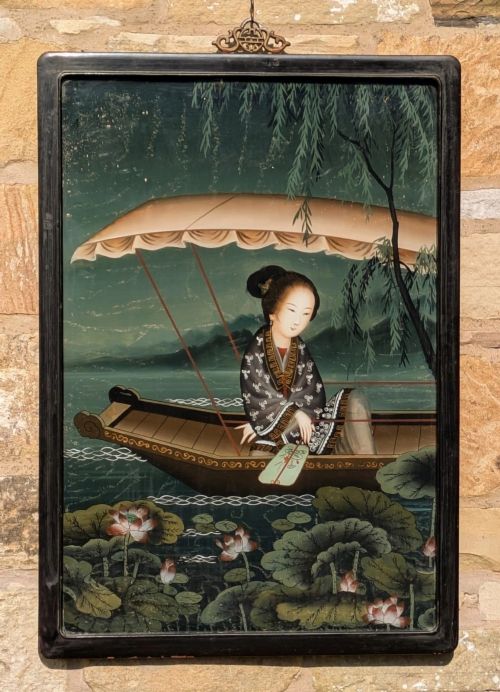
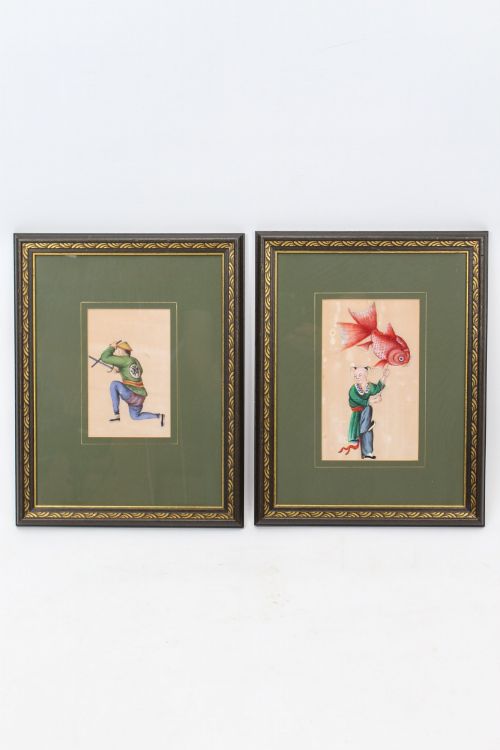
Framed Chinese export art comprises wall art, paintings, and framed artwork created in China specifically for European and British buyers during the eighteenth and nineteenth centuries. You will frequently encounter pith paper paintings, gouache watercolours, and reverse paintings on glass within this selection.
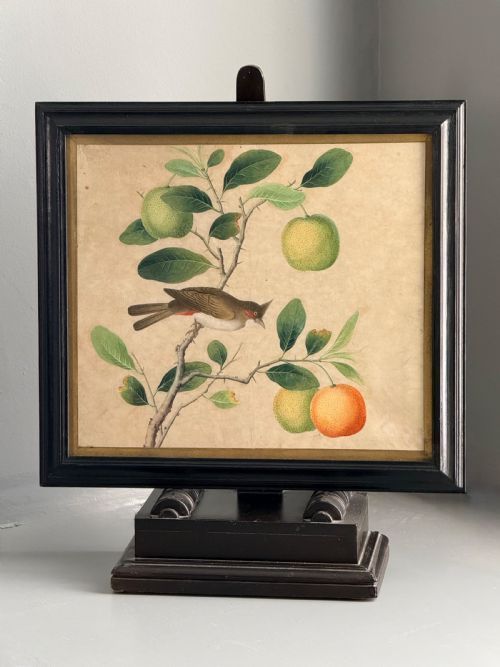
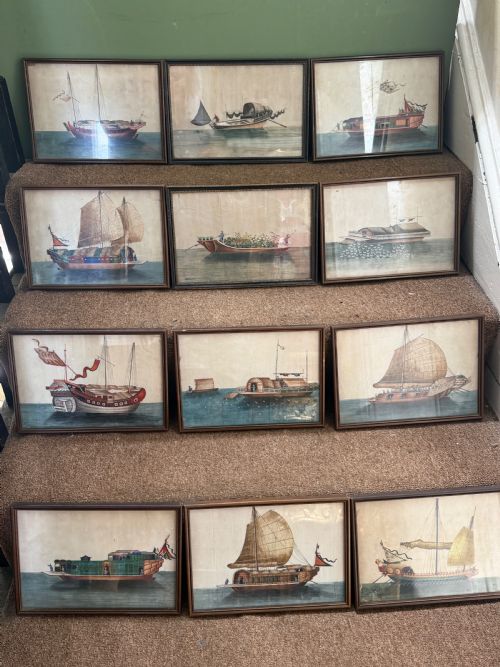
The objects span multiple periods, notably the Regency era, the nineteenth century, and the Edwardian period, often reflecting Anglo-Chinese artistic exchange. Common subjects range from figural studies and botanical works depicting butterflies to maritime scenes featuring junks and steam ships.
Many examples arrive in period frames of wood, gilt wood, or brass, preserving the original presentation intended for Western interiors. These pieces document trade routes and foreign commissions through traditional Chinese techniques adapted to Western tastes.
How they were made
Makers utilised delicate pith paper, often misidentified as rice paper, alongside gouache, watercolour, and silk to create vibrant miniature scenes. Reverse paintings on glass required artists to apply pigments directly to the rear of the pane so the finished image appeared correctly through the front.
Framing often involved traditional woodworking and gilding techniques to house fragile supports like paper and glass securely. Brass fittings and wooden mouldings completed the presentation of these export items destined for long sea voyages to Britain.
Surviving subjects span maritime ship portraits of British schooners alongside traditional botanical studies of insects and floral arrangements.
What varies in quality
The fineness of the brushwork and the preservation of fugitive pigments determine the visual impact of individual paintings and panels. Pith paper works retain greater distinction when the surface remains uncracked and the plant cellular structure supports crisp coloration.
The integrity of the original glass and the craftsmanship of the surrounding wooden or gilt frames contribute significantly to the overall standing of each piece. Grouped sets demonstrate higher uniformity in scale and subject matter across all included panels.
The Framed Chinese Export Art Glossary
- Chinese Export
- Art objects manufactured in China primarily for export to European and American markets from the eighteenth century onwards. These items blended traditional Asian craftsmanship with Western aesthetic demands.
- Pith Paper
- A delicate, soft material sliced from the spongy interior of the Tetrapanax papyrifer plant, commonly used in nineteenth century Canton for watercolour paintings. It possesses a velvety texture that absorbs gouache with exceptional brilliance.
- Reverse Painting on Glass
- A technique where the artist paints directly onto the back of a glass sheet, viewing the final composition from the front. This method produces a glossy, luminous surface finish.
- Gouache
- An opaque water-based medium composed of ground pigments and a binding agent, frequently utilised in export watercolours for its dense colour saturation. It allows for sharp outlines and vivid details.
- Anglo-Chinese
- A style or crossover school combining British subject matter, such as port scenes or gentlemen's portraits, with Chinese painting techniques and execution. These works record the mercantile and naval presence in Asian treaty ports.
Framed Chinese Export Art: Frequently Asked Questions
What is pith paper?
Pith paper is a natural material derived from the pith of a Chinese plant, frequently used in the nineteenth century for vibrant gouache paintings.
It provides a unique absorbent surface that gives watercolour pigments a velvety, three-dimensional quality.
Are these pieces original antiques?
The selection consists primarily of nineteenth-century and eighteenth-century works created during the Qing dynasty for international trade.
Materials such as old glass, handmade paper, and period wooden frames corroborate their age.
What subjects appear in export art?
Common themes include maritime scenes of junks and steam ships, botanical studies of butterflies and flowers, and figural domestic interiors.
Many depict specific trade ports and vessels tailored to satisfy British and European curiosity.