




Black Lacquer Wall Art
Black lacquer wall art brings deep orientalism and rich European Japanning into a room through panels, plaques and mirrors.
Black Lacquer Wall Art
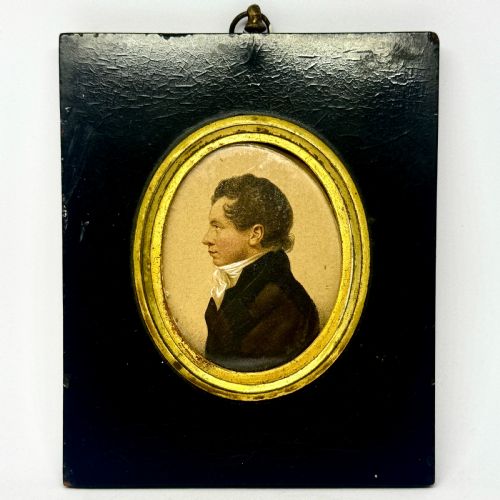
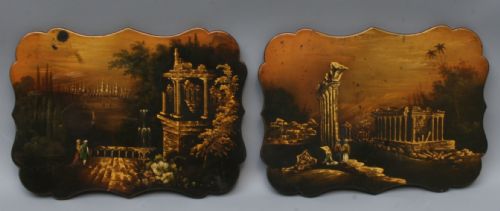
Black lacquer wall art encompasses framed panels, roundels, painted plaques and wall mirrors made across various centuries and origins. A buyer seeking black lacquer wall art encounters items spanning the Regency, Victorian and Meiji periods, alongside Chinese Qing style and Edwardian chinoiserie pieces.
The objects take diverse forms, from rectangular decorative panels and roundels depicting birds and foliage to overmantel mirrors and portrait miniatures. Papier-mâché and wood serve as primary supports for the painted and inlaid surfaces.
Origins stretch from English workshops producing Regency japanned work and Edwardian mirrors to Japanese Meiji and Showa workshops and Chinese export traditions. These pieces reflect enduring global exchanges in decorative finishes and wall decoration.
How they were made
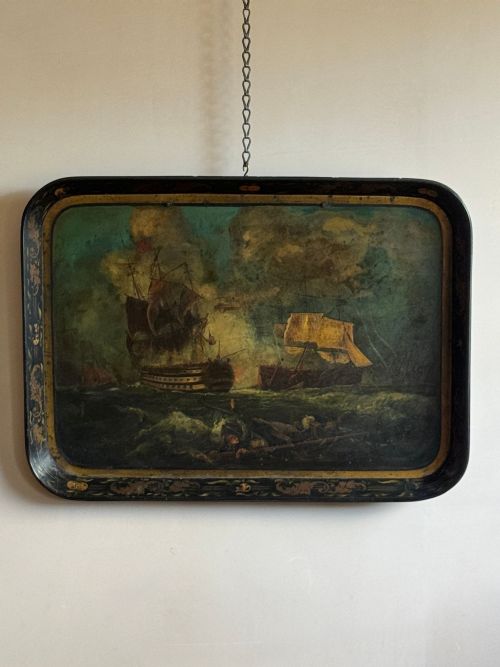
Makers built these pieces upon wooden foundations or moulded papier-mâché, applying successive coats of dark lacquer to achieve a smooth ground. Artisans then hand-painted details or built up relief designs using gold leaf and paint.
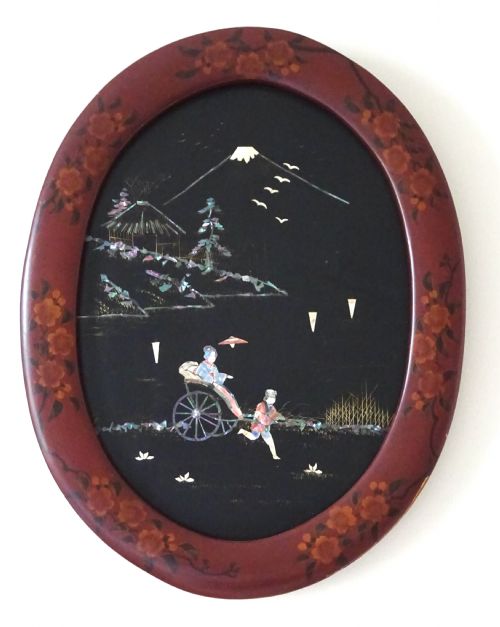
Inlay work forms a central technique, utilising mother of pearl, abalone and foilage elements set into the dark surface. Japanese and Chinese panels frequently combine these shell inlays with fine metallic powders and detailed brushwork.
Some Victorian papier-mâché items began life as domestic tea trays before finding new purpose hanging proudly on nineteenth-century walls.
What varies in quality
The finesse of the hand-painted brushwork and the precision of the mother of pearl or abalone inlay determine the visual impact of a piece. Superior examples display crisp definition in avian and botanical motifs and secure, flush inlay work.
The depth and durability of the original lacquer surface separate standard items from finer works. Age-related craquelure and the preservation of original gilding also influence the character of each panel or mirror.
Iida Takashimaya Company
The Black Lacquer Wall Art Glossary
- Japanning
- European imitation of East Asian lacquerwork produced by applying resinous varnishes and heat-curing them. Artisans often decorated these surfaces with raised gold chinoiserie motifs.
- Papier-mâché
- A composite material made from paper pulp or layers of paper reinforced with glue, pressed and dried. This substance provided a stable, lightweight base for Victorian trays and wall plaques.
- Roundel
- A circular decorative panel or work of art. These pieces frequently feature framed Japanese lacquer designs or painted motifs.
- Overmantel
- A large mirror or decorative panel designed to sit directly above a fireplace mantelpiece. Edwardian examples often incorporated black lacquer frames and integrated mirrors.
- Mother of pearl
- The iridescent internal layer of mollusc shells, utilised for inlay work on panels and frames. Craftsmen cut thin pieces to represent birds, flowers and foliage against dark grounds.
Black Lacquer Wall Art: Frequently Asked Questions
How do I hang heavy lacquer panels?
Most antique panels require secure wall fixings suited to their weight, often utilising D-rings or sturdy wooden battens attached to the back.
Ensure the hanging method distributes the load evenly to protect the wooden or papier-mâché structure from strain.
Where should I place these mirrors?
Overmantel mirrors and wall mirrors function well above mantelpieces or on feature walls where they reflect natural light.
Keep them away from direct sunlight and excessive moisture to preserve the delicate lacquer and gilt surfaces.
How do I clean lacquer art?
Dust the surface gently with a soft, dry microfibre cloth to remove particles without scratching the finish.
Avoid using water, chemical sprays or abrasive cleaners, as moisture penetrates aged lacquer and causes lifting.
How do I distinguish Japanese from Chinese work?
Japanese Meiji and Showa pieces frequently employ refined shell inlay and distinct bird and foliage compositions.
Chinese export items often reference Coromandel or Bantam work, showing carved polychrome details against dark grounds.