



Oriental Lacquer Wall Panels
Oriental lacquer wall panels bring richness and depth to a room through layered finishes and intricate detailing.
Oriental Lacquer Wall Panels
Oriental lacquer wall panels span multiple periods including the nineteenth century and Victorian eras, alongside specific historical phases like the Qing Dynasty and the Japanese Meiji period. These decorative items appear in forms such as wall art, wall plaques, temple panels, roundels, and framed pictures.
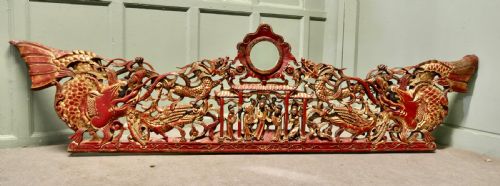
The most common versions on this page are nineteenth-century Chinese and Japanese pieces, often found as pairs or sets depicting birds, foliage, and traditional scenes. Buyers encounter both carved wooden plaques finished in lacquer and framed compositions featuring inlaid elements.
Makers and workshops produced these works for export and domestic use, employing styles ranging from Chinoiserie and Chinese Qing to Japanese Showa and Coromandel work. Each piece brings a distinct regional aesthetic and historical context to interior spaces.
How they were made
Artisans built these panels using woods such as softwood and hardwood as the structural foundation, applying successive layers of lacquer to create a smooth, durable surface. This traditional base received further embellishment through carving and surface gilding.
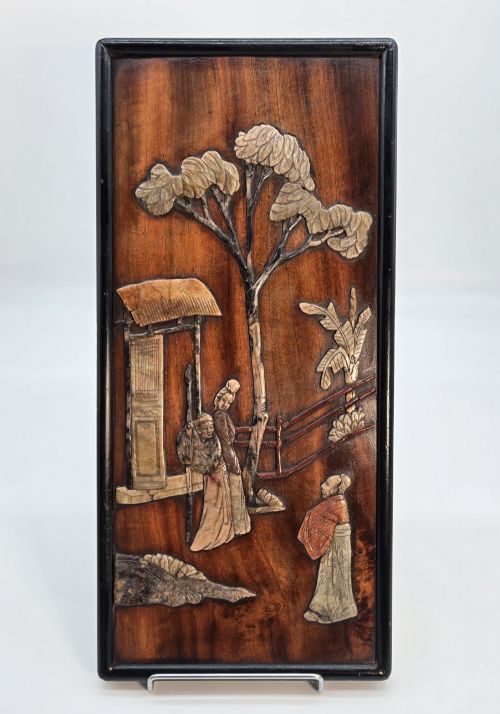
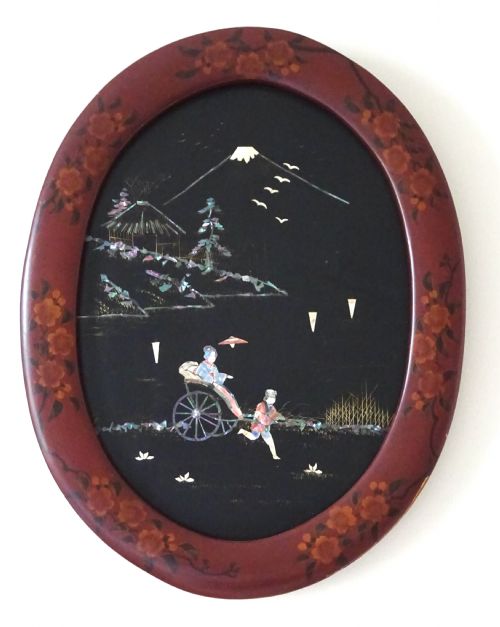
Decoration relied heavily on inlaid materials including mother of pearl, abalone, bone, soapstone, and gold leaf to generate contrast against the dark lacquer ground. Textile works within this category incorporate fine silk alongside standard panel construction.
Materials recorded across these panels include softwood, hardwood, lacquer, gold leaf, mother of pearl, abalone, bone, and soapstone.
What varies in quality
Depth of carving and precision in the application of gold leaf and lacquer distinguish finer panels from simpler commercial pieces. The complexity of the composition, particularly where multiple inlaid materials interact, marks the distinction between standard items and exceptional examples.
The integration of materials like mother of pearl and soapstone requires high technical skill to ensure flush placement within the wood and lacquer ground. Preservation of the original surface finish and the crispness of the carved details dictate the standing of any given panel.
Iida Takashimaya Company
The Oriental Lacquer Wall Panels Glossary
- Lacquer
- A durable resin finish applied in multiple layers to a wooden substrate to create a hard, glossy surface. This technique protects the wood while providing a smooth ground for carving and inlay.
- Mother of Pearl
- The iridescent inner layer of mollusc shells, shaped and embedded into lacquer or wood surfaces to depict foliage and birds. It catches the light to create shimmering visual accents.
- Chinoiserie
- European artistic style reflecting Chinese motifs and decorative techniques, often applied to furniture and wall panels. This aesthetic dominated various periods of interior decoration.
- Coromandel
- Incised Chinese lacquer work where designs are carved into the lacquer ground and filled with colours or gold leaf. The style is also known historically as Bantam work.
Oriental Lacquer Wall Panels: Frequently Asked Questions
How do I hang oriental lacquer wall panels safely?
These panels require secure wall fixings suited to their weight, particularly older wooden pieces that can be heavy. Ensure the hanging wire or brackets engage directly with the structural frame rather than decorative elements.
Position the panels away from direct sunlight and strong heat sources to protect the lacquer finish and inlaid materials from drying out or cracking over time.
What is the difference between Chinese and Japanese panels?
Chinese panels on this page frequently feature deep wood carving, gold leaf, and inlaid stone or shell depicting narrative scenes and nature. They often reflect Qing dynasty aesthetics or export traditions.
Japanese panels from the Meiji period tend to emphasise delicate lacquer work, metal accents, or textile integration. The overall visual balance and specific motifs usually signal the regional origin.
How should I clean lacquer wall panels?
Dust the surface gently with a soft, dry cloth to prevent accumulation in carved recesses and around inlaid mother of pearl. Avoid using water, chemical cleaners, or polishes, as these can damage the aged lacquer surface.
Professional conservation advice should be sought if the panel requires deeper cleaning or stabilisation of loose inlay.
Are these panels sold as single pieces or sets?
The inventory includes both individual wall plaques and matched pairs or larger sets of multiple panels. Sets often display a continuous narrative or balanced decorative scheme across each piece.
Buyers looking to furnish a larger wall space frequently seek out pairs or grouped sets to maintain visual symmetry in a room.