


Carved Lacquer Wall Panels
These carved lacquer wall panels bring rich texture and depth to a room, offering striking focal points for collectors of antique Asian and European export art.
Carved Lacquer Wall Panels
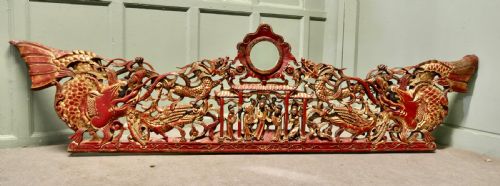
Carved lacquer wall panels encompass decorative architectural elements, framed pictures, and temple fragments originating primarily from nineteenth-century Chinese and Japanese workshops. Buyers searching for carved lacquer wall panels will encounter everything from single temple pediments to matched pairs and larger sets of wooden plaques.
The selections span distinct cultural expressions, featuring Qing Dynasty aesthetics alongside Japanese Meiji period craftsmanship and European Chinoiserie interpretations. Pieces range from simple softwood carvings to elaborate compositions enhanced with giltwood, gold leaf, and inlaid hardstones.
How they were made
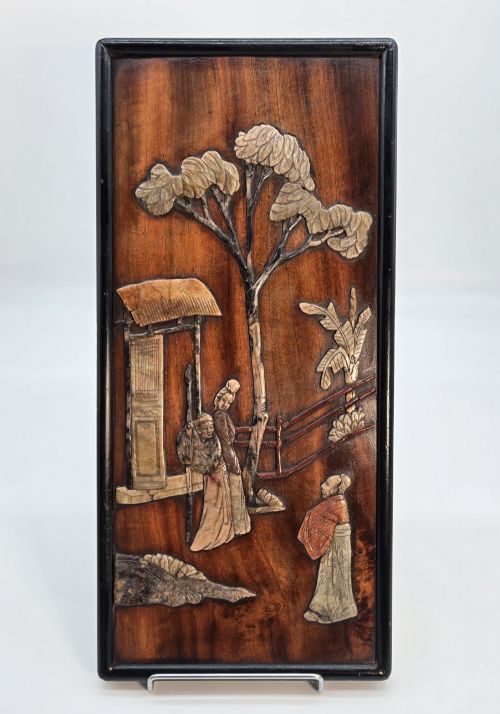
Artisans built these works upon wooden substrates of softwood or hardwood, applying multiple layers of lacquer to create a deep ground suitable for carving. Complex imagery emerged through meticulous incision and relief work, often enriched with contrasting materials such as soapstone, hardstone, and mother-of-pearl inlay.
Gilding techniques introduced gold leaf and giltwood highlights to accentuate key architectural or figurative details within the design. Surface treatments frequently incorporated foilage details and narrative scenes rendered in the manner of traditional export work.
Current listings feature pieces spanning the eighteenth century through the Victorian era, utilising materials including softwood, hardwood, and soapstone.
What varies in quality
Depth and precision of the carving separate standard decorative items from superior examples, with finer pieces exhibiting crisp detailing across figures, birds, and foliage. The complexity of the surface ornamentation, particularly the integration of delicate mop and abalone inlay or extensive gold leaf, dictates the tier of craftsmanship.
Condition of the lacquer surface and the structural integrity of the underlying wooden panel play a primary role in distinguishing finer survivals. Harmony within matched pairs or larger sets further elevates the desirability of the grouping.
The Carved Lacquer Wall Panels Glossary
- Lacquer
- A durable resin applied in multiple layers to a wooden base before being carved or polished. This traditional coating provides a smooth, protective finish that holds intricate detail.
- Chinoiserie
- European artistic style reflecting Chinese motifs and decorative techniques. It frequently appears in nineteenth-century interpretations of earlier export designs.
- Giltwood
- Wood that has been coated with gold leaf or gold paint. This technique highlights relief carvings and frames.
- Meiji period
- Era of Japanese history lasting from eighteen sixty-eight to nineteen twelve. Pieces from this time display refined metalwork, lacquer, and carving standards.
- Temple pediment
- An architectural element placed above an entrance or shrine. These architectural fragments often form the basis of large decorative wall ornaments.
Carved Lacquer Wall Panels: Frequently Asked Questions
How do I hang heavy carved panels?
These wooden items require secure wall fixings distributed evenly to support their weight safely. Professional framing or mirror hangers can install custom brackets that protect the original structure.
Ensure the wall material can bear the load before mounting larger architectural pediments or sets of plaques.
Are these panels waterproof?
While lacquer provides a resilient surface, these antique wooden pieces remain sensitive to high humidity and standing moisture. Keep them away from damp walls and steamy rooms to protect the wood and inlay.
Maintain a stable indoor climate to prevent the lacquer from cracking or lifting over time.
How do I clean antique lacquer?
Dust the surface gently with a soft, dry cloth or a feather duster to remove everyday particles. Avoid using liquid cleaners, polishes, or chemical solvents that might damage the fragile lacquer or gold leaf.
Consult a professional conservator if the piece requires deeper cleaning or stabilization.
What is Coromandel work?
This technique involves coating a wooden panel with dark lacquer, carving through the layers to reveal a contrasting ground, and painting the recessed areas. It was widely exported from China to European markets during earlier centuries.
Nineteenth-century makers often produced pieces in this distinct style.