

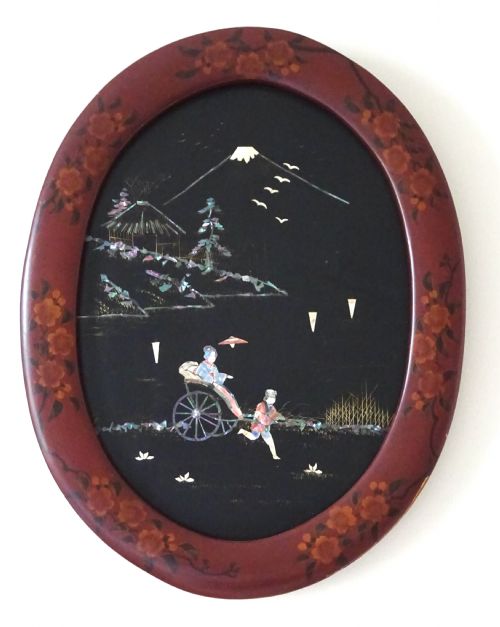


Asian Lacquer Wall Art
Asian lacquer wall art pieces bring rich texture and depth to an interior through layered resin, mother-of-pearl inlay, and carved wood.
Asian Lacquer Wall Art
Asian lacquer wall art encompasses decorative plaques, carved wooden panels, roundels, and framed pictures originating from Chinese and Japanese traditions. These pieces often feature intricate depictions of birds, foliage, or figures rendered in traditional styles.
Buyers frequently encounter nineteenth-century panels and plaques finished in red or black lacquer, enriched with mother-of-pearl and abalone shell. Examples range from Chinese Qing style carvings to Japanese roundels and Meiji period works.
The selection includes matched pairs of temple panels and single decorative items designed specifically for interior display. Each piece relies on traditional craftsmanship to create a durable and visually striking surface.
How they were made
Makers built these pieces using softwood or hardwood foundations, carved meticulously before receiving multiple coats of lacquer. This resin coating provided a smooth, durable base capable of preserving fine details over generations.
Detailing relied heavily on the application of mother-of-pearl, abalone shell, and gold leaf or giltwood highlights. Craftsmen inlaid these lustrous materials into the wet or carved lacquer surface to create contrast and catch the light.
Daruma stares out from nineteenth-century wooden plaques, offering silent wisdom to anyone hanging him near the hallway.
What varies in quality
Depth and precision in the carving dictate the artistic merit of a panel, distinguishing flat decoration from high-relief work with distinct perspective. Finer pieces demonstrate control in the execution of tiny foliage and avian details.
The selection and placement of mother-of-pearl and abalone inlay create a significant tier in craftsmanship. Superior examples utilise carefully graded shell pieces that retain their natural iridescence and sit flush within the lacquer surface.
The Asian Lacquer Wall Art Glossary
- Lacquer
- A durable resin derived from specific trees, applied in numerous layers to wood and polished to a smooth finish. It forms a hard protective surface that resists moisture and wear.
- Mother of Pearl
- The iridescent inner layer of mollusc shells, harvested to create luminous inlay details on panels and plaques. It reflects light in shifting tones of green, pink, and silver.
- Roundel
- A circular decorative panel or plaque intended for wall display. These pieces often frame symmetrical compositions or single subjects.
- Qing Style
- Design characteristics originating from the Qing Dynasty in China, marked by formal balance and detailed natural motifs. It appears frequently in carved wooden panels and lacquered works.
- Meiji
- A historical period in Japan noted for exceptional decorative arts and metalwork. Pieces from this era often display refined naturalism and meticulous surface finishing.
Asian Lacquer Wall Art: Frequently Asked Questions
How should I hang Asian lacquer wall art?
Support the weight of these wooden and lacquered pieces securely using appropriate wall fixings suited to the panel size. Avoid hanging them in areas prone to direct sunlight or damp conditions.
Keep the environment stable to protect the delicate lacquer surface and shell inlay from temperature fluctuations. Gentle dusting with a dry microfibre cloth maintains the finish without harsh cleaning agents.
Are these panels sold in pairs?
Many surviving Chinese and Japanese decorative panels appear as matched pairs intended to frame a central architectural feature or furniture piece. Single roundels and standalone plaques also form a significant portion of available works.
Pairs often feature mirrored compositions depicting birds in branches or related foliage. Checking the dimensions and mounting points helps determine how best to display them together.
What is abalone inlay?
Abalone inlay involves embedding thin slices of marine mollusc shell into carved recesses within the lacquer surface. The material provides intense multicoloured iridescence that contrasts sharply with dark lacquer.
Craftsmen selected pieces specifically for their colour gradients to represent feathers, leaves, or water. This technique requires steady hands and precise fitting to ensure longevity.
How do I distinguish Chinese from Japanese pieces?
Chinese panels often feature deep wood carving combined with rich red or black lacquer, frequently depicting traditional landscape and floral motifs. Japanese pieces often lean towards refined roundels, masks, or subjects executed in Meiji and Showa styles.
Examining the underlying woodwork and the specific application of gold leaf or shell provides further clues. Regional techniques in carving depth and subject matter guide proper attribution.