
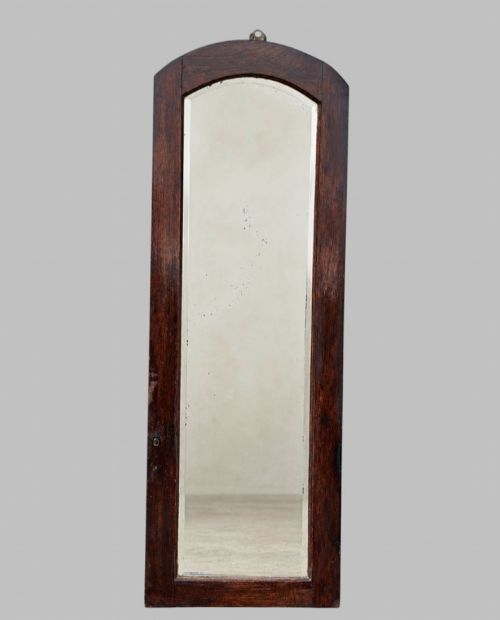
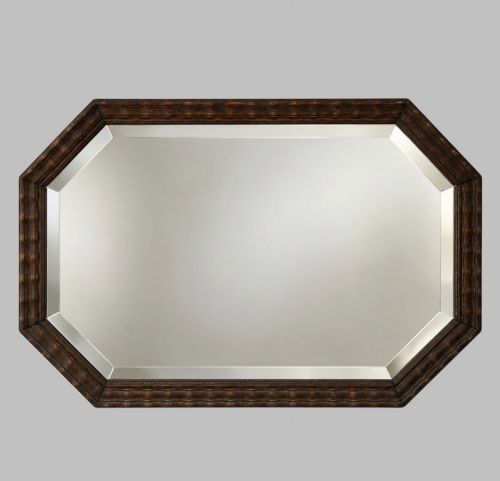
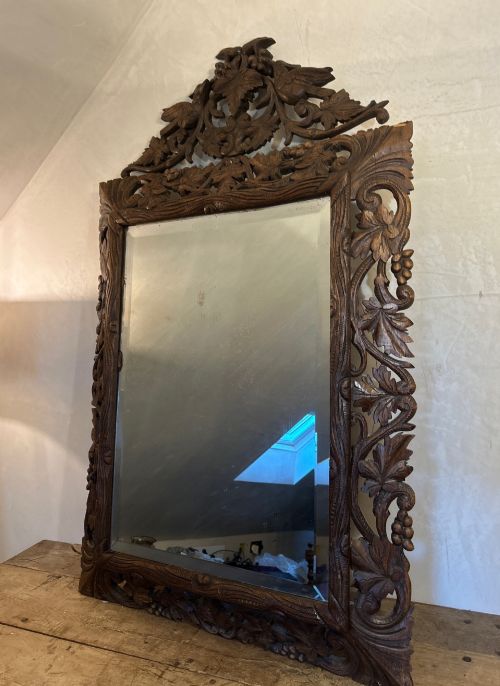
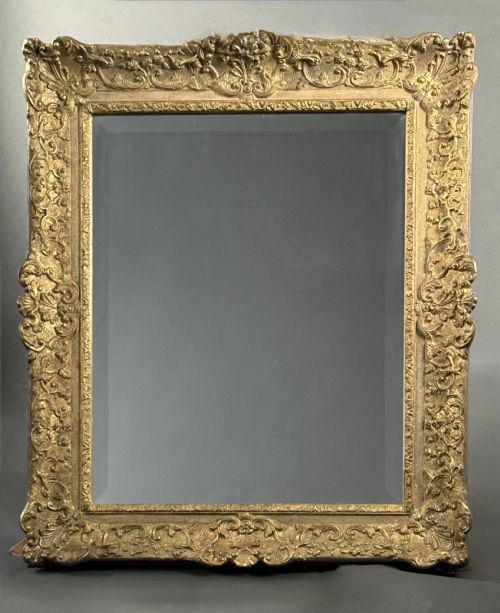
Framed Bevelled Glass Mirror
A framed bevelled glass mirror brings depth and reflective light to a room through angled edge work on the glass plate.
Framed Bevelled Glass Mirror
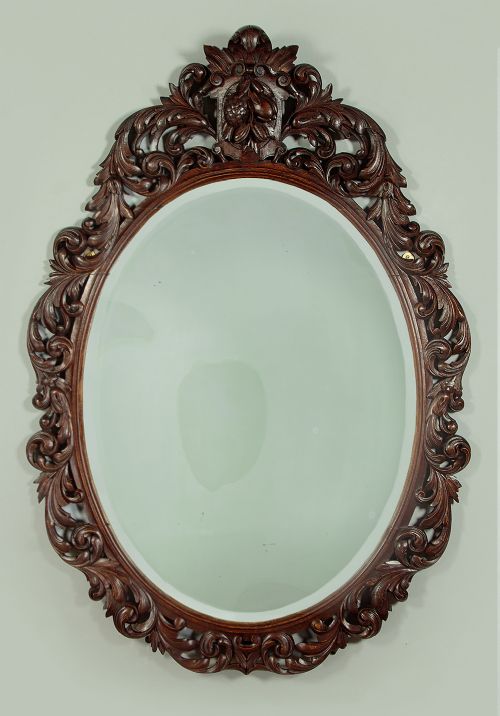
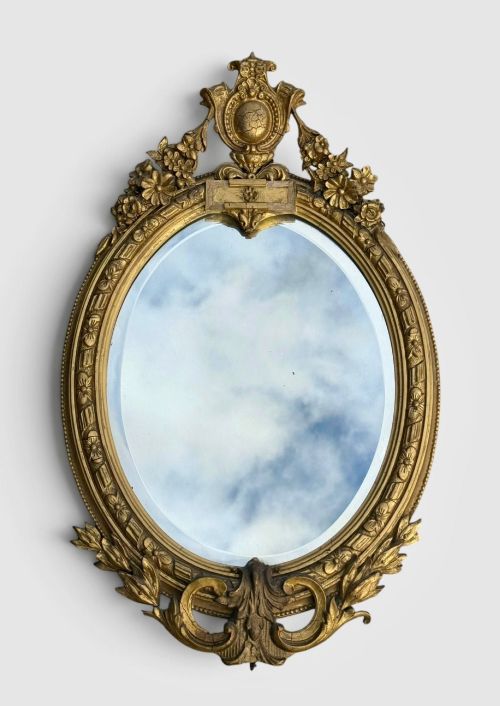
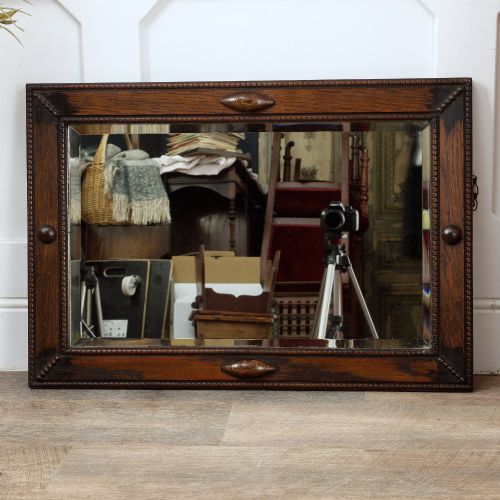
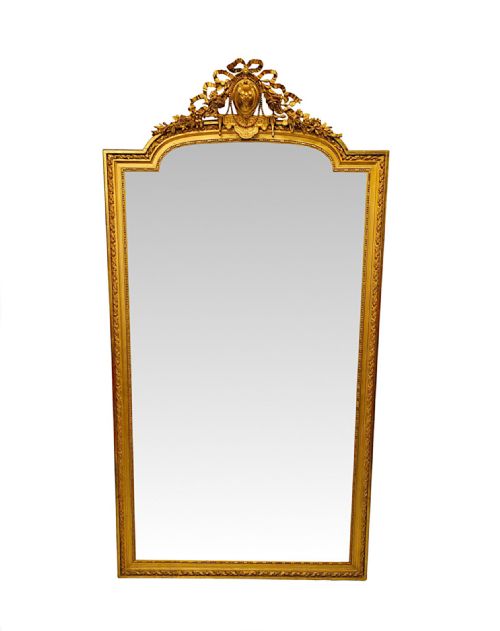
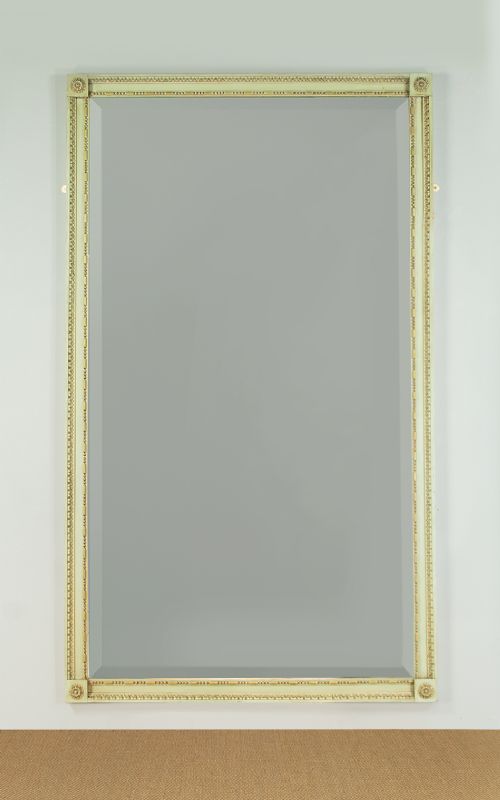
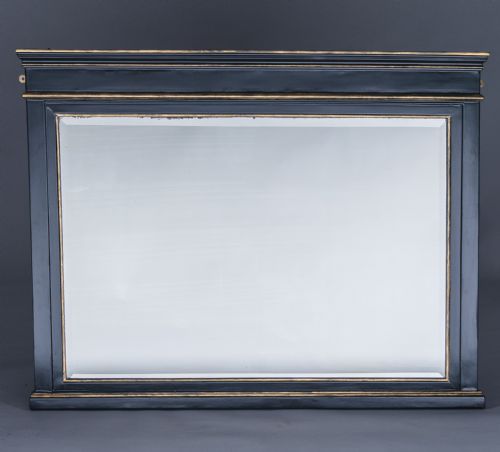
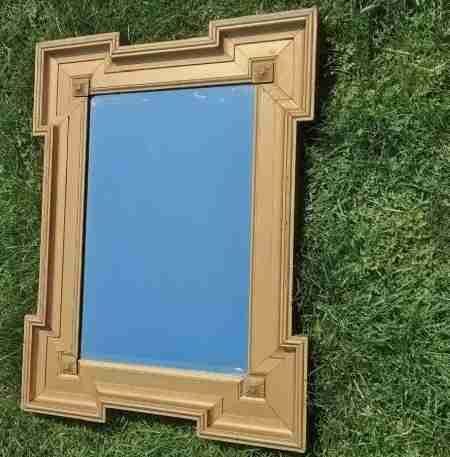
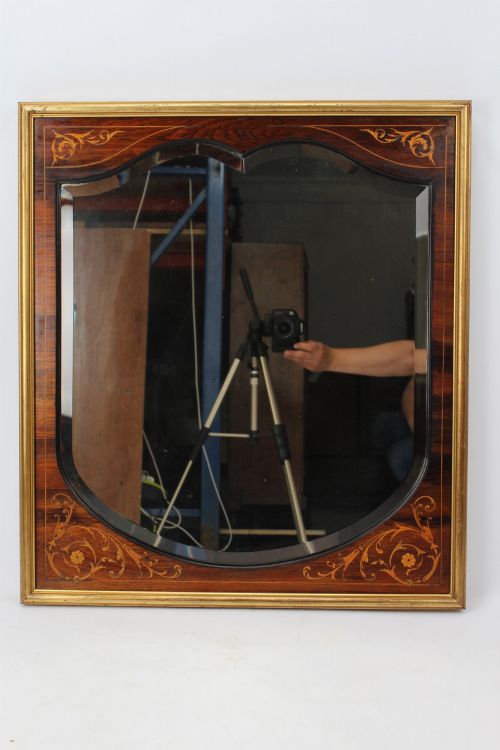
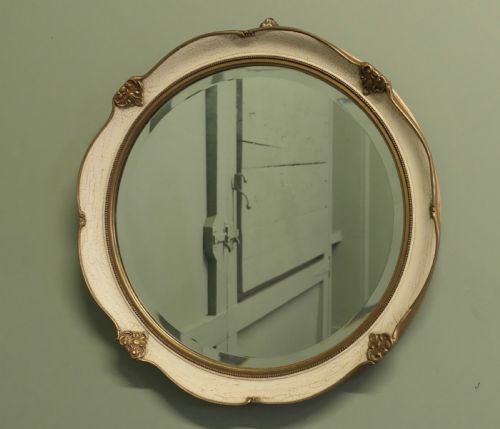
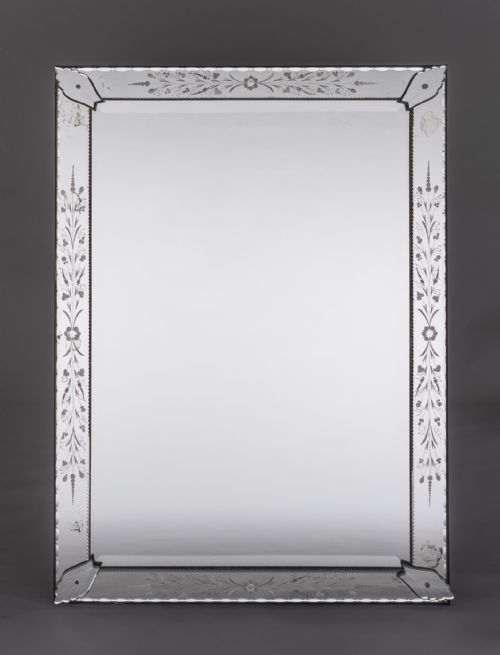
A framed bevelled glass mirror is a decorative looking glass featuring a distinct angled slope ground along the outer perimeter of the plate. The selection spans the Victorian and Edwardian eras alongside the early twentieth century, taking forms such as wall mirrors, overmantles, dressing table pieces and hall mirrors.
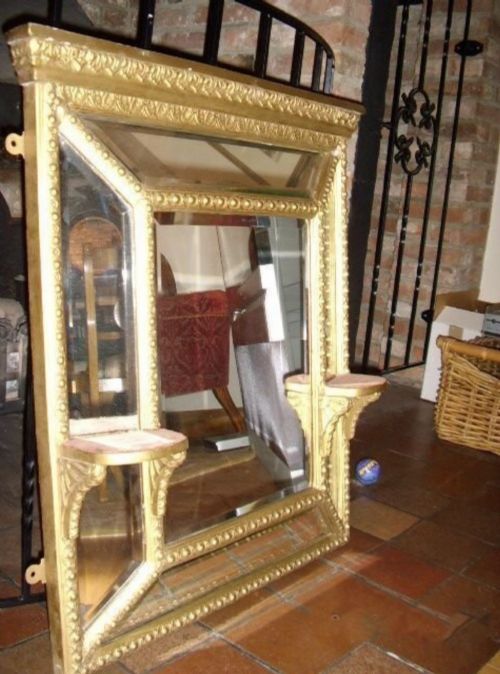
The most common examples on this page are sturdy oak and carved giltwood wall pieces originating from British and French workshops. These range from plain architectural frames to heavily ornamented Rococo Revival and Aesthetic Movement designs.
How they were made
Makers constructed the timber supports using solid oak, walnut, mahogany and bamboo, often applying layers of gesso to create intricate moulded ornamentation before gilding with gold leaf or painting. Glass plates were ground by hand along the edges to produce the characteristic bevel before being set into the wooden or brass frames.
Metal elements incorporate embossed brass and copper work typical of Arts and Crafts production, whilst specialised pieces feature mercury glass or painted silk inserts. Frames combine joinery techniques with applied carved details, secured with traditional backing boards.
One exceptional Edwardian wall mirror includes a painted figure of a soldier standing guard within the design.
What varies in quality
The standard of a framed bevelled glass mirror rests upon the depth and precision of the edge grinding on the glass plate and the crispness of the frame's carved or moulded detail. Finer examples display deep, hand-bevelled glass alongside substantial timber construction or expertly applied gilt gesso rather than shallow surface moulding.
Makers of high quality pieces utilised superior materials such as figured rosewood, heavy cast brass, and genuine gold leaf, pairing them with robust backing construction. Lesser examples rely on simpler painted finishes and thinner plates lacking the substantial presence of workshop pieces.
Waring & Gillow·John Belchier
The Framed Bevelled Glass Mirror Glossary
- Bevelled Glass
- A mirror plate with edges cut and polished at an angle to create a framed border effect within the glass itself. This technique catches light and adds visual depth.
- Giltwood
- Timber, typically lime or pine, coated in gesso and covered with fine gold leaf. It provides a brilliant reflective surface for ornate frames.
- Overmantle Mirror
- A wide looking glass designed specifically to hang on the wall above a fireplace mantel. These often incorporate architectural proportions to suit domestic interiors.
- Gesso
- A plaster mixture applied to wood frames as a smooth base for gilding or painting. It allows craftsmen to carve intricate relief decoration.
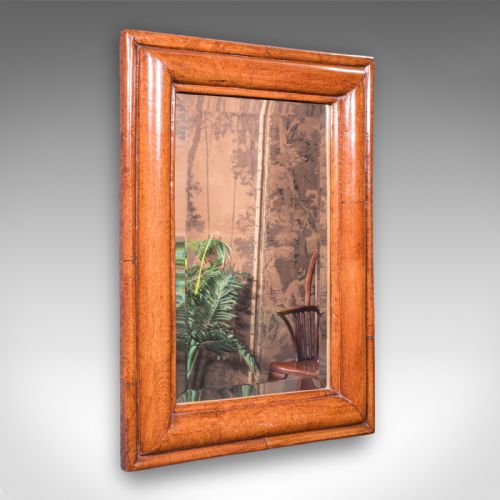
- Cushion Frame
- A convex, rounded frame profile that swells outward toward the outer edge. This style creates a pronounced, sculptural border around the glass plate.
Framed Bevelled Glass Mirror: Frequently Asked Questions
Where should I hang an overmantle mirror?
An overmantle mirror sits securely on the wall directly above a fireplace mantelpiece, anchoring the vertical space in a reception room or parlour. Its wide proportions reflect surrounding light across the room.
Ensure the wall fixings match the substantial weight of these timber and glass pieces. Positioning the mirror at the correct height balances the hearth below.
How do I care for antique glass?
Clean antique glass gently using a soft cloth and mild cleaning solution applied to the cloth rather than sprayed directly onto the surface. Avoid harsh chemicals that might seep behind the plate.
Protect the original backing boards and frame gilding from excessive moisture. Regular dusting keeps the carved wooden surfaces preserved.
What is a mercury glass plate?
A mercury glass plate utilises an older manufacturing method involving a tin and mercury amalgam poured behind the glass to create the reflective surface. This technique produces a distinctive mottled appearance over time.
Such plates often exhibit soft foxing and dark spots that distinguish them from modern silvered mirrors. They offer a muted, atmospheric reflection typical of nineteenth-century pieces.
How do I date a Victorian mirror?
Dating a Victorian mirror involves examining the wood species, construction methods, and stylistic cues such as ebonising, brass embossing, or Aesthetic Movement motifs. The weight and thickness of the glass plate also provide clues to the period of manufacture.
Original backing boards, hand-cut screws, and workshop labels help confirm the age of the piece. Comparing the frame style with documented nineteenth-century designs narrows the timeline.