


Edwardian Marquetry Mirror
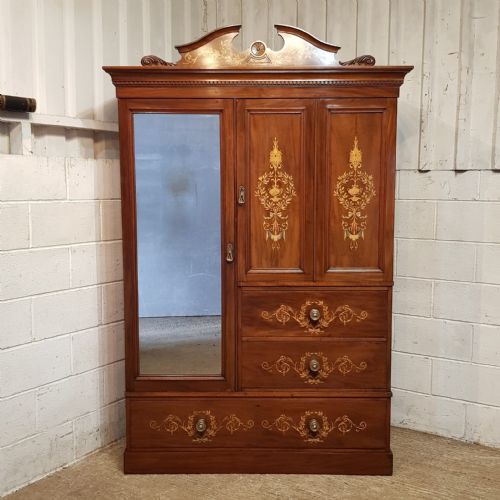
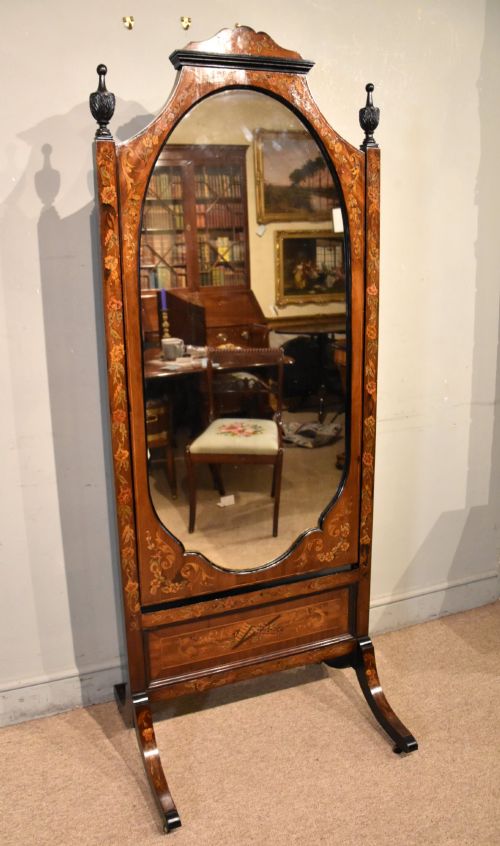
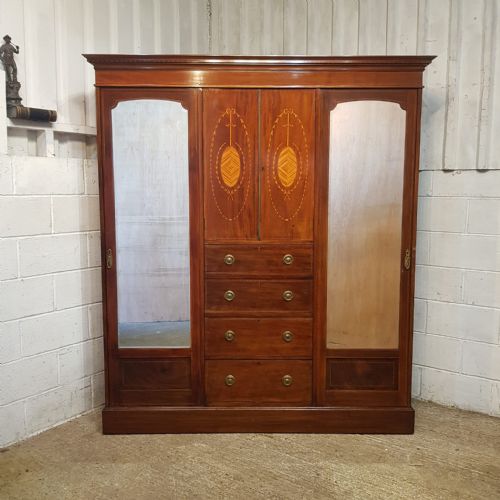
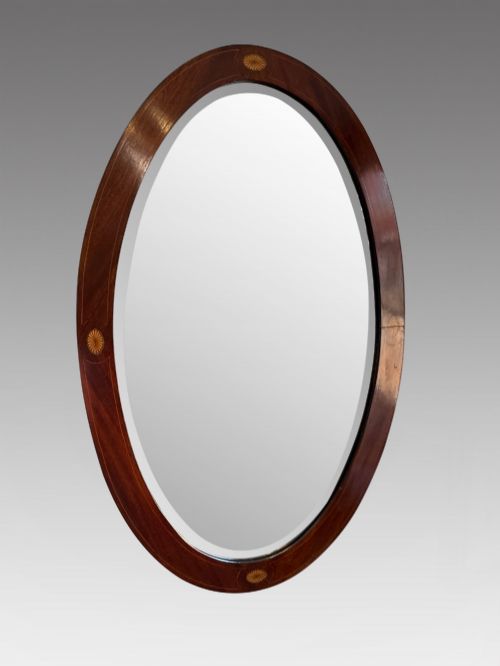
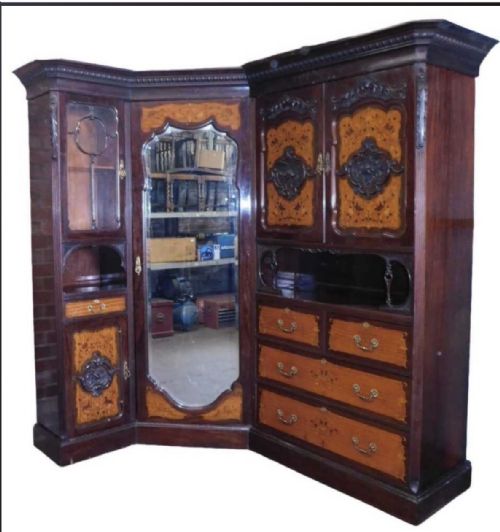
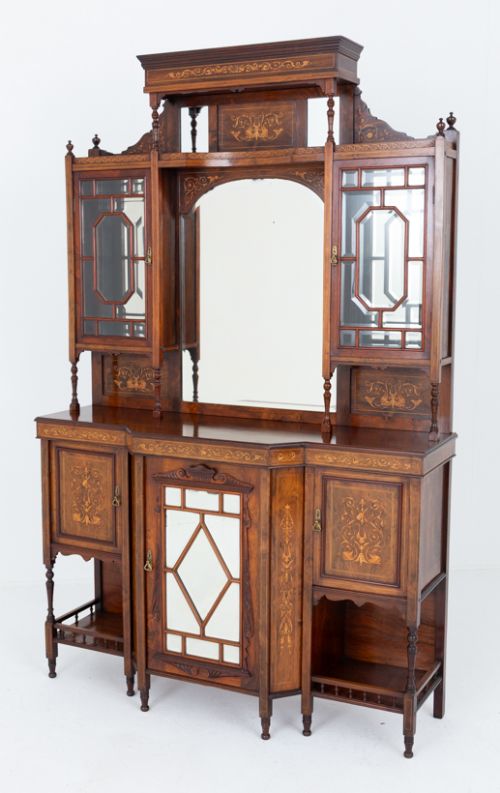
An edwardian marquetry mirror brings fine floral and geometric wood inlay together with polished glass, offering a decorative focal point for a hall, bedroom or parlour.
Edwardian Marquetry Mirror
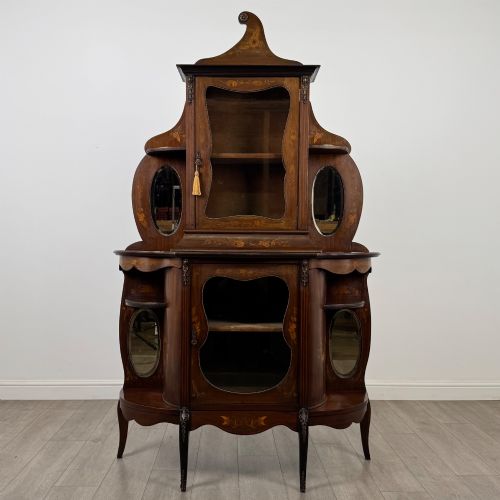
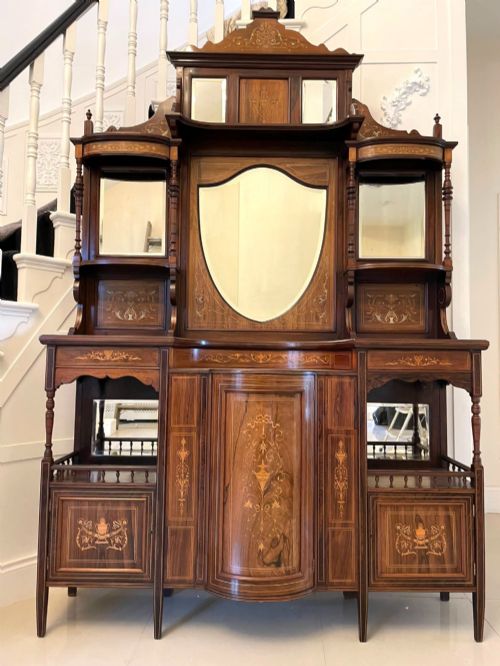
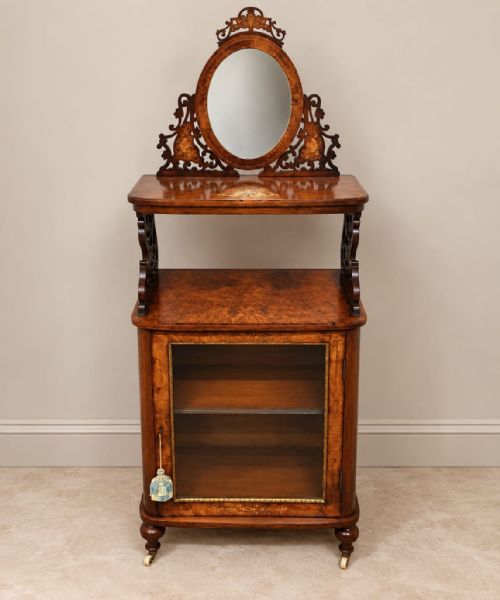
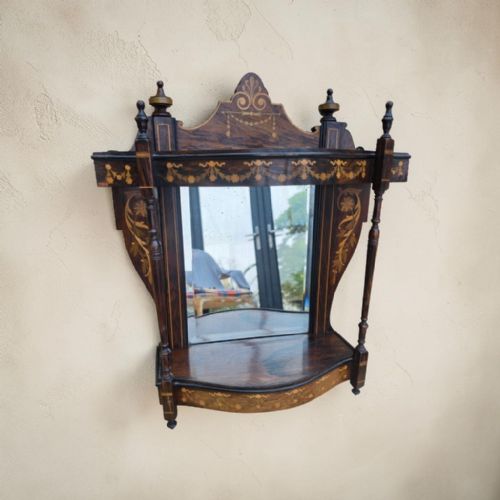
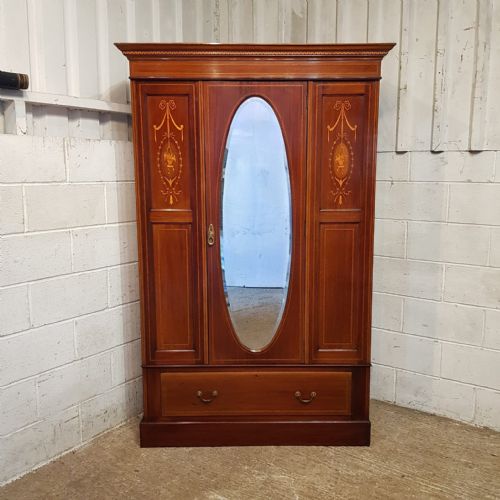
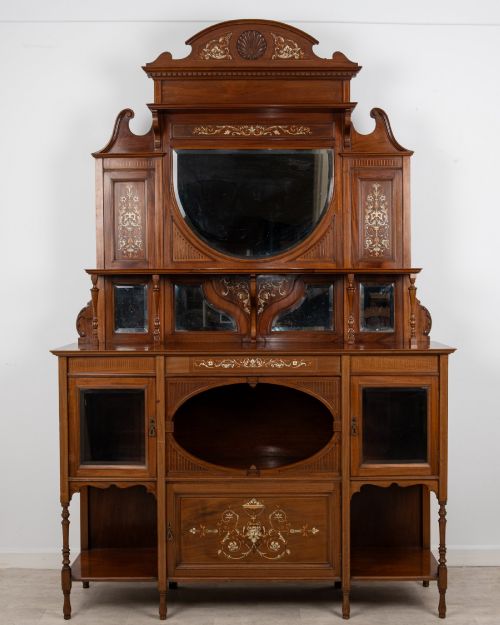
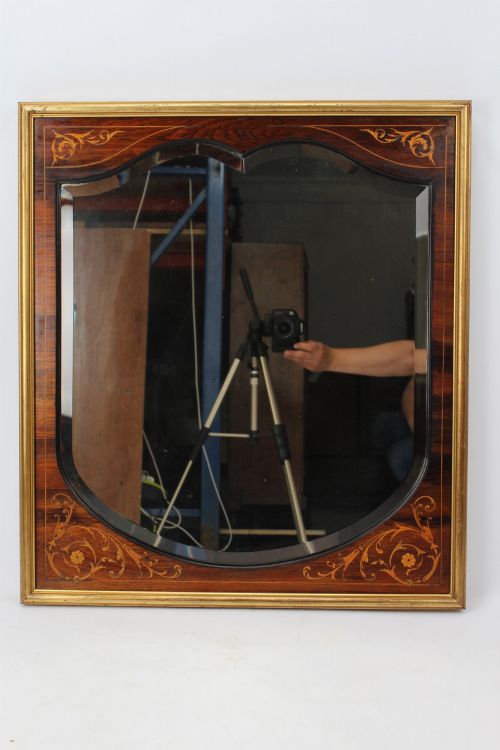
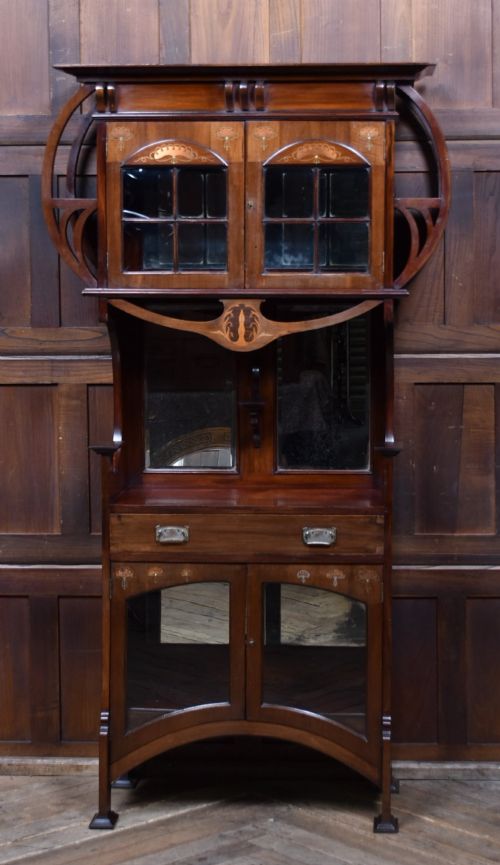
When searching for an edwardian marquetry mirror, one encounters wall-hung, overmantel and dressing table variants produced during the late nineteenth and early twentieth centuries. These pieces combine reflective glass with detailed wood veneer work set into primary timbers such as mahogany or rosewood. The Edwardian examples often echo earlier Sheraton Revival themes through symmetrical floral urns and ribbon motifs.
Beyond wall-mounted looking glasses, the broader selection includes overmantel mirrors designed to sit above a fireplace and tabletop dressing table glasses with tilting frames. The marquetry ornamentation typically frames the glass plate or decorates the surrounding wooden border and crest. Most surviving items rely on mahogany or rosewood backings to support the inlaid decorative panels.
Materials and Construction
Cabinet makers constructed the bodies of these mirrors using dense hardwoods such as mahogany and rosewood, occasionally accented with lighter contrasting timbers like satinwood. The glass plate sits within a rebated frame, secured from behind with wooden slips or backing boards. Brass screws and iron fixings hold the structural elements together.
The marquetry decoration involves slicing thin veneers of various coloured woods and assembling them into pictorial or geometric patterns before gluing them to the primary surface. Craftsmen then scraped and polished the surface with shellac or oil to bring out the natural grain and contrast of the contrasting timbers.
Several mirrors incorporate tiny corner shelves designed specifically for holding calling cards.
Judging Quality and Execution
The distinction between standard production and the finest work lies in the precision of the veneer cutting and the complexity of the wood selection. Superior pieces display tight, seamless joints within the marquetry, utilising naturally coloured woods rather than painted or stained substitutes to achieve shading in floral and scroll motifs.
Secondary quality factors include the depth of the timber frame moulding and the clarity of the mirror plate itself. Better examples retain original bevelled mirror glass and robust original brass hanging brackets or pivoting support arms that bear the weight of the frame without sagging.
Maple & Co·Edwards & Roberts·Gillows
The Edwardian Marquetry Mirror Glossary
- Marquetry
- A decorative technique where small pieces of tinted or natural wood veneer are fitted together to form pictorial or geometric patterns on a wooden backing. This differs from inlay by covering the entire surface rather than resting within recessed channels.
- Satinwood
- A lustrous, yellow-toned timber imported from tropical regions, frequently utilised in fine Edwardian cabinetry to provide bright contrast against darker woods like mahogany and rosewood. Its natural sheen makes it particularly effective for detailed banding.
- Overmantel mirror
- A large looking glass specifically proportioned to hang on the wall immediately above a fireplace mantelpiece. These pieces often incorporate small display shelves or heavy architectural mouldings.
- Sheraton Revival
- A late nineteenth and early twentieth century design movement that reinterpreted the refined classical furniture styles of the eighteenth-century designer Thomas Sheraton. Pieces in this style typically feature light mahogany construction with delicate marquetry and symmetrical proportions.
- Bevelled glass
- A mirror plate whose outer edges are ground and polished at an oblique angle to create a decorative tapered border. This traditional technique catches the light and adds depth to the reflection.
Edwardian Marquetry Mirror: Frequently Asked Questions
How do I hang a heavy antique mirror?
These large wall-hung pieces require secure fixings screwed directly into structural wall studs or masonry using appropriate wall anchors. The weight must be distributed evenly across robust brass rings or original brackets rather than relying on decorative wire.
Ensuring the mounting hardware matches the load capacity prevents structural strain on the wooden frame and maintains the security of the hanging.
How do I clean antique mirror glass?
Wipe the glass surface gently using a soft cloth slightly dampened with distilled water or a mild glass cleaner sprayed onto the cloth rather than directly onto the glass. Avoid letting moisture seep behind the wooden frame or into the silvered backing.
Harsh chemical solvents and abrasive pads can damage both the fragile silvering on the rear of the glass and the surrounding polished wood frame.
Can I polish the wooden frame?
Apply a microcrystalline wax sparingly with a soft cloth to nourish the timber and protect the original polish from dust and dry air. Buff the surface gently after a short period to achieve a soft sheen.
Avoid modern liquid silicone sprays or heavy furniture polishes that build up sticky residues and soften historic shellac finishes.
What is the difference between an inlay and marquetry?
Inlay involves recessing pieces of wood, metal or shell into channels carved directly into a solid timber background. Marquetry creates a complete veneer picture independently before gluing the entire assembly onto the structural carcase.
Both techniques appear frequently across Edwardian furniture, often combined to accent borders and central panels.