


Jacobean Revival Mirror
A jacobean revival mirror brings heavy, carved character to a room, offering dark timber frames and traditional proportions.
Jacobean Revival Mirror
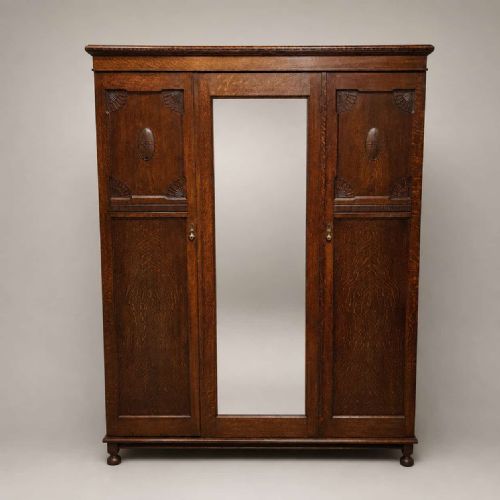
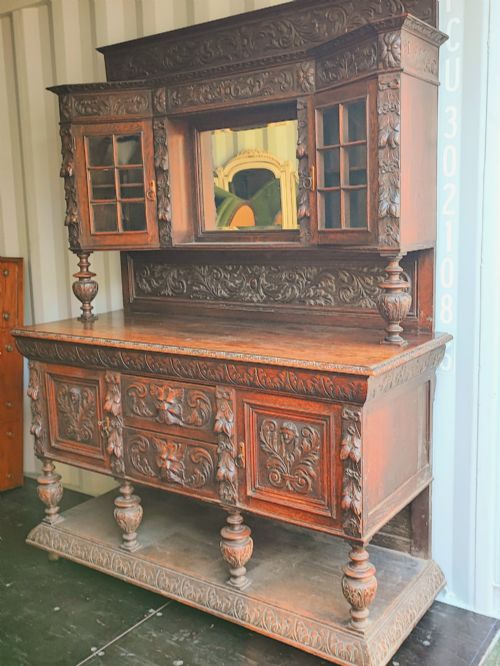
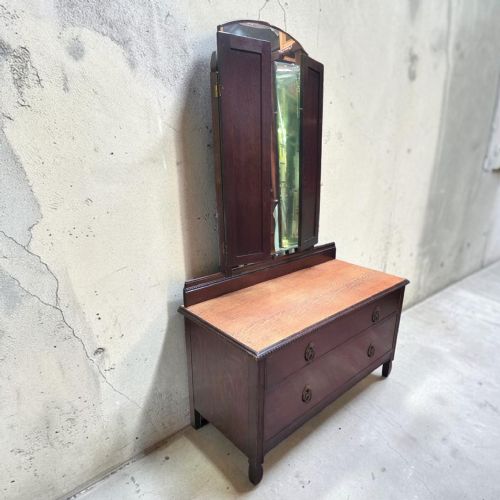
When you search for a jacobean revival mirror, you are looking at dark timber frames built in the spirit of seventeenth-century English design, predominantly emerging from the Victorian era into the 1920s and 1930s. The versions most commonly met on this page include wall-mounted plates, overmantel mirrors, and dressing table attachments framed in solid or carved oak.
These pieces draw heavily upon historical revivalism, often pairing dark oak with bevelled glass, barley twist supports, or brass fixings. While some examples appear as standalone wall mirrors, others form part of larger furniture suites such as dressing chests and sideboards.
The aesthetic leans towards weight and presence, utilising traditional joinery and carved details that echo Tudor and Carolean precedents. They suit interiors seeking historical gravity without the fragility of genuine seventeenth-century survivals.
How they were made
Makers built these pieces using solid oak, often darkened with stain or polish to mimic centuries of ageing and exposure. Frames feature hand-carved details, bevelled glass plates, and occasionally turned elements like barley twist columns.
Construction methods relied on sturdy timber framing, frequently incorporating brass fixings and leaded glass elements in related cabinetry. The glass sits securely within rebated wooden frames designed to support the weight of heavy mirror plates.
Jacobean Revival Mirror Retail Price Guide 2026
Typical asking prices for jacobean revival mirror among the pieces listed under this phrase on Sellingantiques today, from the lower quarter to the upper quarter. They describe what is for sale here now, not the wider market.
Listings feature oak frames spanning the Victorian era, Edwardian period, and the 1920s and 1930s.
What varies in quality
The distinction between ordinary and superior examples lies in the depth and crispness of the timber carving, alongside the quality of the oak itself. Better pieces display carefully proportioned frames with well-executed mouldings rather than shallow, mechanical stamping.
Weight, stability, and the condition of the original mirror glass further separate the tiers, with heavier solid oak frames and clear, undistorted plates representing finer craftsmanship.
The Jacobean Revival Mirror Glossary
- Jacobean Revival
- A nineteenth and twentieth-century design movement recreating the architectural and furniture styles of the early seventeenth century. It relies heavily on dark oak and geometric carving.
- Barley Twist
- A spiral turning technique used on furniture legs and mirror supports. It became particularly popular during revival periods.
- Overmantel Mirror
- A large mirror designed to hang specifically above a fireplace mantelpiece. These often incorporate multiple glass sections.
- Carolean Style
- A design influence referencing the reign of Charles II, characterised by rich carving and ornate details. It frequently overlaps with revival aesthetics.
- Leaded Glass
- Glass panes held together by lead cames, occasionally found in related cabinets and furniture doors. It adds architectural texture to a piece.
Jacobean Revival Mirror: Frequently Asked Questions
How do I date a jacobean revival mirror?
Dating relies on examining the construction methods, the type of timber backing, and the fixings used on the reverse. Victorian and early twentieth-century pieces often use machine-sawn components alongside hand-finished details.
Looking at the bevel of the glass and the composition of the oak frame helps distinguish nineteenth-century examples from those produced in the 1920s or 1930s.
Are these mirrors heavy?
These frames are constructed from solid oak, which makes them substantially heavier than modern wall mirrors. Proper wall fixings and sturdy anchor points are essential for safe hanging.
When positioning an overmantel or large wall-mounted version, ensure the fixings secure directly into wall studs or masonry.
Where should I hang a dark oak mirror?
These pieces suit living rooms, hallways, and dining spaces where dark wood furniture provides a grounding element. They pair well with period interiors and neutral walls that let the carved timber stand out.
Placing them opposite a window helps reflect light into the room, balancing the dark tone of the oak frame.
What is the difference between jacobean and tudor revival?
Tudor revival generally references earlier sixteenth-century forms with simpler, robust framing, while Jacobean revival incorporates more ornate turning and strapwork decoration from the seventeenth century.
In practice, makers often blended these historical motifs, meaning many mirrors feature overlapping stylistic elements from both periods.