
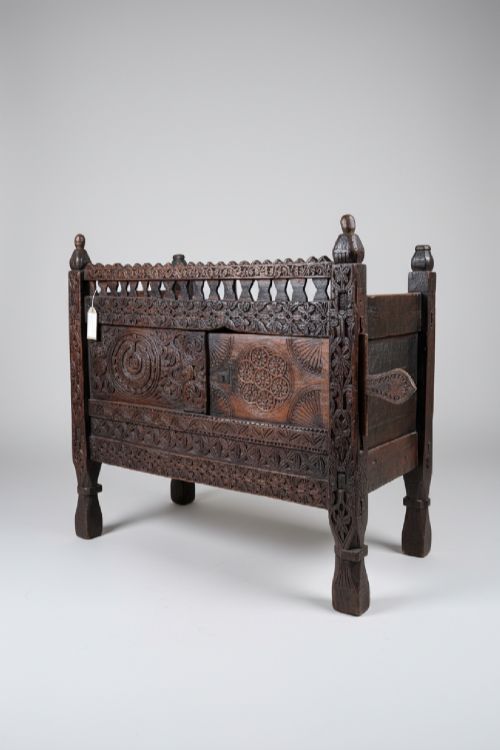
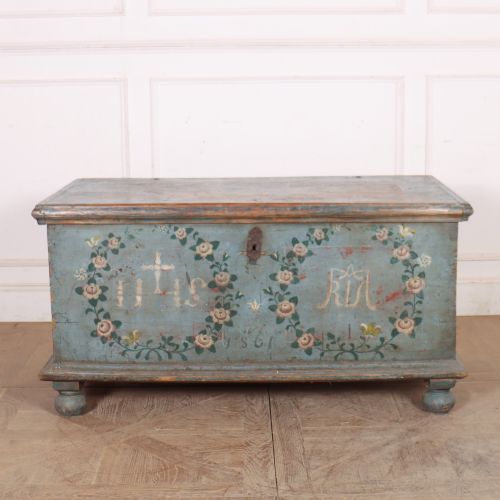


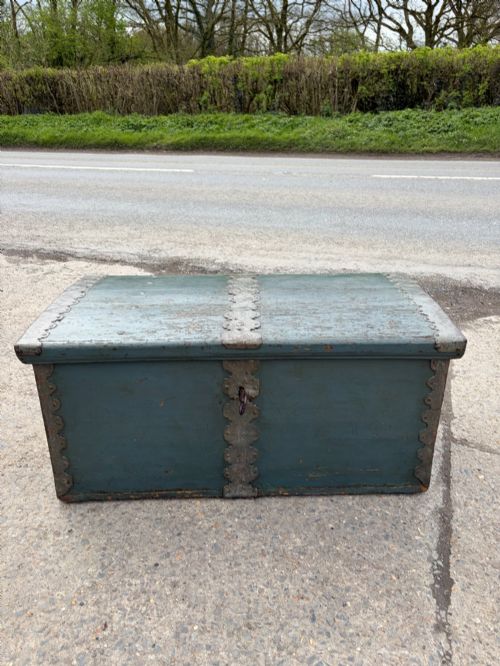

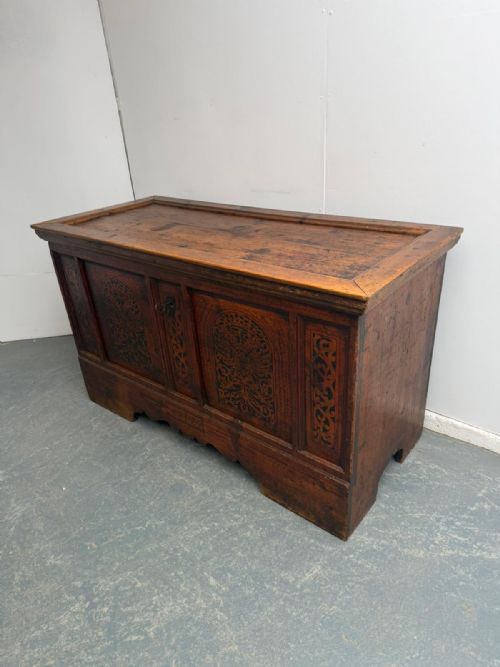


Folk Art Storage Trunk
A folk art storage trunk brings vibrant regional tradition into a room, offering robust utility wrapped in centuries of hand-painted character.

Folk Art Storage Trunk
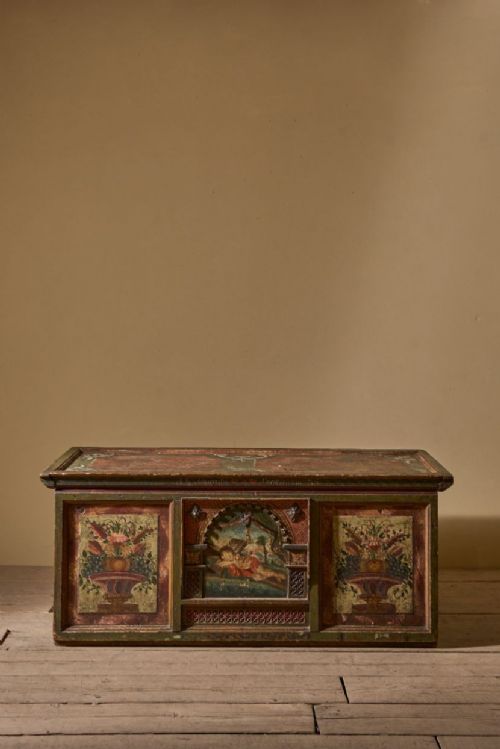
A folk art storage trunk serves as a tangible link to domestic history, originating from domestic settings across Europe and the British Isles during the eighteenth and nineteenth centuries. These pieces encompass dowry chests, marriage chests, and strong boxes designed for holding textiles, valuables, or personal belongings.
The selection here draws heavily from Scandinavian country workshops, Hungarian village traditions, and Alpine regions, alongside examples from the Victorian era and Georgian periods. Buyers frequently encounter painted pine coffers and dome-top chests displaying regional motifs and distinct patination.
How they were made
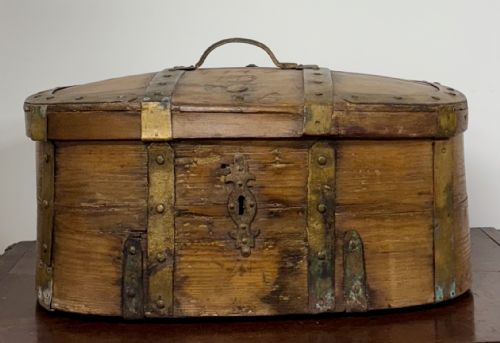
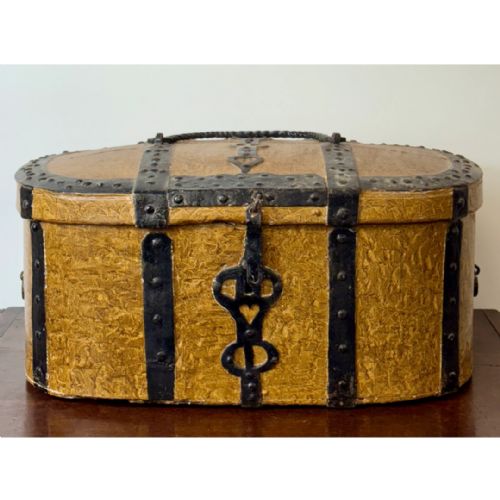
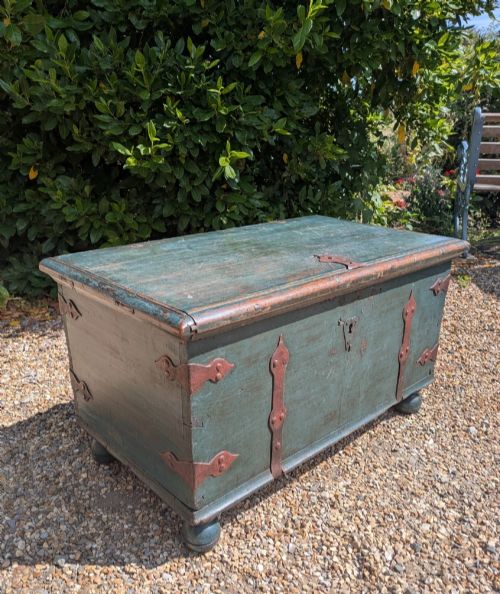
Makers constructed these storage pieces predominantly from solid pine and oak, relying on durable local timber suitable for daily domestic use. Panels were joined using traditional methods and frequently secured with hand-forged iron strapwork, hinges, and corner brackets.
Surface decoration relied on applied pigment and paint, sometimes finished over hand-carved woodwork. Artisans utilised local mineral and plant-based colours to apply floral patterns, crests, and narrative scenes directly to the timber.
The inventory spans the 18th, 19th, and early 20th centuries, taking in Georgian, Regency, and Victorian periods.
What varies in quality
The survival and integrity of the original paint surface dictates much of the visual impact, distinguishing pieces with untouched, authentic pigment from those with later overpainting. The complexity and execution of the folk art motifs, whether floral garlands or heraldic designs, reflect the skill of the regional artisan.
Structural robustness also separates examples, seen in the weight of the timber, the preservation of hand-forged ironwork, and the intact condition of dovetailed or pegged joints.
The Folk Art Storage Trunk Glossary
- Marriage chest
- A large storage box commissioned or decorated to mark a wedding, frequently inscribed with initials or dates and gifted as part of a dowry. These pieces often display the most elaborate folk art painting.
- Dome top
- A curved lid construction designed to shed water and provide extra internal headroom for bulky textiles. This profile is common on 19th-century strong boxes and travel trunks.
- Strapwork
- Heavy bands of iron fixed across the exterior of a chest to reinforce the corners and joints. Hand-forged examples add both structural strength and decorative contrast to the timber.
- Cassone
- A traditional Italian large chest used for storing household linens and valuables. These form part of the broader tradition of decorative storage furniture.
- Strong box
- A heavily fortified small chest or box utilised for securing currency and documents. They typically incorporate robust iron straps and secure locking mechanisms.
Folk Art Storage Trunk: Frequently Asked Questions
What were folk art storage trunks used for?
These chests primarily served practical domestic functions, holding heavy woollens, household linens, and personal valuables within the home. Many functioned specifically as marriage or dowry chests, commissioned to transport a bride's belongings to her new household.
Over time, they evolved into central pieces of furniture that doubled as seating or sturdy tables within rural dwellings.
How do I identify a Scandinavian folk art trunk?
Scandinavian examples frequently utilise native pine as a base material and feature distinctive painted palettes dominated by blues, reds, and creams. The decoration commonly includes stylised floral motifs, geometric borders, or traditional regional symbols.
Construction details such as dovetailed corners and hand-forged iron hardware further point to northern European country workshops of the eighteenth and nineteenth centuries.
How do I clean and care for original painted surfaces?
Original paint requires gentle maintenance using a dry microfiber cloth to remove dust without disturbing the pigment. Avoid liquid cleaners, modern polishes, or harsh solvents that can strip or soften historic finishes.
Keep the timber away from direct sunlight and excessive humidity fluctuations to prevent the wood from warping and the paint from flaking.
What is the difference between a coffer and a chest?
While both terms describe large storage boxes with hinged lids, a coffer traditionally denotes a more heavily constructed box, often featuring integrated legs or riser feet. Chests more commonly sit directly on the floor or on simple bracket bases.
In historical listings, the terms are frequently used interchangeably to describe heavy lidded storage furniture.