


Scandinavian Pine Coffer
These scandinavian pine coffer pieces are robust storage boxes that bring practical timber utility and folk character to any interior.

What They Are
When you search for a scandinavian pine coffer, you encounter sturdy timber storage pieces that served domestic households for generations. These utilitarian forms include blanket boxes, marriage chests, strong boxes, and log bins designed for holding household goods.
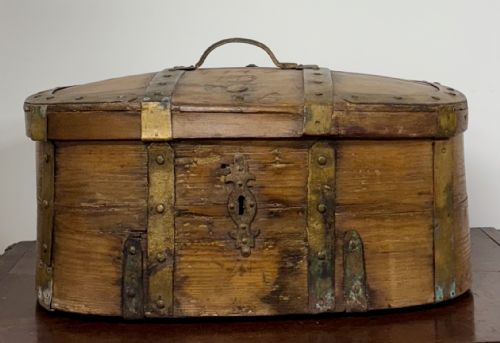
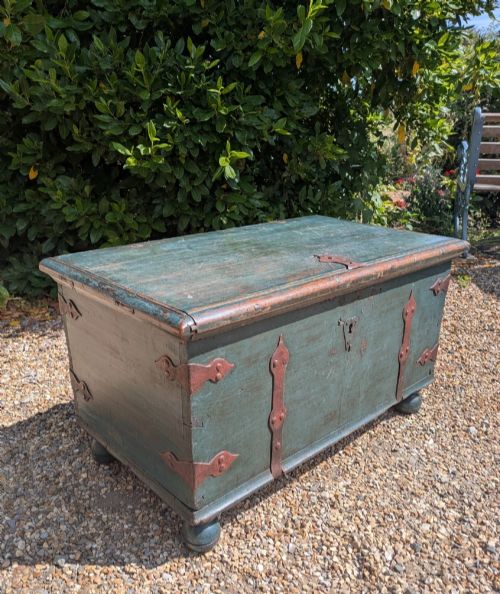
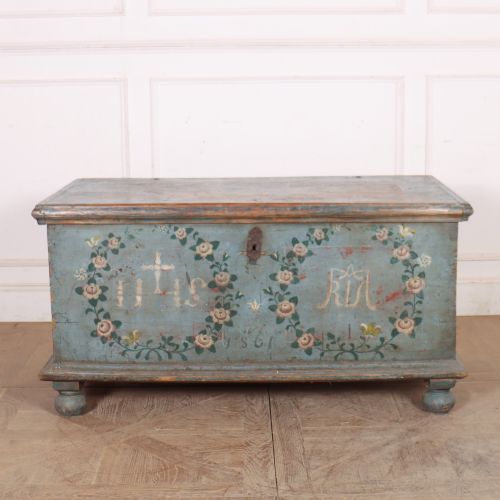
The pieces on this page span the Georgian, Victorian, and nineteenth-century periods, capturing the traditional craftsmanship of Scandinavian country workshops. You will frequently encounter painted surfaces, grained finishes, and structural metalwork upon these rustic farmhouse forms.
Originating largely from Swedish traditions, these coffers range from mid-eighteenth-century Baroque metal-bound boxes to smaller mid-nineteenth-century strong boxes. Each item reflects the practical needs of rural storage with regional decorative touches.

How They Were Made
Construction relies primarily on solid pine timbers, selected for availability and durability in domestic settings. Carpenters joined these panels using traditional joinery methods suited to heavy daily use in rural households.
Surface treatments frequently involve layers of paint or graining applied over the bare timber to protect the wood and add colour. Iron components, including hand-forged strapwork and metal binding, reinforce the corners and lids while securing the contents.
Retail Price Guide 2026
Typical UK retail prices for scandinavian pine coffer, calculated from the Sellingantiques database of over a million retail prices indexed since 2003. This retail price guide relies exclusively on Sellingantiques data; no external sources or auction records are used, so the figures do not describe the wider market.
One log bin retains enough soot from the farmhouse hearth to remind you it once sat directly beside the family fire.
What Varies in Quality
Quality reveals itself in the integrity of the original pine construction and the survival of early painted or grained surfaces. Pieces retaining their original folk art decoration and untouched hand-forged iron strapwork represent the finer end of the range.
Proportion and decorative restraint also distinguish the work, as seen in the transition from structured Swedish Baroque forms to simpler rustic farmhouse storage bins. The degree of wear on the timber and ironwork tells a story of genuine age without diminishing the integrity of the piece.
The Scandinavian Pine Coffer Glossary
- Coffer
- A heavy wooden box used for storing valuables, linen, or household provisions. These sturdy receptacles often double as seating or tables in traditional rural interiors.
- Strapwork
- Ornamental bands of wrought iron fastened across the exterior of a box or chest to reinforce the joints and provide security. Hand-forged examples display the individual hammer marks of the blacksmith.
- Marriage chest
- A specially commissioned storage piece created to mark a wedding, often inscribed with dates or initials and decorated with folk art motifs. These items formed an essential part of a bride's dowry.
- Log bin
- A deep storage container designed specifically for holding firewood near a hearth. They utilise durable pine construction to withstand the weight and rough texture of logs.
- Grained paint
- A decorative surface finish applied to imitate the appearance of more expensive timbers such as oak or walnut. Painters used combs and brushes to manipulate the wet paint over a pale base coat.
Frequently Asked Questions
How old are these coffers?
The pieces span from the mid-eighteenth century through the Georgian and Victorian eras into the late nineteenth century. Most examples originate from Scandinavian country workshops during the eighteen-seventies and eighties.
Specific dates depend on the construction style and decorative painting techniques characteristic of each period. Georgian and Baroque examples show earlier forms of joinery and hardware.
What were they used for?
These boxes served essential storage roles in rural homes, holding blankets, winter provisions, logs, or valuable documents. Strong boxes offered secure containment for money and important papers.
Larger marriage chests held domestic linens and household goods brought to a new home. Their robust construction allowed them to double as benches or tables when space was tight.
How do I care for painted pine?
Protect the original painted and grained surfaces by keeping the timber away from direct sunlight and excessive heat sources. Dust gently with a dry or slightly damp cloth without using harsh chemical cleaners.
Maintaining stable room humidity prevents the pine from drying out or splitting. Allow the natural patina of the aged paint to remain undisturbed.
Are the iron fittings original?
Hand-forged iron strapwork and metal binding are typical of these traditional storage boxes. Blacksmiths made these strap pieces to reinforce the corners and lids for heavy daily use.
Examining the attachment methods and the wear on the metal helps determine if the hardware belongs to the original period of construction.