
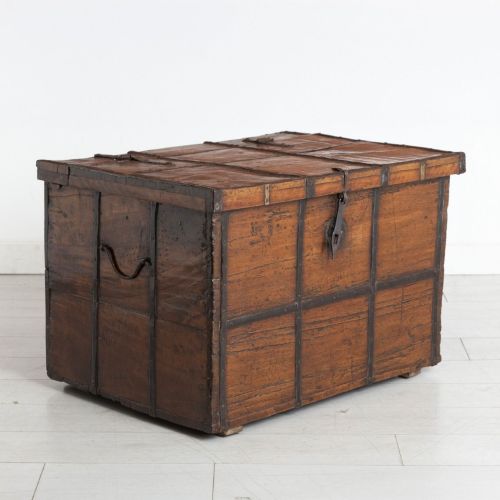
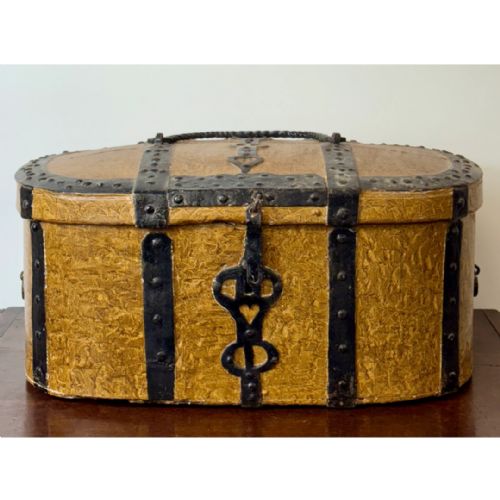
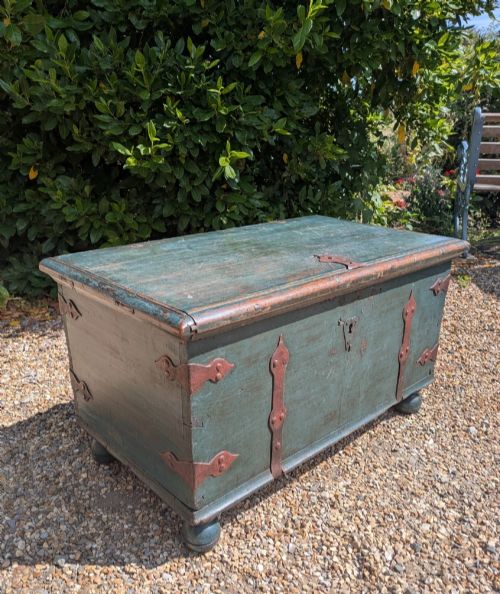
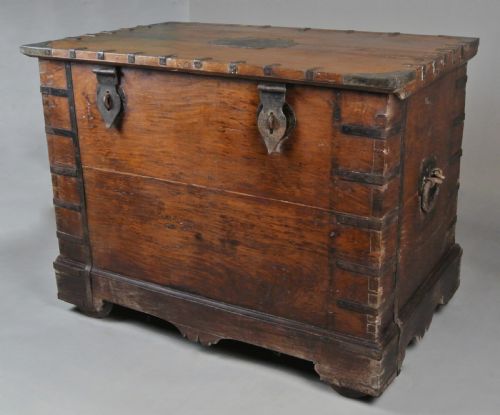
Iron Bound Box
An iron bound box brings structural strength and historic utility to any interior through robust metal fastenings and durable timber construction.
Iron Bound Box
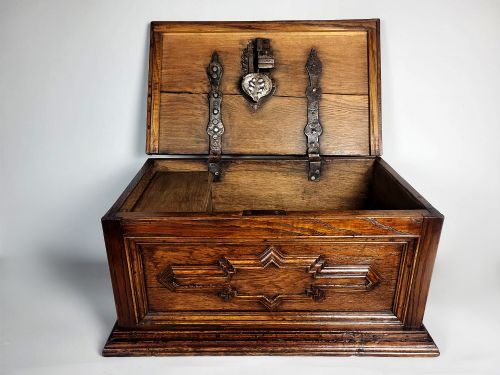
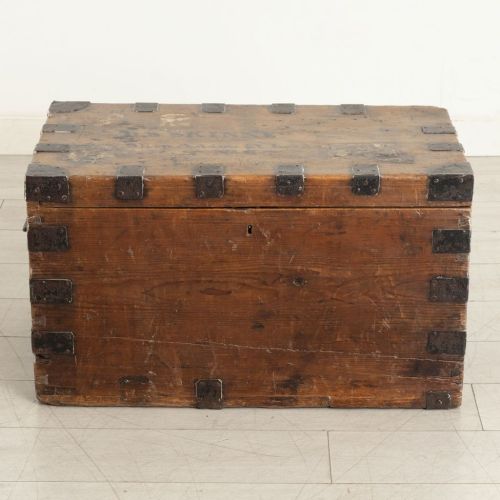
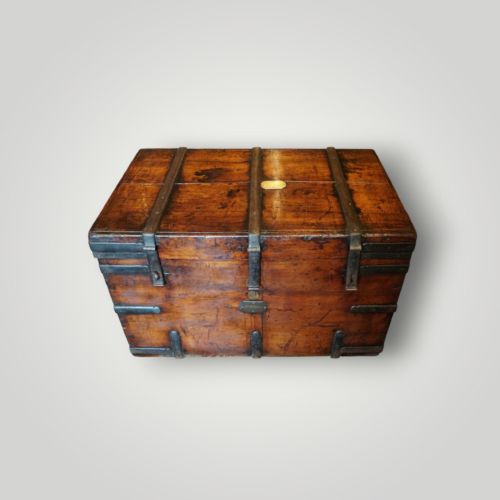
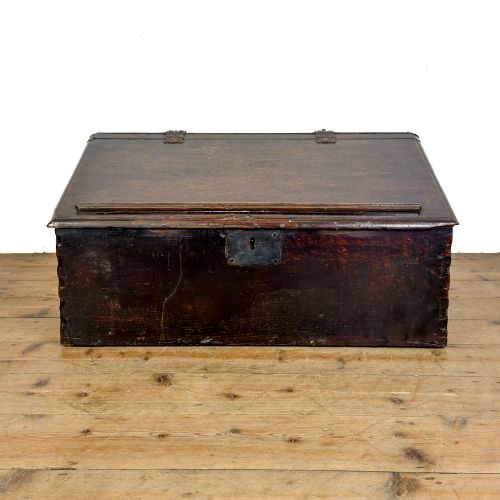
An iron bound box is a heavy-duty container designed for secure transport and storage, combining timber bodies with protective metal straps. These pieces serve functions ranging from military campaign transport to domestic blanket storage and valuable deed safeguarding.
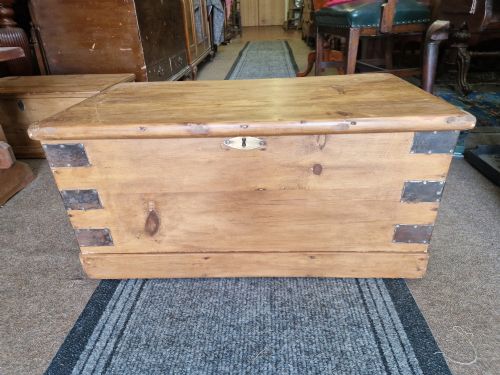
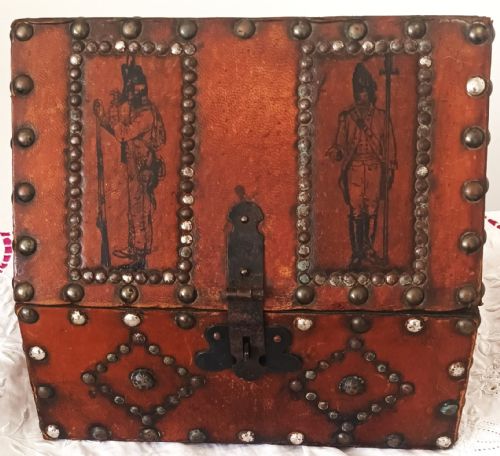
The selections available span multiple centuries, with 19th-century and Victorian pine or teak travelling trunks appearing frequently alongside earlier oak strongboxes. Scandinavian folk art examples and painted marriage chests also form a distinct part of the available range.
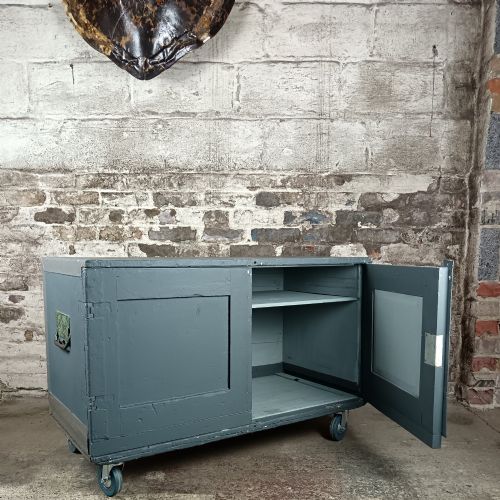
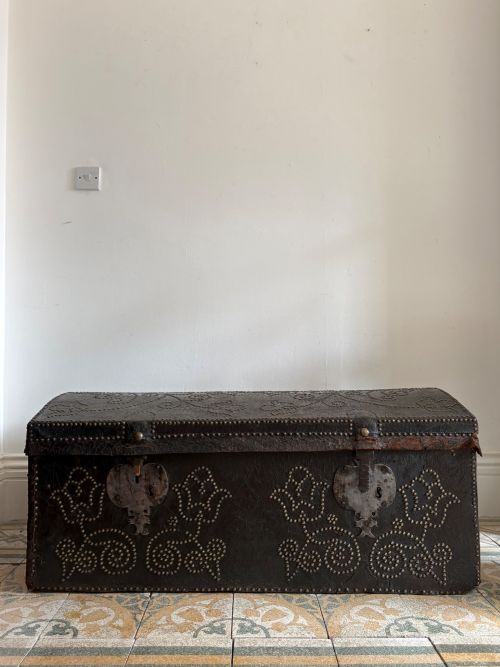
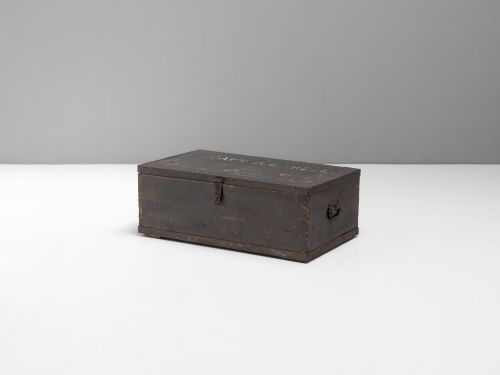
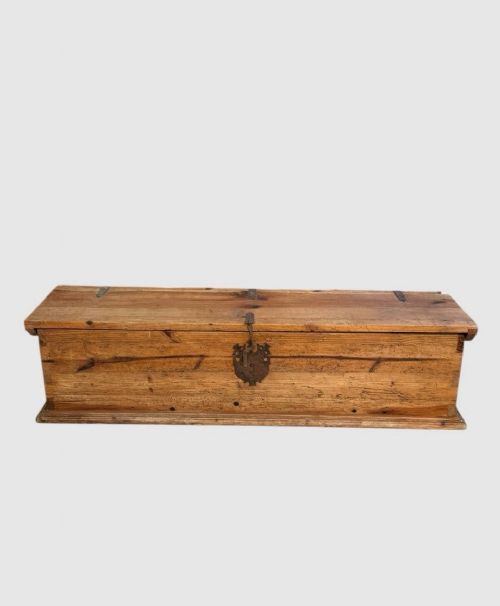
Forms vary widely from small bible boxes and table-top strongboxes to monumental dowry chests and long sword lockers. Buyers frequently encounter rectangular travel trunks and dome-top coffers equipped with side carrying handles.
How they were made
Construction relies heavily on sturdy domestic and imported timbers such as oak, pine, teak, elm and mahogany. Makers joined these boards using traditional joinery before reinforcing the primary stress points with protective woodwork.
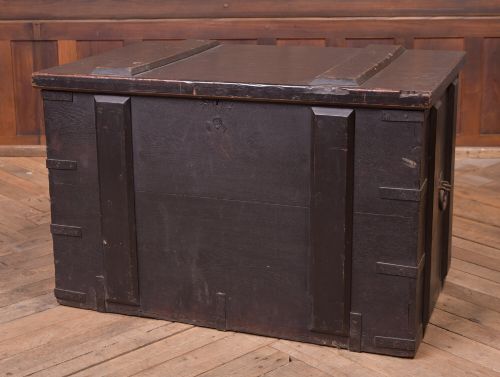
Wrought iron and steel straps, hinges, and corner brackets were fastened to the wooden bodies using hand-forged nails and rivets. Complex internal steel locks and brass fittings completed the security measures required for valuable transit.
Iron Bound Box Retail Price Guide 2026
Typical asking prices for iron bound box among the pieces listed under this phrase on Sellingantiques today, from the lower quarter to the upper quarter. They describe what is for sale here now, not the wider market.
Several trunks bear the original travel scars of Waterloo commissary generals and military officers who crossed oceans with their valuables safely locked inside.
What varies in quality
Quality separates ordinary utility containers from exceptional survival pieces through the complexity of the internal locking mechanism and the integrity of the original hardware. Hand-forged strapwork and untouched surface patination distinguish finer examples.
The choice of primary timber influences durability and aesthetic weight, with dense hardwoods like oak and teak demonstrating superior longevity compared to softer woods. Original painted finishes and folk art decoration preserve historical value far better than later overpainting.
The Iron Bound Box Glossary
- Strongbox
- A secure container reinforced with metal bands designed to protect currency, documents, or valuables from theft and fire. These usually feature complex internal locking mechanisms.
- Strapwork
- Decorative or reinforcing bands of iron applied to the exterior of a chest or box to distribute stress and protect corners. They are often hand-forged.
- Campaign chest
- Modular furniture designed for easy disassembly and transport by military officers on active service. They typically incorporate brass corners and recessed carrying handles.
- Dome top
- A curved lid design that sheds water effectively and allows for greater internal storage volume. This form appears frequently on 18th-century and earlier travel coffers.
- Dowry chest
- A large storage box commissioned to hold household linens and possessions for a bride entering marriage. These frequently display regional folk art painting.
Iron Bound Box: Frequently Asked Questions
What were iron bound boxes used for?
These boxes served primarily for transporting and securing valuables, documents, and personal belongings during travel. Military officers, merchants, and households relied on their reinforced structure for safe transit.
Over time, many transitioned into domestic furniture for storing blankets, silver, or legal papers. Today, collectors utilise them as decorative storage furniture or coffee tables.
How do I date an iron bound box?
Dating relies on examining the timber species, hand-forged ironwork characteristics, and construction methods. Earlier examples from the 16th and 17th centuries typically employ heavy oak and complex iron mechanisms.
Later Victorian and 19th-century versions frequently utilise pine, teak, or mahogany with machine-assisted components. Regional painting styles and lock technology also provide reliable chronological markers.
Are these boxes suitable for daily home use?
Their original heavy-duty construction makes them exceptionally durable for modern domestic environments. They provide practical enclosed storage for household items while adding historical character to a room.
Larger coffers and trunks function effectively as coffee tables or blanket storage at the foot of a bed. Smaller strongboxes sit comfortably on desks or side tables.
What is the difference between a coffer and a trunk?
A coffer generally refers to a heavy, chest-like container constructed with thick timber walls and deep structural framing. They often feature domed lids and extensive iron reinforcement for security.
A trunk typically implies a portable container designed explicitly for travel, featuring flat or slightly rounded lids and side carrying handles. Both utilise iron banding for structural integrity.