
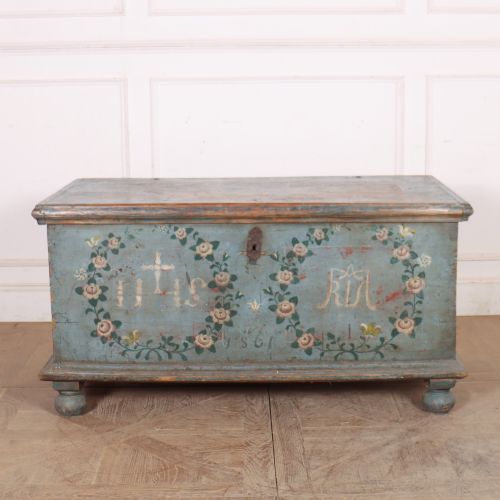


Blue Painted Marriage Chest
These heavy timber blue painted marriage chest pieces are folk storage boxes commissioned for weddings, bringing rustic regional character into modern interiors.
Blue Painted Marriage Chest
When you search for a blue painted marriage chest, you encounter sturdy timber receptacles built for domestic storage and ceremonial gifting. The selection relies heavily on nineteenth century Swedish pieces, alongside examples from Alpine, Hungarian, and Italian traditions.
Forms vary from flat lid blanket boxes to dome top coffers and mule chests fitted with lower drawers. Most examples utilise pine or oak timber beneath applied layers of pigment paint, tempera paint, and decorative surface finishes.
How they were made
Carpenters constructed these bodies primarily from solid pine or oak planks, joining the corners with traditional framing and dovetailed joints. Iron and wrought iron hardware, including strap hinges and carrying handles, reinforced the heavy timber structures.
Artisans applied tempera and pigment paint directly to the wood surface, often creating folk art motifs in shades of blue. This brushwork sealed the timber while establishing the distinct regional decorative style seen across the Scandinavian and European pieces.
Nineteenth century Scandinavian folk art and Alpine traditions dominate the regional styles recorded here.
What varies in quality
Quality rests upon the preservation of the original pigment paint and the integrity of the underlying timber construction. Pieces retaining untouched folk art surfaces demonstrate superior craftsmanship compared to later repainted variants.
The sophistication of the painted decoration and the robustness of the wrought iron hardware distinguish regional workshops. Heavier timbers like oak and better-preserved dome top forms indicate higher grade domestic production.
The Blue Painted Marriage Chest Glossary
- Coffer
- A heavy wooden chest traditionally used for storing valuables or textiles. These pieces often feature lift-off or hinged lids.
- Mule chest
- A storage chest that incorporates one or more drawers beneath the main lift-top compartment. This form bridges the traditional coffer and the modern chest of drawers.
- Tempera paint
- A permanent, fast-drying painting medium consisting of coloured pigment mixed with a water-soluble binder. It provides a durable matte finish on historic wooden furniture.
- Folk art
- Artistic work produced from an indigenous culture or peasant society. These items reflect traditional community aesthetics rather than academic art training.
Blue Painted Marriage Chest: Frequently Asked Questions
How do I date a painted chest?
Dating relies on examining the construction methods, timber species, and paint composition used by the maker. Nineteenth century examples often display hand-sawn board marks and forged iron hardware.
Folk art styles and regional motifs also help establish the period of origin. Comparing the wear patterns on the pigment paint provides further clues to the age of the piece.
Where were these chests made?
These chests originate from various European regions, with a strong concentration of Swedish pieces alongside Alpine, Hungarian, and Italian examples. Each region developed distinct decorative painting traditions.
Rural workshops utilised locally available woods such as pine and oak. The resulting objects reflect the specific folk art aesthetics of their geographic origin.
How should I care for a painted coffer?
Protect historic painted surfaces by keeping the timber away from direct sunlight and fluctuating humidity levels. Gentle dusting with a dry cloth prevents dirt accumulation without harming the tempera paint.
Avoid using modern chemical polishes on the historic pigment layers. Maintaining a stable indoor climate preserves the structural integrity of the pine or oak body.