
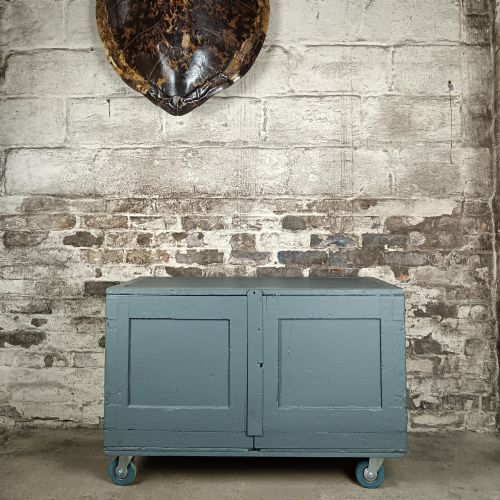
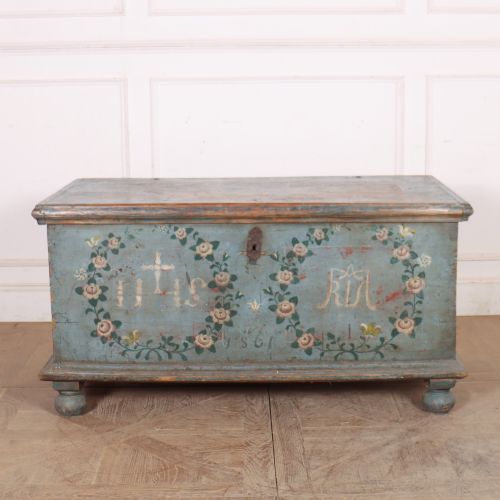
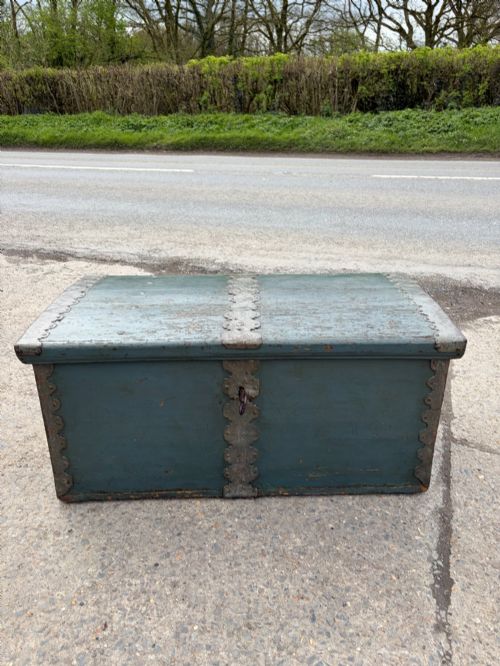
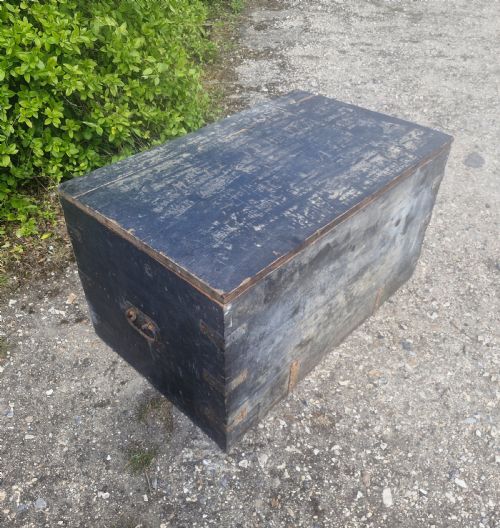


Antique Blue Blanket Chest
An antique blue blanket chest brings regional folk art and practical storage into a room, often arriving from nineteenth-century Scandinavia with its original pigment intact.
Antique Blue Blanket Chest
An antique blue blanket chest serves as a robust storage receptacle for linens and garments, taking the form of a coffer, trunk, or mule chest across various nineteenth-century styles. The selection leans heavily towards Scandinavian country and folk art pieces, alongside regional European examples from the Georgian and Regency periods.
Buyers encounter dome-top coffers and flat-topped marriage chests, many constructed with internal compartments or drawers as seen in mule chest variants. These utilitarian objects double as decorative focal points through their distinctive painted surfaces.
Origins stretch from alpine regions to Italian workshops and Swedish rural communities, each maker applying local aesthetic traditions to pine and oak carcases. The resulting forms range from simple shepherds coffers to elaborate campaign trunks fitted with iron hardware.
Materials and construction methods
Carpenters primarily utilised solid pine and oak for the carcases, joining boards with traditional methods suited to heavy everyday use. Wrought iron, brass, and tin hardware reinforce corners, lids, and lifting handles on military and transport variants.
Surfaces were prepared for decoration using tempera paint, pigment paint, and traditional paint layers that often survive in remarkably original states. Hand-painted motifs characterise the Swedish and Hungarian pieces, sealing the wood while adding vibrant colour.
Swedish folk art pieces form the largest regional grouping, spanning dome-top coffers and flat marriage chests.
Evaluating quality and character
The survival rate of the original painted surface dictates much of the distinction between examples, with untouched folk art pigments commanding greater interest than later overpainting. Depth of colour and the crispness of hand-painted floral or geometric motifs set finer marriage chests apart.
Structural integrity of the timber carcase and the original status of hinges, locks, and wrought iron carrying handles influence the overall merit of a coffer. Pieces retaining internal till boxes or original upholstery show superior completeness.
The Antique Blue Blanket Chest Glossary
- Mule chest
- A storage chest fitted with one or more drawers beneath the main compartment. This form bridges the gap between a traditional blanket box and a chest of drawers.
- Coffer
- A heavy, rectangular wooden box used for storing valuables or textiles. They often feature robust iron hardware and flat or domed lids.
- Cassone
- A traditional Italian large painted chest associated with marriage customs. These items frequently display elaborate artistic decoration.
- Tempera paint
- A permanent, fast-drying painting medium consisting of coloured pigment mixed with a water-soluble binder. It provides the matte finish seen on many folk art surfaces.
- Campaign trunk
- A portable chest designed for military officers on the move. They incorporate brass or iron mounts and carrying handles for frequent transport.
Antique Blue Blanket Chest: Frequently Asked Questions
What is a mule chest?
A mule chest combines the deep top-opening compartment of a blanket box with one or more lower drawers. This hybrid design emerged to make stored items more accessible without unloading the entire chest.
Such pieces date across the Georgian and nineteenth-century periods, often rendered in painted pine or rich hardwoods.
How do I care for painted wood?
Keep painted chests away from direct sunlight and steady heat sources to prevent the historic pigment from drying or flaking. Dust gently with a dry, soft cloth and avoid modern chemical polishes.
Maintaining stable room humidity protects both the underlying pine or oak carcase and the fragile tempera surface.
Where were marriage chests made?
Marriage chests appear frequently in nineteenth-century Scandinavian folk art traditions, particularly from rural Sweden and alpine regions. Italian workshops also produced ornate cassoni for similar celebratory purposes.
Families commissioned these painted boxes to mark weddings, adorning them with names, dates, or symbolic floral motifs.
What distinguishes a coffer from a trunk?
A coffer typically denotes a heavy, rigid wooden box built by joiners for domestic storage, often featuring decorative carvings or painted panels. Trunks more frequently indicate travel-ready containers with reinforced edges and carrying hardware.
Military and campaign variants specifically served transport needs, while folk art coffers remained stationary in homes.