




Folding Lamp Tables
These folding lamp tables offer versatile surfaces that pack flat when space demands, pairing period joinery with ingenious portable design.
Folding Lamp Tables
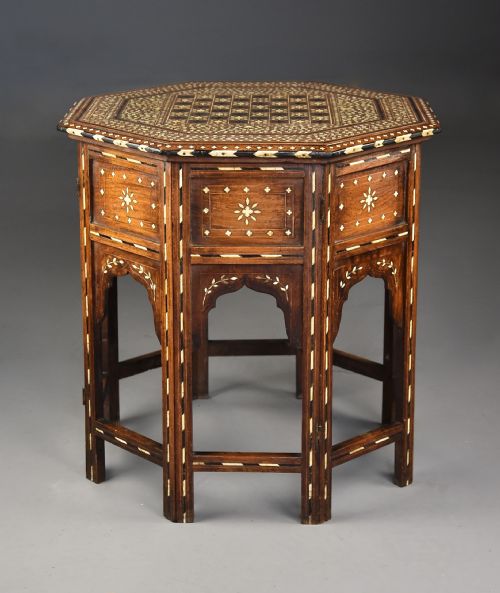
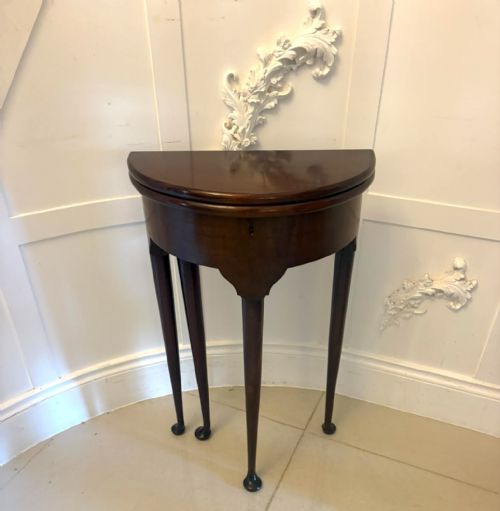
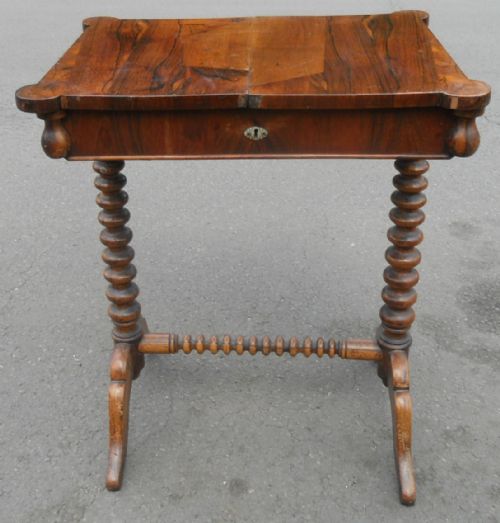
Folding lamp tables span the Victorian and Edwardian eras alongside later twentieth-century productions, serving as portable surfaces for illumination and occasional use. Buyers tracking down folding lamp tables will encounter diverse forms ranging from drop-leaf side tables to octagonal occasional pieces and games surfaces.
The materials and aesthetic influences stretch across British traditional workshops and imported traditions, encompassing mahogany, rosewood, teak, and intricate Anglo-Indian bone inlay. These tables frequently adapt existing forms like tea tables, card tables, and Sutherland designs into compact furniture suited to shifting domestic arrangements.
How they were made
Makers utilised dense timbers including mahogany, rosewood, and teak, often employing clever folding mechanisms, drop leaves, and tip-top actions to save space. Construction relied on sturdy joinery combined with hinged supports that allowed the framework to collapse flat without sacrificing stability.
Surface decoration distinguished the finer examples through boxwood stringing, satinwood highlights, and profuse Oriental or Anglo-Indian carved detail. Skilled artisans also incorporated bone inlay and red lacquer finishes, transforming utilitarian folding frames into decorative focal points.
What varies in quality
Quality rests on the integrity of the folding mechanism and the precision of the timber selection, where dense grain and stable hinges separate robust constructions from looser frames. Superior pieces maintain a rigid stance when open while folding smoothly into a compact footprint.
The refinement of the surface ornament dictates the upper tier of these tables, distinguishing deeply carved Oriental woodwork and precise boxwood inlay from simpler plain timber surfaces. Original brass hardware and well-fitted concealed compartments further elevate the distinction of the piece.
The Folding Lamp Tables Glossary
- Drop Leaf
- A table design featuring hinged flaps on the sides that can be raised to expand the surface area or lowered when space is restricted.
- Occasional Table
- A small, versatile piece of furniture designed for intermittent use around a room rather than a singular fixed purpose.
- Bone Inlay
- A decorative technique where small pieces of bone are set into the surface of wood to create intricate geometric or floral patterns.
- Sutherland Table
- A narrow style of drop-leaf table featuring exceptionally slender leaves supported by swinging gate legs.
Folding Lamp Tables: Frequently Asked Questions
How do I fold these tables?
Most designs rely on hinged gate-leg supports, folding bracket actions, or pivoting top mechanisms that release the frame to collapse flat.
Careful handling of the original wooden or brass hinges ensures the moving parts operate without straining the surrounding timber joints.
Where should I place a lamp table?
These compact pieces fit easily beside seating arrangements, in hallways, or as bedside surfaces where portable table space is useful.
Their ability to fold flat also allows them to be stored out of sight when floor space is required for other activities.
How do I care for inlaid wood?
Dust regularly with a dry cloth and avoid placing wooden surfaces in direct sunlight or near sudden heat sources that could dry out the materials.
Bone inlay and delicate boxwood stringing benefit from minimal moisture and occasional gentle conditioning suited to antique timber.
Can these tables hold heavy lamps?
The structural stability depends on the soundness of the folding joints and the density of woods like mahogany, teak, or rosewood.
Sturdier Victorian and Edwardian iterations generally support standard table lamps securely when the folding legs are fully locked into position.