


Vintage Oriental End Table
A vintage oriental end table brings hand-carved detail and rich cultural craftsmanship into a modern room.
Vintage Oriental End Table
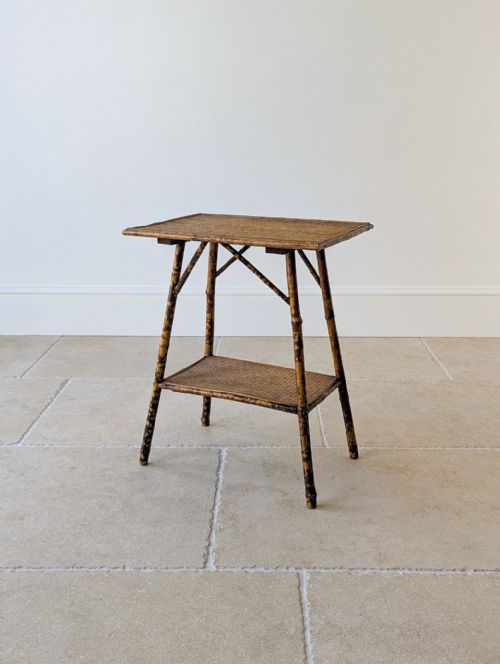
A vintage oriental end table encompasses various low tables, nests, and occasional surfaces designed with distinct regional motifs. These pieces span the nineteenth and early twentieth centuries, reflecting diverse global workshops.
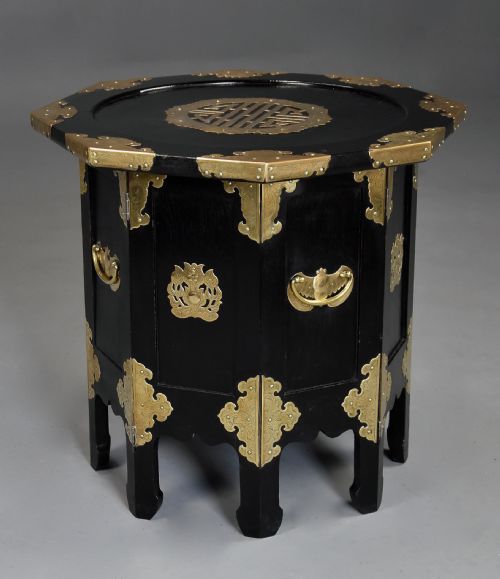
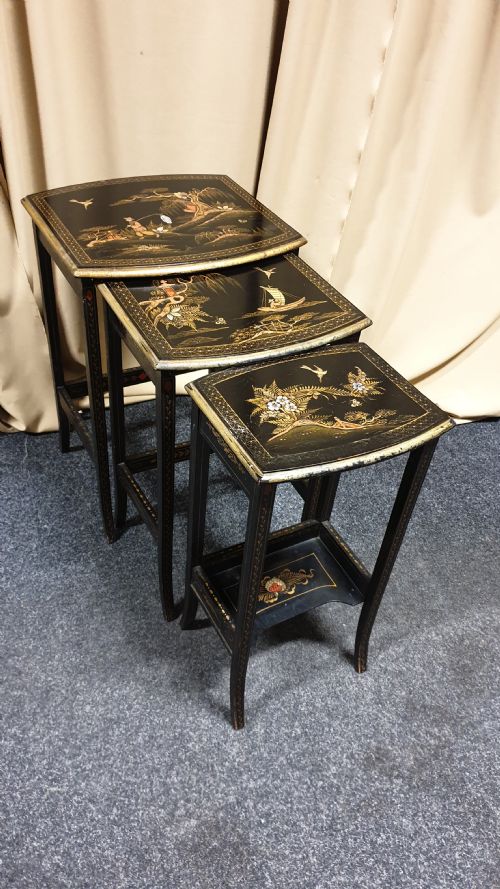
The selections available here lean heavily toward nesting sets, octagonal shapes, and side tables constructed from dense timbers. Regional expressions range from Chinese lacquerwork to Indian rosewood carvings and Kashmiri decoration.
Buyers frequently encounter nested arrangements and folding tables intended for versatile placement beside seating. Each form serves as a compact display surface carrying deep historical ornamentation.
Materials and construction
Carpenters utilised resilient hardwoods including solid rosewood and various indigenous timbers to build robust frames. These dense materials supported intricate hand-carving and complex joinery without needing modern fasteners.
Surfaces frequently received elaborate treatments such as hand-applied lacquer, gleaming gold leaf, and inlaid mother-of-pearl or bone. Artisans also integrated brass elements and cloisonne details to enrich the decorative scheme.
Several tables feature folding wooden bases designed to collapse flat, proving that flat-pack convenience predates modern furniture stores.
Judging the workmanship
Quality rests upon the crispness of the hand-carved motifs and the precision of the joinery linking the legs and tops. Superior examples maintain structural integrity across nested sets where smaller tables must slide smoothly into position.
The refinement of surface embellishments dictates the upper tier of pieces, particularly the depth of lacquer layers and the careful setting of mother-of-pearl or bone inlays. Lesser examples display simpler surface painting and coarser timber selection.
The Vintage Oriental End Table Glossary
- Chinoiserie
- European artistic interpretation of Chinese and East Asian artistic traditions, often featuring painted lacquer and gilded motifs.
- Cloisonne
- An ancient technique for decorating metalwork objects with coloured material held in place by thin metal strips.
- Ebonised
- Wood finished to resemble ebony through staining or painting, common in decorative Victorian furniture.
- Nest of tables
- A set of graduated tables designed to fit neatly one beneath another when not in use.
- Occasional table
- A small table intended for light, intermittent use in a principal room.
Vintage Oriental End Table: Frequently Asked Questions
How do I style an oriental end table?
These compact tables function well beside armchairs or sofas to hold lamps and small decorative objects. Their detailed surfaces allow them to stand alone as striking focal points in a neutral interior.
Matching the wood tone or decorative finish to existing furnishings helps integrate the piece smoothly. Nests of tables offer practical flexibility, separating when guests arrive and tucking away afterward.
What periods do these tables represent?
The available pieces originate primarily from the nineteenth century through the early decades of the twentieth century. This era encompasses late Victorian production alongside specific regional workshops from China and India.
Dating relies upon construction methods, timber choices, and stylistic markers typical of these decades. Examining the underside and joinery often reveals the age of the item.
Are these tables sturdy enough for daily use?
Solid rosewood and dense hardwoods provide robust foundations capable of supporting daily placement of cups and books. The joinery employed by period artisans ensures long-term stability under normal household conditions.
Care should be taken with delicate surfaces like lacquer or mother-of-pearl inlay. Using coasters prevents moisture rings from forming on antique polished tops.
How do I identify Kashmiri tables?
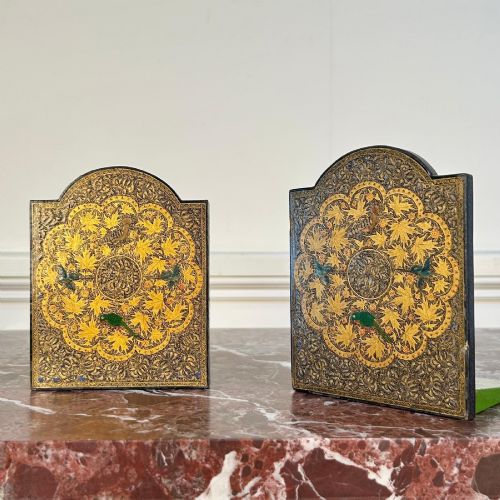
Kashmiri pieces often feature dense, intricate surface painting or carved floral patterns reflecting traditional North Indian craftsmanship. These items utilise local timbers and frequently take octagonal or folding forms.
The distinct decorative palette sets them apart from concurrent Chinese lacquerwork or English Chinoiserie. Each region utilised specific motifs that help distinguish their origin.