


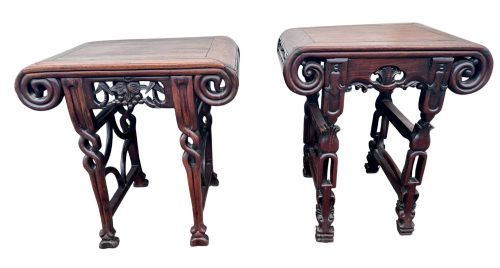


Pair Carved End Tables
Pair carved end tables bring matched symmetry and hand-carved detail to a room, serving beside chairs or beds with practical surface space.
Pair Carved End Tables
When you search for pair carved end tables, you encounter matched pairs of small tables designed for domestic use, spanning side tables, bedside cabinets, and occasional stands. These items originate from various periods including the nineteenth century and the early twentieth century, reflecting diverse international workshops.
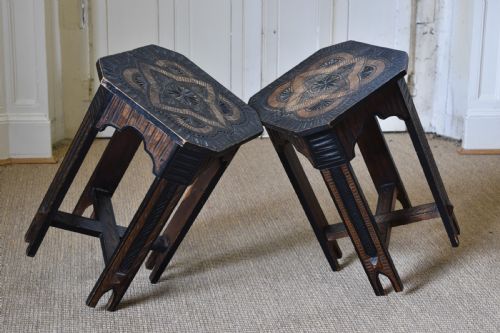
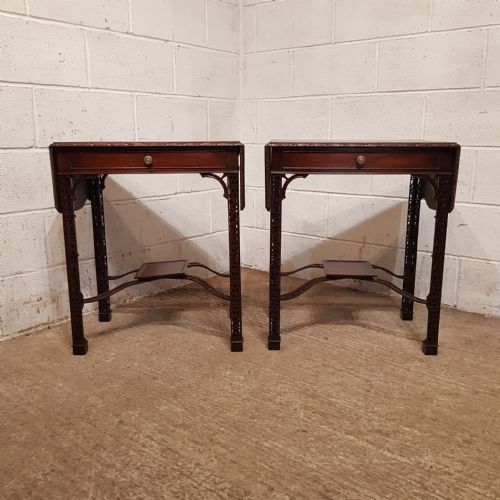
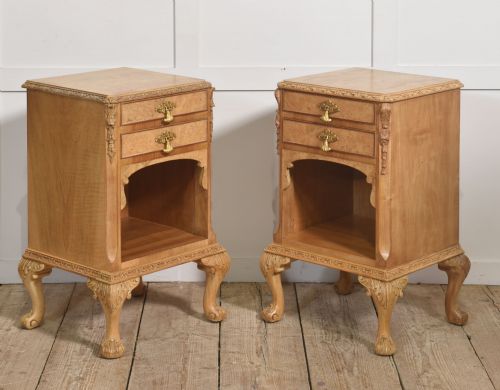
The forms on this page range from French bleached oak bedside cupboards and Chippendale revival drop leaf tables to Chinese Qing Dynasty huali hardwood and marble topped stands. Buyers find both European revival designs and Asian hardwood furniture built for functional utility.
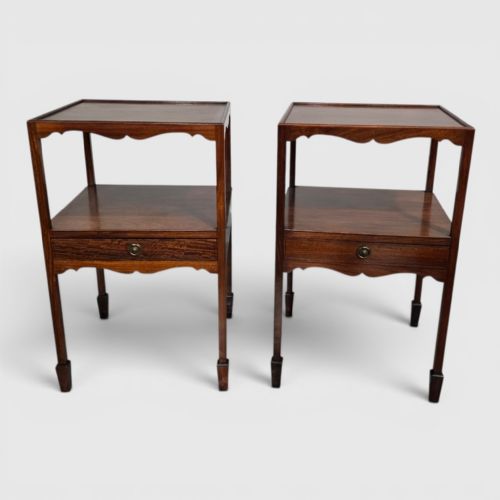
Most examples function as lamp tables, coffee tables, or plant stands, offering twin pieces that bring balance to a room arrangement. The selection encompasses diverse regional interpretations of carved woodwork, from Anglo-Indian camel tables to Irish bedside tables.
How they were made
Cabinetmakers constructed these tables using dense timbers such as mahogany, walnut, oak, ash, rosewood, and huali hardwood, often incorporating secondary woods for internal framing. Surfaces frequently feature chip carving, relief work, or gold and silver gilt highlights applied by hand.
Many examples integrate contrasting materials into the timber framework, utilising inset rouge marble tops, brass mounts, or leather inserts on writing surfaces. Drop leaves, folding mechanisms, and tier structures demonstrate specialised joinery designed for stability in domestic settings.
Camel tables arrived from Anglo-Indian workshops ready to fold flat, proving that nineteenth-century travellers appreciated portable furniture just as much as modern tourists do.
What varies in quality
The distinction between tiers of quality rests upon the crispness of the hand-carving and the selection of timber figures, such as burr walnut or figured mahogany. Superior pieces exhibit deeply undercut foliage or figurative motifs executed with precision rather than shallow, mechanical stamping.
Material integration also dictates standard, particularly where inset marble slabs fit flush within hardwood frames or where gilt and brass elements retain their original patination. Cohesion between the two matched tables in a pair determines the overall desirability for collectors seeking symmetry.
The Pair Carved End Tables Glossary
- Chippendale Revival
- A style popular in the nineteenth and twentieth centuries that reinterprets eighteenth-century designs associated with Thomas Chippendale, often featuring carved cabriole legs and intricate ornamentation.
- Huali
- A fragrant and highly valued Chinese hardwood utilised in traditional furniture construction, known for distinctive grain patterns and durability.
- Rouge Marble
- A rich red ornamental limestone frequently used for table inserts and architectural decoration in European and Asian furniture.
- Drop Leaf
- A table design featuring hinged flaps that fold down to save space or lift up to extend the surface area.
- Jardiniere Stand
- A tall or low decorative support originally intended to hold indoor plant pots or flower containers.
Pair Carved End Tables: Frequently Asked Questions
How are pair carved end tables used?
These tables function primarily as bedside supports, lamp stands, or flanking pieces beside seating furniture in living spaces.
Their twin configuration allows for balanced placement on either side of a bed, fireplace, or sofa.
What woods do these tables use?
Maker materials include traditional European timbers such as mahogany, oak, walnut, ash, and rosewood alongside Asian hardwoods like huali and hongmu.
Selected pieces also incorporate marble inserts, leather tops, and brass details.
How do I identify the period?
Dating relies on stylistic markers such as nineteenth-century revival motifs, Qing Dynasty carving characteristics, and early twentieth-century construction techniques.
Examining the underside, joinery methods, and wood ageing helps determine the age of each piece.
Are these tables always matching pairs?
The listings consist of matched pairs designed to sit together, sharing identical timber, carving styles, and dimensions.
This uniformity distinguishes them from assembled pairs gathered at a later date.
Where were these tables made?
Origins span European workshops producing French provincial and English revival styles alongside Asian workshops crafting Qing Dynasty hardwood stands.
Regional variations define the decorative carving and timber selection found across the inventory.