


Black Oriental Side Tables
Black oriental side tables bring dark lacquer and gilt ornament to a room, offering low surfaces for lamps or cups.
Black Oriental Side Tables
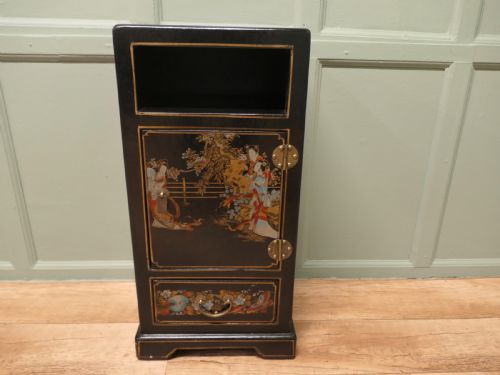
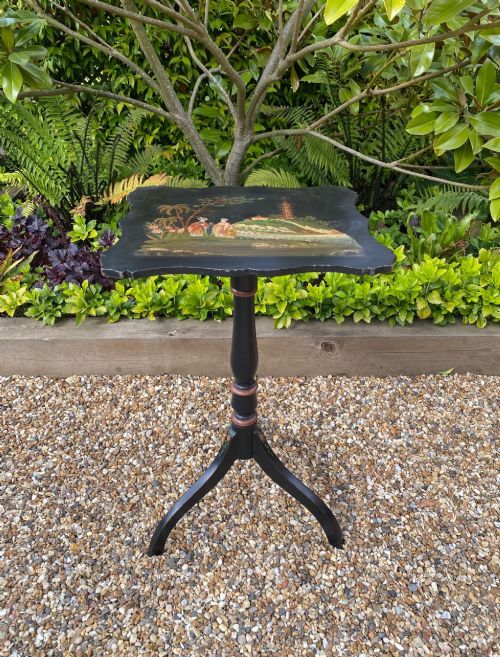
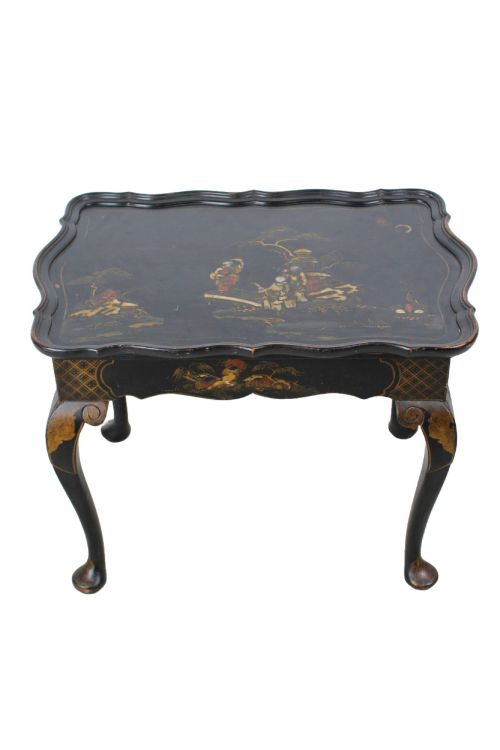
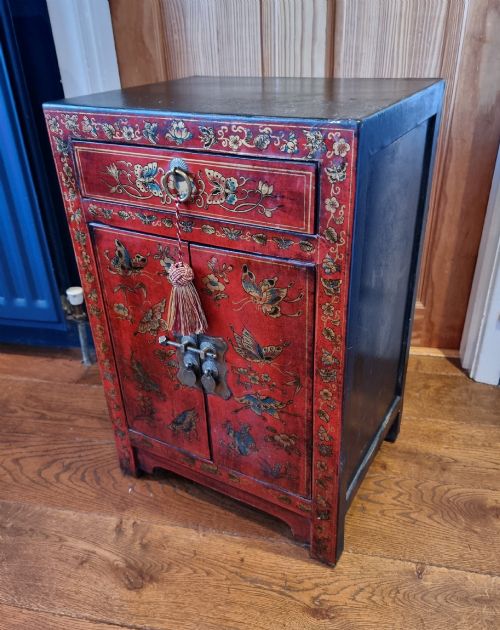
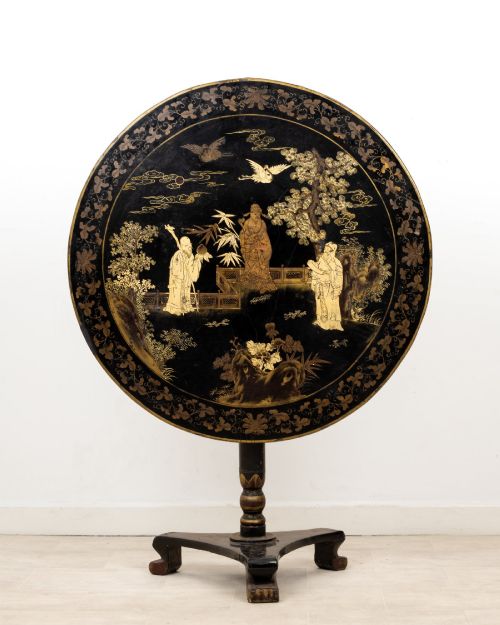
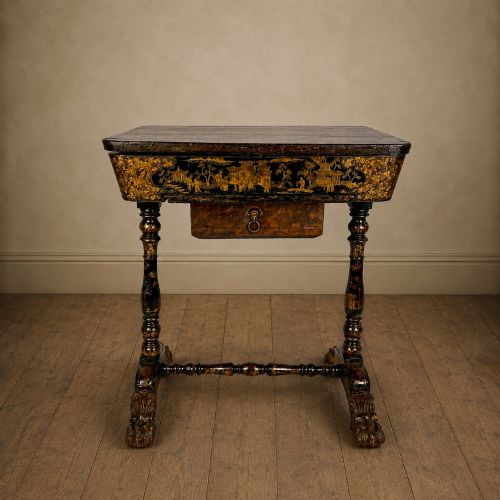
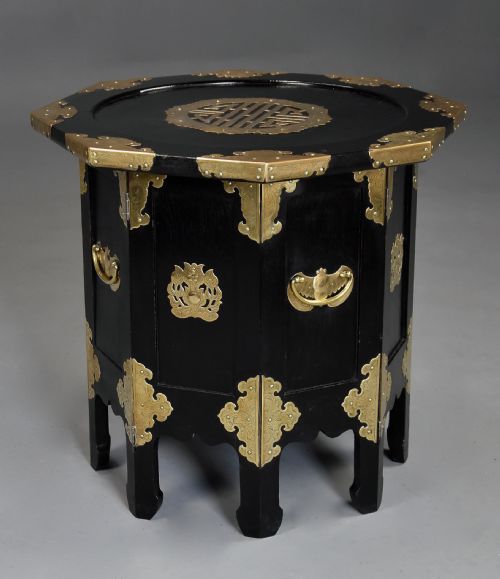
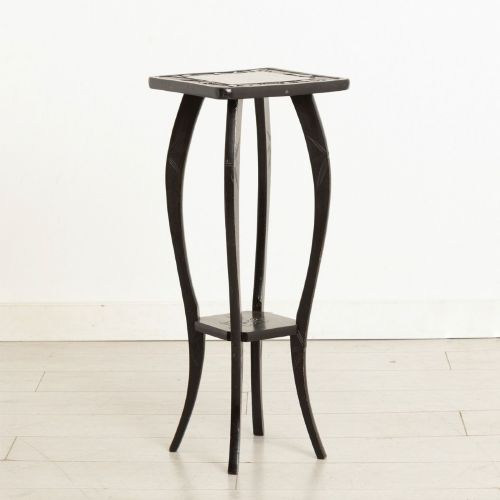
These black oriental side tables cover forms ranging from nests of four tables and tripod stands to occasional tables, coffee tables, plant stands, and work tables. They originate across the nineteenth century, the Victorian and Edwardian eras, and into the early twentieth century.
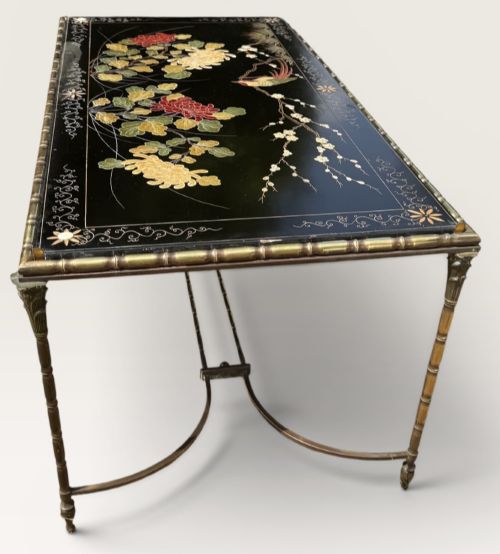
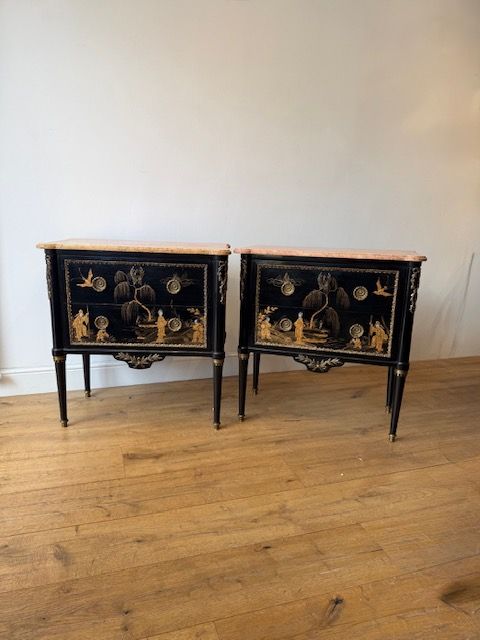
Chinoiserie decoration, Japanese influences, and Chinese export pieces dominate the selection, bringing painted motifs, lacquer, and carved details into domestic spaces.
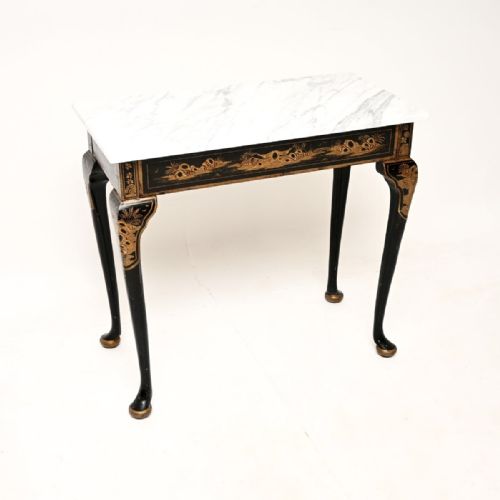
Buyers frequently encounter nested sets, marble top lamp tables, and small folding or tray tables that suit smaller corners or beside seating.
Materials and construction
Lacquered wood and ebonised timber form the basis of these pieces, providing a dark, smooth ground for painted and gilt decoration. Artisans applied layers of lacquer to woods such as hardwood, elm, and bamboo.
Gilt, gold leaf, and brass add metallic contrast through painted scenes, framing lines, or hardware. Marble inserts appear on tabletops, offering a cool, solid surface alongside the wooden frames.
Some tables double as sewing boxes or card tables, hiding compartments beneath their decorative lids.
Judgments of quality
The depth of the lacquer work and the crispness of the hand-painted or carved decoration separate standard production from finer examples. Pieces with layered, polished lacquer and detailed figural scenes show greater skill than simple painted finishes.
Structural integrity in joints, particularly on nests of tables, folding frames, and delicate plant stands, indicates the original standard of making. Integrated materials like inset marble or cloisonne panels elevate a piece beyond basic timber construction.
Liberty of London·Maison Bagues
The Black Oriental Side Tables Glossary
- Chinoiserie
- European artistic interpretation of Chinese and East Asian styles, popular in furniture decoration. It relies on motifs of figures, pavilions, and landscapes rendered in paint and gold.
- Ebonised
- Wood treated to imitate ebony, giving a deep black finish. Makers used ebonised hardwoods and fruitwoods to achieve a dark surface.
- Lacquer
- A durable finish applied in multiple coats and polished to a sheen. It protects the wood and provides a reflective dark background.
- Nest of tables
- A set of graduated tables designed to stack beneath one another. They slide out when needed for serving or display.
Black Oriental Side Tables: Frequently Asked Questions
What are black oriental side tables?
These are low tables and stands finished in dark lacquer or ebonised wood, decorated with Asian-inspired motifs. They include nests, plant stands, and occasional tables made across the nineteenth and early twentieth centuries.
They function as practical surfaces for lamps or cups while introducing decorative character to a room through painted scenes and polished finishes.
How do I date a black oriental side table?
Dating relies on construction methods, materials, and stylistic markers such as Victorian aesthetic bamboo or Edwardian chinoiserie decoration. Comparing the wood type and lacquer technique helps place a piece within its period.
Makers' marks and the specific style of the painted or carved motifs also point toward nineteenth-century origins or early twentieth-century revivals.
Where should I place a nest of tables?
Nests of tables suit sitting rooms beside sofas or armchairs, where the smaller tables can be pulled out as needed. Their stacked design saves floor space when not in use.
They also work well in corners or beside beds to hold lamps or books without cluttering the room.
How do I care for lacquered wood?
Lacquered surfaces require dusting with a soft, dry cloth and protection from direct sunlight and heat. Moisture should be wiped away promptly to preserve the finish.
Avoiding harsh chemical cleaners ensures the painted decoration and glossy surface remain intact over time.