
Folding Accent Table
A folding accent table offers adaptable surface space in compact forms, spanning gateleg, Sutherland and Pembroke designs.
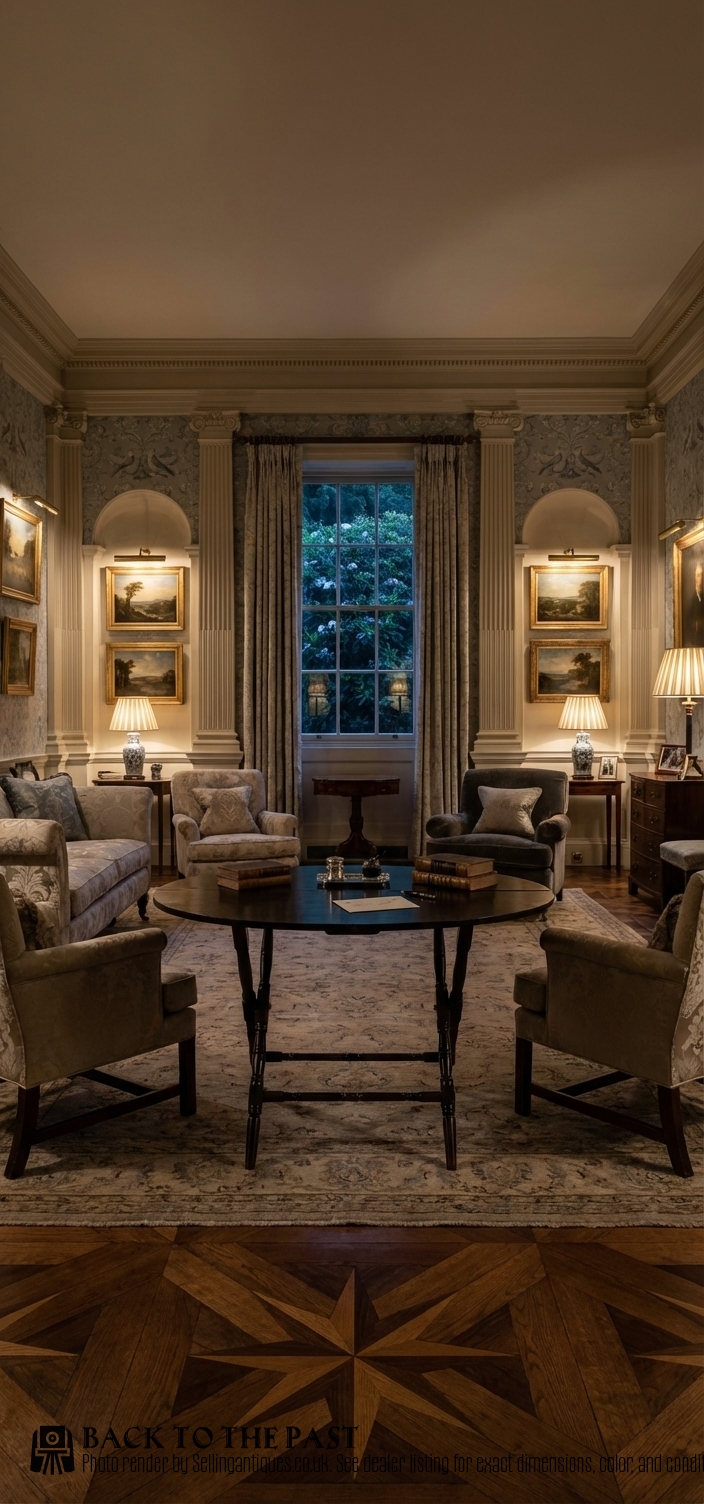
Folding Accent Table
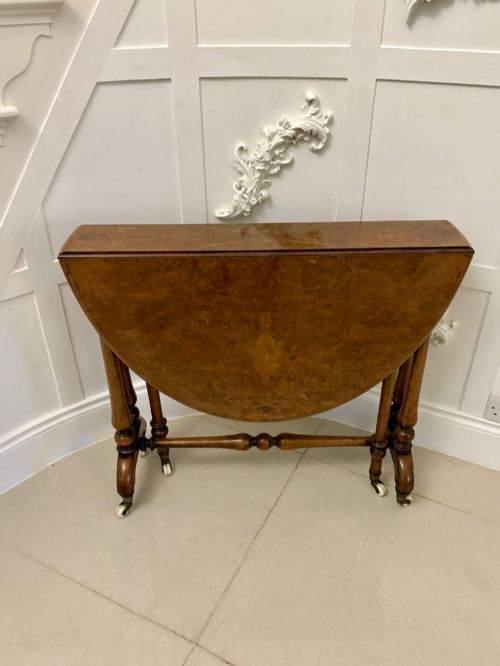
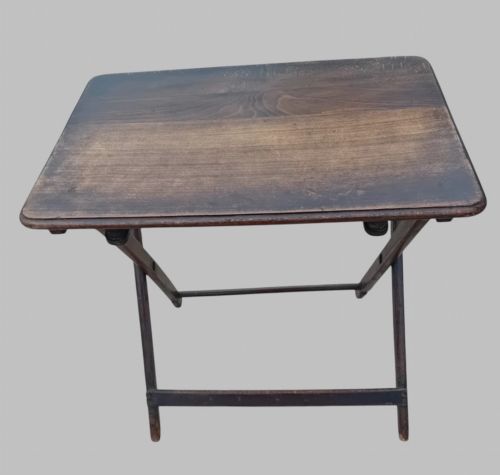
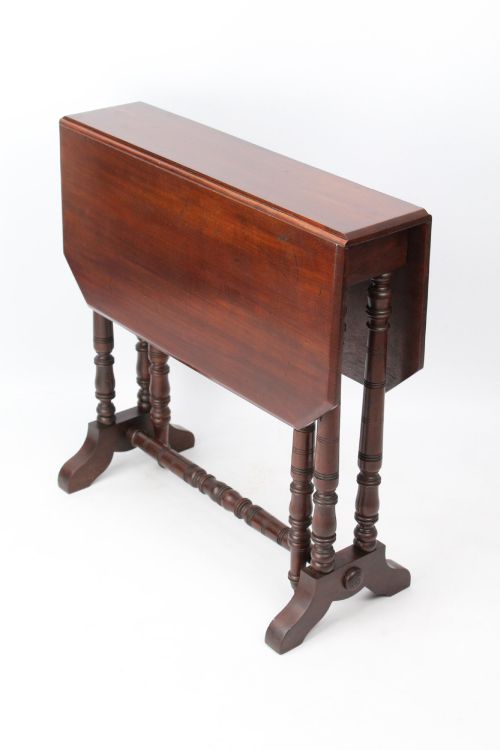
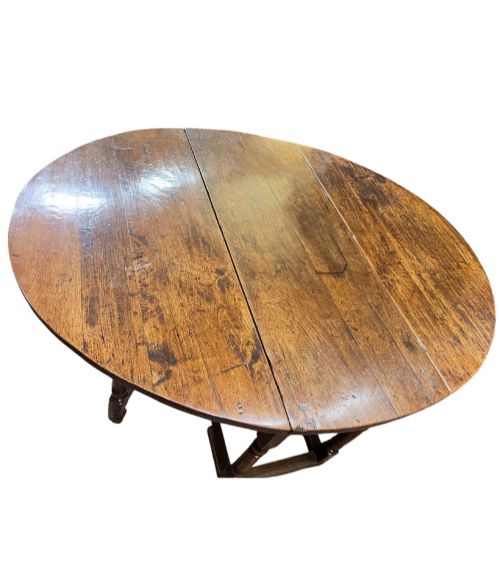
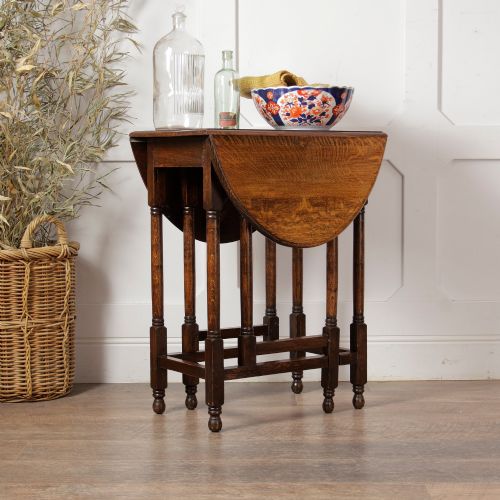
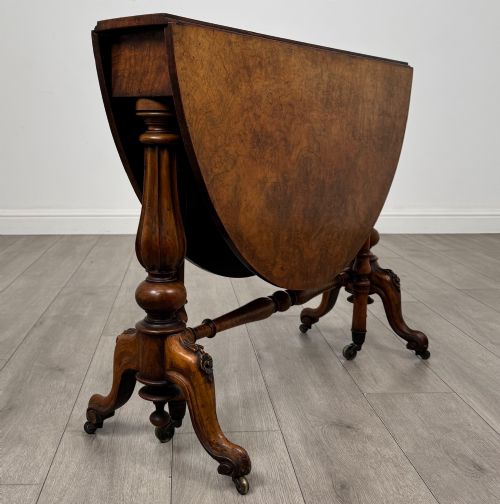
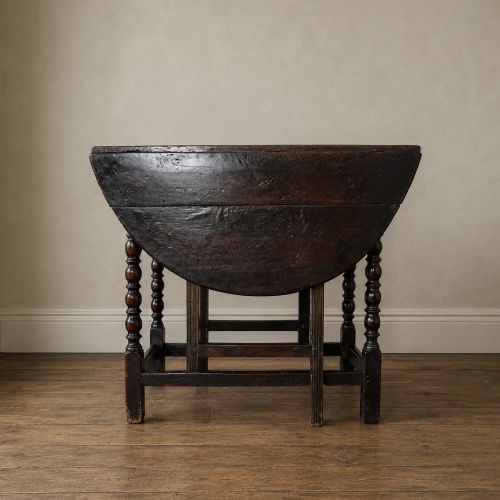
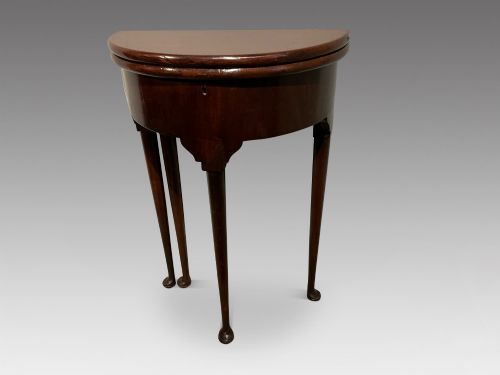
A folding accent table encompasses various space-saving forms intended for occasional use and flexible placement around a room. When searching for a folding accent table, buyers encounter historic pieces ranging from compact 17th-century gatelegs to Victorian Sutherland tables and Edwardian Pembroke tables.
The most common versions met on this page include drop-leaf tables, gateleg tables with swinging supports, and slim Sutherland tables featuring narrow central frames. These pieces originate from multiple periods, including the Georgian, Victorian, and Edwardian eras, as well as early 20th-century workshops.
Makers utilised ingenious folding mechanisms, such as dropping flaps, pivoting leaves, and swinging legs, to allow these tables to expand for dining or tea and contract against a wall when not in use. Their historic forms reflect the changing domestic requirements for versatile furniture in British and international homes.
Materials and construction methods
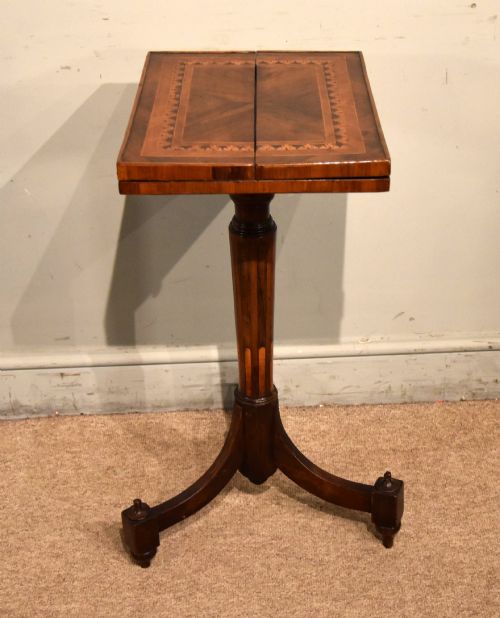
Cabinetmakers constructed these tables primarily using hardwoods such as mahogany, oak, and walnut, frequently selecting burr walnut or satinwood veneers for decorative top surfaces. Solid timbers provided structural integrity for folding legs and drop leaves, while softer beech or deal occasionally served for internal framing or secondary elements.
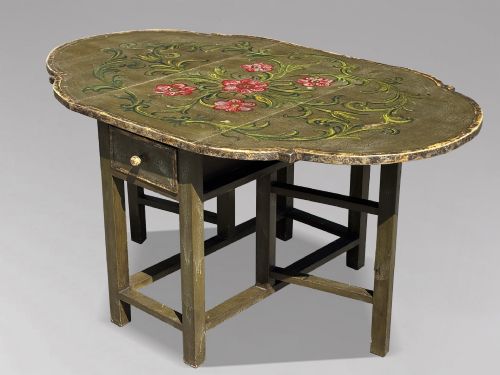
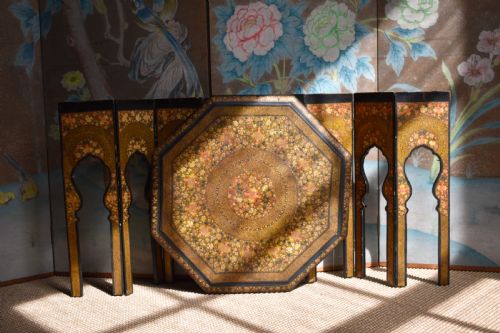
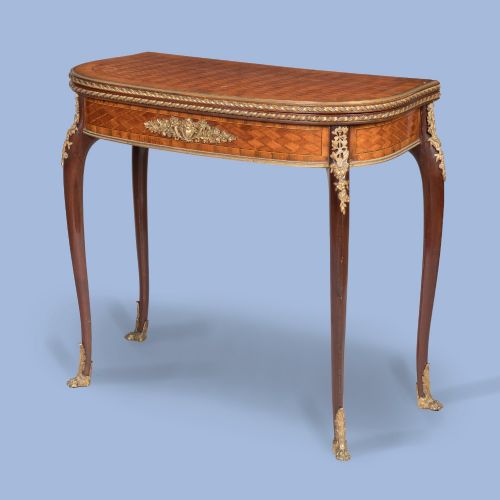
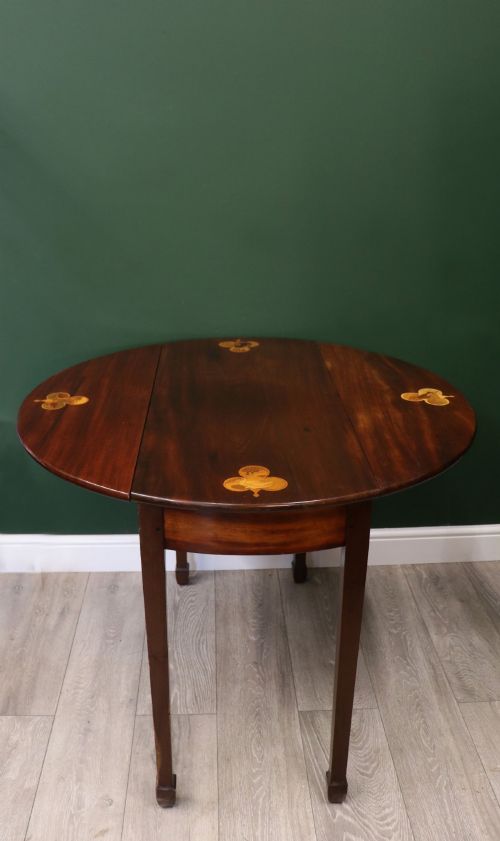
Surface ornamentation involved intricate techniques including floral marquetry, parquetry, brass inlay, and painted finishes such as green or black lacquer. Ormolu mounts and carved details further distinguish specific regional styles like Anglo-Indian padauk tables or French faux bamboo pieces.
Folding Accent Table Retail Price Guide 2026
Typical asking prices for folding accent table among the pieces listed under this phrase on Sellingantiques today, from the lower quarter to the upper quarter. They describe what is for sale here now, not the wider market.
Distinctions in craftsmanship
The grade of a folding accent table depends largely on the selection of timber and the precision of the joinery within its folding action. Superior examples display figured burr walnut or dense Cuban mahogany with book-matched veneers and tightly fitted hinges that allow leaves to drop smoothly without sagging.
Decorative refinement separates standard utility items from top-tier specimens, visible in the execution of hand-carved details, fine string inlay, and balanced proportions. Original surface patination and intact hinges or pivoting mechanisms further indicate superior historic maintenance and original manufacture.
The Folding Accent Table Glossary
- Sutherland table
- A narrow-bodied drop-leaf table with exceptionally slender folding leaves and gateleg supports, popular during the Victorian period.
- Gateleg table
- A table featuring hinged leaves supported by one or more swinging legs that pivot outward from the frame.
- Pembroke table
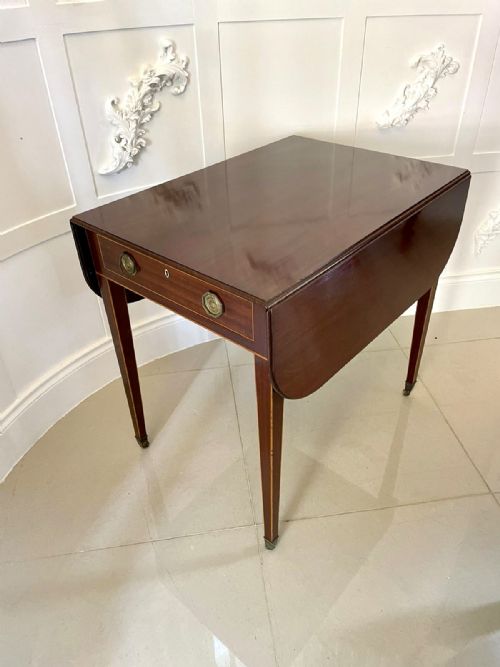
- A small occasional table with two hinged drop leaves on opposite sides, frequently incorporating one or more small drawers.
- Marquetry
- Decorative patterns formed by fitting together thin veneers of wood, shell, or ivory onto a structural surface.
- Patina
- The surface sheen and mellowing of colour developed on wood through age, use, and polishing.
Folding Accent Table: Frequently Asked Questions
What is a Sutherland table?
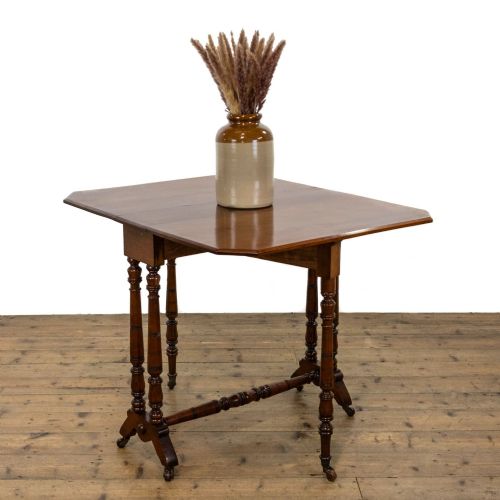
A Sutherland table is a specific form of drop-leaf table characterised by a particularly narrow central fixed top and very wide folding flaps. When lowered, the leaves hang almost vertically, making the table exceptionally compact.
Victorian makers produced these tables extensively in burr walnut and mahogany for use as occasional or tea tables in parlours.
How do gateleg tables work?
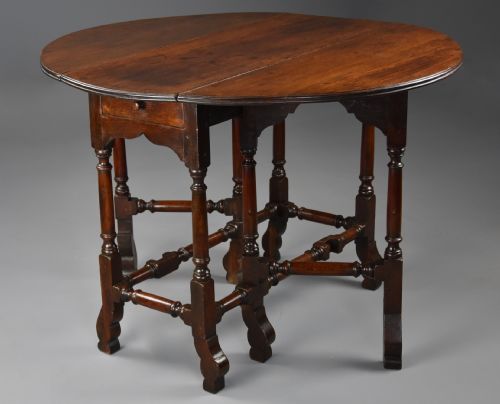
Gateleg tables utilise hinged legs that swing outward on pivots to support the drop leaves when raised. This structural design transfers weight safely to the floor.
Originating in earlier centuries in oak, these frames provide robust support while allowing the entire assembly to fold flat.
Where were Pembroke tables used?
Pembroke tables served as versatile breakfast, writing, or side tables in Georgian and Edwardian drawing rooms. Their drop leaves permitted quick expansion near a fireside or window.
They frequently feature tapered legs, brass castors, and small drawers fitted beneath the main surface.
How do I identify a campaign table?
Campaign tables were designed for military officers to dismantle or fold flat for transport during travel. They typically feature brass corner brackets, recessed carrying handles, and sturdy folding frames.
Timbers like mahogany or padauk were chosen for their resilience against varied climates.