







Chinese Rosewood Table
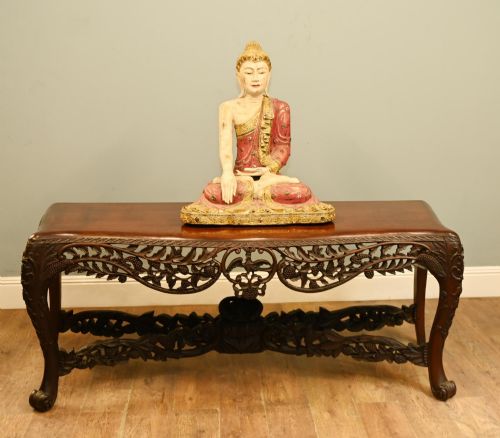
When sourcing a chinese rosewood table, you are choosing solid timber furniture made for export and domestic interiors during the late nineteenth and early twentieth centuries.
Chinese Rosewood Table
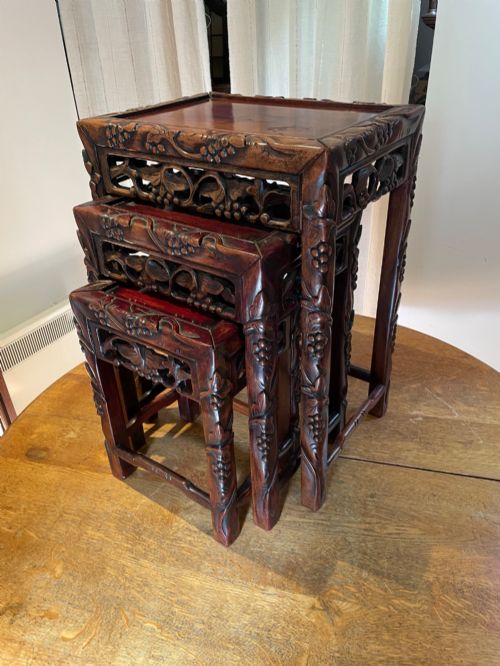
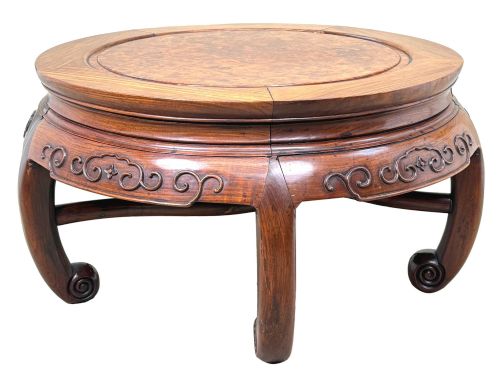
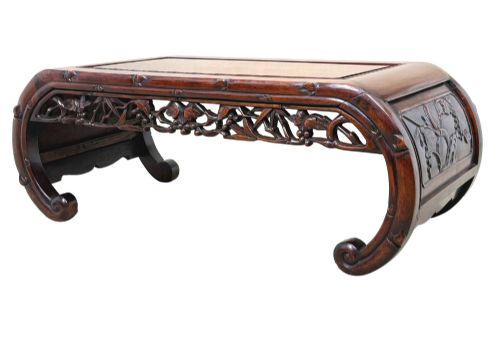
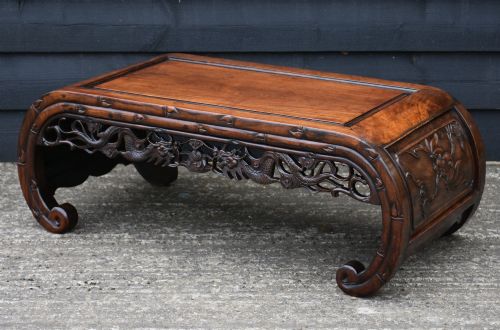
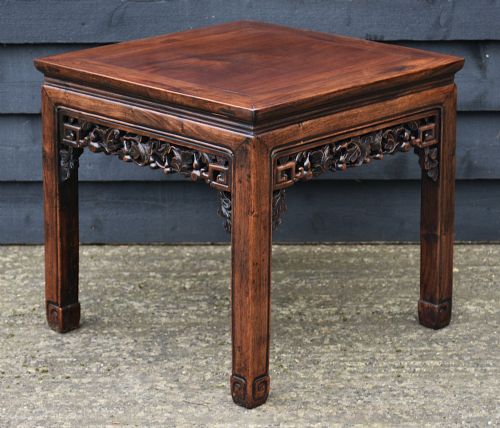
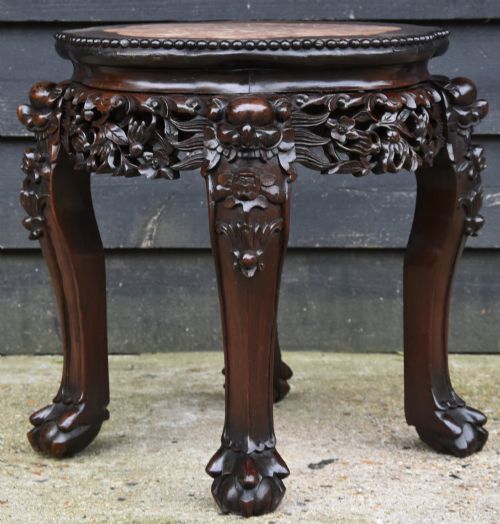
A chinese rosewood table encompasses a broad variety of forms designed for nineteenth and early twentieth-century living, ranging from low opium tables and coffee tables to nests of four tables and tall jardiniere stands.
The versions most commonly met on this page date from the late nineteenth century and the decades around nineteen hundred, reflecting traditional Qing dynasty aesthetics alongside pieces made for the Chinese export market.
Makers utilised dense Asian hardwoods including hongmu and padouk alongside rosewood, frequently incorporating inset marble panels or intricate carving.
Materials and Technique
Craftsmen built these tables using dense tropical hardwoods such as rosewood, hongmu and padouk, selected for their weight, grain and deep natural colour.
Construction techniques relied on traditional joinery methods that accommodated the dense timber without relying on modern fasteners.
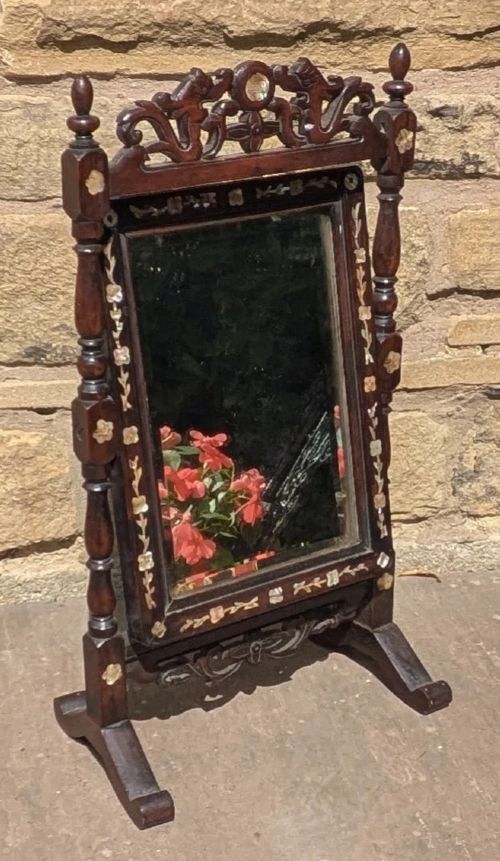
Surfaces often featured hand-carved dragon details, pierced aprons, or inlaid mother of pearl, sometimes combined with inset rouge marble table tops.
Chinese Rosewood Table Retail Price Guide 2026
Typical asking prices for chinese rosewood table among the pieces listed under this phrase on Sellingantiques today, from the lower quarter to the upper quarter. They describe what is for sale here now, not the wider market.
Several tables arrived in Britain via the British Empire Exhibition, carrying stories far beyond their original parlour rooms.
Evaluating Quality
Quality in these tables depends heavily on the crispness of the hand-carving and the density of the chosen hardwood, with heavier hongmu and rosewood pieces commanding greater attention.
The integration of inset marble panels and mother of pearl inlay alters the character of a piece, where precise fitting and intact inlay distinguish finer workshop output.
Proportion and structural integrity separate standard utility stands from more ambitious centre tables and graduated nests.
Edwards and Roberts
The Chinese Rosewood Table Glossary
- Hongmu
- A translation meaning red wood, used to describe dense tropical hardwoods prized in Chinese furniture making. It encompasses several heavy species with rich reddish-brown tones.
- Opium table
- A low rectangular table traditionally used for resting while seated on mats or low platforms. These are frequently built in rosewood with subtle carving along the aprons.
- Jardiniere stand
- A tall pedestal or small table designed specifically to elevate plant pots and floral arrangements. They often feature inset marble tops to protect the wood from moisture.
- Nest of tables
- A graduated set of tables designed to slide neatly beneath one another when not in use. They appear frequently in sets of three or four from the late Qing period.
- Padouk
- A heavy, durable timber with a distinctive reddish hue often utilised alongside rosewood in Asian export furniture. It takes a fine finish and supports intricate carving.
Chinese Rosewood Table: Frequently Asked Questions
What is a chinese rosewood table used for?
These tables served various practical functions in historic interiors, from holding large ceramic vases and planters to acting as low seating surfaces or occasional tea tables.
In modern rooms, collectors utilise them as lamp tables, bedside stands or compact coffee tables that showcase dense grain and carved details.
How do you identify a genuine period piece?
Authentic pieces from the nineteenth and early twentieth centuries display traditional joinery, heavy native hardwoods like hongmu or padouk, and hand-carved motifs consistent with Qing styles.
Examining the underside and joints reveals the hand-finished construction methods typical of workshops before mass-produced manufacturing became dominant.
Are marble tops original to these tables?
Many plant stands, jardiniere tables and centre tables incorporate inset marble or rouge marble panels specifically chosen to display heavy ceramic vessels safely.
These stone inserts were fitted during original construction to prevent water damage to the polished hardwood surface beneath.
How do nests of tables function?
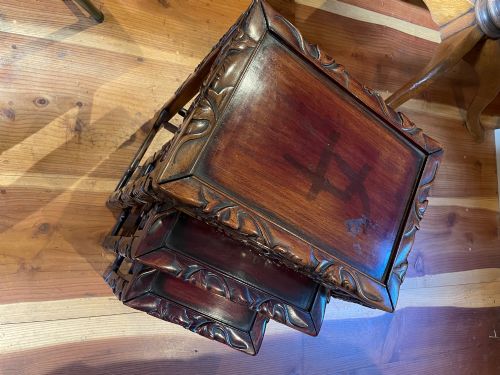
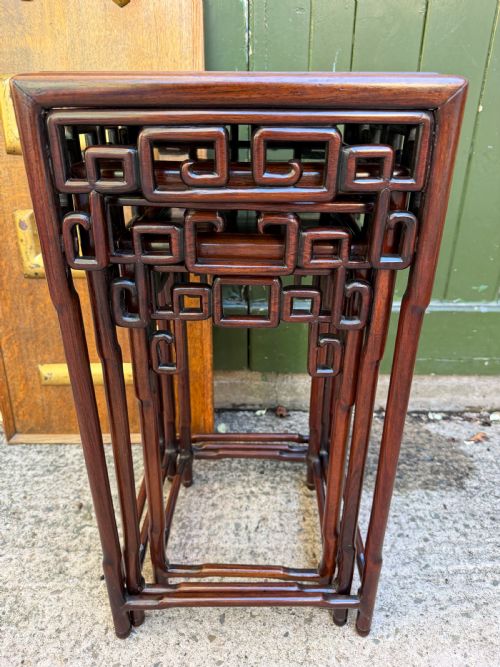
A nest consists of multiple graduated tables built to stack sequentially inside the largest frame, saving floor space when entertaining guests.
Each smaller table pulls out independently to provide surface area for drinks or lamps as needed.