
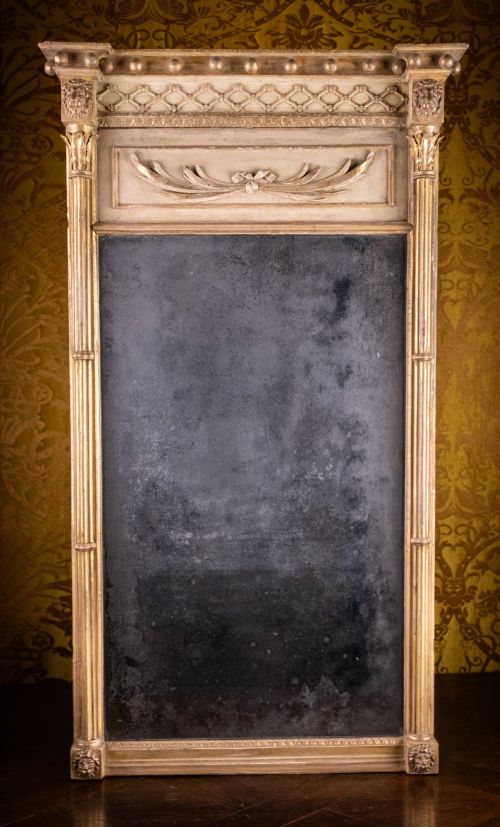

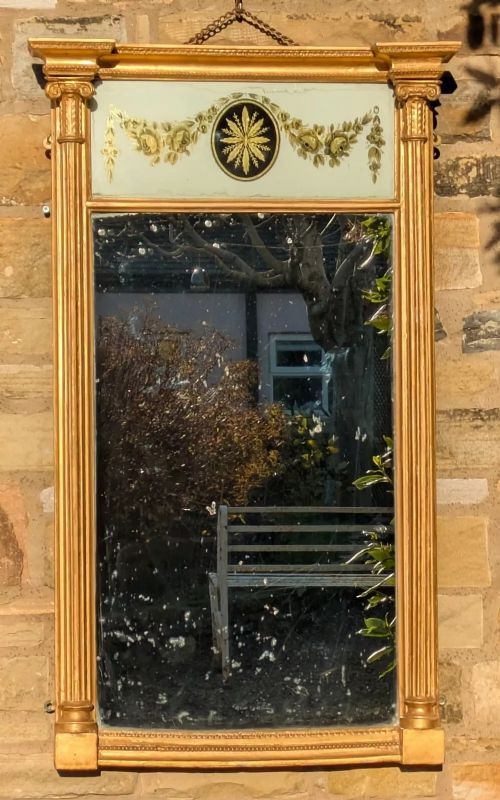
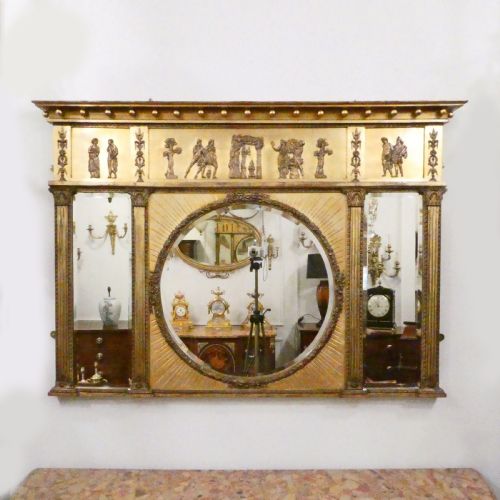

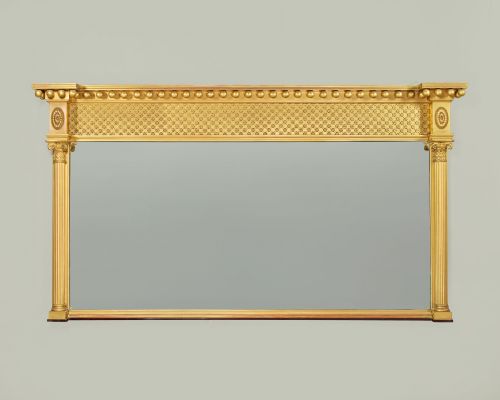


Fluted Column Wall Mirror
A fluted column wall mirror brings neoclassical architectural strength and golden warmth to a room.
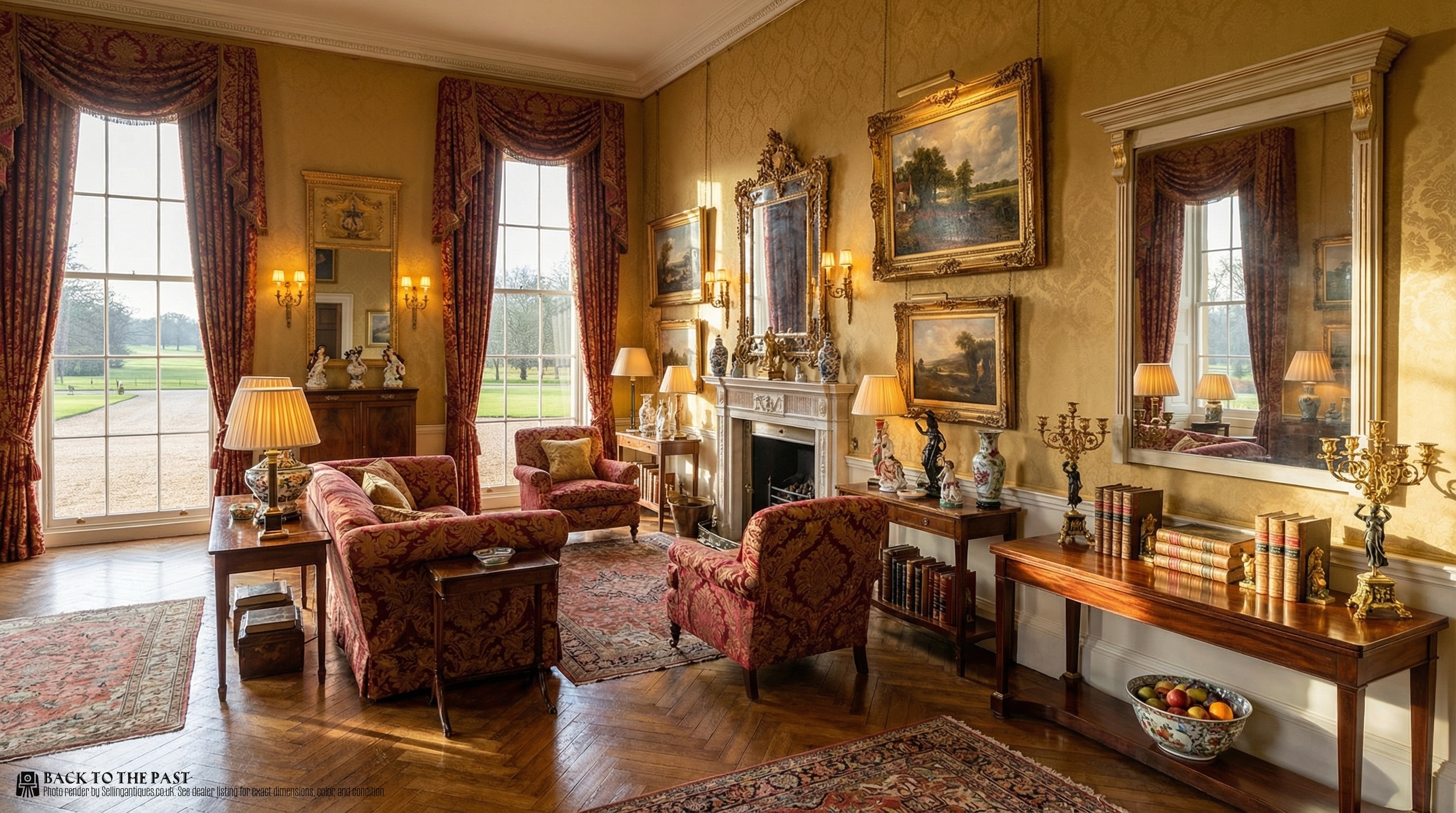
What a fluted column wall mirror is
A fluted column wall mirror is a grand interior furnishing designed to reflect light and amplify space while anchoring a room with classical architectural presence. These pieces frequently take the form of pier mirrors or substantial overmantel mirrors intended for placement above a fireplace or between windows.
The versions most commonly met on this page span the nineteenth century, including Georgian and Regency revivals alongside pieces dated from eighteen hundred to eighteen eighty. They appear in styles such as Regency, Neoclassical, Grand Regency, Regency Revival, and Victorian.
Makers and craftsmen of these periods utilised traditional forms influenced by classical antiquity, incorporating vertical fluting along the frame edges. Such mirrors served both a functional purpose and a decorative role in grand English interiors.
What varies in quality
The distinction between tiers rests upon the crispness of the carving and the depth of the gilding. Finer examples display sharply defined fluting along the column frames and skilful application of gold leaf over well-prepared gesso.
Proportion and scale also dictate quality, as larger overmantel mirrors and architectural pier glasses demand precise balance to support heavy glass plates. The preservation of original mercury mirror plates and untouched painted or gilded surfaces elevates a piece considerably.
Retail Price Guide 2026
Typical UK retail prices for fluted column wall mirror, calculated from the Sellingantiques database of over a million retail prices indexed since 2003. This retail price guide relies exclusively on Sellingantiques data; no external sources or auction records are used, so the figures do not describe the wider market.
Listings feature pieces spanning the nineteenth century, including Georgian and Regency periods alongside Victorian revivals.
The Fluted Column Wall Mirror Glossary
- Pier mirror
- A tall wall mirror designed specifically to hang on the narrow wall space between windows, known as the pier. These often paired with console tables beneath them.
- Gesso
- A plaster-like mixture applied to wood frames to create a smooth surface for carving and gilding. It allows for intricate decorative relief details.
- Parcel-gilt
- A finish where only specific portions of an object are gilded with gold leaf while other areas are painted or left as exposed wood. This creates a striking contrast in colour and texture.
- Fluting
- Shallow, parallel concave grooves running vertically along the shaft of a column or pilaster. This classical decorative detail draws the eye upward.
Frequently Asked Questions
Where should I hang a fluted column wall mirror?
These mirrors suit principal reception rooms, hallways, or above a drawing room fireplace where their architectural scale can be fully appreciated.
Their vertical fluting and gilt frames function best on substantial walls with adequate natural light to activate the glass plate.
How do I identify a Regency style mirror?
Regency style mirrors draw heavily on classical Greek and Roman motifs, featuring architectural elements like columns, cornice moulding, and bold gilded surfaces.
Nineteenth century revivals often replicate these exact proportions, making the materials and construction methods key indicators of age.
What is the difference between a pier mirror and an overmantel mirror?
Pier mirrors are typically taller and narrower, designed to fit the specific wall space between two windows.
Overmantel mirrors are proportioned horizontally or grandly vertical to sit squarely above a fireplace opening.
How do I care for antique gilded frames?
Dust the carved wood and gesso surfaces gently with a soft, dry brush to avoid disturbing the fragile gold leaf.
Keep these mirrors away from direct sunlight and excessive moisture to protect the original giltwood and nineteenth century mirror plates.