


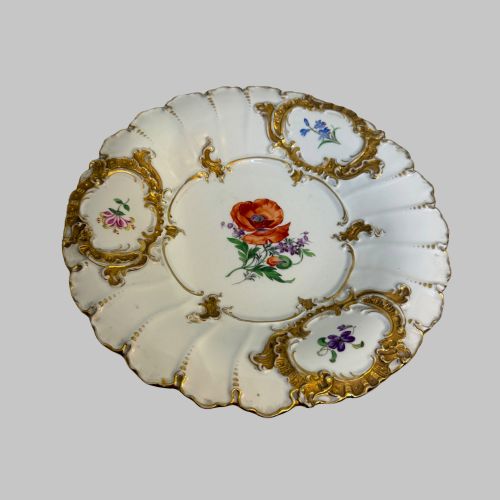

Floral Porcelain Serving Dish
These pieces of floral porcelain serving dish bring hand-painted botanicals and historic ceramic forms directly to the table.
Floral Porcelain Serving Dish
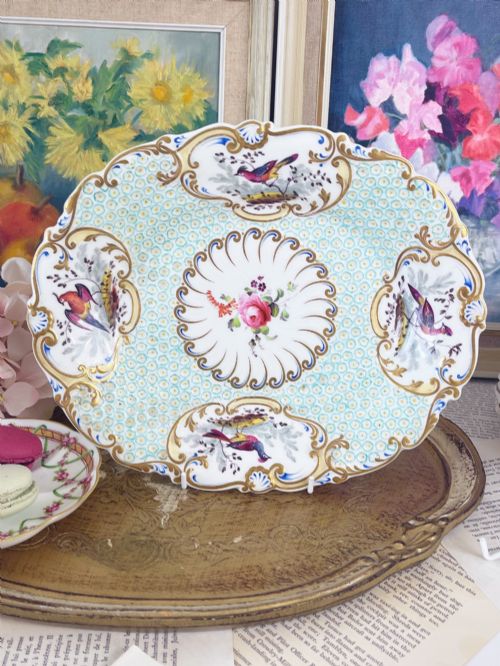
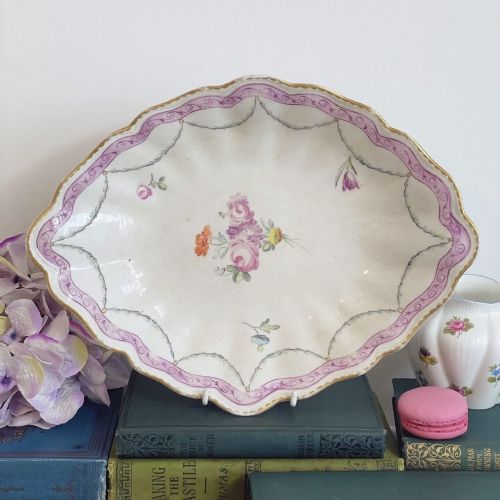
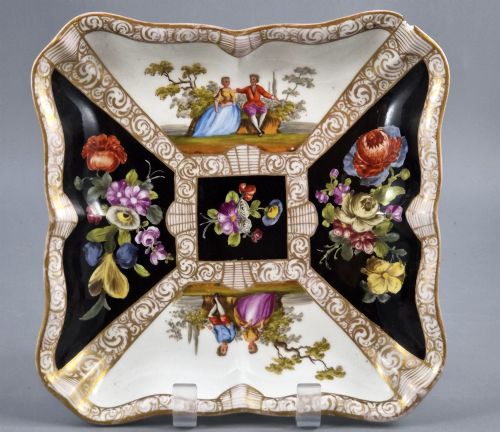
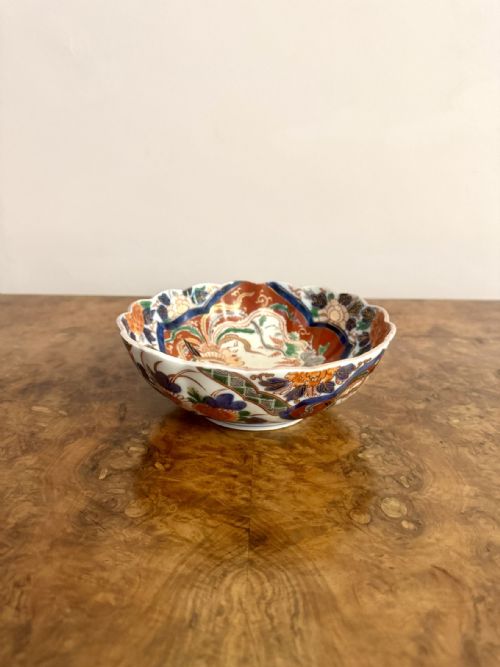
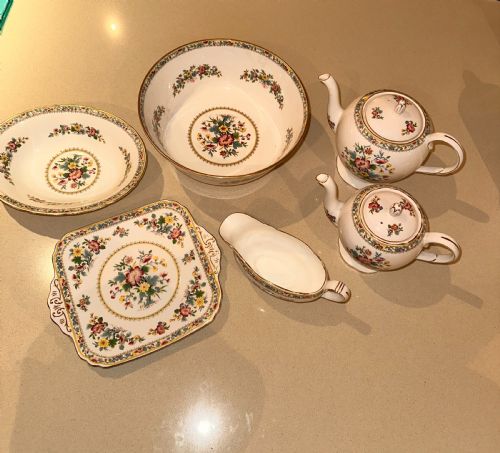
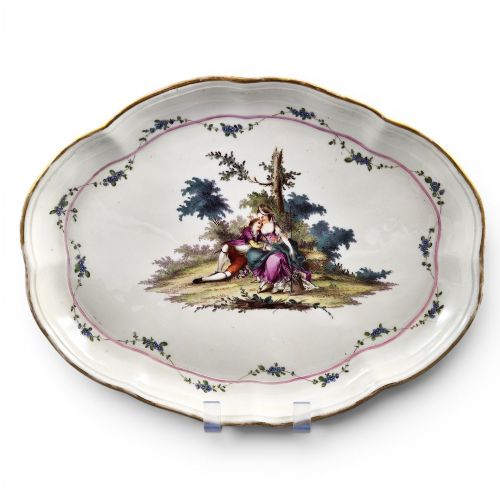
A floral porcelain serving dish is a utilitarian and decorative vessel intended for presentation at the table, encompassing platters, oval plates, square dishes, and deep bowls. The selection spans English factories such as Derby, Worcester, and Coalport, continental European porcelain from Meissen and Marseille, and Japanese Imari and Kutani wares.
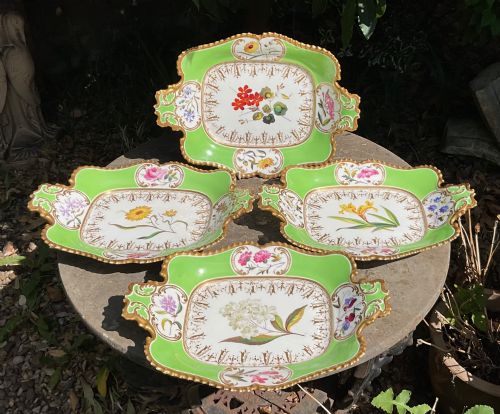
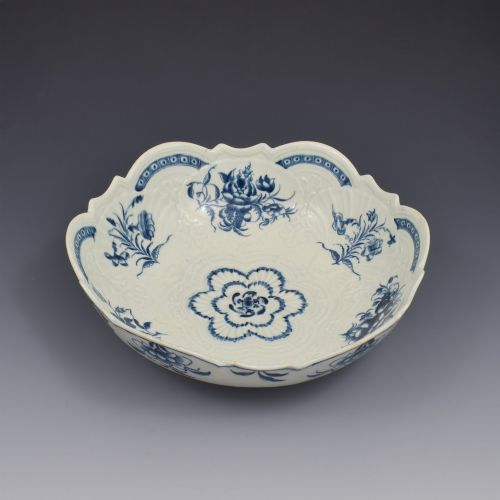
Buyers will encounter 18th-century blue and white junket dishes alongside 19th-century dessert services, Regency moulded serving dishes, and Japanese Meiji period chargers. These vessels range from intimate cabinet pieces to large platters designed for formal dining.
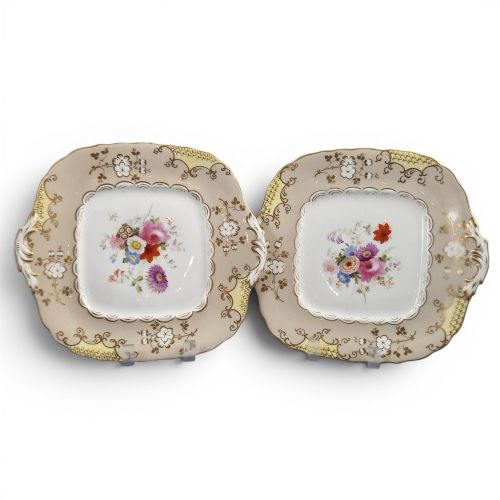
Forms vary from scalloped edge bowls and lobed plates to rectangular serving trays and triangular entrée dishes, reflecting the specific dining customs of the Georgian, Victorian, and Edwardian periods.
How they were made
Makers utilised ceramic bodies including bone china, ironstone, and hard-paste porcelain, shaped by hand or moulded into complex floral and geometric profiles. Glaze was applied to seal the ceramic body before kiln firing.
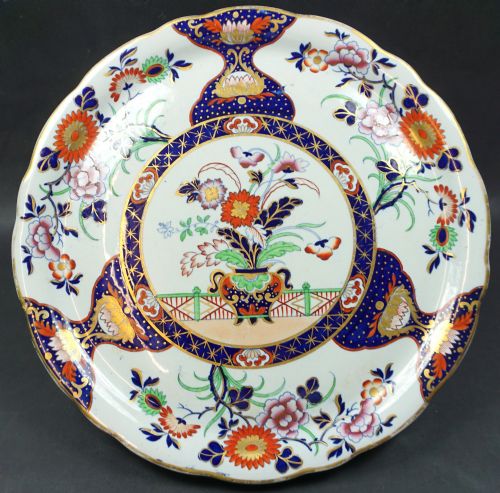
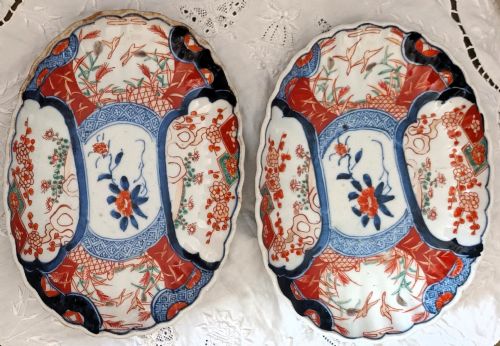
Decoration relied on hand-painted polychrome enamels, underglaze blue, and applied gold leaf or gilding to highlight moulded rims and borders. Specific pigments defined regional palettes, from the iron-red and cobalt blue of Japanese Imari to the botanical watercolours of English factories.
Listings feature 18th-century Chinese export porcelain alongside 19th-century English bone china and Japanese Meiji period Imari chargers.
What varies in quality
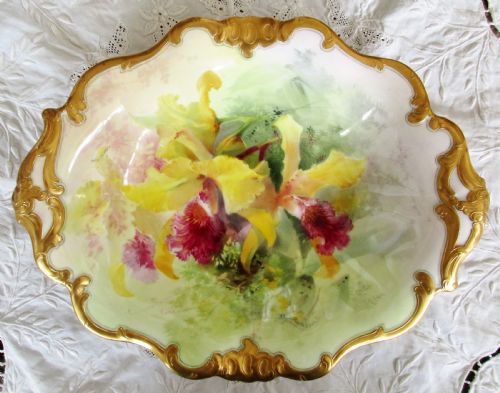
The sophistication of the hand-painted brushwork separates standard production from superior examples, particularly in the rendering of botanical specimens, birds, and Watteau scenes. Crispness in moulded relief work and precision in gilding application further distinguish masterworks from simpler factory wares.
The integrity of the porcelain body, clarity of the glaze, and survival of original enamel colours without excessive rubbing dictate the standing of individual pieces within the market range.
H & R Daniel·Derby·Meissen·Chamberlains Worcester·Hicks & Meigh·Dr Wall Worcester·Royal Doulton·Coalport·Joseph-Gaspard Robert·John Ridgway·Rockingham Pottery·Carlton Ware·Paul Müller Selb·Müller Volkstedt·Flight, Barr and Barr
The Floral Porcelain Serving Dish Glossary
- Imari
- A style of Japanese porcelain featuring a distinct palette of underglaze cobalt blue, iron-red, and gilt highlights. This aesthetic was widely exported to Europe and subsequently copied by Western factories.
- Bone china
- A type of soft-paste porcelain incorporating bone ash, developed in England to create a whiter and more translucent ceramic body. It allowed for thinner walled vessels with high structural strength.
- Enamel
- Opaque vitreous material fused to the surface of fired porcelain to provide colour and decoration. Enamel painting is applied over the glaze and fixed in a muffle kiln.
- Gilding
- The application of gold leaf or gold powder to ceramic surfaces, typically accentuating rims, handles, and moulded borders. Higher quality pieces often employ burnished gold.
- Junket dish
- A shallow bowl specifically designed for serving junket, a traditional milk-based dessert curd. These dishes frequently feature pierced galleries or lobed rims.
Floral Porcelain Serving Dish: Frequently Asked Questions
Can I use these dishes for food?
Most antique serving dishes are stable enough for dry foods or contemporary dining use. However, pieces with overglaze enamel or delicate gilding may suffer from abrasive contact with cutlery.
Consider reserving older or heavily decorated examples for display or gentle service to preserve the painted surfaces.
How do I date a porcelain dish?
Examine the base for factory marks, impressed ciphers, and painted pattern numbers. Blue underglaze crescents, crossed swords, and iron-red characters offer clues to the originating kiln and active period.
The weight of the ceramic body, style of hand-painting, and rim moulding techniques also help narrow down the decade of manufacture.
What is the difference between porcelain and ironstone?
Porcelain is a vitrified ceramic fired at high temperatures, resulting in a dense, white, and often translucent body. It includes soft-paste, hard-paste, and bone china formulations.
Ironstone is a heavy earthenware developed for durability, possessing an opaque body and a thicker profile designed to withstand robust daily use.