




Vintage China Tableware
Vintage china tableware brings together plates, services and tea sets spanning the Georgian era to the Art Deco period.
Vintage China Tableware
Vintage china tableware encompasses functional and decorative ceramics designed for dining, tea and dessert service. These sets and individual pieces range from early nineteenth-century earthenware and ironstone to porcelain tea sets and dinner services from later decades.
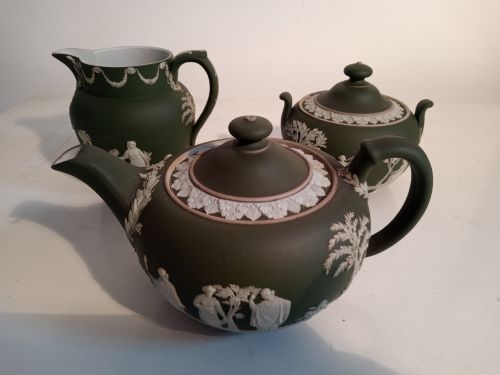
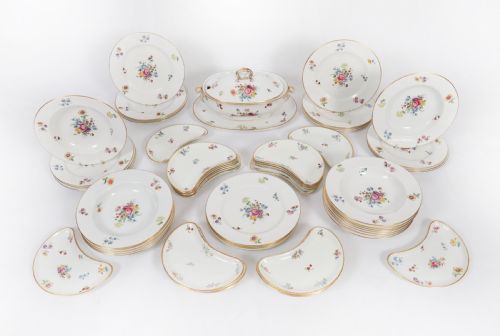
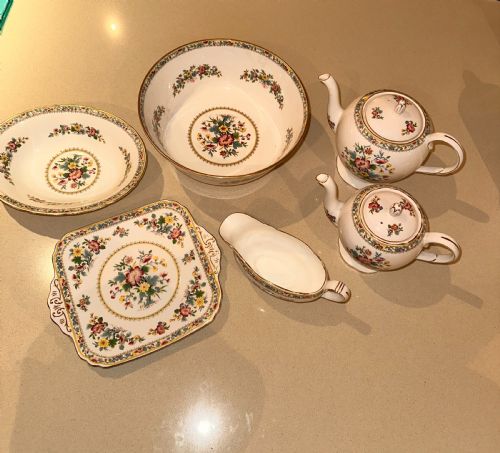
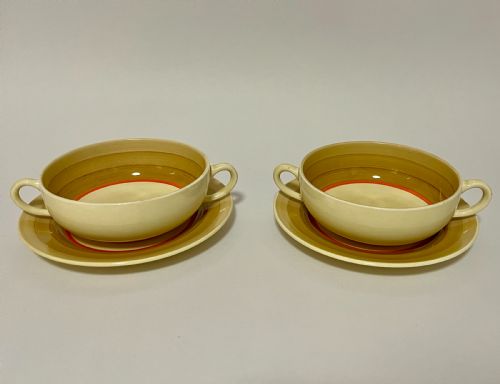
Buyers will encounter diverse forms on this page, including large dinner services, tea and coffee sets, soup tureens, meat platters and dessert services. Originating from periods such as the Georgian, Victorian and Edwardian eras, as well as the 1920s and 1930s, these pieces reflect domestic dining habits of the past.
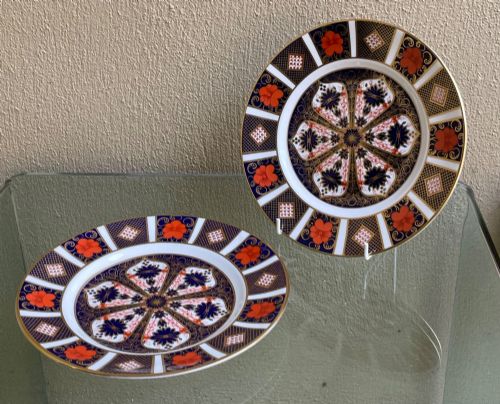
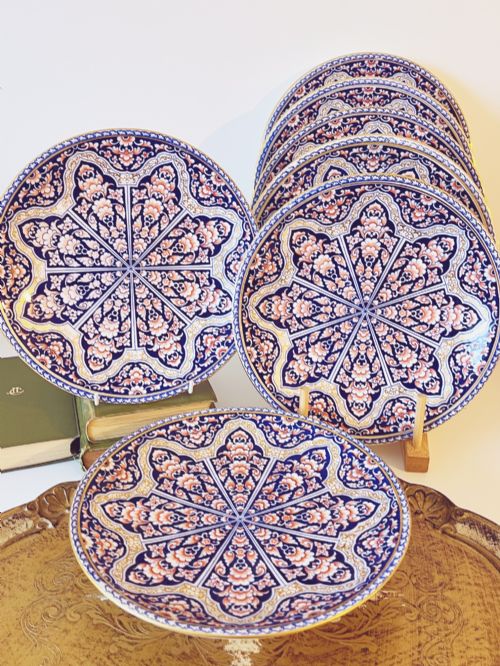
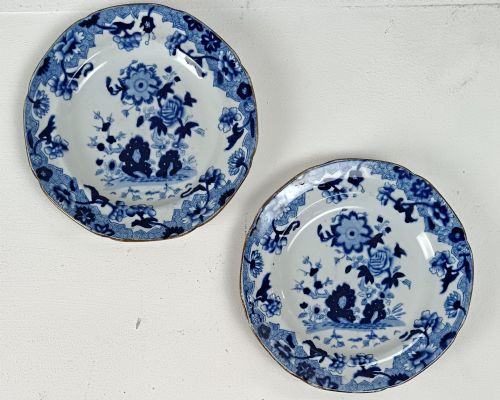
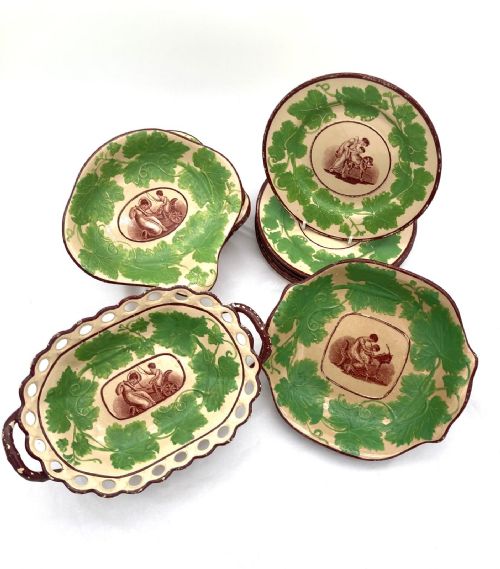
The selection includes transfer-printed patterns, hand-painted floral designs and Imari styles produced by established potteries and factories. Pieces vary from single decorative plates to extensive multi-piece settings with matching saucers, tureens and serving dishes.
How they were made
Potters shaped these ceramics using body materials such as porcelain, bone china, earthenware and ironstone, applying glaze to seal the porous clay bodies. Many items received underglaze or overglaze transfer printing, followed by hand-painting in colours like blue, green and multi-coloured enamel palettes.
Gold leaf application and intricate gilding frequently accented the rims and handles of better-quality tea and dessert services. Firing in kilns transformed the shaped clay and applied pigments into durable tableware suitable for daily dining or formal presentation.
One twenty-piece set hides its culinary ambitions inside a storage box meant for sushi.
What varies in quality
The standard of execution in hand-painting and transfer printing separates standard production items from finer tableware. Crispness of detail in transfer-printed patterns and precision in polychrome enamel work indicate greater skill during manufacture.
The weight, density and refinement of the ceramic body also distinguish the pieces, with fine bone china and porcelain offering a more delicate translucency compared to heavier ironstone or earthenware. Preservation of applied gold leaf and surface glazes significantly influences the overall integrity of a service.
Royal Crown Derby·Spode·Wedgwood·Clarice Cliff·Coalport·Royal Worcester·Meissen·Limoges·William Adams·Müller Volkstedt MV Co.·Doulton·Grainger and Co·Sutherland·Gladstone potteries
The Vintage China Tableware Glossary
- Ironstone
- A heavy, durable type of earthenware patented in the nineteenth century to imitate Chinese porcelain. It resists chipping well and forms the body of many large meat platters and soup tureens.
- Transfer printing
- A decoration technique where an engraved metal plate transfers a design onto tissue paper, which is then pressed onto the ceramic body before firing. This method allowed consistent reproduction of complex pictorial scenes.
- Imari style
- A decorative scheme inspired by Japanese export porcelain featuring rich iron-red, cobalt blue and gold colouring. Victorian interpretations of this style appear frequently on plates and dessert services.
- Bone china
- A type of porcelain incorporating animal bone ash, resulting in a strong, brilliant white and slightly translucent material. It became a standard medium for fine British tea and coffee sets.
- Comport
- A raised serving dish or pedestal bowl used for presenting fruit or desserts at the table. These often anchor matching dessert services from the nineteenth century.
Vintage China Tableware: Frequently Asked Questions
How do I care for vintage china?
Wash these pieces gently by hand in warm water using a mild detergent, avoiding abrasive scourers that can damage overglaze decoration or gold leaf.
Store stacked plates with felt or paper dividers between them to prevent scratching the glaze and rim gilding.
Can I use these sets for daily dining?
Many nineteenth-century ironstone and ceramic pieces remain sturdy enough for regular use, provided they are hand-washed rather than put in a modern dishwasher.
Fine bone china and porcelain tea sets from later periods require more careful handling due to delicate handles and thinner walls.
How do I identify the date of a set?
Look for factory backstamps, impressed registry marks or date ciphers underneath the glaze, which many British and European potteries used from the nineteenth century onward.
Stylistic indicators such as Art Deco geometric forms or Victorian floral transfers also help narrow down the period of manufacture.
What is the difference between earthenware and porcelain?
Earthenware is a porous, opaque ceramic fired at lower temperatures, often forming heavier utilitarian wares like ironstone dinner services.
Porcelain and bone china are fired at higher temperatures until vitrified, resulting in a non-porous, harder material that often exhibits translucency when held to the light.