


Floral China Tableware
Floral china tableware brings botanical painted details to the dining table, ranging from intimate dessert sets to large Victorian services.
Floral China Tableware
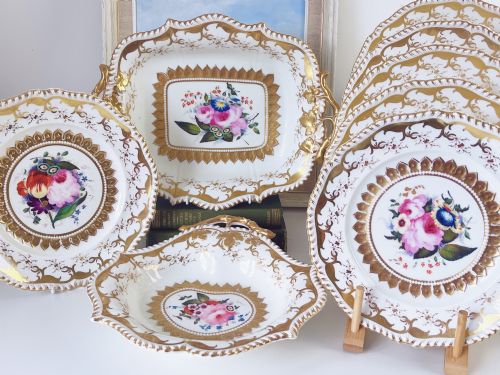
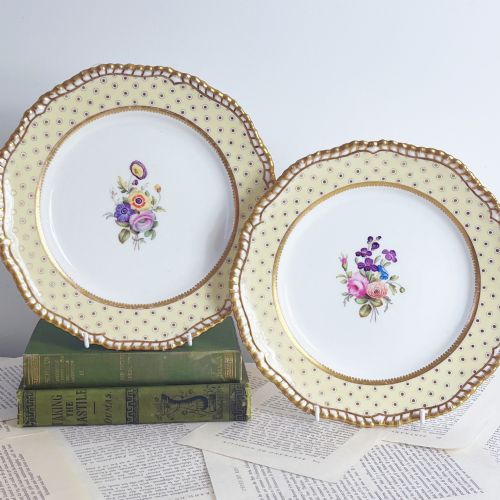
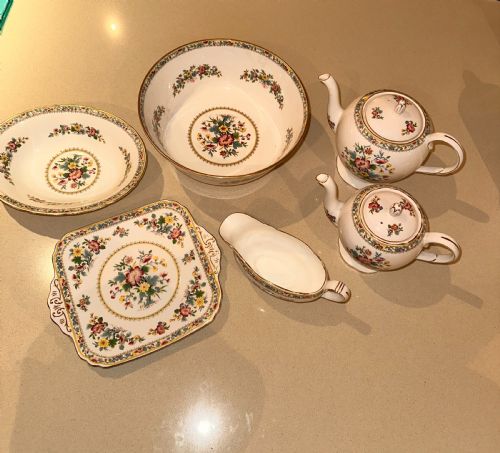
Floral china tableware comprises plates, tureens, and full dinner or dessert services decorated with plant motifs. When searching for floral china tableware, buyers encounter pieces spanning the Georgian, Victorian, and Edwardian periods.
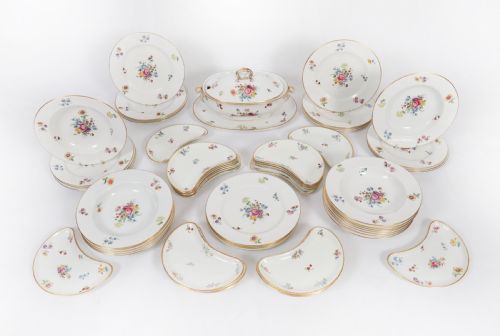
The assortment on this page ranges from modest sets of tea plates to extensive eighty-piece services. Origins include traditional English potteries alongside continental porcelain makers.
How they were made
Potters utilised ceramic bodies such as porcelain, earthenware, ironstone, and creamware to form the plates and serving vessels. These bodies were often glazed and embellished with gold leaf or enamel highlights.
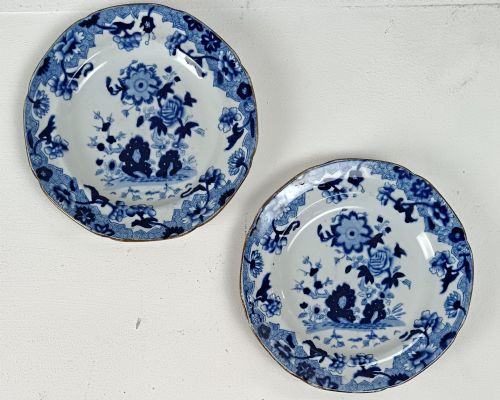
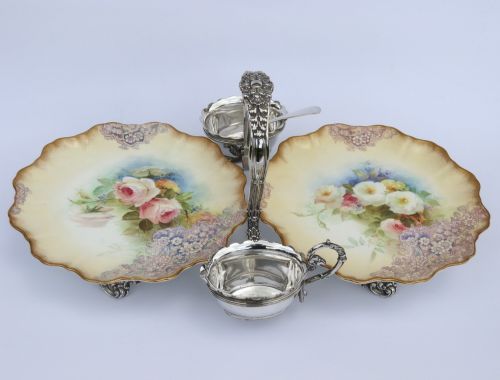
Decoration relied heavily on hand-painted floral designs applied directly onto the ceramic or porcelain surface. Transfer printing and specialised patterns such as blue and white also appeared across various pieces.
The listings on this page span the Georgian, Victorian, and Edwardian periods, utilising materials such as porcelain, ironstone, and creamware.
What varies in quality
Quality rests upon the precision of the hand-painted botanical details and the complexity of the ceramic form. Pieces featuring delicate brushwork by named makers diverge sharply from standard factory output.
The integrity of the body, whether robust ironstone or fine translucent porcelain, dictates the durability and refinement of the service. Preservation of the original enamel colours and gold leaf gilding further separates the finer examples.
Grainger Lee and Co·Spode·Copeland·Meissen·Walker and Hall·Doulton Burslem·Wedgwood·Rockingham Pottery·Booths·Coalport·Masons Ironstone·Müller Volkstedt·Royal Worcester·Jacob Petit·Limoges·Royal Crown Derby
The Floral China Tableware Glossary
- Ironstone
- A heavy, durable type of ceramic developed in the nineteenth century as a robust alternative to porcelain. It resists chipping and forms a sturdy base for dinner services.
- Creamware
- A refined earthenware with a warm yellowish hue, developed in the eighteenth century. It became a popular ground for botanical painting.
- Tureen
- A deep covered vessel used for serving soups, sauces, or vegetables at the table. These often feature decorative handles and matching stands.
- Felspar
- A mineral added to porcelain paste to improve translucency and strength. Spode utilised this composition for specialised dessert plates.
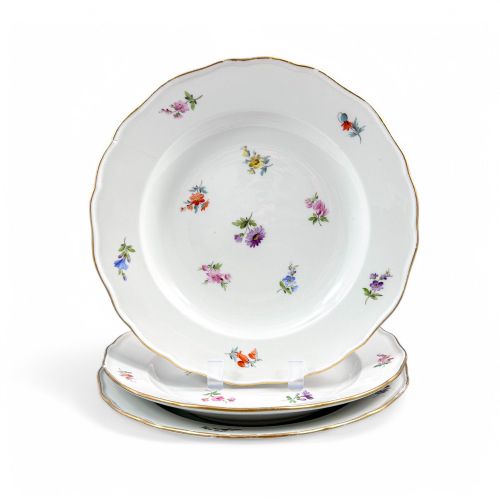
- Streublumen
- A decorative style featuring scattered small floral sprigs across a white ceramic surface. This German porcelain motif gained wide popularity in the nineteenth century.
Floral China Tableware: Frequently Asked Questions
How do I care for antique floral china?
Wash these pieces gently by hand using mild detergent and warm water. Avoid modern dishwashers, as harsh cycles strip away delicate enamel painting and gold leaf gilding.
Store plates with felt dividers between them to protect the glazed surfaces from scratching. Handle tureens and serving dishes by their main bodies rather than relying solely on protruding handles.
Can I use these services daily?
Many nineteenth-century ironstone and earthenware services were built for robust daily use. However, fragile porcelain pieces with intricate hand-painted flowers suit special occasions better.
Check each item for hairline cracks before serving hot food. Older ceramic bodies can be sensitive to sudden thermal shock.
How do I date a floral dinner service?
Examine the maker marks stamped or painted on the underside of the ceramics. Reference books and registry numbers often pinpoint the exact decade of production.
Style clues such as Rococo Revival curves or Edwardian borders also help narrow down the manufacturing period. The weight and composition of the ceramic body provide additional chronological evidence.
What is the difference between a dessert service and a dinner service?
Dinner services comprise large meat dishes, soup dishes, tureens, and full-sized dinner plates designed for the main course. They use sturdy ironstone or heavy earthenware to withstand heavy use.
Dessert services focus on smaller plates, shaped dishes, and compotes intended for fruit or sweets at the end of the meal. These often feature finer porcelain bodies and more elaborate botanical hand-painting.