


Antique Porcelain Dinner Service
An antique porcelain dinner service brings historical table settings to life, offering grand nineteenth-century tableware crafted by renowned English and European potteries.
Antique Porcelain Dinner Service
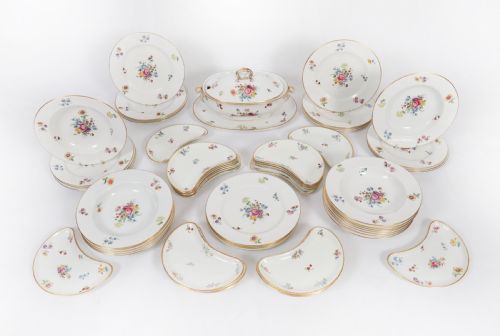
An antique porcelain dinner service encompasses comprehensive dining sets, part services, and smaller scale child sets originating predominantly across the nineteenth century and the Edwardian era. These assemblies include everything from extensive sixty-piece Copeland Spode settings and Victorian Wedgwood groupings down to miniature child services and individual Coalport or Spode dinner plates.
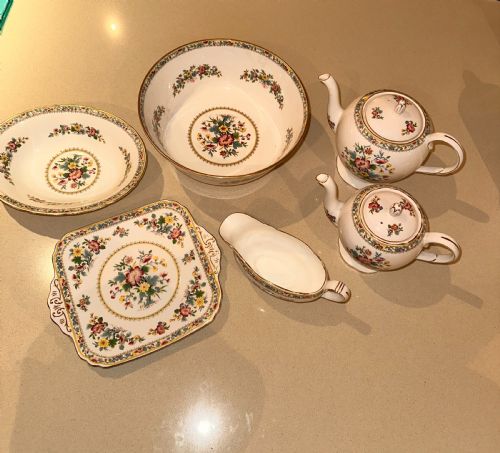
Buyers encountering this category will find traditional English and European styles, alongside French Provincial aesthetics and blue and white transfer printed patterns. Forms range from large multi-piece dining services to compact miniature dinnerware sets, reflecting the diverse domestic dining habits of the Victorian and Edwardian periods.
Materials and methods of manufacture
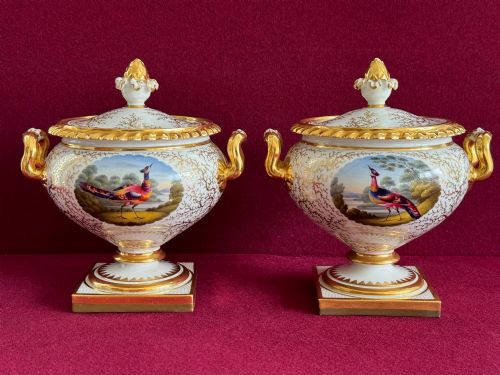
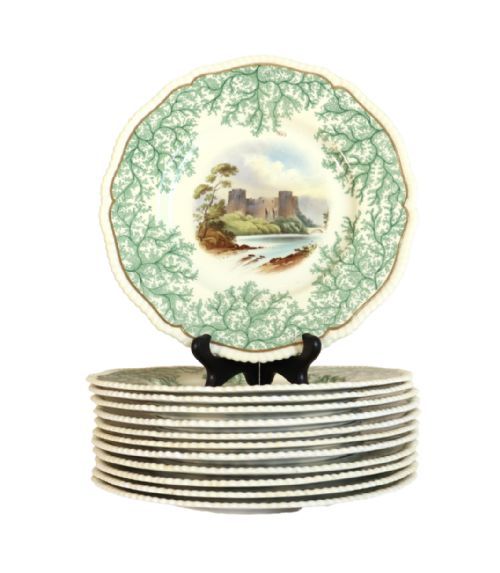
These services are shaped from porcelain, bone china, and earthenware, finished with applied glaze and decorated with enamel or hand-painted details. Many pieces incorporate gilt and gold leaf accents to highlight rims and decorative borders.
Transfer printing techniques, such as flow blue methods and detailed sheet patterns, appear alongside delicate hand-painted motifs. Potteries utilised these established ceramic traditions to produce both utilitarian family tableware and decorative child services.
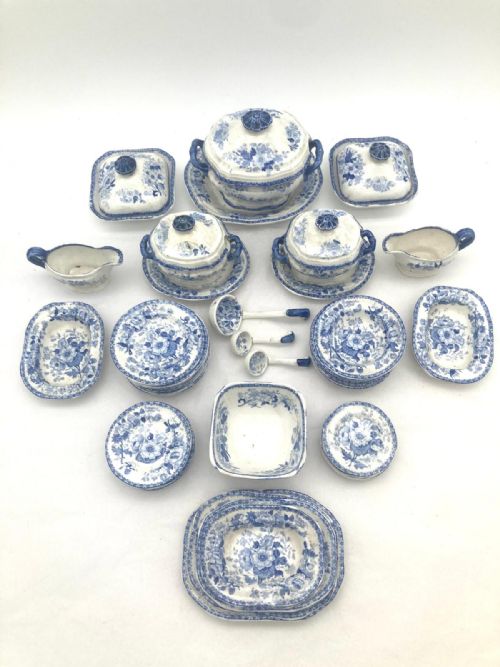
Miniature dinner services let Victorian children practice formal dining etiquette with tiny plates that could easily fit in the palm of a hand.
Variations in quality and execution
The standard of an antique porcelain dinner service depends heavily on the precision of the hand-painting and the preservation of the original enamel and gilt decoration. Extensive sets that retain a high proportion of their original matching pieces demonstrate superior survival rates compared to heavily depleted part services.
The finesse of the ceramic body itself, whether fine bone china, porcelain, or robust earthenware, dictates the refinement of each plate and serving vessel. Furthermore, named family provenances or specific historical commissions elevate the distinction of particular services.
Spode·Minton·Wedgwood·Copeland·Coalport·Müller Volkstedt·Doulton
The Antique Porcelain Dinner Service Glossary
- Bone china
- A type of soft-paste porcelain incorporating bone ash, yielding a strong, translucent ceramic body used extensively in traditional English tableware.
- Flow blue
- A cobalt blue transfer printing style originating in the nineteenth century where the colouring bled slightly into the surrounding glaze during firing.
- Gilt
- A thin layer of gold or gold leaf applied to the surface of ceramics, typically accentuating the rims and borders of dinner plates.
- Transfer printing
- A mechanical printing method that applies intricate engraved designs onto ceramic surfaces using paper or tissue before glazing and firing.
Antique Porcelain Dinner Service: Frequently Asked Questions
How do I care for antique dinner services?
Wash porcelain and bone china pieces entirely by hand using warm water and a mild detergent. Avoid mechanical dishwashers, as harsh detergents and high temperatures will degrade delicate enamel and gilt decoration over time.
Store plates using felt separators or padded dividers to prevent surface scratching and rim chipping. Stacking heavy sets too high without protection risks cracking the underlying ceramic bodies.
Were child services used for dining?
Miniature dinner services and child sets served primarily as educational toys for children to learn formal dining etiquette during the nineteenth century. Despite their small scale, they were manufactured using the same ceramic materials and decorative techniques as adult tableware.
While some were occasionally used for light play or nursery meals, many survived in excellent condition because they were treated as display items. Collectors prize them today for their charming representation of full-sized domestic services.
What is a part dinner service?
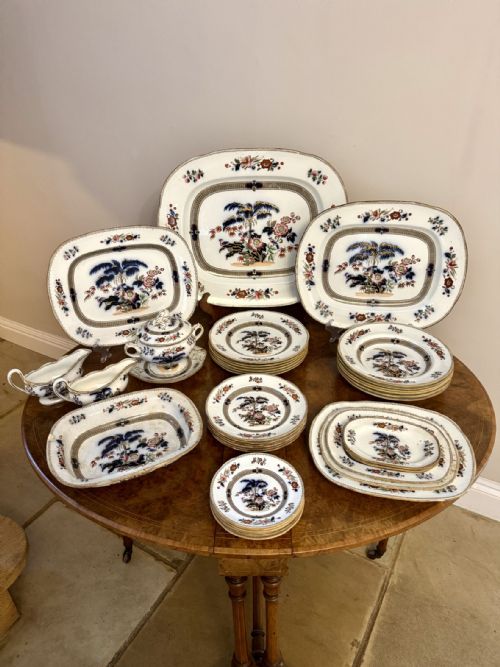
A part dinner service is a surviving subset of a larger, original dining set that has become separated over generations. These collections typically retain a mixture of dinner plates, serving dishes, or soup plates rather than the complete original complement of pieces.
Buying a part service allows collectors to acquire authentic nineteenth-century tableware without needing storage space for a full sixty-piece setting. They offer a practical way to set a dining table using genuine historical ceramics.
How are nineteenth century services dated?
Dating relies on maker marks stamped, impressed, or painted onto the underside of the ceramic base. These factory marks often changed with successive partnerships, registry dates, or reigning monarchs.
Stylistic indicators, such as transfer-printed floral patterns, flow blue coloration, and heavy gilding styles, also provide strong clues to the decade of manufacture. Comparing these elements with established ceramic reference guides helps narrow down the period.