

Floral Inlaid Side Table
A floral inlaid side table brings rich botanical marquetry and warm timber tones to an interior, offering both decorative presence and everyday utility.

What these pieces are
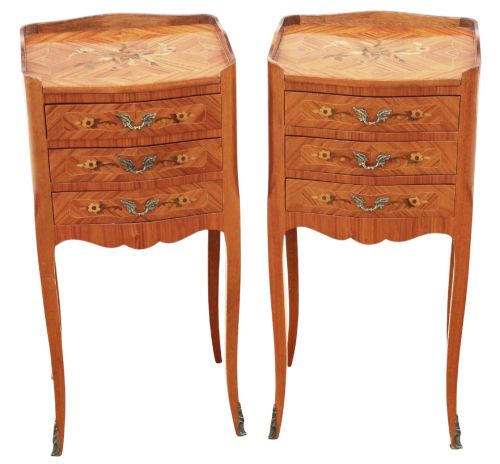
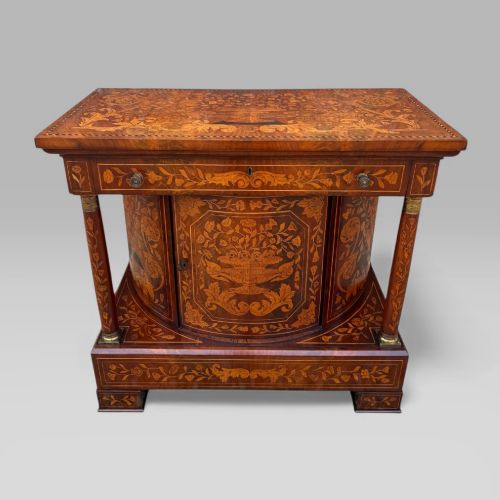
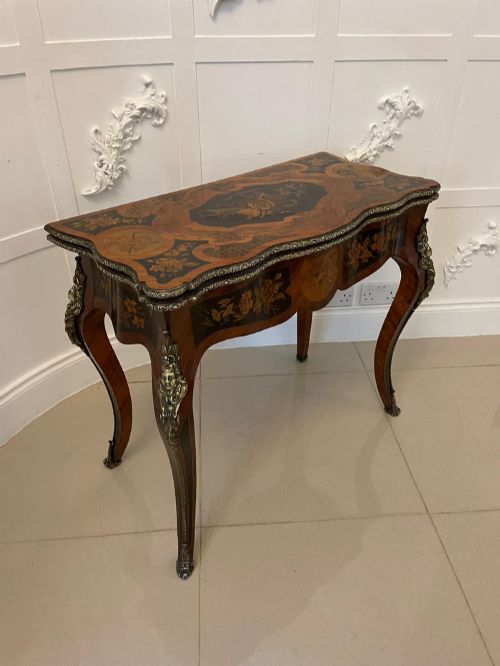
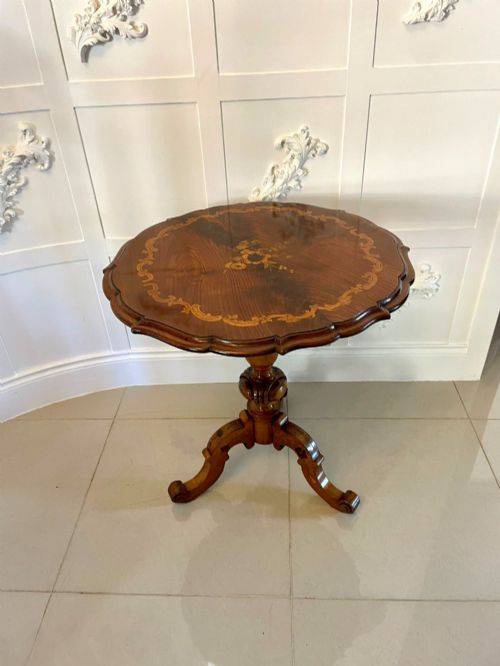
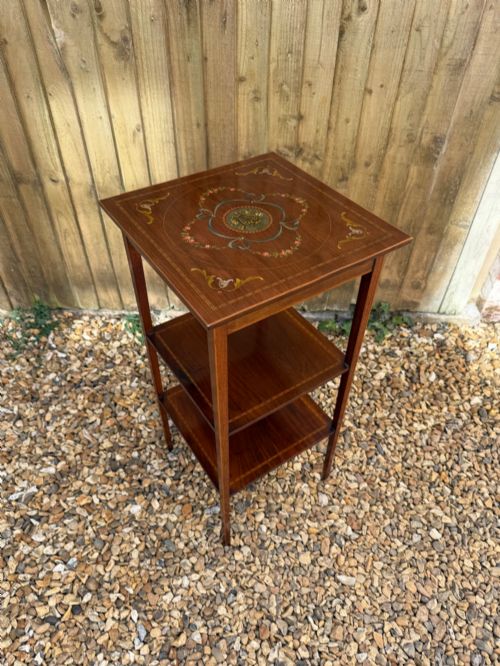
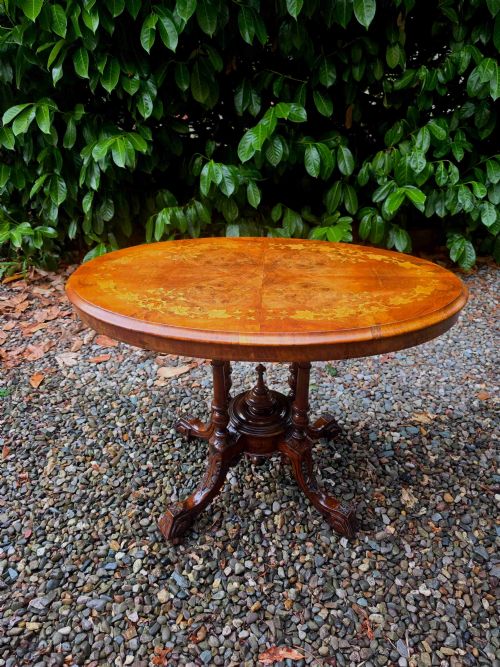
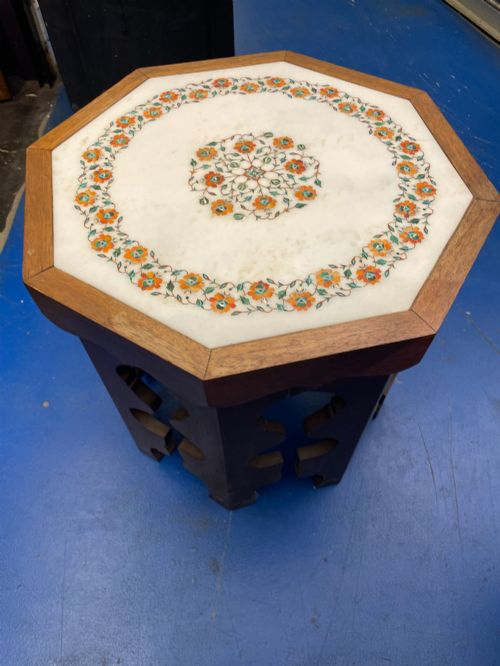
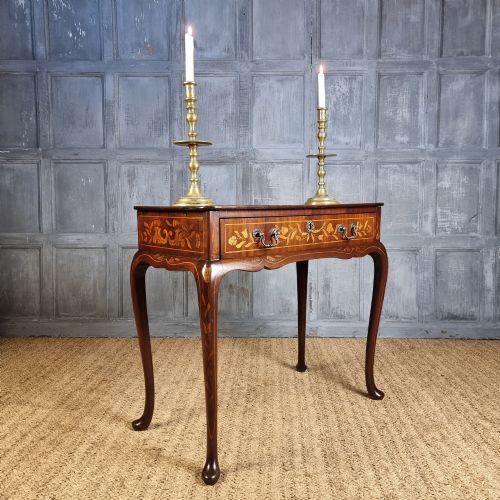
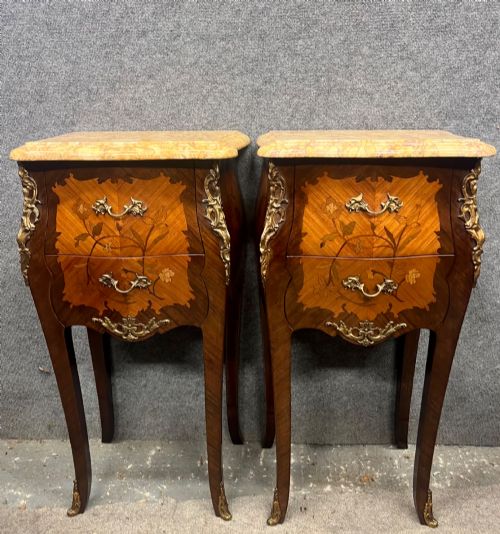
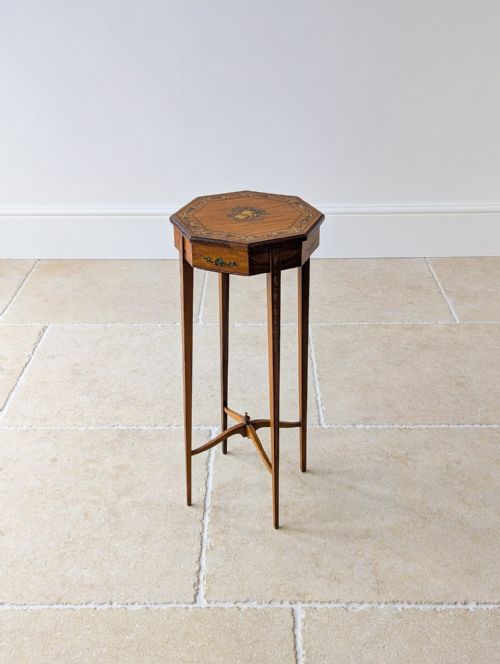
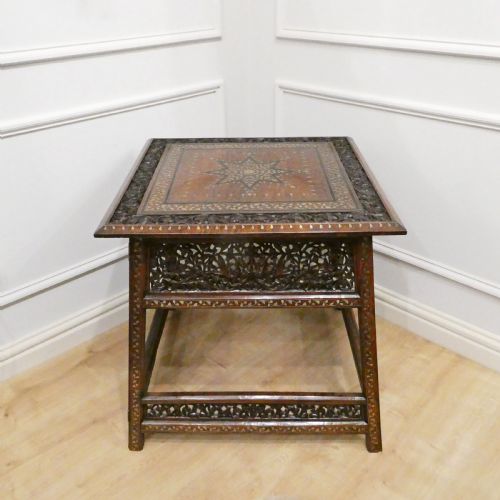
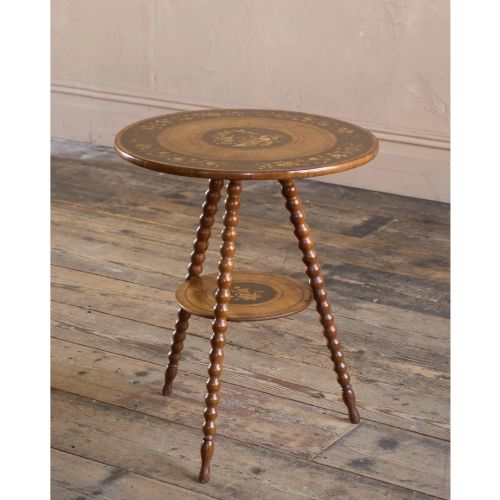
A floral inlaid side table encompasses various forms such as occasional tables, bedside tables, card tables, and display tables created across the Victorian and Edwardian eras, alongside earlier Georgian examples. These pieces combine practical surfaces with intricate marquetry depicting floral motifs, often set into walnut, mahogany, or exotic veneers like kingswood and satinwood.
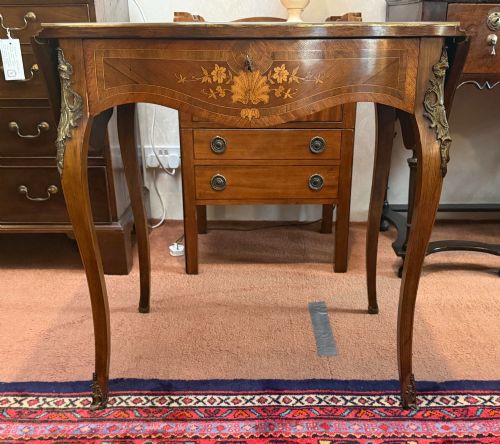
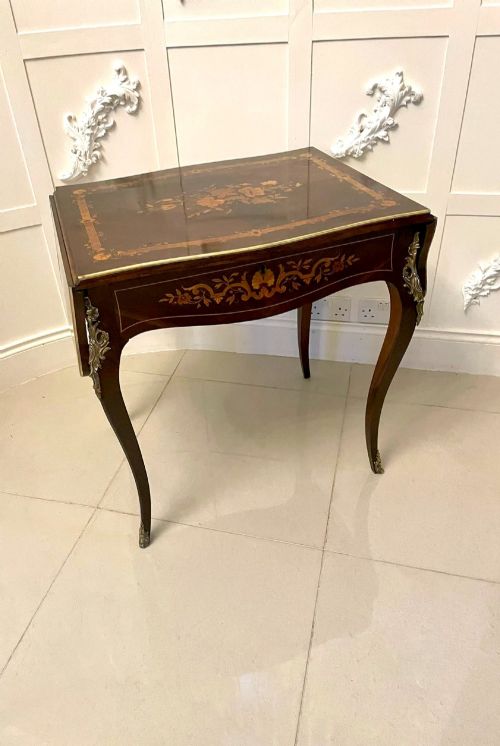
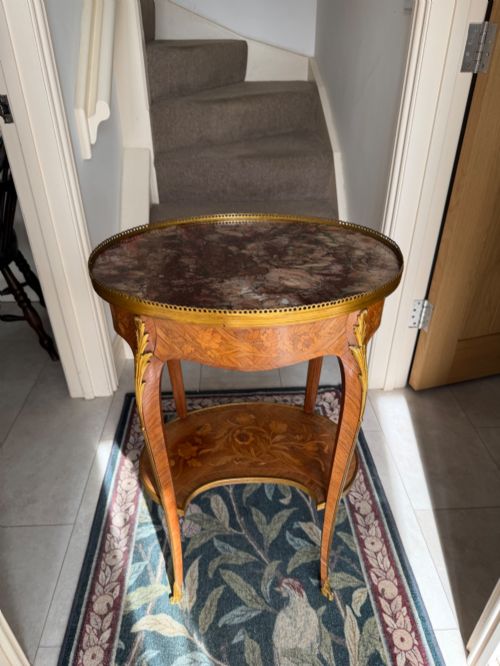
The version most commonly encountered on this page is the Victorian walnut or mahogany occasional table, frequently featuring detailed marquetry panels and sometimes combined with brass mounts, ormolu, or drop-flap mechanisms. Alongside these sit Edwardian display cabinets and eighteenth-century revival pieces, maintaining a consistent focus on botanical inlay across different functional forms.

How they were made
Cabinet makers constructed the carcasses of these tables using foundational timbers like mahogany and walnut, onto which finely figured veneers of kingswood, satinwood, and fruitwood were applied. The floral decoration was achieved through marquetry, where contrasting tinted and natural wood veneers were meticulously cut and fitted together to form petals, leaves, and stems.
Many examples incorporate cast brass or ormolu mounts to accent the framework, while glass panels feature in the construction of specialised display and bijouterie tables. The integration of drop-flaps, folding card table tops, and specialised cabinetry demonstrates advanced joinery techniques adapted to domestic use.
Retail Price Guide 2026
Typical UK retail prices for floral inlaid side table, calculated from the Sellingantiques database of over a million retail prices indexed since 2003. This retail price guide relies exclusively on Sellingantiques data; no external sources or auction records are used, so the figures do not describe the wider market.
Even a humble card table demands floral marquetry so convincing that imaginary bees might attempt to pollinate the walnut petals.
What varies in quality
The distinction between standard domestic production and superior craftsmanship lies in the precision and complexity of the marquetry work. Finer pieces demonstrate careful selection of timber grain to create natural shading within the floral designs, whereas simpler items rely on repetitive stamping or less varied veneer selections.
Structural integrity and the quality of secondary materials also dictate standing within the range, distinguished by the weight of the underlying timber carcasses, the finesse of any brass or ormolu mounts, and the seamless movement of mechanical elements like card table hinges and drop flaps.
Charles Topino
The Floral Inlaid Side Table Glossary
- Marquetry
- Decorative veneer work forming pictures or patterns by laying fine woods onto a structural carcass. This technique allows intricate floral designs to cover table tops and friezes.
- Ormolu
- Gilded bronze used for decorative mounts and accents on furniture. It adds bright metallic contrast to dark timber surfaces.
- Kingswood
- A dense, richly figured timber featuring dark violet-brown stripes, frequently utilised in fine cabinet-making. It provides a striking contrast when paired with lighter satinwood or fruitwood in floral inlays.
- Bijouterie table
- A glass-topped display table designed for showing small valuable objects and collections. These tables often feature interior lining and delicate inlaid frames.
- Drop flap
- A hinged leaf on a table that can be lowered or raised to alter the surface area. This mechanism offers flexible use in smaller domestic spaces.
Frequently Asked Questions
How do I date a floral inlaid side table?
Dating relies on observing the combination of primary timber, secondary woods, and stylistic clues within the marquetry. Victorian and Edwardian examples often display machine-sawn veneer characteristics and specific revival styles.
Earlier pieces from the late eighteenth or early nineteenth century show distinct hand-tool marks on internal drawer linings and carcass construction methods. Comparing the specific floral motifs to documented period pattern books also helps narrow down the timeframe.
Where were these tables placed historically?
These tables served multiple functions in period drawing rooms, boudoirs, and parlours, depending on their specific form. Card tables sat ready for evening entertainment, while occasional and display tables held decorative objects and lighting.
Bedside tables and nightstands provided enclosed storage and surface space within sleeping quarters. Their portability allowed them to be moved easily around domestic interiors as social habits changed.
What is the difference between marquetry and inlay?
Marquetry involves assembling a complete picture or pattern from thin veneers before applying it as a single sheet to the timber surface. The design covers the entire background area of the table top.
Inlay generally refers to cutting recesses directly into a solid piece of wood and inserting contrasting materials into those channels. In historical pieces, the term marquetry is most accurate for the complex floral arrangements seen across these tabletops.
How should I care for antique marquetry tables?
Preserving these surfaces requires maintaining stable indoor humidity levels to prevent the delicate veneer woods from shrinking or lifting. Direct sunlight should be avoided to protect natural tinted woods from fading.
Routine maintenance involves dusting with a soft, dry cloth and applying traditional wax polish sparingly to nourish the timber. Avoid using modern liquid cleaners or silicone-based sprays on antique polished surfaces.