





Floral Imari Serving Charger
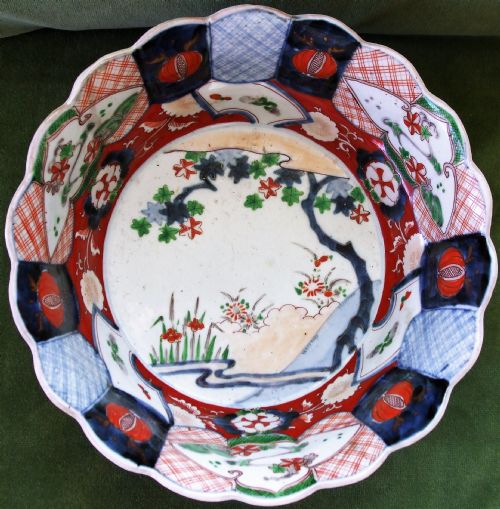
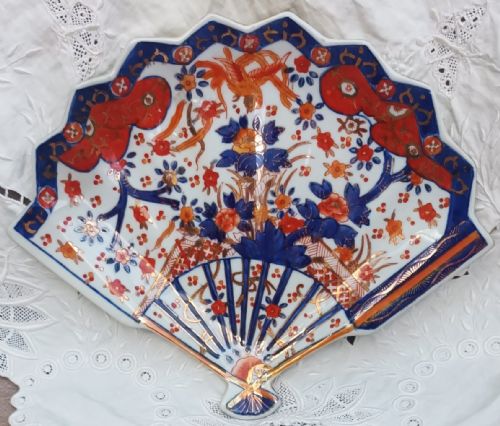
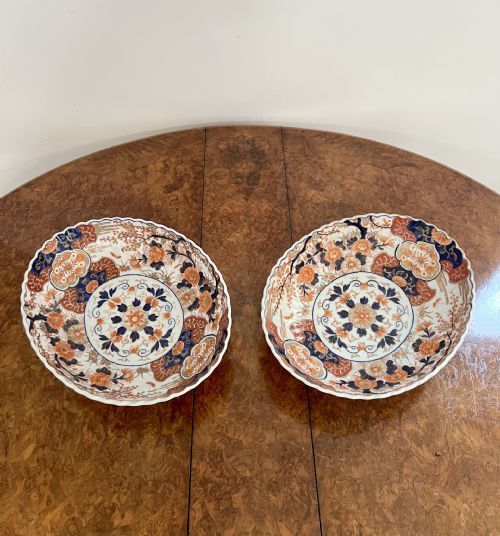
These floral imari serving charger pieces are striking Japanese porcelain plates and bowls painted in cobalt underglaze, enamel and gold leaf.

Floral Imari Serving Charger
A floral imari serving charger is a substantial decorative porcelain piece originating from Japan, typically created during the Meiji period or the nineteenth century. These items appear in various forms on this page, including large charger plates, scalloped edge bowls, square plates and oval dishes.
The version you are most likely to encounter here is the nineteenth century or circa nineteen hundred Japanese imari charger, featuring hand painted floral and bird designs. They function as both display wall plates and serving dishes.
The aesthetic bridges traditional Japanese Arita pottery traditions with forms suited for international export, combining robust porcelain bodies with elaborate surface decoration.
How They Were Made
The foundation of every piece is hard paste porcelain, shaped into chargers, bowls and plates before receiving initial cobalt underglaze painting. Potters then apply coloured enamels and gilding over the glaze to build up the rich palette characteristic of imari ware.
Firing in kilns fixes the cobalt blue beneath the glaze, whilst subsequent lower temperature firings set the enamel colours and gold leaf details.
Floral Imari Serving Charger Retail Price Guide 2026
Typical asking prices for floral imari serving charger among the pieces listed under this phrase on Sellingantiques today, from the lower quarter to the upper quarter. They describe what is for sale here now, not the wider market.
Listings on this page span the Victorian era, the nineteenth century, and the early twentieth century, including the Meiji period.
What Varies in Quality
The distinction between standard examples and superior pieces rests upon the precision of the hand painted floral and bird designs and the richness of the gilding. Finer chargers display meticulous brushwork and intricate patterns that cover the porcelain surface with clarity and depth.
The weight and finish of the porcelain body also mark the difference, with better pieces showing superior potting in forms such as scalloped edges or square plates.
The Floral Imari Serving Charger Glossary
- Imari
- A style of Japanese porcelain named after the port from which it was shipped to the West. It is traditionally decorated in cobalt blue, iron red, and gold.
- Charger
- A large decorative plate used historically for serving food or as a centerpiece on a table. These pieces often feature hanging holes on the footring for display on walls.
- Meiji Period
- The era in Japanese history spanning from eighteen sixty-eight to nineteen twelve. Pieces from this time often exhibit confident hand painted motifs and vibrant enamels.
- Cobalt Underglaze
- A blue pigment applied to the raw porcelain body before glazing and firing. It produces a durable colour that lies beneath the clear glossy finish.
- Arita
- The Japanese town and surrounding region where the production of porcelain first began. Arita kilns supplied the wares decorated in the imari style.
Floral Imari Serving Charger: Frequently Asked Questions
What is a floral imari serving charger?
It is a decorative Japanese porcelain plate or dish adorned with hand painted floral motifs in characteristic iron red, cobalt blue and gold leaf. These pieces were made in various shapes including square, oval and scalloped edge forms.
They serve primarily as striking wall plates or large serving dishes, bringing centuries of Japanese ceramic tradition into modern interior spaces.
How do I display a charger plate?
Many of these pieces feature footrings that allow for secure wall mounting using appropriate plate hangers. Alternatively, they sit safely on sturdy stands atop tables, sideboards or cabinets.
Ensure the display method supports the weight of the porcelain securely without obscuring the hand painted designs.
How do I date a nineteenth century imari piece?
Dating relies upon stylistic markers, material characteristics and period attributions associated with Japanese Meiji and nineteenth century production. The specific combination of cobalt underglaze and enamel work helps place pieces within this timeframe.
Comparing the form and painting style with documented examples provides further context for the age of the ceramic.
Were these chargers used for food?
While originally designed as part of dining and serving wares, chargers often functioned as decorative centrepieces due to their size and elaborate artistry. Their gilded surfaces and enamel work make them more commonly used for display today.
Careful handling is recommended if using them for serving to preserve the hand painted enamels and gold leaf.
What makes imari porcelain unique?
The distinctive palette combines cobalt blue underglaze with vibrant enamel colours and gold leaf overglaze. This creates a dense, layered aesthetic that stands apart from plain or monochrome ceramics.
The integration of Arita potting traditions with export market demands produced a remarkably durable and visually rich ware.