
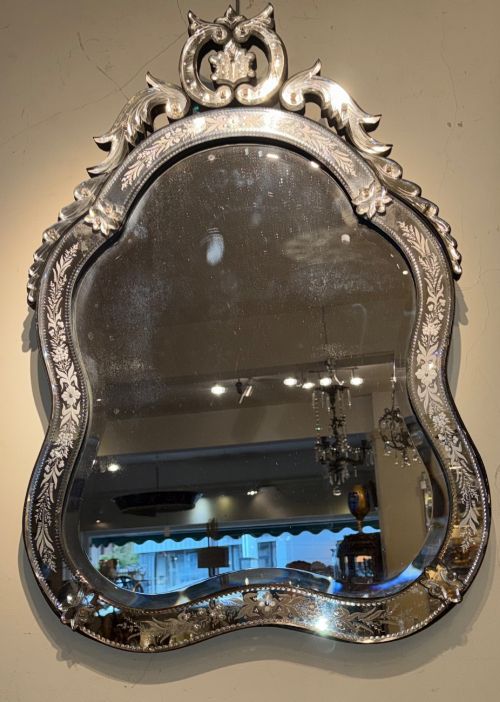
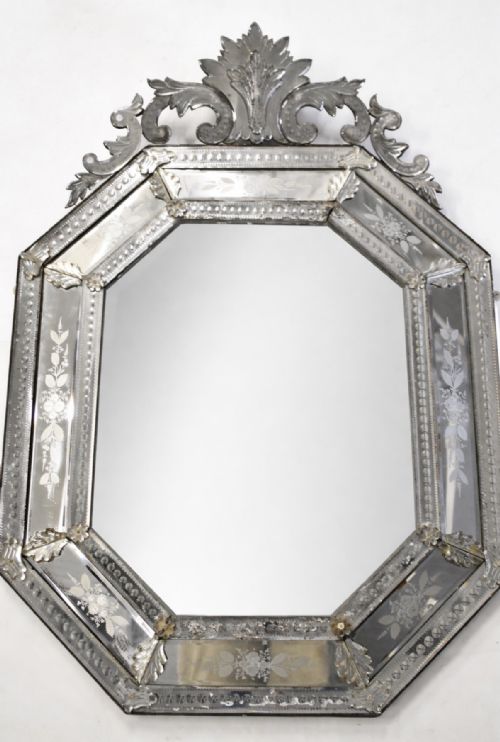


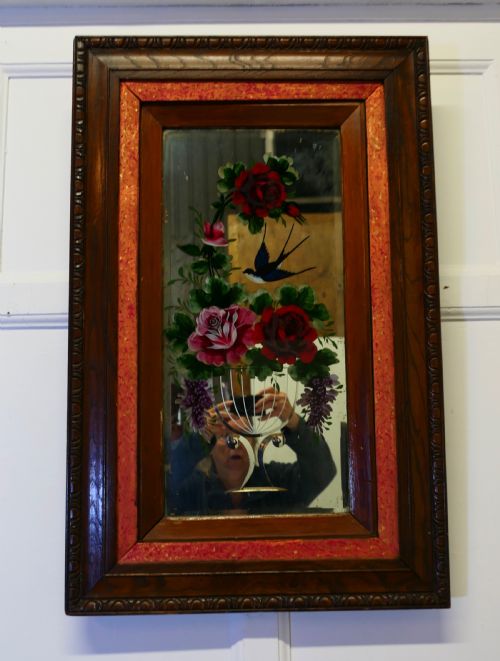


Floral Etched Mirror
These floral etched mirror examples range from Venetian wall plates to Art Deco trays, bringing decorative glass and period craftsmanship into a room.
Floral Etched Mirror
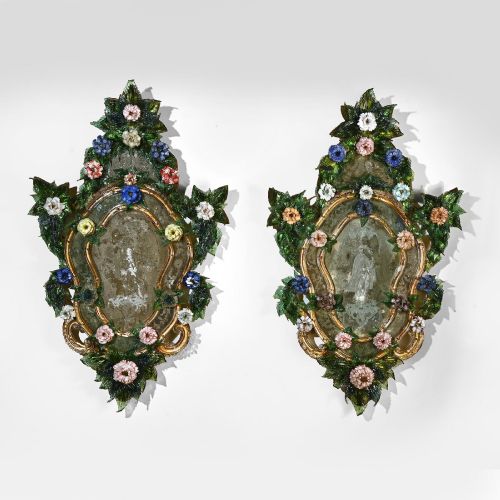
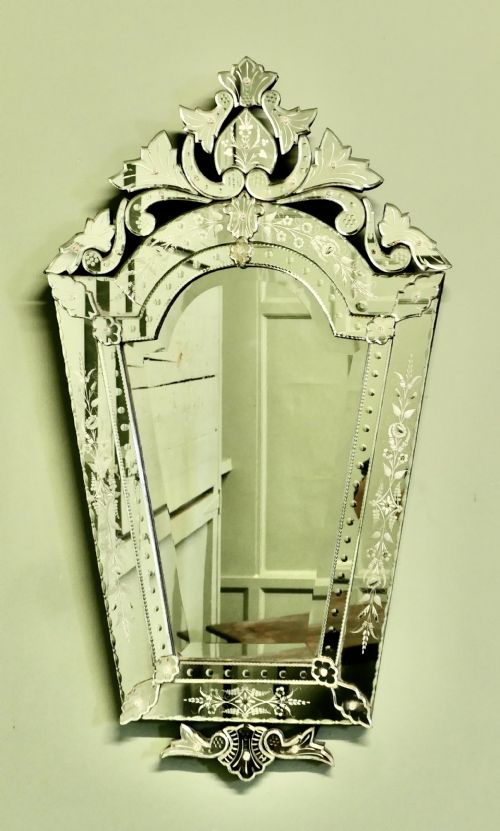
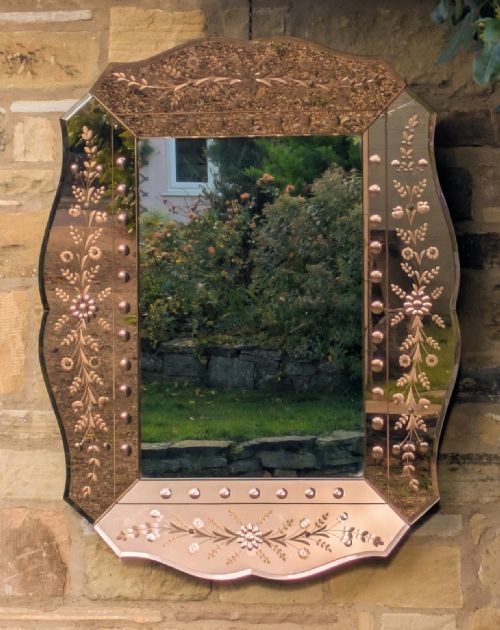
When you search for a floral etched mirror, you are looking at decorative looking glasses shaped by period aesthetics ranging from the eighteenth century to the mid-twentieth century. The pieces recorded here span styles like Venetian, Art Deco, Victorian, Rococo, and Art Nouveau.
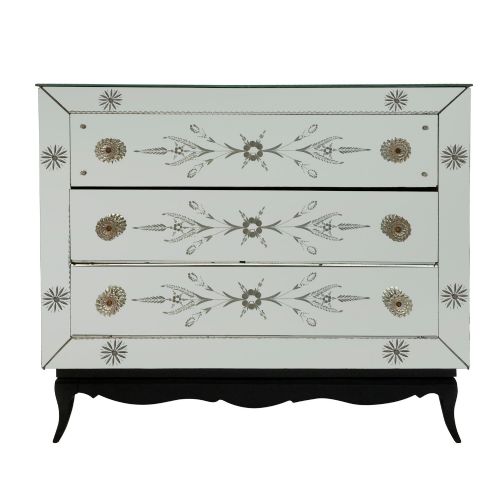
You are most likely to meet Venetian examples on this page, often taking the form of wall mirrors or cushion mirrors with elaborate glass work. Other forms include chests of drawers, fire screens, and serving trays featuring etched glass elements.
Origins stretch across French, Venetian, and British workshops, encompassing diverse formats from large wall plates down to smaller tabletop trays. Each piece displays distinct regional characteristics in its frame construction and surface engraving.
How they were made
Makers utilised glass, mirrored glass, silvered glass, and metal, combining reflective surfaces with traditional etching techniques to create floral motifs. Wood also supports certain structures like chests of drawers and painted frames.
Surface decoration frequently involves reverse painting, etching, and bevelling directly onto the glass plates. Frames incorporate painted finishes or brass structures, particularly seen in fire screens and gypsy style mirrors.
Several mirrors whisper tales of Venetian canals and Victorian sitting rooms while stubbornly refusing to reveal who first etched those roses.
What varies in quality
The sophistication of the glass etching and the depth of the floral detailing separate standard utilitarian items from finer decorative works. Superior examples display crisp lines in the floral engraving and well-preserved silvering on the glass plate.
The integrity of the frame construction, whether carved wood, brass, or mirrored glass components, dictates the overall execution. Pieces that retain their original plates and harmonious proportions achieve a more unified aesthetic presence.
The Floral Etched Mirror Glossary
- Venetian mirror
- A looking glass originating from or styled after traditional Venetian glassmaking centres, typically featuring decorated glass frames and etched glass elements.
- Foxed
- The natural ageing of silvered glass where oxidation causes dark spots or a mottled appearance across the reflective surface.
- Cushion mirror
- A wall mirror featuring a raised or convex central plate surrounded by angled border panels that frame the reflective centre.
- Reverse painted
- A technique where paint is applied to the back of the glass so the image is viewed correctly through the front transparent layer.
- Fire screen
- A decorative panel placed in front of a fireplace when not in use, often rendered here in brass framing with glass inserts.
Floral Etched Mirror: Frequently Asked Questions
Where should I hang a Venetian mirror?
These mirrors suit principal reception rooms, hallways, or above mantelpieces where their reflective qualities and detailed glass frames can catch the light.
Ensure the wall structure can support the weight of larger Venetian or cushion mirrors safely.
How do I clean an antique glass mirror?
Use a soft, dry cloth to remove dust gently from the surface without applying pressure to fragile etched areas.
Avoid commercial chemical cleaners that might seep behind the glass plate and damage the silvering or foxed backing.
What is a gypsy style mirror?
These decorative mirrors typically feature painted wooden frames adorned with characteristic period ornamentation and folk-art influences.
They offer a more informal alternative to formal gilt or Venetian wall mirrors.
How can I tell an older mirror plate?
Older mirror plates often exhibit natural foxing, slight surface distortions, and hand-bevelled edges characteristic of earlier manufacturing methods.
Examination of the reverse side and framing construction also helps determine the period of origin.