


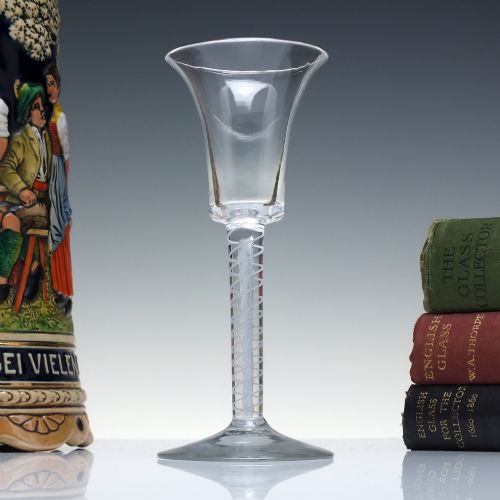
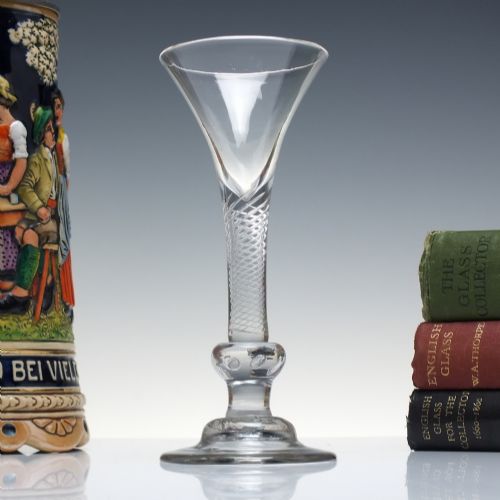
Flint Glass Drinking Goblet
These flint glass drinking goblet examples offer the weight and clarity that collectors prize in 18th century and Georgian glassware.
What They Are
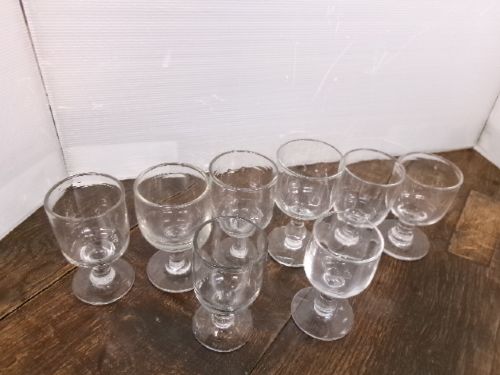
A flint glass drinking goblet brings heavy lead crystal vessels into the home, echoing the wine glasses, rummers and ale glasses seen across the Georgian period. These pieces span the eighteenth century and the early nineteenth century, showcasing clear glass forms designed for drinking.
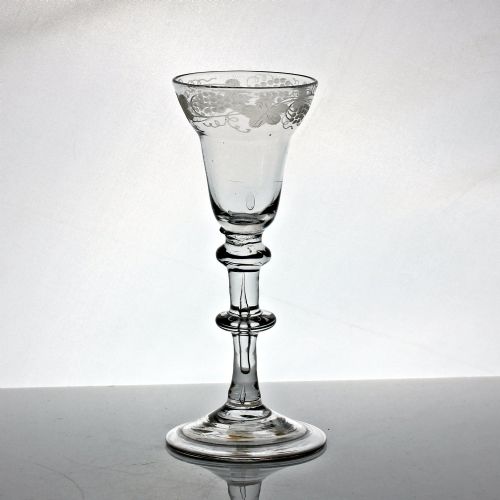
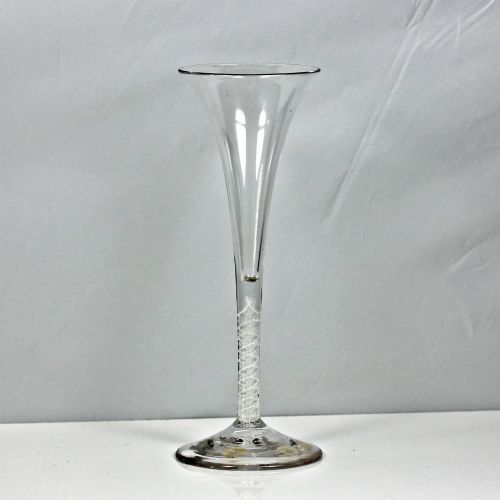
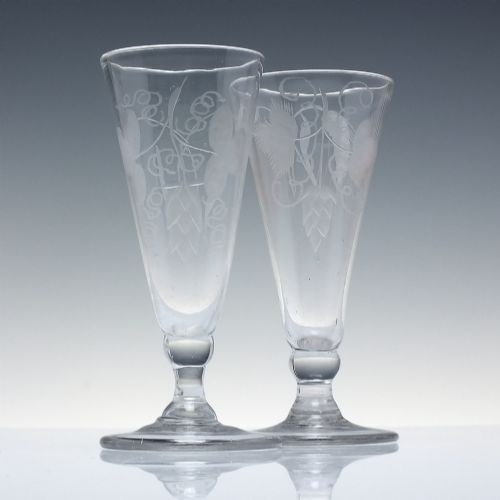
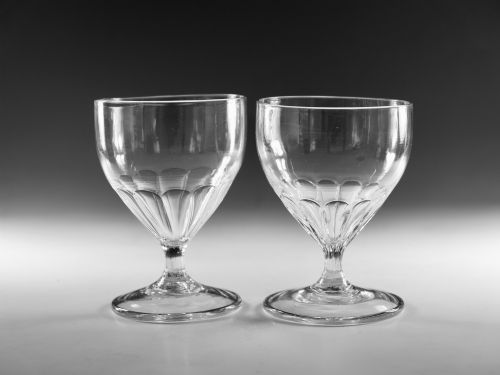
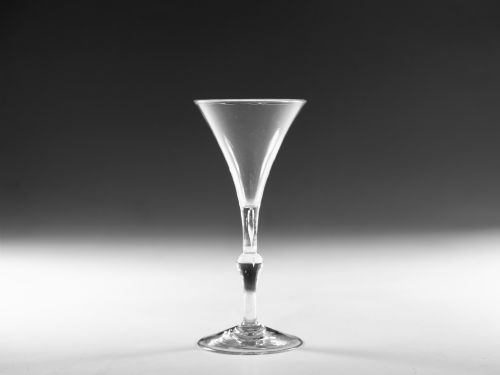
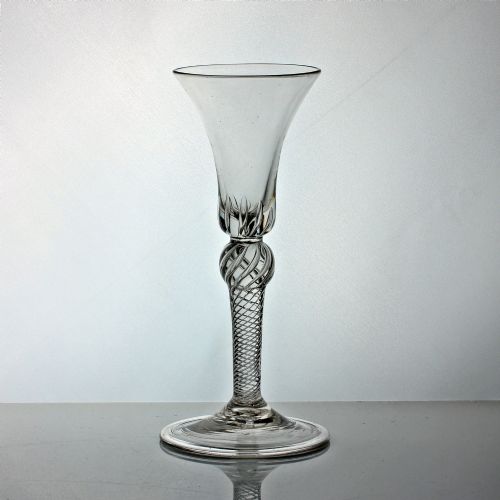
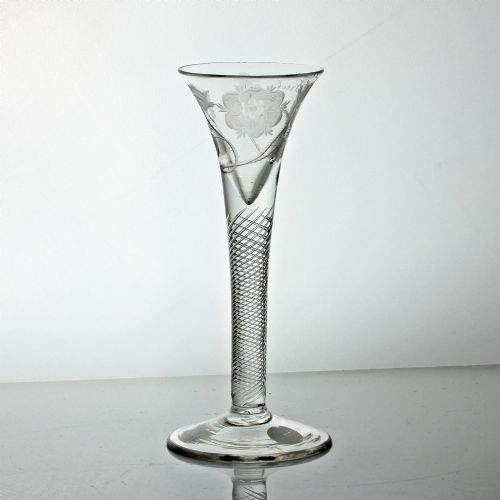
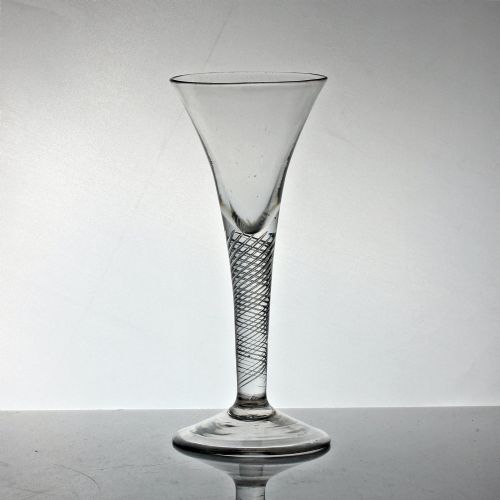
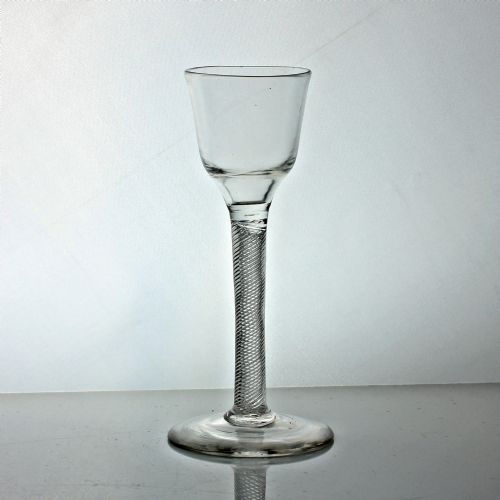
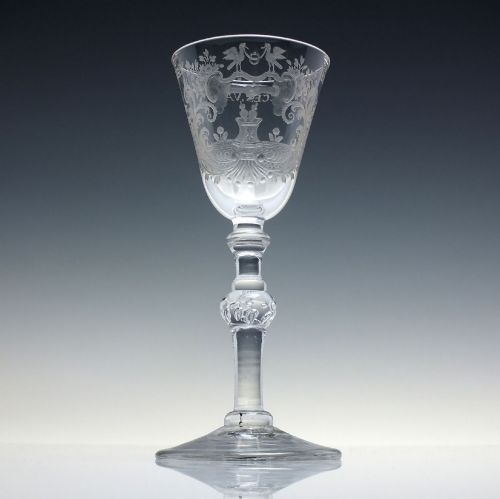
The selections available range from multi spiral air twist wine glasses to cut glass rummers dated around eighteen thirty. Buyers frequently encounter wine glasses featuring engraved pan top bowls or opaque twists alongside drinking vessels marked by historic English origins.
How They Were Made
Makers utilised lead glass, lead crystal and flint glass to achieve substantial weight and clear optical brilliance in these drinking vessels. Techniques recorded in the listings include wheel cutting and delicate surface engraving.
Internal optical effects such as multi spiral air twists and double series opaque twists were formed while the metal remained hot and workable. Enamel was occasionally applied to enrich the surface of the clear glass.
Retail Price Guide 2026
Typical UK retail prices for flint glass drinking goblet, calculated from the Sellingantiques database of over a million retail prices indexed since 2003. This retail price guide relies exclusively on Sellingantiques data; no external sources or auction records are used, so the figures do not describe the wider market.
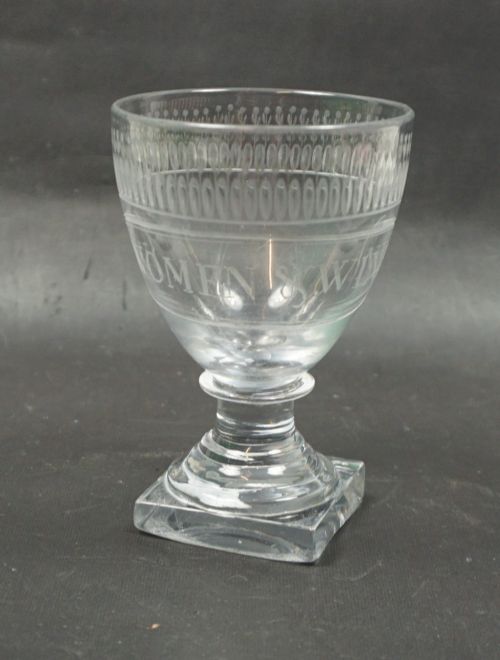
One rummer carries an engraved tribute to women and wine, capturing Georgian social toasts in solid lead crystal.
What Varies in Quality
Quality rests upon the crispness of the cutting, the complexity of the internal twist formation and the clarity of the metal itself. Finer examples display balanced proportions and precise execution in their engraved pan top bowls or multi spiral stems.
The handling of the material dictates the distinction between standard vessels and exceptional drinking glasses. Heavier lead crystal and deeply defined facet cutting elevate certain rummers and wine glasses above simpler counterparts.
The Flint Glass Drinking Goblet Glossary
- Flint glass
- A heavy, brilliant form of lead glass popular in Georgian manufacturing. It provides the high refractive index seen in these drinking vessels.
- Air twist
- A stem decoration formed by drawing out elongated bubbles of air within the molten glass during shaping. These appear as single spirals or complex multi spiral patterns.
- Opaque twist
- A stem featuring white or coloured enamel threads enclosed within clear glass. Makers created single and double series variations to catch the light.
- Pan top bowl
- A flared vessel profile associated with eighteenth century wine glasses. This shape opens outward toward the rim.
- Rummer
- A capacious drinking glass developed for heavier wines, spirits or ale. Georgian examples often feature cut glass decoration around the lower bowl.
Frequently Asked Questions
What is a flint glass drinking goblet?
A flint glass drinking goblet is a heavy lead crystal vessel produced during the Georgian era. These pieces include wine glasses, ale glasses and rummers.
They reflect eighteenth century drinking customs through clear glass forms, distinct stems and engraved bowls.
How do I date a Georgian glass?
Dating relies on stylistic markers such as balustroid stems, opaque twists and pan top bowl profiles. Eighteenth century examples often show distinct manufacturing traits.
Material composition like lead crystal and specific cutting styles also help place a piece within the Georgian period.
What is an air twist stem?
An air twist stem contains elongated bubbles trapped inside the molten glass and stretched during forming. These create helical patterns within the transparent stem.
Multi spiral versions show complex internal channels that refract light as the glass moves.
How were these glasses used historically?
These vessels served for consuming wine, ale and spirits at the table during the eighteenth and early nineteenth centuries. Their substantial weight suited daily dining.
Engraved inscriptions on rummers occasionally recorded specific toasts or sentiments shared by drinkers of the period.