

Flint Glass Drinking Glass
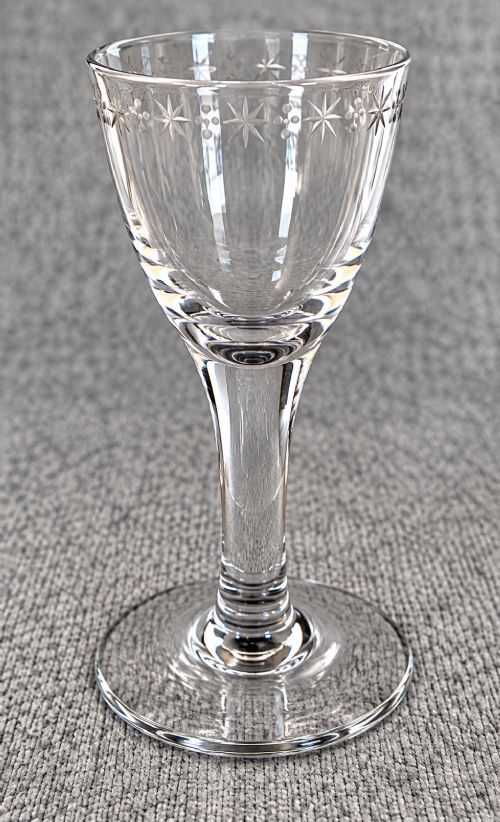
Flint glass drinking glass pieces span the Georgian and Victorian eras, offering collectors lead crystal drinking vessels shaped as wine glasses, rummers, and flutes.
Flint Glass Drinking Glass
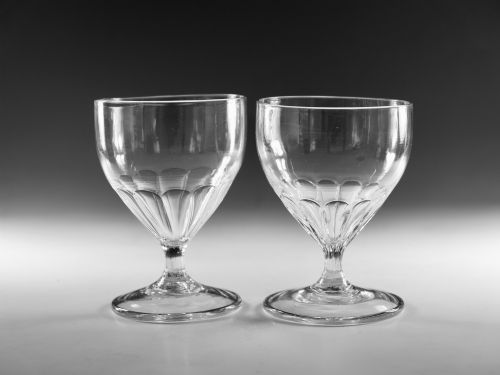
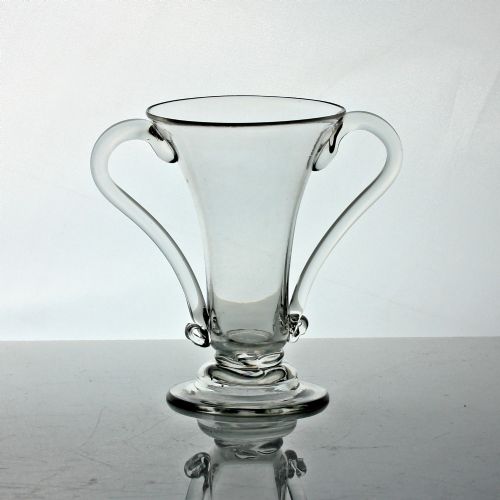
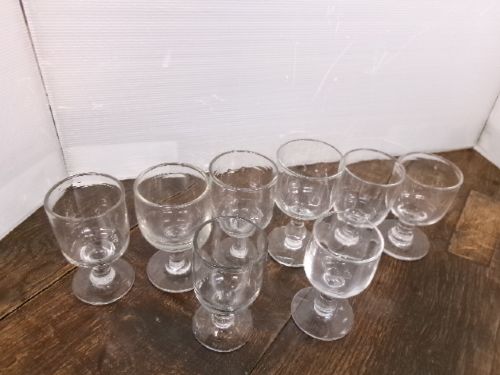
A flint glass drinking glass search brings forward drinking vessels primarily from the eighteenth and nineteenth centuries, including Georgian and Victorian examples. Buyers encounter forms such as wine glasses, ale and beer glasses, rummers, jelly glasses, and dram glasses.
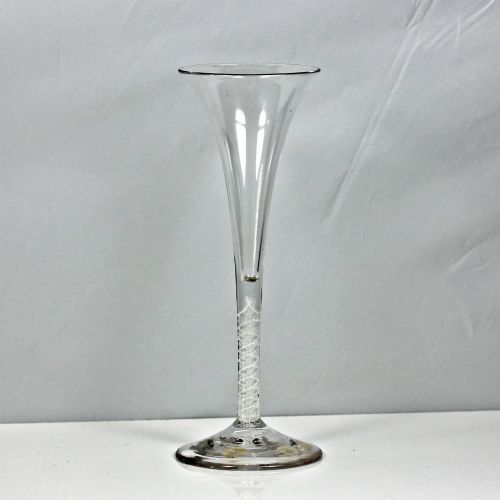
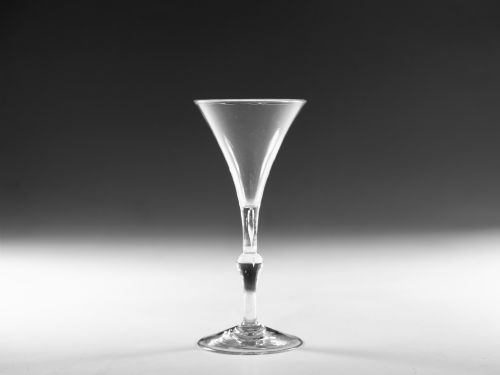
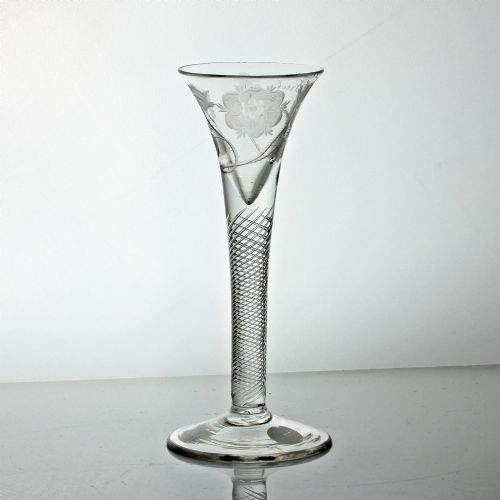
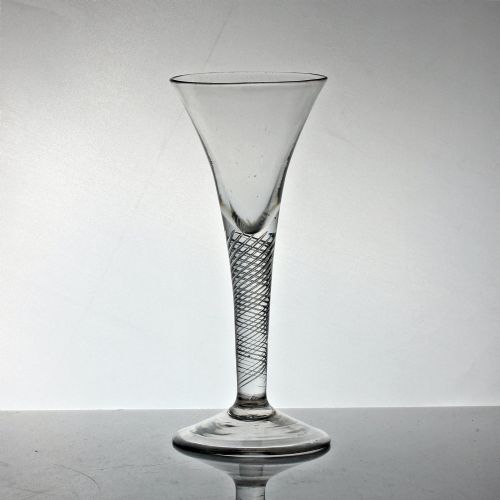
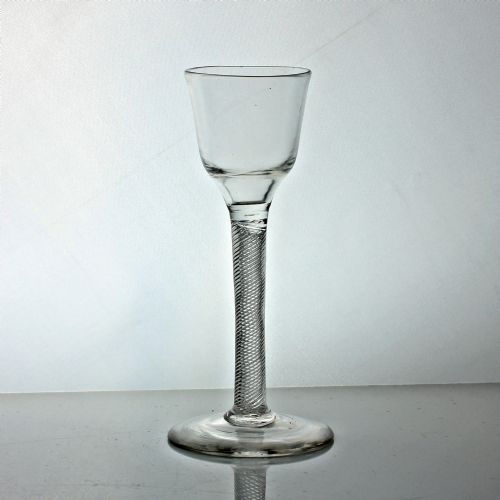
The selection ranges from early baluster and balustroid forms to mid-eighteenth century air twist and opaque twist stems, alongside later rummers and tumblers. Most pieces originate from English makers working in lead crystal and clear glass.
Vessels span utilitarian drinkware to commemorative pieces engraved with Jacobite, anti-Jacobite, Masonic, or social subjects. Collectors find both single items and matched pairs or sets within the available periods.

Materials and manufacture
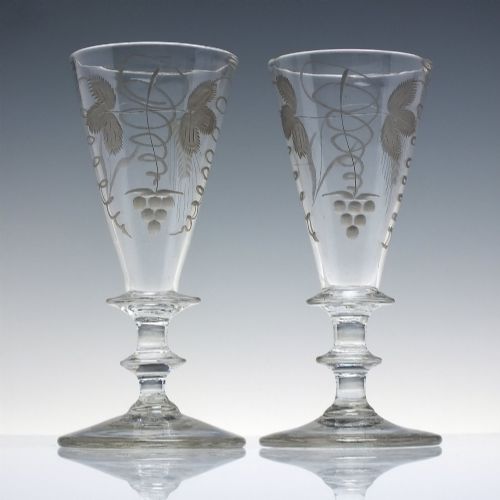
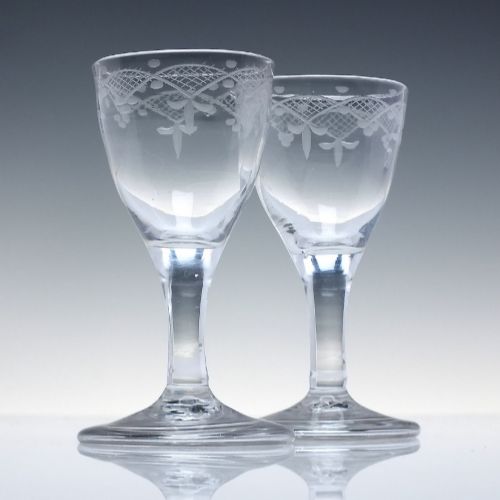
Stem construction utilised specialised techniques to create air twists, opaque twists, and mixed twists, or relied on plain, baluster, and composite forms. Decoration was applied through cutting, engraving, and occasionally enamelling.
Flint Glass Drinking Glass Retail Price Guide 2026
Typical asking prices for flint glass drinking glass among the pieces listed under this phrase on Sellingantiques today, from the lower quarter to the upper quarter. They describe what is for sale here now, not the wider market.
Listings feature lead glass and clear glass pieces spanning the seventeenth, eighteenth, nineteenth, and twentieth centuries, dominated by Georgian and Victorian examples.
Assessing quality
Quality rests upon the clarity of the lead glass and the precision shown in forming complex stem formations like air twists or balusters. The crispness and depth of wheel engraving on the bowl further separate standard items from superior examples.
Proportion, weight, and the presence of desirable structural elements such as folded feet or shoulder knops define the standing of individual drinking vessels within their period.
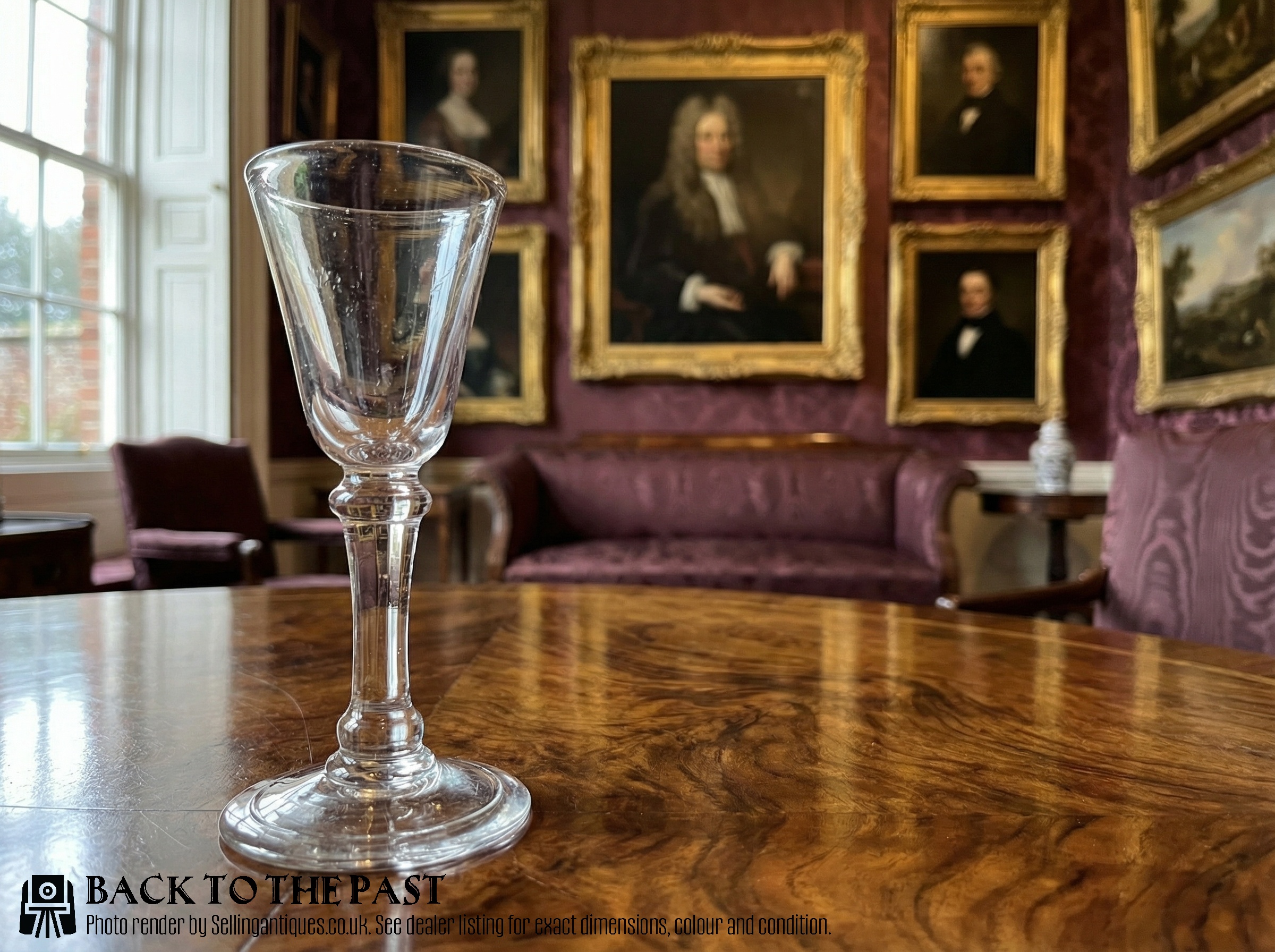
The Flint Glass Drinking Glass Glossary
- Flint glass
- A heavy, brilliant lead glass used for eighteenth and nineteenth century drinking vessels. It provides the clarity and weight characteristic of Georgian stemware.
- Air twist
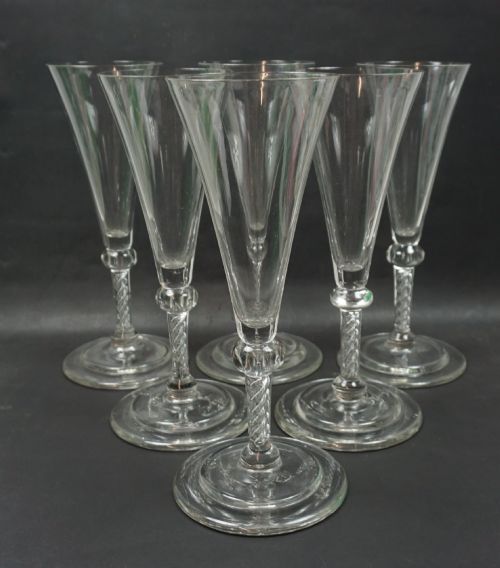
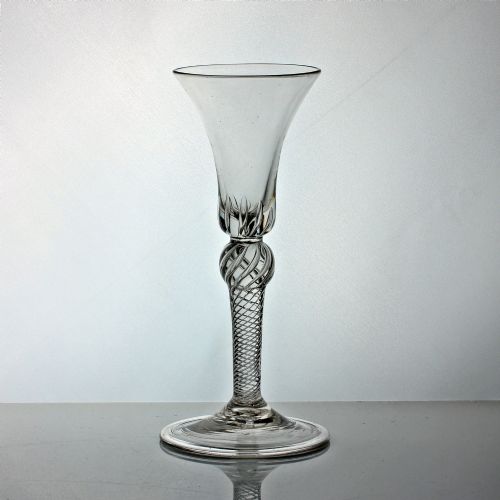
- A stem formation containing internal spiral threads of air trapped within the glass. This technique was popular in mid-eighteenth century English wine glasses.
- Opaque twist
- A stem containing white or coloured enamel glass threads twisted within the clear metal. These threads form intricate single or double series patterns.
- Rummer
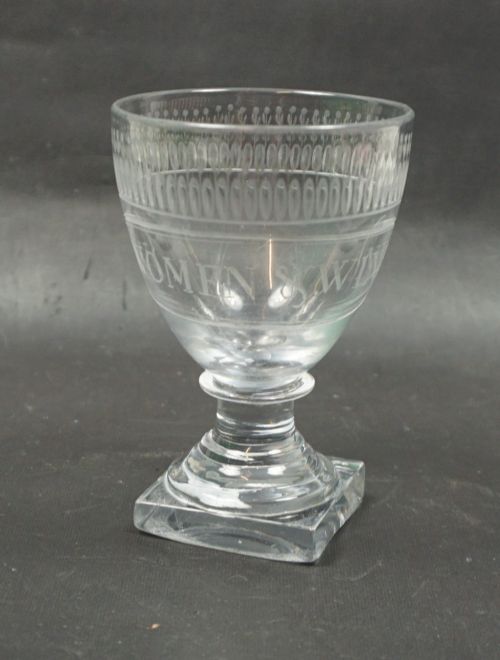
- A large, sturdy glass used for wine or ale, typically dating from the late eighteenth and nineteenth centuries. They often feature ovoid or bucket bowls.
- Baluster
- A heavy, thick stem style reminiscent of architectural columns, common in early eighteenth century drinking glasses. Variations include light balusters and balustroids.
- Folded foot
- A glass foot where the outer rim is folded under to create a smoother, stronger edge. This feature is frequently seen on earlier Georgian pieces.
Flint Glass Drinking Glass: Frequently Asked Questions
What is a flint glass drinking glass?
A flint glass drinking glass is a heavy lead crystal vessel intended for beverages, most commonly originating from the Georgian or Victorian periods.
These pieces encompass wine glasses, rummers, dram glasses, and flutes characterised by clear metal and hand-formed stems.
How do I date a twist stem glass?
Air twist and opaque twist stems generally point to the mid-to-late eighteenth century, particularly between one thousand seven hundred and forty and one thousand seven hundred and seventy.
Earlier examples often use baluster forms, while plain stems and cut decorations overlap with later Georgian production.
Were rummers used for wine?
Rummers served multiple purposes for both wine and ale during the Georgian and Victorian eras. Their generous bowl capacity suited hearty drinks consumed after dinner.
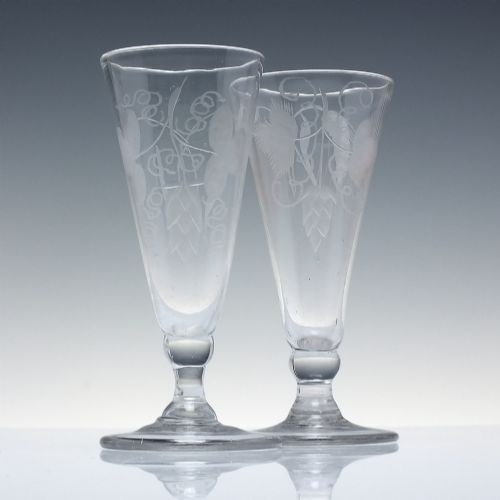
Many examples feature engraved hop and barley motifs appropriate for ale, while others received commemorative or Masonic decoration.
What does folded foot mean?
A folded foot has its outer edge doubled back underneath the base during manufacture. This added weight and reinforced the rim against chipping.
This construction method appears frequently on eighteenth century wine glasses and dram glasses.