
Fireplace Hearth Irons
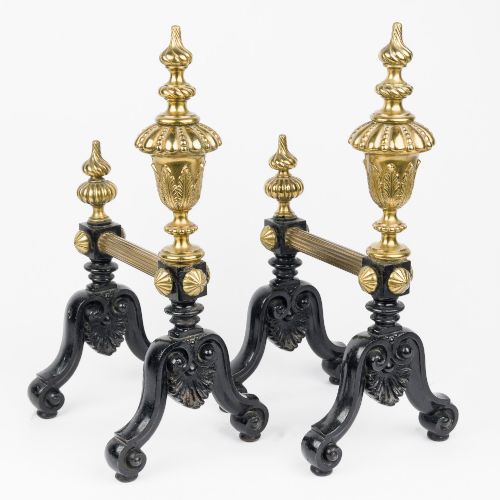
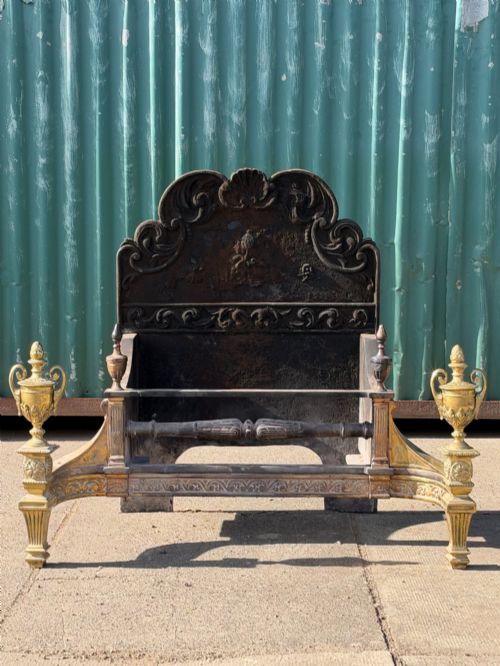
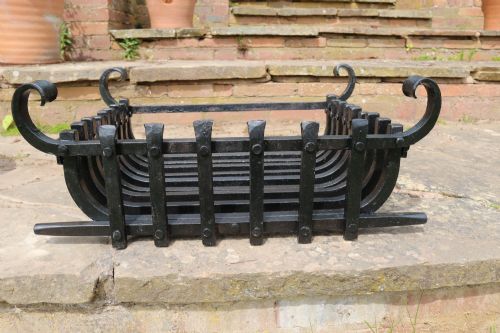
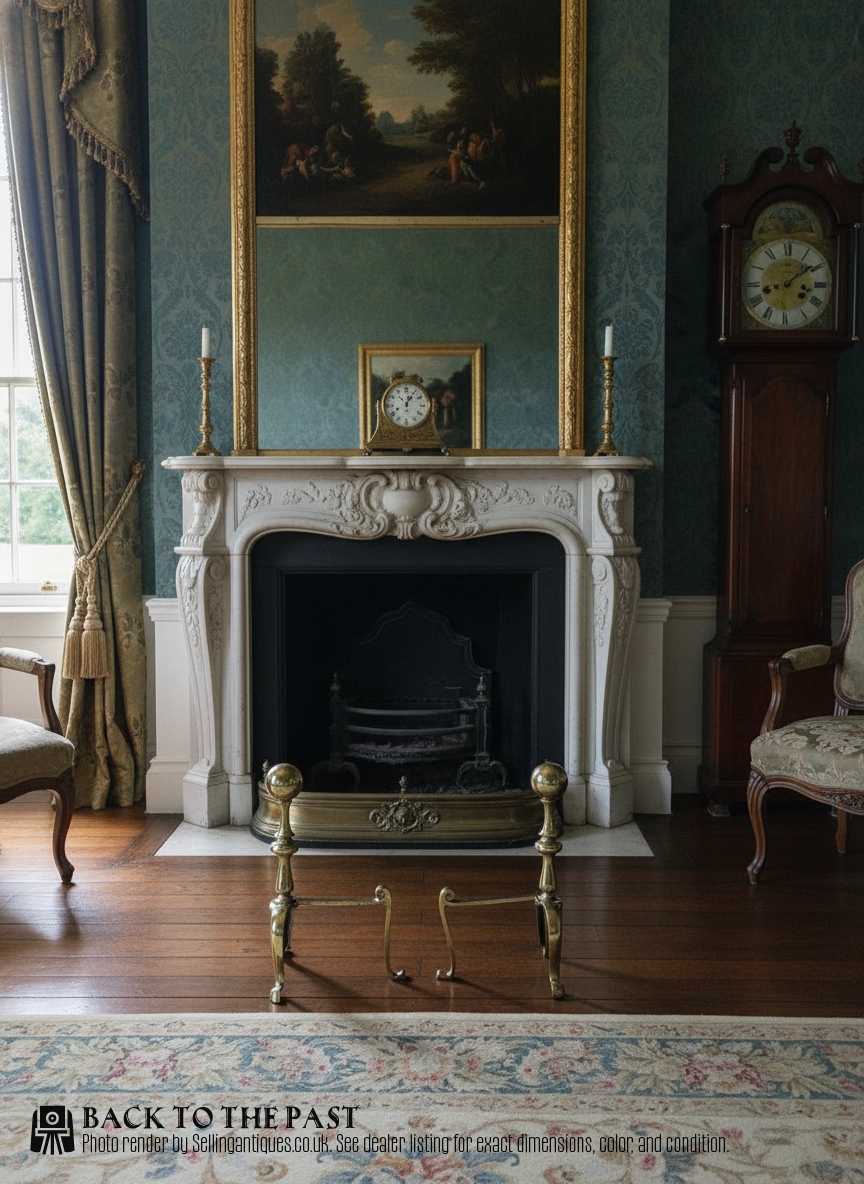
Fireplace hearth irons hold the logs above the hearth and handle the fire, bringing solid 18th-century and Victorian metalwork directly into the living room.
Fireplace Hearth Irons
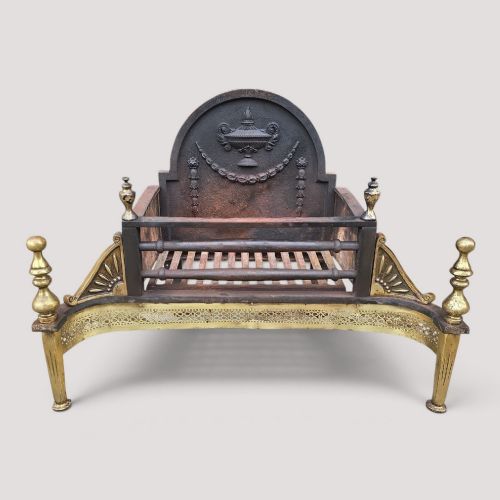
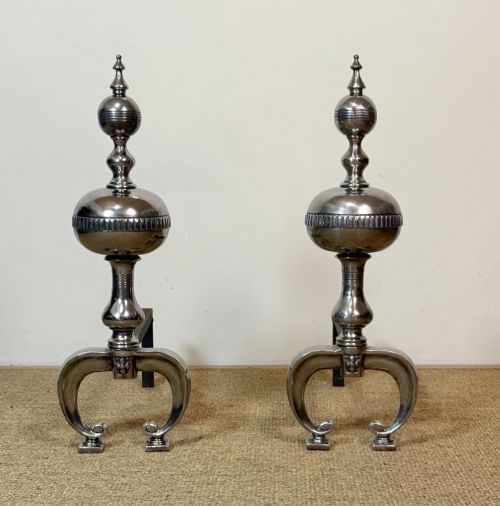
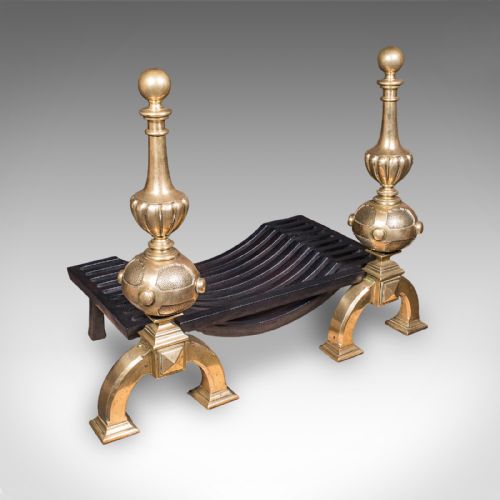
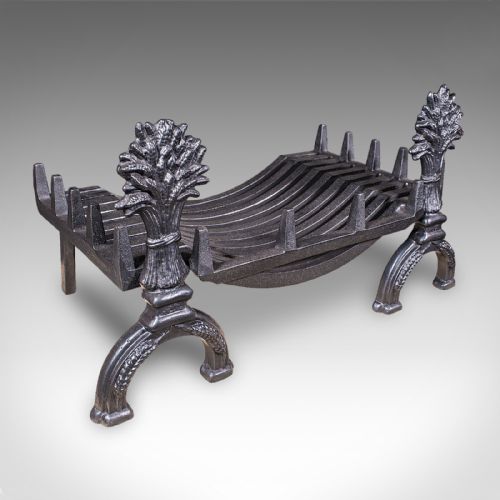
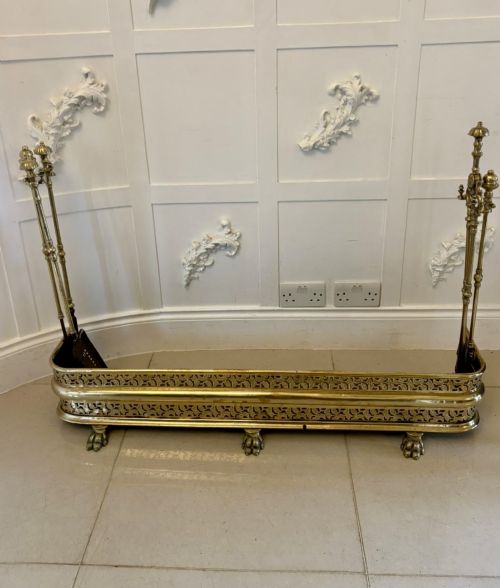
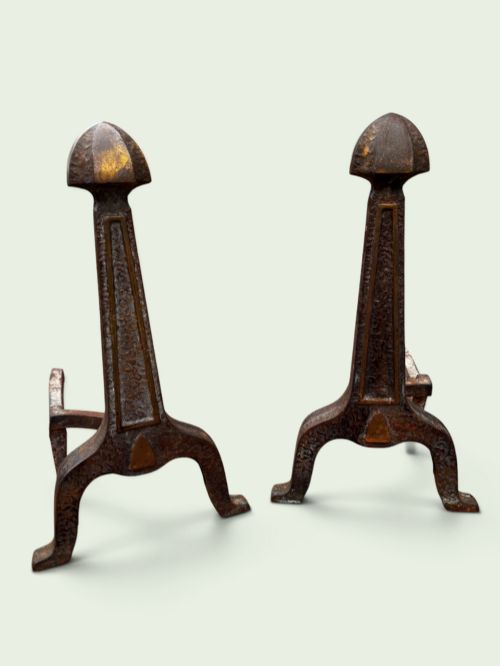
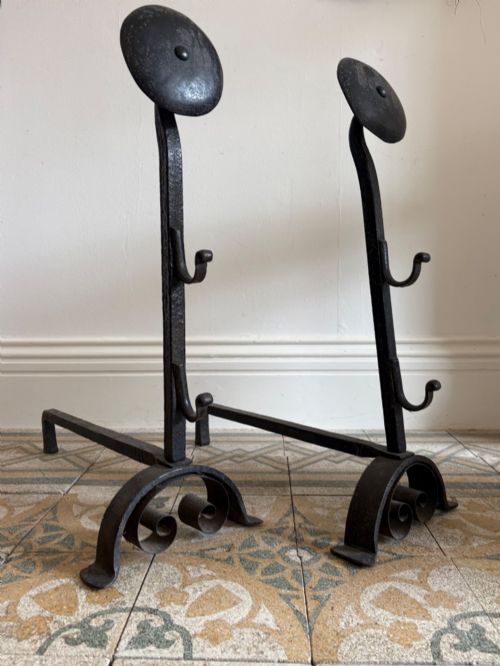
When you search for fireplace hearth irons, you encounter robust items designed to manage and elevate wood fires in period chimneys. These objects include andirons, fire dogs, chenets, and sets of fire tools spanning the Georgian, Victorian, and Regency eras.
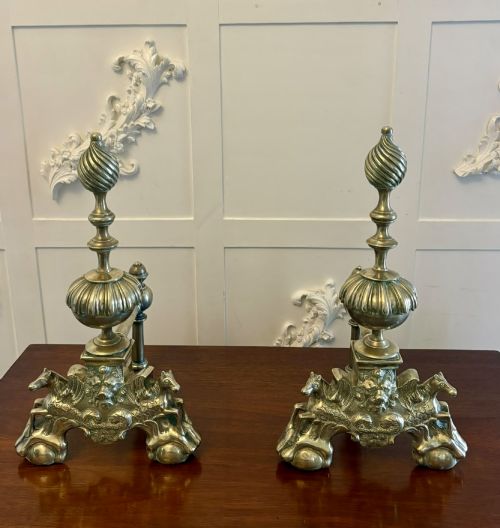
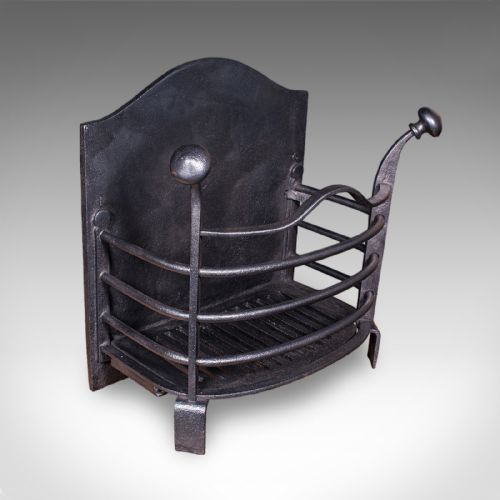
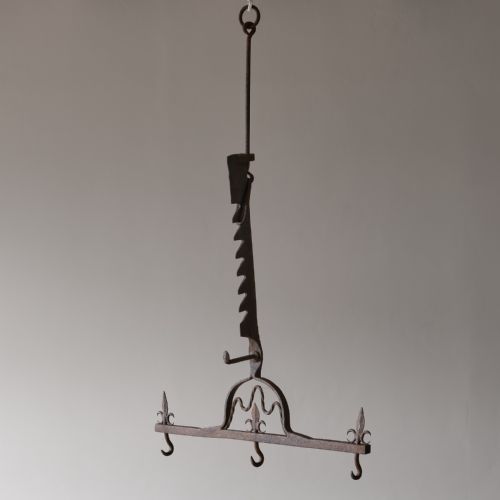
You meet heavy wrought iron chimney jacks and footmen alongside polished brass fenders and cast iron grates. The selection draws heavily on English country-house furniture and French styles from the 18th and 19th centuries.
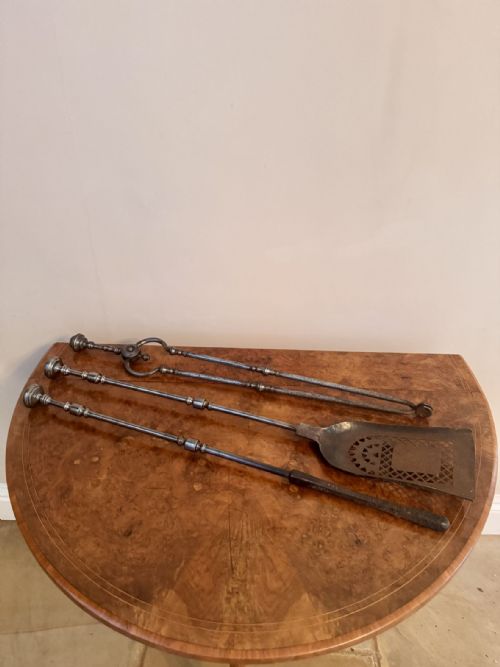
Pairs of fire dogs and companion tool sets dominate the selection, often featuring matching pokers, tongs, and shovels. These metal objects served essential domestic roles before central heating altered the hearth.
Arts and Crafts examples introduce distinct hammered textures and Gothic shields, while earlier Georgian items rely on clean lines and functional heft.
How they were made
Blacksmiths shaped wrought iron and steel by hand on the anvil, hammering hot metal to form sturdy fire tools, trammels, and andirons. This forging process created durable items meant to withstand intense heat and daily use.
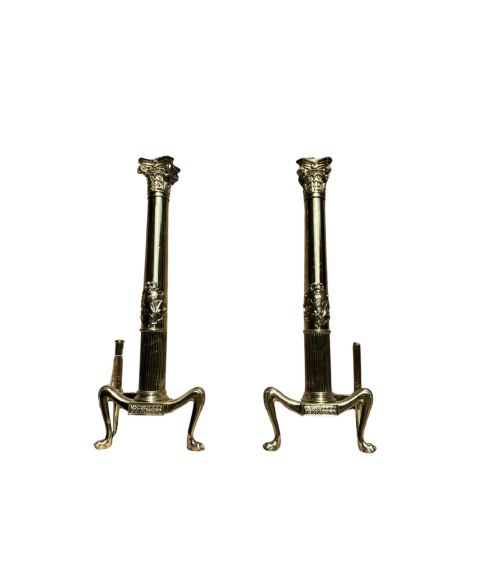
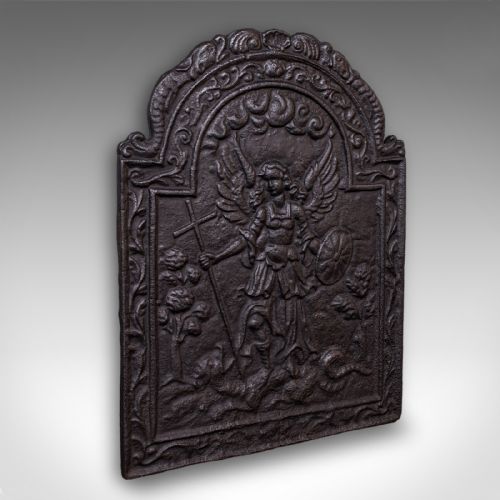
Foundries cast molten iron and brass in sand moulds to produce decorative fire backs, grates, and ornate andirons with rococo or Neo-Classical motifs. Artisans then finished the bronze and brass surfaces with polished or ormolu details.
What varies in quality
The distinction between ordinary and superior pieces rests on the weight of the metal and the crispness of the casting or forging. Hand-forged wrought iron displays precise hammer work and balanced proportions, whereas heavier brass yields a more solid presence on the hearth.
Makers integrated decorative elements with structural integrity, ensuring that chenets and andirons stood firm under heavy logs. Finer tool sets retain matching handles and original stands, reflecting a higher standard of period craftsmanship.
Coalbrookdale·John Linwood of Birmingham
The Fireplace Hearth Irons Glossary
- Andirons
- Supports placed on hearths to raise logs for better air circulation and burning. They often feature decorative fronts made of brass or cast iron.
- Chenets
- French term for fire dogs or andirons. These ornamental metal supports frequently display rococo or empire styling.
- Fender
- A low metal guard placed around the hearth to contain ash and embers. They are commonly fashioned from brass or iron.
- Chimney Jack
- A mechanical device used in historic fireplaces to turn roasting meat over the hearth. They demonstrate ingenious early engineering.
- Trammel Hook
- An adjustable iron hook hung inside a chimney to suspend pots over the fire. They allow cooks to alter cooking heights easily.
Fireplace Hearth Irons: Frequently Asked Questions
What are fireplace hearth irons used for?
These metal items support logs in an open hearth and manage the fire safely. They elevate wood to allow air underneath for a cleaner burn.
Companions sets and tools handle ash, coal, and positioning wood during use. Fenders protect the room floor from stray sparks and rolling embers.
How do I date a set of andirons?
Dating relies on stylistic clues, manufacturing techniques, and the types of metal used. Georgian and Regency pieces show classical restraint, while Victorian and Arts and Crafts examples display heavier ornamentation or hammered surfaces.
Hand-forged wrought iron often points to 18th-century or earlier origins. Cast brass and ormolu mounts frequently indicate 19th-century French production.
Can these irons be used in a modern fireplace?
Many solid iron and brass pieces remain entirely functional for burning wood in standard open hearths. Buyers should verify dimensions and weight to ensure compatibility with their specific fireplace opening.
Decorative grates and antique fire tools also serve purely aesthetic roles in non-working fireplaces. They add period character to a room without requiring active use.
How do I clean antique brass and iron?
Maintenance depends on the metal finish and whether the piece shows polished brass or dark wrought iron. Dry dusting usually suffices for everyday care of historic surfaces.
Harsh chemical polishes should be avoided on old iron to preserve the stable dark oxide layer. Brass components benefit from gentle cleaning to maintain their historic sheen without stripping age.