
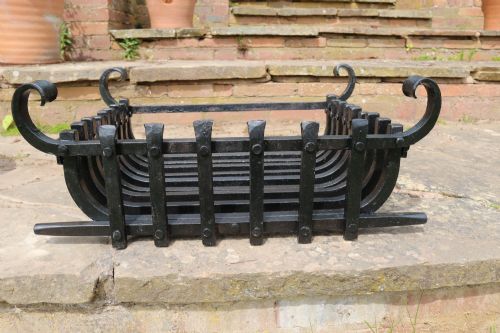
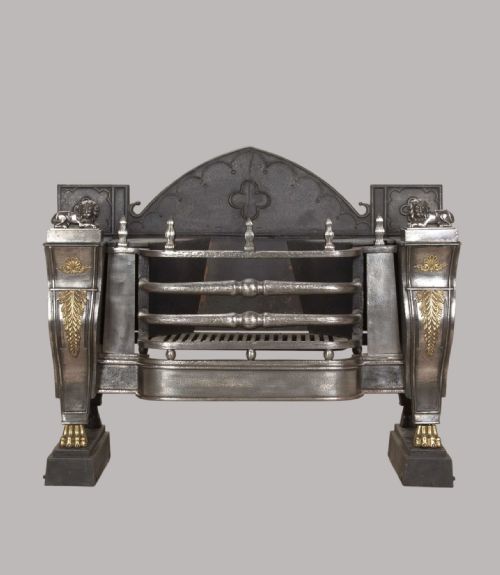
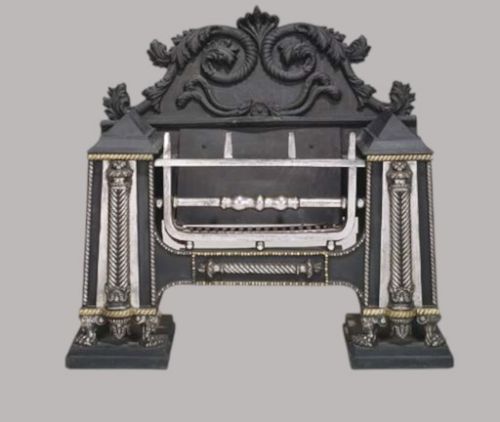
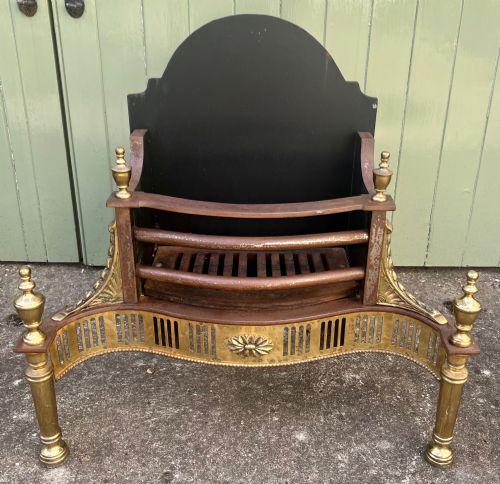


Fireplace Grate Basket
These fireplace grate basket designs bring period metalwork and open-hearth utility together for solid room heating.
Fireplace Grate Basket
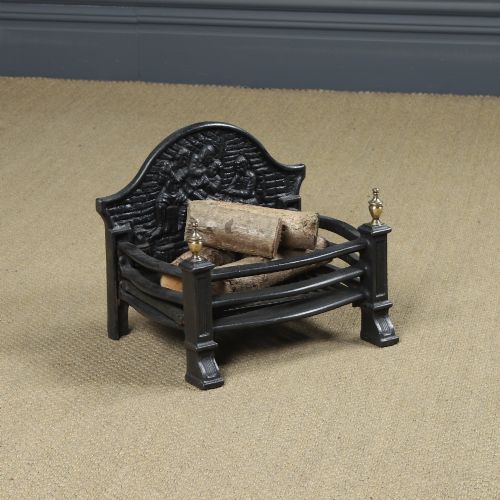
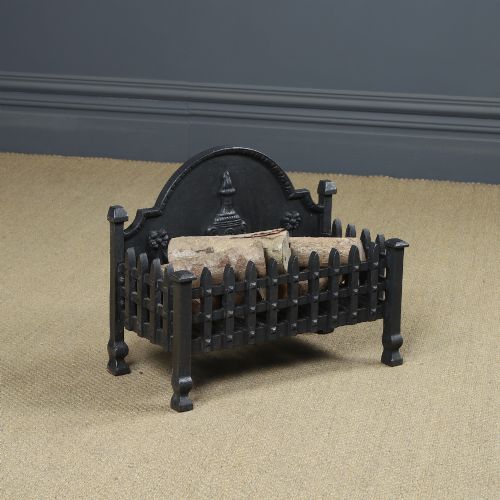
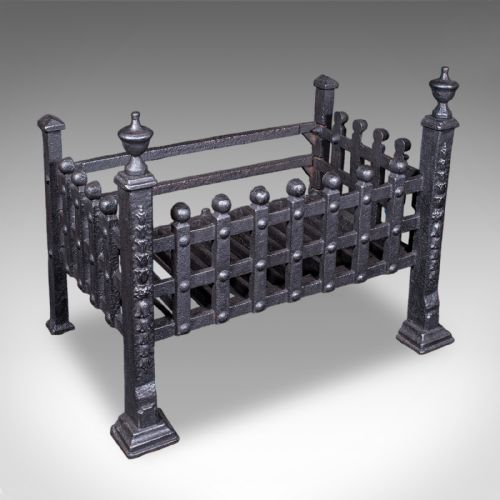
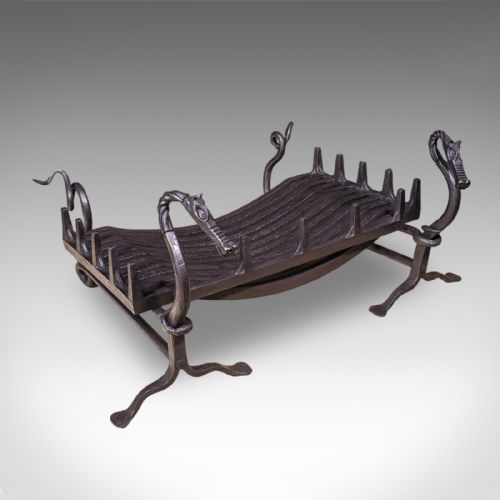
A fireplace grate basket serves as an open hearth container for burning logs and coal within domestic chimneys. When searching this phrase, buyers encounter heavy metal units designed either as free-standing hearth baskets paired with andirons or as fixed inserts.
The selections span periods from the Georgian and Regency eras through the Victorian, Edwardian, and Arts and Crafts movements. Victorian and Edwardian examples dominate the available inventory, frequently featuring heavy cast iron or wrought iron construction.
Pieces often integrate matching fire backs, fenders, or mulling andirons to complete the hearth set. Forms range from small proportions suited to bedroom grates to large inglenook baskets designed for substantial open fireplaces.
Quality and Craftsmanship Variations
Metal thickness and weight distinguish robust utilitarian ironwork from lighter decorative pieces. Superior items utilise heavy gauge cast and wrought iron that resists warping under prolonged heat exposure.
The refinement of decorative detailing separates standard production from exceptional examples. Pieces exhibiting crisp Neoclassical casting, detailed Gothic revival motifs, or integrated brass detailing command stronger presence on the hearth.
Some sets arrive equipped with mulling andirons, ready to warm spiced ale beside the flames.
The Fireplace Grate Basket Glossary
- Hob Grate
- A fireplace grate featuring flat iron shelves at the sides for heating Kettles or pans. These originated during the Georgian period.
- Andirons
- Supporting metal fire dogs placed on either side of the hearth to hold logs or support the fire basket. They often feature decorative finials.
- Fire Back
- A heavy cast iron plate placed at the back of an open fireplace to radiate heat into the room and protect the masonry. They frequently display classical or heraldic reliefs.
- Register Grate
- A type of fireplace insert equipped with a movable flap or damper to control the draught and regulate smoke flow up the chimney.
- Inglenook
- A large recessed fireplace space designed to accommodate seating alongside the fire basket. Baskets made for these areas typically possess heavy proportions.
Fireplace Grate Basket: Frequently Asked Questions
How do I choose the right size fireplace grate basket?
Measure the internal width, depth, and height of your fireplace opening carefully before selecting a basket. Ensure adequate clearance around the sides and back for proper airflow and heat distribution.
Consider whether the basket is designed to stand freely on andirons or sit within a fixed register opening. Inglenook and large Victorian baskets require substantial hearth space, whereas small proportions suit bedroom or secondary fireplaces.
What is the difference between cast iron and wrought iron grates?
Cast iron is poured molten into moulds, creating rigid structures capable of holding intricate decorative relief work such as Neo-Gothic or Neoclassical motifs. It offers excellent heat retention but can fracture under extreme thermal shock if too thin.
Wrought iron is heated and hammered by blacksmiths into durable bars and fire baskets. This material bends rather than breaks under stress, providing robust resilience for daily solid fuel burning.
Can I burn real wood in an antique fire basket?
Most antique fire baskets were engineered specifically for burning wood logs or coal. Inspect the basket to ensure the iron bars and internal firebrick linings remain solid and free from deep structural cracks.
Avoid building excessively large fires initially to test how the metal responds to heat. Using appropriate grates with fitted fire backs helps protect original masonry and metalwork.
How do I date an antique fireplace grate basket?
Examine the stylistic markers, such as Adam style brass ornamentation, Regency classical lines, or Victorian Gothic revival motifs. The manufacturing technique, ranging from hand-forged wrought iron to mass-produced Victorian foundry castings, also indicates the period.
Inventory records frequently link specific design characteristics to Georgian, Victorian, or Edwardian eras. Comparing the hardware, such as andirons and fender sets, helps confirm the era of assembly.