



Heavy Iron Fire Grate
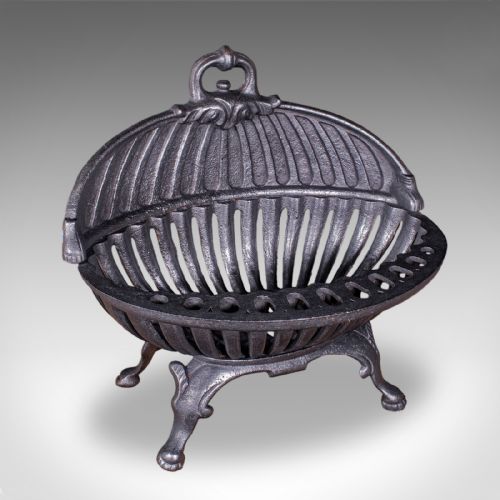
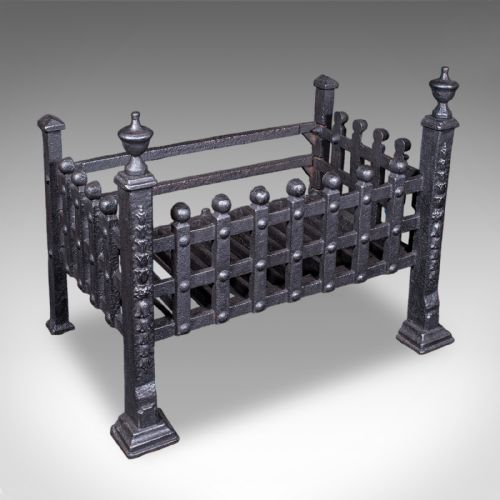
A heavy iron fire grate anchors a hearth with solid weight, built to hold burning logs safely through centuries of cold rooms.
Heavy Iron Fire Grate
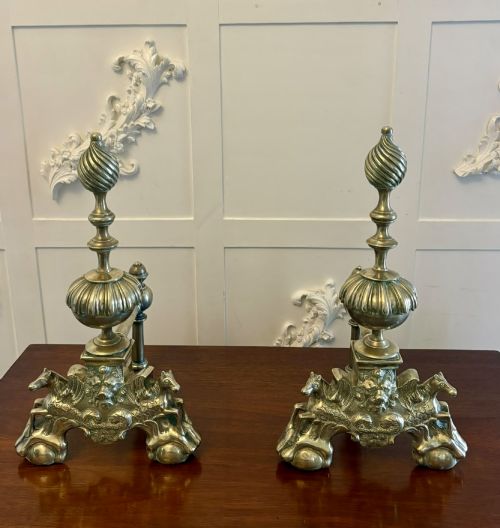
A heavy iron fire grate serves as the central iron basket or log holder within an open hearth, frequently accompanied by matched andirons and firebacks. These pieces appear across Victorian, Gothic Revival, Neoclassical Revival, and Arts and Crafts styles, spanning the nineteenth century and early twentieth century.
The form ranges from small portable grates to large inglenook assemblies designed for substantial fireplaces. Buyers encounter standalone log baskets alongside complete hearth sets that include fire dogs and fenders.
Materials and construction
Makers utilised cast iron for firebacks and heavy structural frames, taking advantage of its heat retention and durability. Wrought iron provides the forged bars and decorative twist elements seen in fire baskets.
Brass details and fitted firebrick linings appear in specific examples to add contrast and manage thermal stress. The metal components were forged, cast, and riveted together to withstand intense hearth temperatures.
Heavy Iron Fire Grate Retail Price Guide 2026
Typical asking prices for heavy iron fire grate among the pieces listed under this phrase on Sellingantiques today, from the lower quarter to the upper quarter. They describe what is for sale here now, not the wider market.
Listings feature cast iron, wrought iron, brass, and firebrick across Victorian, Gothic Revival, Neoclassical Revival, and Arts and Crafts styles.
Assessing quality and proportion
Quality rests in the thickness of the metal and the integrity of the joins across the basket and andirons. Substantial cast firebacks and heavy wrought iron bars indicate superior structural ambition.
Design ambition elevates certain pieces, particularly those displaying crisp Gothic or Neoclassical Revival casting detail alongside balanced proportions. Completeness of a matched hearth set also separates standard items from exceptional survivals.
The Heavy Iron Fire Grate Glossary
- Fire grate
- A metal basket or frame designed to hold burning fuel above the hearth floor. It allows air to circulate beneath the fire for better combustion.
- Andirons
- Supporting metal fire dogs placed on either side of a hearth to hold logs. They often pair directly with a central fire basket.
- Fireback
- A heavy metal plate placed against the rear wall of a fireplace. It protects the brickwork and radiates heat back into the room.
- Inglenook
- A large recessed hearth space designed to accommodate seating alongside the fire. Grates built for these spaces are typically of grand proportions.
Heavy Iron Fire Grate: Frequently Asked Questions
How do I choose the right size grate?
Measure the width, depth, and height of your fireplace opening carefully before selecting a heavy iron fire grate. Leave adequate clearance around the iron basket so air flows freely and the hearth brickwork remains protected.
Consider whether you need a standalone basket or a complete set with andirons. Larger inglenook pieces require substantial hearth space and strong floor support.
Can I burn real wood in these grates?
Most of these pieces were built precisely for burning wood or coal in open hearths. The heavy cast and wrought iron construction handles high temperatures reliably.
Check for internal firebrick linings or solid metal thickness that protects the structural integrity. Regular maintenance keeps the metal sound during burning seasons.
How do I clean a cast iron fire grate?
Remove ash and debris regularly to prevent moisture retention and rust formation on the iron surface. Brush the metal with a stiff bristle brush and apply appropriate grate polish if desired.
Avoid using harsh chemical cleaners that strip the historical patina. Gentle maintenance preserves the dark iron finish developed over decades of use.
What styles are available for these hearth pieces?
The selection includes Victorian, Gothic Revival, Neoclassical Revival, and Arts and Crafts designs. Each style reflects the decorative tastes of its period, from medieval influences to clean revival lines.
Matching andirons and firebacks often carry the same stylistic motifs. This unity helps determine the period and origin of the hearth set.