

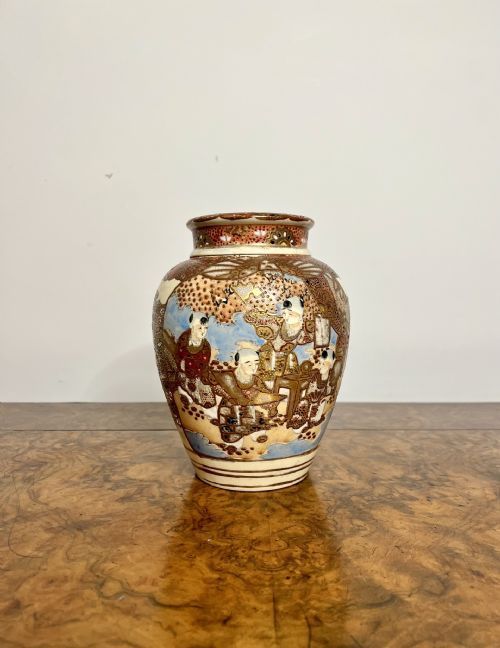


Figural Japanese Ceramic
Figural japanese ceramic pieces bring expressive form and intricate hand-painted detail to any room.
Figural Japanese Ceramic
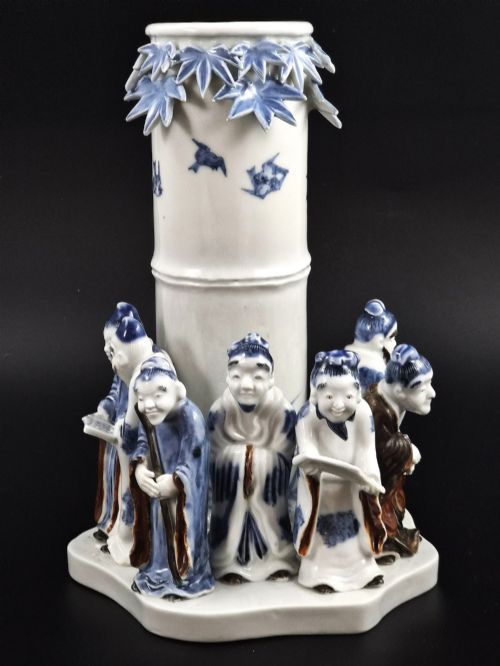
When you search for figural japanese ceramic, you encounter pieces shaped into human figures, animals, and vessels adorned with detailed figural processions. These works primarily span the nineteenth century and the early twentieth century, aligning with the Meiji period and associated eras.
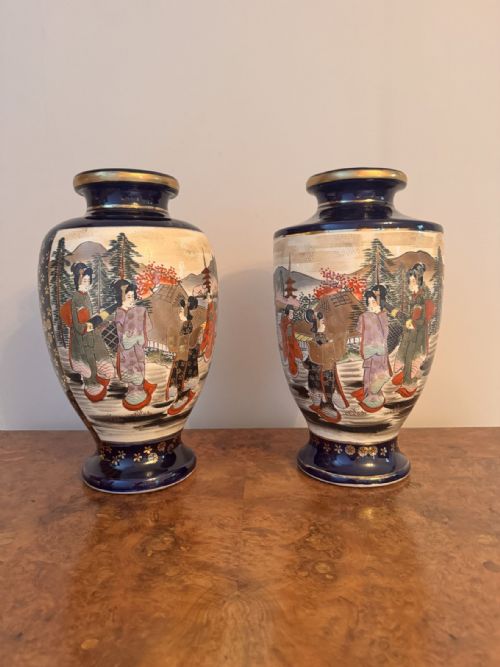
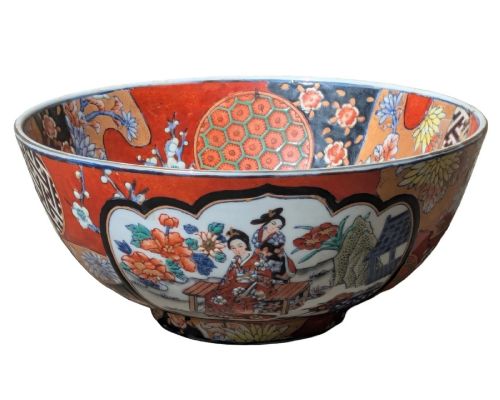
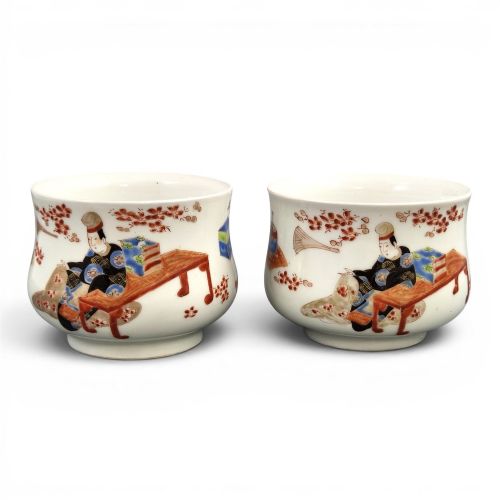
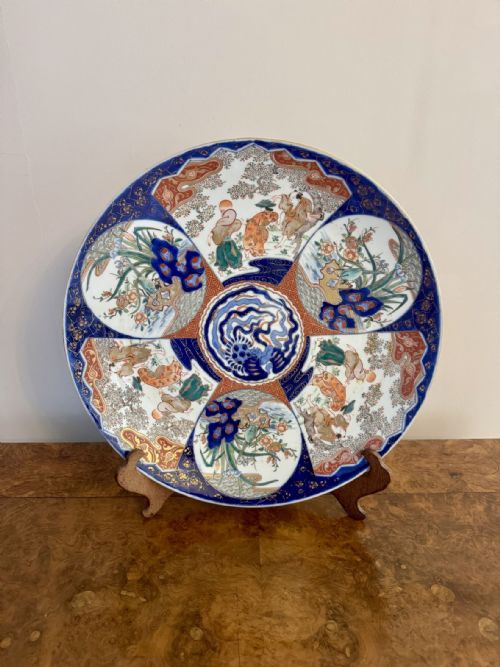
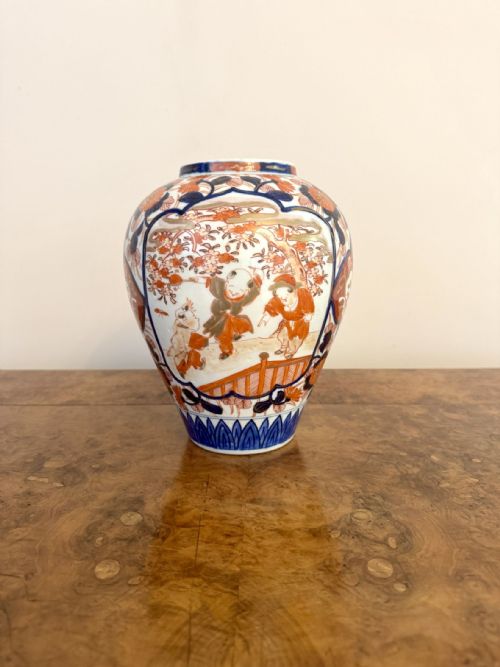
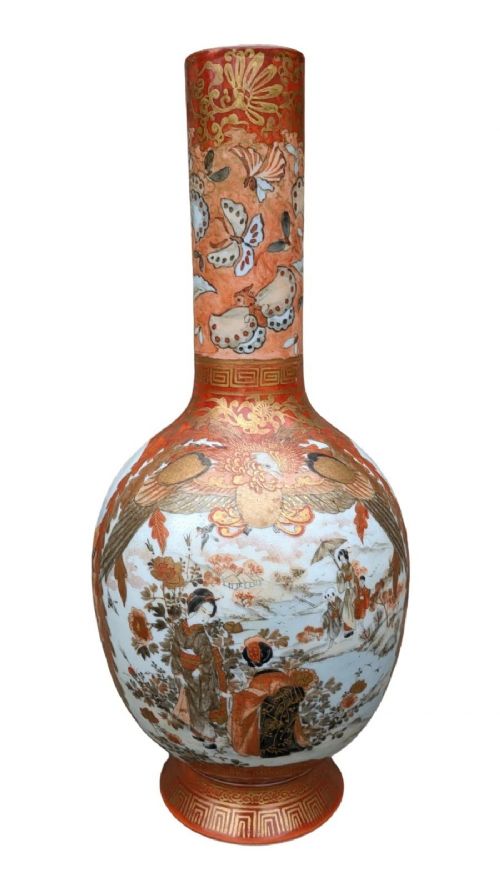
The objects on this page take various forms, ranging from miniature vases and ginger jars to large table lamps, incense burners, and decorative chargers. Satsuma earthenware and Kutani porcelain dominate the selection, often accompanied by Imari bowls and plates.
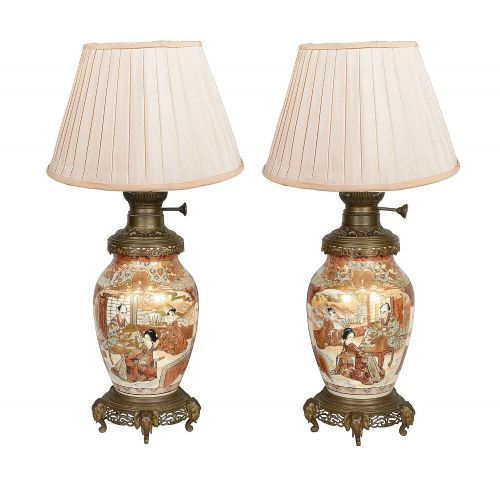
Buyers will find both standalone decorative items and converted table lamps fitted with gilt bronze mounts. The execution ranges from small, finely painted miniatures to substantial lidded jars and censers.
How they were made
Potters shaped these ceramics using porcelain and earthenware clays, which were then hand-painted with detailed enamel pigments. Many pieces incorporate raised moriage work and generous applications of gold leaf to highlight clothing, borders, and backgrounds.
Makers often integrated gilt bronze mounts or wooden elements, particularly in larger vessels and table lamps. The decoration on Satsuma wares relies on fine-line enamel painting over an ivory-crackled glaze, while Imari wares utilise iron-red and cobalt-blue underglazes.
Listings feature 19th-century and early 20th-century Satsuma and Kutani ceramics, including vases, table lamps, and censers.
What varies in quality
The refinement of the hand-painted brushwork sets the baseline for quality, distinguishing hasty production from meticulous execution. Miniature scenes crowded with distinct figural processions demand high technical skill from the artist.
The precision of the gilding and the clarity of the enamel colours determine the visual depth of a piece. Furthermore, the presence of legible artist signatures or recognised workshop marks elevates the standing of individual Satsuma and Kutani items.
Chosei Mark·Kinkozan·Shizan
The Figural Japanese Ceramic Glossary
- Satsuma
- Earthenware pottery featuring an ivory-coloured, crackled glaze painted with enamel and gold leaf. It often depicts elaborate figural scenes.
- Kutani
- Japanese porcelain or pottery traditionally recognised by its bold palette, frequently utilising rich reds, greens, and gold.
- Imari
- Japanese export porcelain decorated in underglaze blue, iron red, and gold. This style originated during the Edo period.
- Moriage
- A ceramic decorating technique where slip is piped onto the surface in raised dots or lines. It creates a textured, tactile effect.
- Koro
- A traditional Japanese incense burner typically featuring a pierced lid and three or more feet. They often take sculptural or vessel forms.
- Takarabune
- A mythical treasure ship steered by the Seven Lucky Gods in Japanese folklore. It frequently appears as a decorative theme in ceramic censers.
Figural Japanese Ceramic: Frequently Asked Questions
What is a figural japanese ceramic?
These pieces comprise porcelain and earthenware objects from Japan, notably Satsuma and Kutani wares, shaped into figures or decorated with detailed human subjects.
They encompass a variety of functional and decorative items, including vases, censers, chargers, and table lamps.
How do I identify Satsuma ware?
Satsuma ceramics are typically earthenware with a distinctive creamy, crackled glaze that serves as a canvas for polychrome enamel and gold leaf.
They frequently feature intricate figural processions, arhats, and court scenes painted with exceptional miniature detail.
When were most of these pieces made?
The majority of the pieces available belong to the nineteenth century and the Meiji period, reflecting a peak era of Japanese ceramic export artistry.
Production also extends into the early twentieth century, spanning the Taisho and Showa periods with similar decorative traditions.
How should I live with these ceramics?
These decorative objects work well as focal points on mantels, tables, and open shelving where their painted details can be closely appreciated.
Some items, such as vases and jars, have been historically converted into table lamps to integrate into modern interiors.